
Terbinafine Liver Toxicity: Risks, Signs, and What to Do
When you take terbinafine, an oral antifungal medication used to treat nail fungus and skin infections. Also known as Lamisil, it works by killing the fungi that cause infections. But for a small number of people, this drug can harm the liver. It’s not common — less than 1 in 12,000 users — but when it happens, it can be severe. You might not feel anything at first, but liver damage from terbinafine can lead to jaundice, fatigue, or worse. That’s why knowing the signs and acting fast matters.
Terbinafine liver toxicity isn’t the same as alcohol-related liver damage. It’s an unpredictable reaction, often tied to how your body processes the drug. People with existing liver disease, those taking other medications that affect the liver, or those on long-term treatment (more than 6 weeks) are at higher risk. Your doctor should check your liver function before you start and sometimes during treatment. If you’re on terbinafine and notice dark urine, yellow eyes or skin, nausea that won’t go away, or unexplained tiredness, stop taking it and call your doctor. Don’t wait. The liver can heal if caught early — but not if you ignore it.
There’s no way to know for sure who will react badly. Genetic differences, other health conditions, and even diet can play a role. That’s why it’s not about avoiding terbinafine entirely — it’s about using it wisely. Many people take it without issue. But if you’ve had liver problems before, or if you drink alcohol regularly, talk to your doctor about alternatives. Topical antifungals, laser treatments, or other oral drugs like itraconazole might be safer for you. And if you’re on terbinafine, don’t mix it with acetaminophen, statins, or alcohol. These can stack the risk.
What you’ll find below are real stories and practical guides from people who’ve dealt with this issue. You’ll see how patients spotted the warning signs, what tests doctors ordered, and how they switched to safer options. There’s also advice on monitoring your liver health while on medication, what to ask your pharmacist, and how to avoid dangerous drug combos. This isn’t fear-mongering — it’s about being informed. Because when it comes to your liver, a few extra questions can make all the difference.
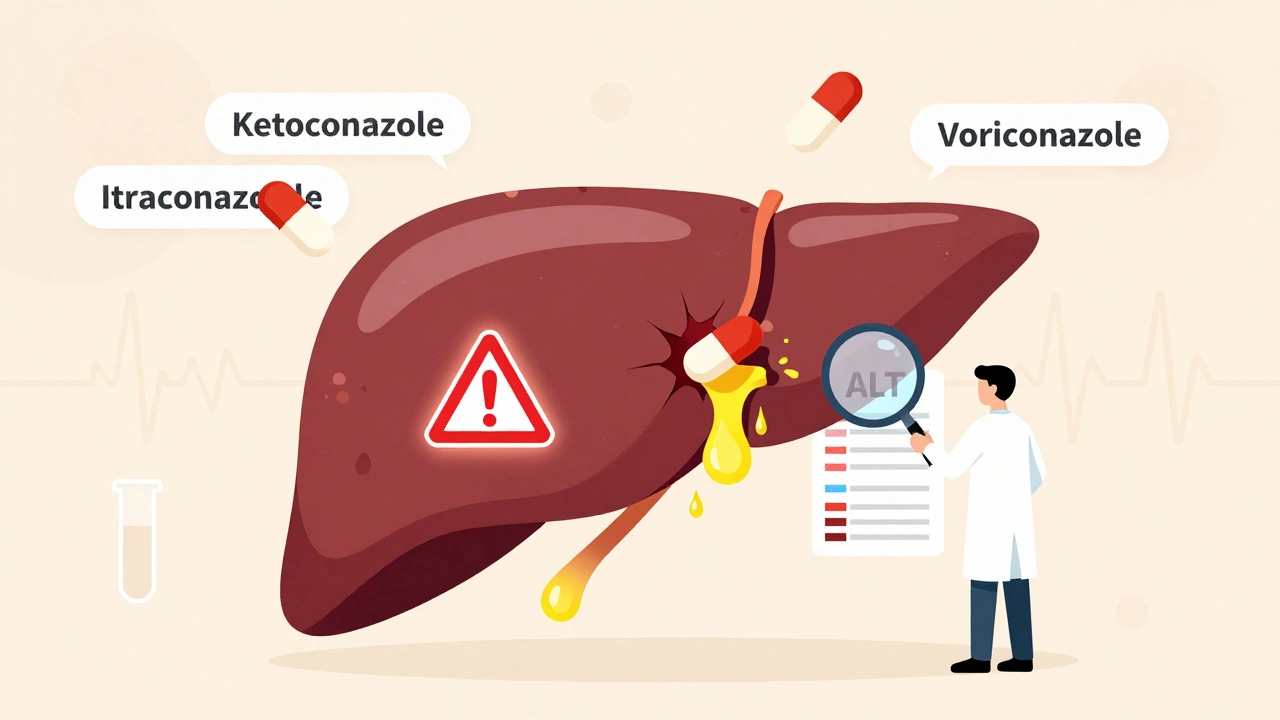
Antifungals can cause serious liver damage, especially ketoconazole, itraconazole, and voriconazole. Learn which drugs are riskiest, how to spot early signs of liver injury, and what monitoring you need to stay safe.
Dec, 2 2025