
Sulfonamide Cross-Reactivity: What You Need to Know About Allergic Reactions
When someone has a sulfonamide cross-reactivity, a dangerous immune response triggered by certain sulfur-containing drugs that can mimic allergic reactions to sulfa antibiotics. Also known as sulfa allergy, it’s not just about sulfa antibiotics—it can extend to other medications that share similar chemical structures, even if they’re not antibiotics at all. This isn’t just a theoretical concern. People who react to one sulfonamide drug may react to others, even if they’ve never taken them before. The risk isn’t equal across all drugs, but the confusion around it leads to unnecessary avoidance—or worse, dangerous exposure.
Many patients think a sulfa allergy means they can’t take any drug with "sulf" in the name. That’s a myth. Sulfonamide cross-reactivity mainly applies to drugs with the same core chemical ring structure, like sulfamethoxazole (in Bactrim) or sulfadiazine. But it doesn’t automatically mean you can’t take diabetes drugs like glipizide, diuretics like furosemide, or even some migraine meds like sumatriptan. The chemistry is different. Still, doctors err on the side of caution because a true reaction can mean hives, swelling, or even life-threatening conditions like Stevens-Johnson syndrome. That’s why knowing your exact history matters: Did you get a rash? Trouble breathing? A fever? The details guide safer choices.
Related to this are antibiotic allergies, immune responses to drugs designed to kill bacteria, often mislabeled or overreported, and drug hypersensitivity, the body’s exaggerated immune reaction to a medication, sometimes delayed and hard to trace. These are the bigger categories where sulfonamide cross-reactivity lives. And while some people outgrow these reactions, others carry the risk for life. That’s why medication safety plans, clear communication with your care team, and knowing your exact reaction history are critical. You might need to avoid certain antibiotics, but you shouldn’t avoid all drugs with sulfur in them.
What you’ll find below are real, practical guides on how to spot hidden risks, manage reactions safely, and talk to your doctor without sounding like you’re guessing. From how to tell if your rash was truly a sulfonamide reaction to which non-sulfa alternatives actually work, these posts cut through the noise. No fluff. No fearmongering. Just what you need to protect yourself—and make smarter choices with your prescriptions.
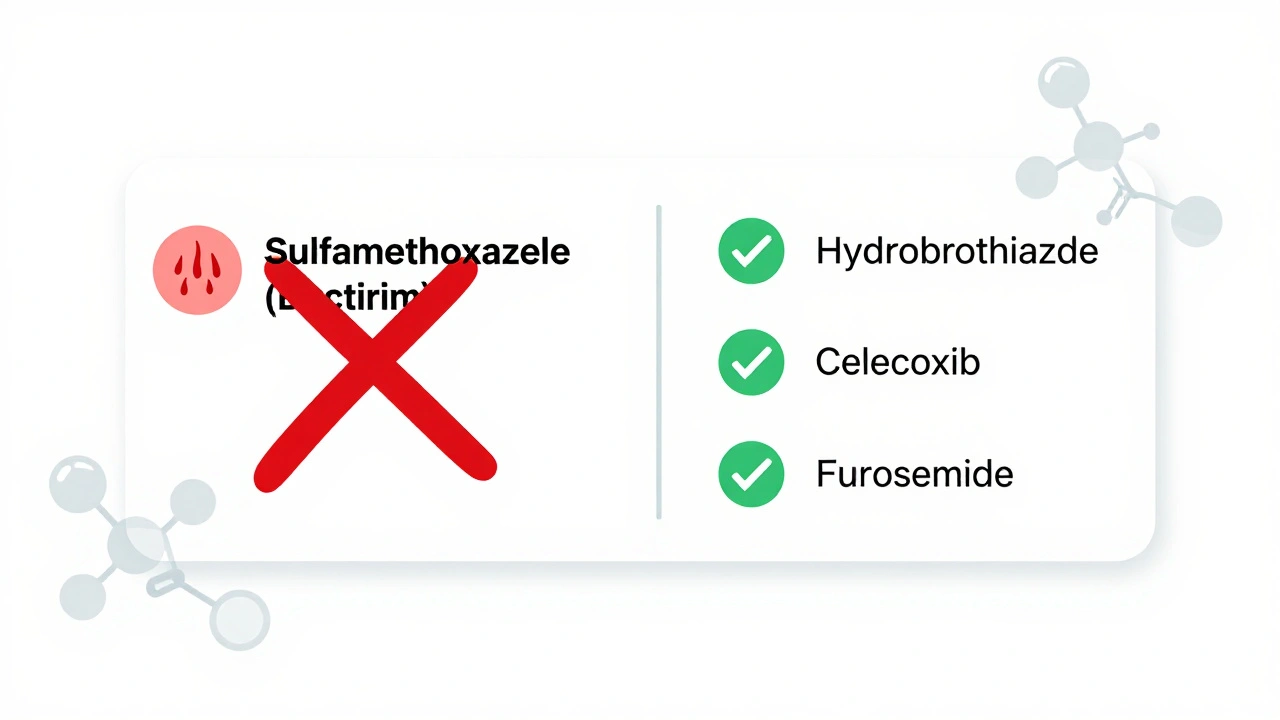
Most people with "sulfa allergies" don't need to avoid common medications like blood pressure or arthritis drugs. Learn the real science behind sulfa cross-reactivity and what you can safely take.
Dec, 6 2025