
Sulfa Allergy: What It Is, How It Affects You, and What Medications to Avoid
When someone has a sulfa allergy, an immune system reaction to sulfur-containing drugs, often mistaken for a food allergy but actually triggered by specific chemical structures in medications. Also known as sulfonamide allergy, it’s one of the most common drug allergies reported in the U.S., affecting about 3% of the population. This isn’t just a rash—it can mean trouble breathing, swelling, or even life-threatening reactions like Stevens-Johnson syndrome. Many people don’t realize they have it until they take a sulfa drug and get sick.
The real confusion comes from the fact that not all drugs with "sulfa" in the name cause the same reaction. Antibiotics like sulfamethoxazole, a common component of Bactrim and Septra, often trigger reactions in people with sulfa allergy are the main culprits. But things like diabetes pills (sulfonylureas), diuretics (furosemide), or some migraine meds (sumatriptan) are chemically different and usually safe. Still, doctors often play it safe and avoid all sulfonamide-containing drugs if you’ve had a past reaction. That’s why knowing exactly what you’re allergic to matters more than just saying "I’m allergic to sulfa." The same goes for compounded medications, custom-formulated drugs that might contain hidden sulfa ingredients not listed on standard labels. Always check with your pharmacist.
Most reactions show up within hours or days after taking the drug. Common signs include itchy skin, hives, fever, or a red, blistering rash. In rare cases, your lungs or liver get involved. If you’ve ever had a bad reaction after taking an antibiotic for a UTI, ear infection, or sinus issue, you might have a sulfa allergy. Don’t assume it’s just a "side effect"—write it down, tell every doctor you see, and keep a list of meds you’ve reacted to. Even if it happened years ago, your body remembers.
There are plenty of safe alternatives. For infections, doctors can switch to penicillin-based drugs, cephalosporins, or macrolides like azithromycin. For pain or inflammation, NSAIDs like ibuprofen are usually fine—unless you’ve had other drug allergies. The key is communication. If you’ve ever been told to avoid sulfa drugs, make sure your care team knows. That’s why building a medication safety plan, a personal record of what you can and can’t take, shared with all your providers is one of the smartest things you can do. It’s not about fear—it’s about control.
Below, you’ll find real stories and practical guides on how to spot hidden sulfa ingredients, what to ask your pharmacist, how to handle emergencies, and which meds are truly safe—even if they sound similar. No guesswork. Just clear info to keep you protected.
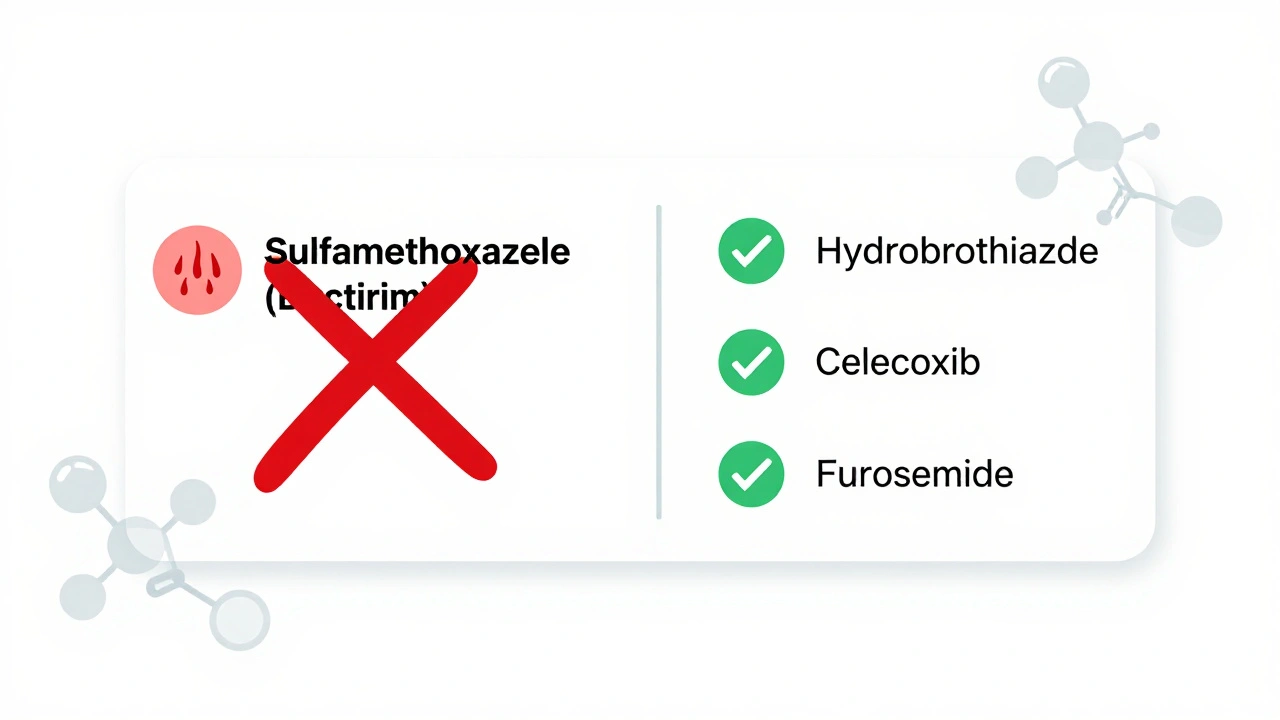
Most people with "sulfa allergies" don't need to avoid common medications like blood pressure or arthritis drugs. Learn the real science behind sulfa cross-reactivity and what you can safely take.
Dec, 6 2025