
Stability Testing Guidelines: What Pharma Teams Need to Know
When you pick up a bottle of pills, you trust that they’ll work the same way on day 300 as they did on day 1. That trust comes from stability testing guidelines, standardized procedures that measure how pharmaceutical products hold up over time under real-world conditions. Also known as drug stability studies, these tests are required by global regulators to prove a medication won’t break down, lose potency, or turn harmful before its expiration date. Without them, your insulin could lose effectiveness, your blood pressure pill could become unpredictable, or your antibiotic might not kill the infection.
These guidelines aren’t just paperwork—they’re science. The most widely accepted framework is ICH Q1A, the international standard for stability testing of new drug substances and products, developed by the International Council for Harmonisation. It tells companies exactly how to expose drugs to heat, humidity, and light, and how often to test them. For example, a tablet might be stored at 40°C and 75% humidity for six months to simulate two years of real-world storage. If the active ingredient drops below 90% or toxic byproducts appear, the product fails. drug shelf life, the period during which a medication remains safe and effective under specified storage conditions isn’t guessed—it’s proven through repeated lab tests.
It’s not just about the pill itself. Packaging matters too. A blister pack might protect against moisture, but if the bottle cap leaks, the whole batch is at risk. Stability testing looks at everything: how the drug interacts with its container, whether light causes discoloration, if refrigerated meds freeze during shipping, and even how the formula changes when mixed with water for liquid forms. drug degradation, the chemical breakdown of a medication over time, leading to reduced potency or harmful byproducts is the silent threat behind every expiration date.
These rules aren’t optional. Regulators like the FDA and EMA can shut down production if stability data is incomplete or fake. And it’s not just big pharma—compounding pharmacies, generic makers, and even online pharmacies must follow these standards. When you see a batch number on your medicine, it’s tied to stability test results from that exact production run. If something goes wrong, they can trace it back to the lab data.
What you’ll find in the posts below are real-world examples of how stability issues show up in practice: why a generic version of a heart drug failed a test, how improper storage ruined a batch of insulin, why some meds need special packaging, and how pharmacists spot signs of degradation before they reach patients. These aren’t theoretical debates—they’re life-or-death details hidden in lab reports and regulatory filings. If you’ve ever wondered why your meds have expiration dates, or why some pills need refrigeration while others don’t, the answers are here.
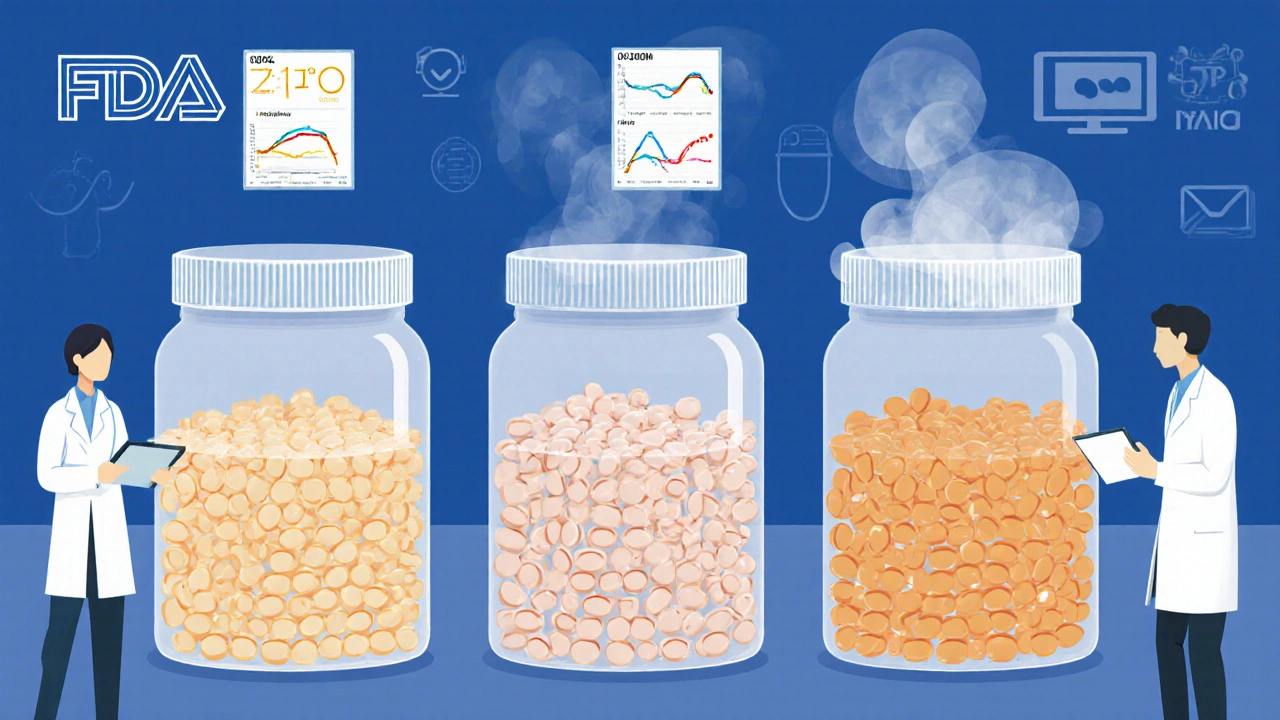
Learn the FDA's exact stability testing requirements for generic drugs, including batch sizes, testing timelines, common failures, and 2025 updates. Understand why stability data is the #1 reason ANDAs get rejected.
Nov, 28 2025