
Probiotics and Antibiotics: What You Need to Know About Use, Timing, and Effects
When you take antibiotics, medications that kill or slow harmful bacteria causing infections. Also known as antibacterial drugs, they’re essential for treating pneumonia, strep throat, and other bacterial illnesses. But they don’t just target the bad bugs—they wipe out good ones too. That’s where probiotics, live microorganisms that support digestive and immune health. Often found in yogurt, kefir, or supplements, they’re beneficial bacteria that help restore balance after antibiotics disrupt your gut. The question isn’t just whether to take them together—it’s how to do it right.
Antibiotics like amoxicillin, ciprofloxacin, or doxycycline can cause diarrhea, bloating, or yeast infections because they strip away the friendly bacteria that keep your gut lining healthy. Studies show taking probiotics during antibiotic treatment can cut the risk of antibiotic-associated diarrhea by up to 42%. But timing matters. Taking them at the same time can reduce their effectiveness. Most experts recommend spacing them out: take your probiotic two hours before or after your antibiotic. This gives the good bacteria a better shot at surviving and settling in.
Not all probiotics are the same. Strains like Lactobacillus rhamnosus and Saccharomyces boulardii have the most solid evidence for helping with antibiotic side effects. Look for products with at least 5 billion CFUs and clear strain labeling. Avoid cheap, unbranded supplements—many don’t contain what they claim. And remember, probiotics aren’t magic. They won’t fix every gut issue, but they can help you avoid the worst of the side effects when used correctly.
Some people stop probiotics right after finishing antibiotics. That’s a mistake. Your gut microbiome can take weeks to recover. Continuing probiotics for at least two weeks after your last antibiotic dose gives your good bacteria time to rebuild. If you’ve had recurring infections or chronic digestive issues, talk to your doctor about long-term use. You might also want to support your gut with fiber-rich foods—onions, garlic, bananas, and oats feed the good bacteria that come back.
There’s another layer here: not everyone needs probiotics with antibiotics. If you’re young, healthy, and taking a short course for a simple infection, your body might bounce back on its own. But if you’re older, have a weakened immune system, or have had problems with diarrhea or yeast infections after antibiotics before, probiotics are worth the effort. It’s not about fear—it’s about smart prevention.
What you’ll find below are real, practical guides from people who’ve been there. From how to pick the right probiotic brand to what to do if you forget to space your doses, these posts cut through the noise. You’ll see how antibiotics interact with other meds, why some probiotics fail, and how to protect your gut without spending a fortune. No fluff. Just what works.
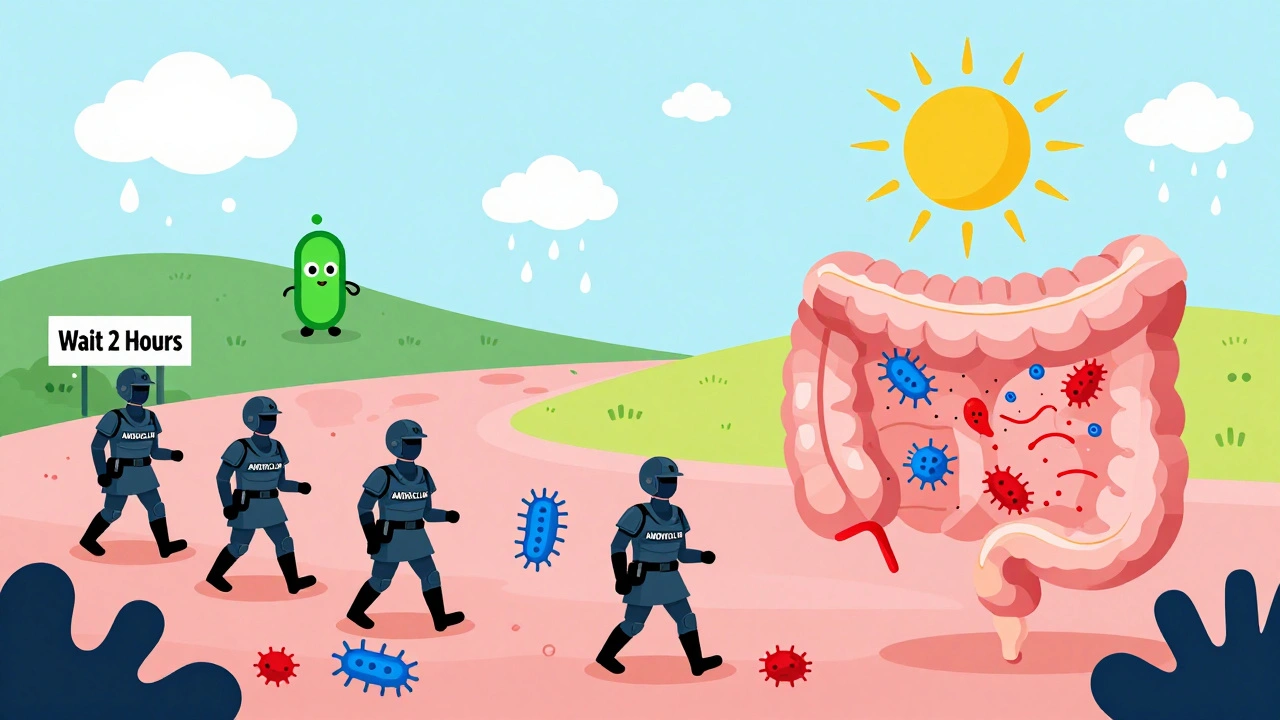
Learn how to space probiotics and antibiotics correctly to prevent diarrhea and protect your gut microbiome. Discover the best strains, doses, and timing based on the latest research.
Dec, 9 2025