
Ketoconazole Warnings: What You Need to Know Before Taking It
When you hear ketoconazole, a prescription antifungal medication once widely used for skin and systemic infections. Also known as Nizoral, it's powerful—but its risks changed how doctors use it. The FDA now limits ketoconazole to only the most serious fungal infections that don’t respond to safer drugs. Why? Because it can seriously harm your liver, mess with your hormones, and react badly with common medications.
One of the biggest ketoconazole side effects, severe liver injury that can lead to liver failure or death is why oral ketoconazole was pulled from routine use. Even a short course can raise liver enzymes. If you’re taking it, your doctor should check your liver function before and during treatment. You shouldn’t use it if you already have liver disease. And if you start feeling unusually tired, your skin or eyes turn yellow, or you have dark urine, stop taking it and call your doctor right away.
It’s not just your liver. ketoconazole interactions, how it affects how other drugs work in your body by blocking the CYP3A4 enzyme make it dangerous with many common medicines. Taking it with statins like simvastatin can cause muscle damage. With blood thinners like warfarin, it can spike your bleeding risk. Even over-the-counter antacids can make ketoconazole useless by lowering stomach acid—it needs acid to absorb. And don’t mix it with alcohol. That combo can make liver damage worse.
It also messes with your hormones. Ketoconazole lowers testosterone and cortisol, which can lead to breast growth in men, loss of sex drive, or even adrenal insufficiency. That’s why it’s no longer used for acne or dandruff. Topical versions (shampoos or creams) are still okay for skin use because very little gets into your blood. But the pills? Those are high-risk.
If you’re prescribed ketoconazole, ask your doctor: Is this the only option? Are there safer antifungals like fluconazole or itraconazole that could work? Most of the time, the answer is yes. The ketoconazole warnings exist for a reason—it’s not just another pill. It’s a last-resort drug with real, life-threatening risks.
Below, you’ll find real-world stories and expert breakdowns from patients and doctors who’ve dealt with these risks firsthand. From what symptoms to track, to how to talk to your pharmacist about interactions, to what alternatives actually work—you’ll find practical advice that doesn’t sugarcoat the facts.
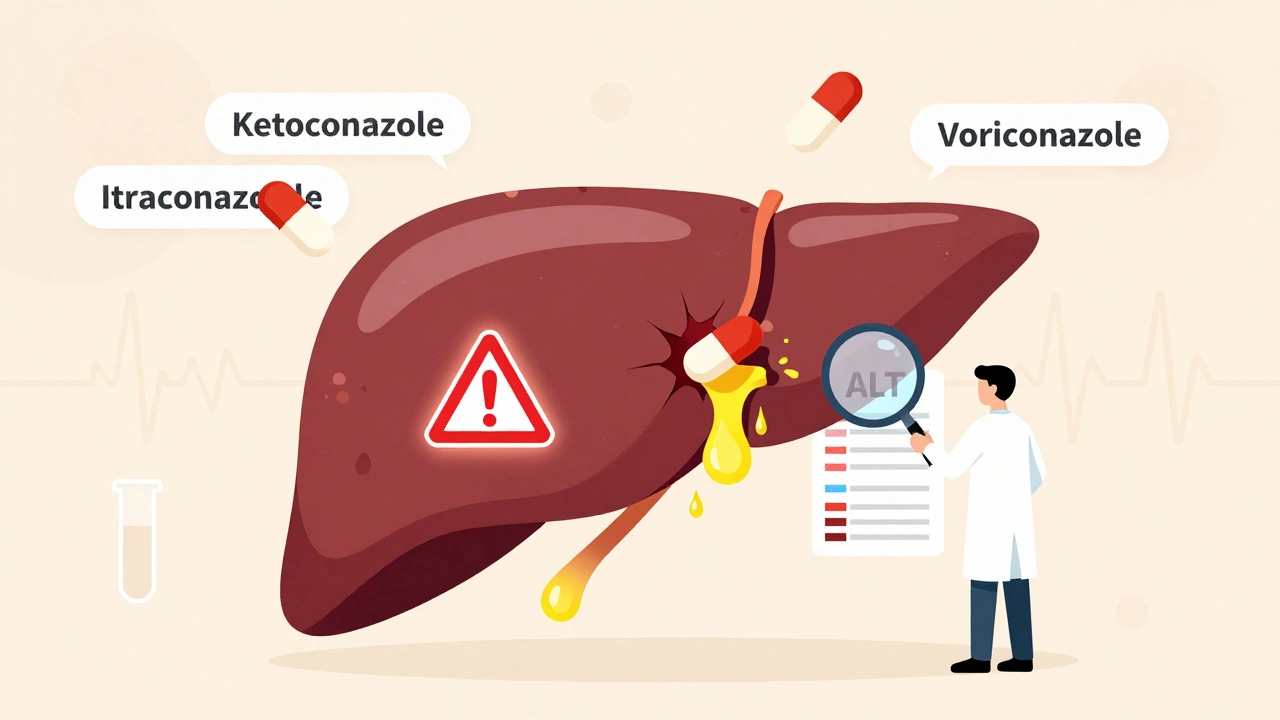
Antifungals can cause serious liver damage, especially ketoconazole, itraconazole, and voriconazole. Learn which drugs are riskiest, how to spot early signs of liver injury, and what monitoring you need to stay safe.
Dec, 2 2025