
Hydrochlorothiazide Safety: What You Need to Know About Side Effects, Interactions, and Risks
When you take hydrochlorothiazide, a common diuretic used to treat high blood pressure and fluid retention. Also known as HCTZ, it’s one of the most prescribed pills for hypertension—but its safety isn’t as simple as it looks. Millions use it without issues, but for others, even small changes in dose or diet can trigger serious problems. It doesn’t just flush out water; it pulls out potassium, magnesium, and sodium, which can throw your body’s balance off. That’s why safety isn’t just about taking the pill—it’s about knowing what to watch for and who you’re taking it with.
Hydrochlorothiazide doesn’t work in a vacuum. It plays well with some drugs and fights others. If you’re also taking lithium, a mood stabilizer often used for bipolar disorder, hydrochlorothiazide can raise lithium levels to dangerous points, increasing the risk of toxicity. The same goes for NSAIDs, like ibuprofen or naproxen. These painkillers can blunt hydrochlorothiazide’s effect on blood pressure and stress your kidneys. And if you’re on digoxin, a heart medication, low potassium from HCTZ can make digoxin more toxic—potentially causing irregular heartbeats. These aren’t rare edge cases. They’re common enough that doctors should check your full med list before prescribing HCTZ.
Side effects aren’t always obvious. You might not feel dizzy right away, but if you’re losing too much salt and water, you could end up with low blood pressure, confusion, or even fainting. Some people get muscle cramps or weakness because their potassium drops too low. Others notice skin rashes or sensitivity to sunlight—signs your body’s reacting. And while rare, hydrochlorothiazide can affect blood sugar, making it harder for diabetics to control their levels. It’s not a drug you can ignore after the first month. Regular blood tests to check electrolytes and kidney function aren’t optional—they’re part of staying safe.
There’s no one-size-fits-all answer. What’s safe for one person might be risky for another. Age, kidney health, other conditions, and even what you eat matter. That’s why the best safety plan isn’t just reading a label—it’s talking to your doctor, tracking how you feel, and knowing when to speak up. Below, you’ll find real-world advice from people who’ve been there: how to spot early warning signs, what to ask your pharmacist, and how to avoid the hidden traps that come with long-term use.
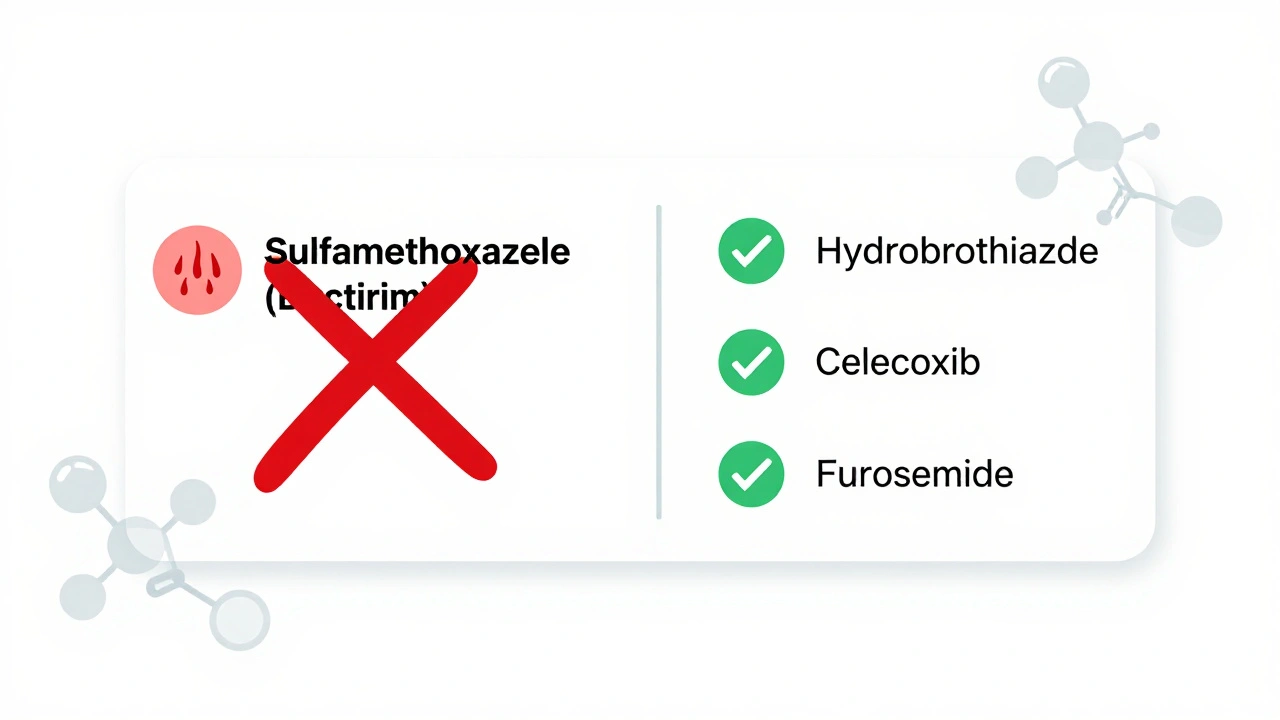
Most people with "sulfa allergies" don't need to avoid common medications like blood pressure or arthritis drugs. Learn the real science behind sulfa cross-reactivity and what you can safely take.
Dec, 6 2025