
Drug Interactions with Antifungals: Risks, Examples, and What to Avoid
When you take an antifungal, a medication used to treat fungal infections like athlete’s foot, yeast infections, or systemic fungal diseases. Also known as antimycotics, it can change how your body handles other drugs—sometimes in life-threatening ways. Not all antifungals act the same, but the most common ones—like fluconazole, itraconazole, and ketoconazole—are strong inhibitors of the CYP3A4 enzyme. This enzyme is responsible for breaking down over half of all prescription medications. When it’s blocked, those drugs build up in your blood, turning safe doses into toxic ones.
That’s why statins, cholesterol-lowering drugs like simvastatin and atorvastatin become dangerous when mixed with antifungals. Grapefruit juice already raises simvastatin levels—add fluconazole and you’re looking at a high risk of rhabdomyolysis, a condition where muscle tissue breaks down and can cause kidney failure. The same goes for blood thinners, like warfarin, which can spike to dangerous levels when taken with azole antifungals, leading to uncontrolled bleeding. Even common SSRIs, such as sertraline and fluoxetine, can increase the risk of serotonin syndrome when combined with certain antifungals. This isn’t theoretical—real cases have landed people in the ER with high fever, seizures, and muscle rigidity.
It’s not just about the big names. Even over-the-counter antifungal creams can cause issues if you’re on multiple meds. And some antifungals, like terbinafine, are safer but still need checking if you’re taking liver-metabolized drugs. The key is simple: never start or stop an antifungal without telling your doctor what else you’re on. Keep a full list of every pill, patch, supplement, and herbal remedy you use. Your pharmacist can flag risks before you even leave the counter. You don’t need to guess. You just need to speak up.
Below, you’ll find real-world examples of how these interactions play out, what symptoms to watch for, and how to adjust your treatment safely—without risking your health.
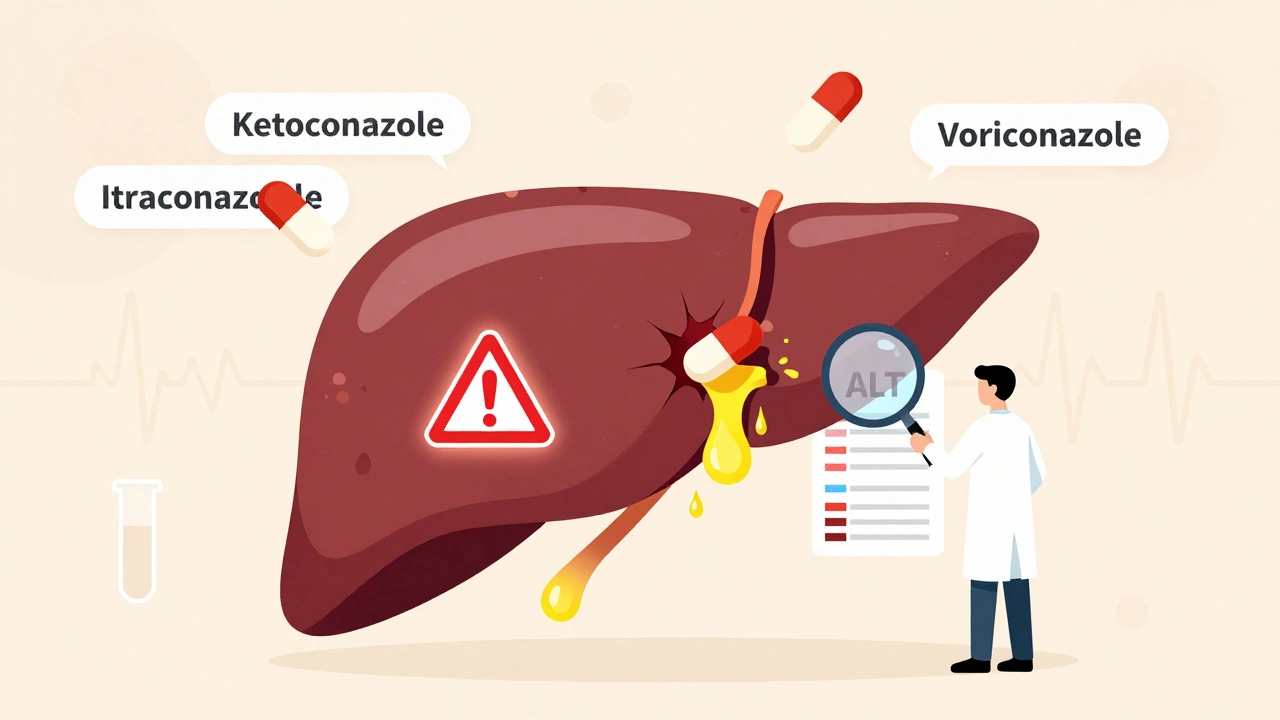
Antifungals can cause serious liver damage, especially ketoconazole, itraconazole, and voriconazole. Learn which drugs are riskiest, how to spot early signs of liver injury, and what monitoring you need to stay safe.
Dec, 2 2025