
ANDA Stability Testing: What You Need to Know About Generic Drug Reliability
When you pick up a generic pill at the pharmacy, you expect it to work just like the brand-name version. That’s where ANDA stability testing, a regulatory process used by the FDA to prove that generic drugs remain safe and effective over time under real-world conditions. Also known as Abbreviated New Drug Application stability studies, it’s the backbone of trust in every low-cost medication you buy. Without this testing, a generic drug might look identical on the shelf—but break down in your medicine cabinet, lose potency in heat, or react poorly with moisture. That’s not just a waste of money. It’s a risk to your health.
Stability testing isn’t a one-time check. It’s a long-term watch. Manufacturers must prove their generic versions hold up under different temperatures, humidity levels, and light exposure for months—even years. This isn’t just about the active ingredient. It’s about the coating, the filler, the packaging. A tablet that cracks, a liquid that separates, a capsule that dissolves too fast—all these things matter. The FDA requires data showing the drug stays within strict chemical and physical limits throughout its labeled shelf life. And it’s not just U.S. rules. Global agencies like EMA and Health Canada use similar standards. If a generic drug fails stability testing, it doesn’t get approved. Period.
What you might not realize is how this connects to the posts you’ll find below. Many of them tie back to the same core issue: generic drug approval, the process that ensures a generic medication is therapeutically equivalent to its brand-name counterpart. Also known as bioequivalence approval, it’s the first step—but stability testing is the second, longer test that keeps that promise alive. You’ll read about manufacturing defects in generics, why some states block substitution for critical drugs, and how counterfeit meds slip through cracks. All of it ties back to whether a drug can be trusted over time. A pill that works today might not work next month if stability testing was rushed or ignored. That’s why pharmacists are trained to spot packaging red flags, why doctors worry about switching antiseizure meds, and why expiration dates aren’t just marketing.
ANDA stability testing isn’t flashy. It doesn’t make headlines. But it’s the quiet system that keeps millions of people safe. When you take a generic blood pressure pill, an antibiotic, or an antidepressant, you’re relying on this process to ensure it still works. And if you’re trying to save money, reduce waste, or understand why your doctor won’t switch your meds—it all starts here. Below, you’ll find real stories, practical guides, and hard facts about what happens after a drug leaves the lab and enters your home. No fluff. Just what you need to know to trust what’s in your medicine cabinet.
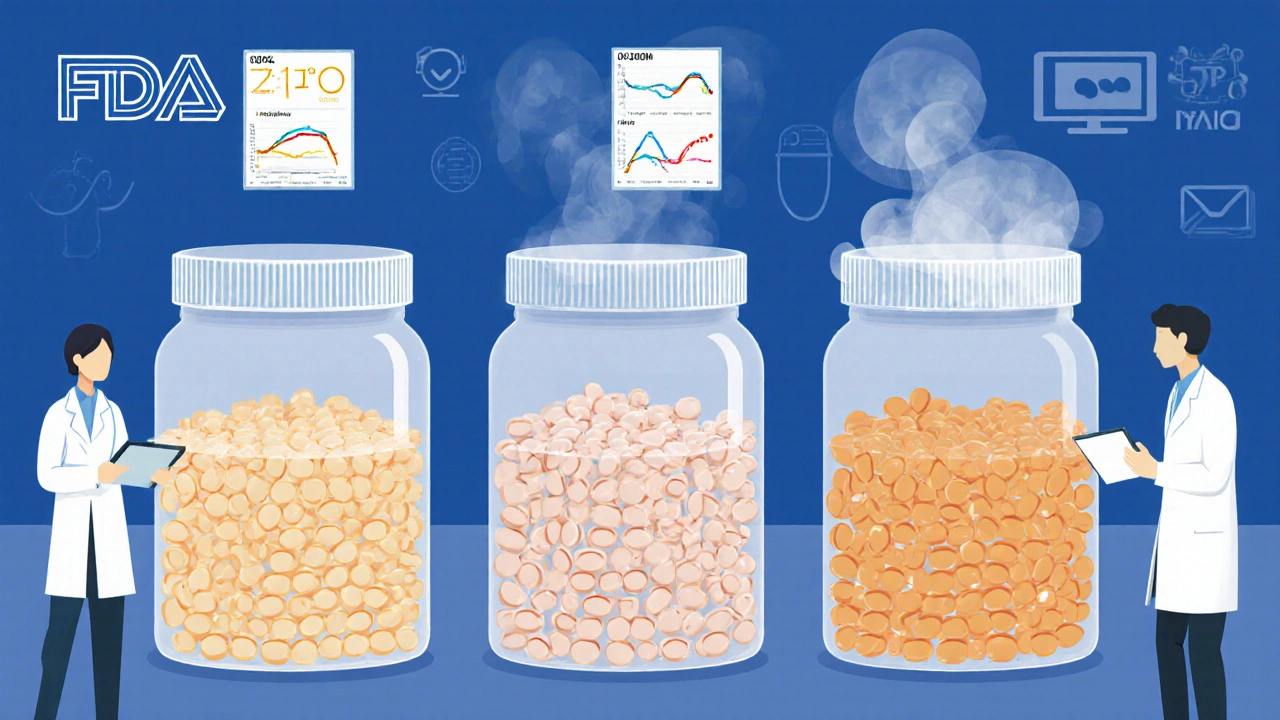
Learn the FDA's exact stability testing requirements for generic drugs, including batch sizes, testing timelines, common failures, and 2025 updates. Understand why stability data is the #1 reason ANDAs get rejected.
Nov, 28 2025