
Yoga and Tai Chi for Pain: Gentle Movement Benefits
Chronic pain doesn’t just hurt-it drains your energy, ruins your sleep, and makes even simple movements feel like battles. If you’ve tried medications, physical therapy, or injections and still feel stuck, you’re not alone. Many people find relief not in stronger pills, but in slower, gentler movement: yoga and tai chi. These aren’t just trendy wellness activities. They’re evidence-backed tools that help reduce pain, improve mobility, and rebuild confidence in your body-without putting stress on joints or nerves.
How Yoga and Tai Chi Actually Help With Pain
Yoga and tai chi work differently than lifting weights or running. Instead of pushing through pain, they teach you to move with it. Both practices combine slow, controlled motion with deep breathing and focused attention. This combination sends signals to your nervous system that say: “You’re safe.” Over time, this reduces the hypersensitivity that makes chronic pain feel so intense.
Yoga uses held postures-like seated forward bends, gentle twists, and supported bridges-to stretch tight muscles and release tension around painful areas. Tai chi flows like water, with movements that shift your weight slowly from one foot to the other, improving balance and coordination. Neither requires strength or flexibility to start. A 2024 review by the National Center for Complementary and Integrative Health found that people with neck pain who practiced yoga for 12 weeks improved their range of motion by 37%, on average. Tai chi users with knee osteoarthritis saw similar gains in joint function and reduced stiffness.
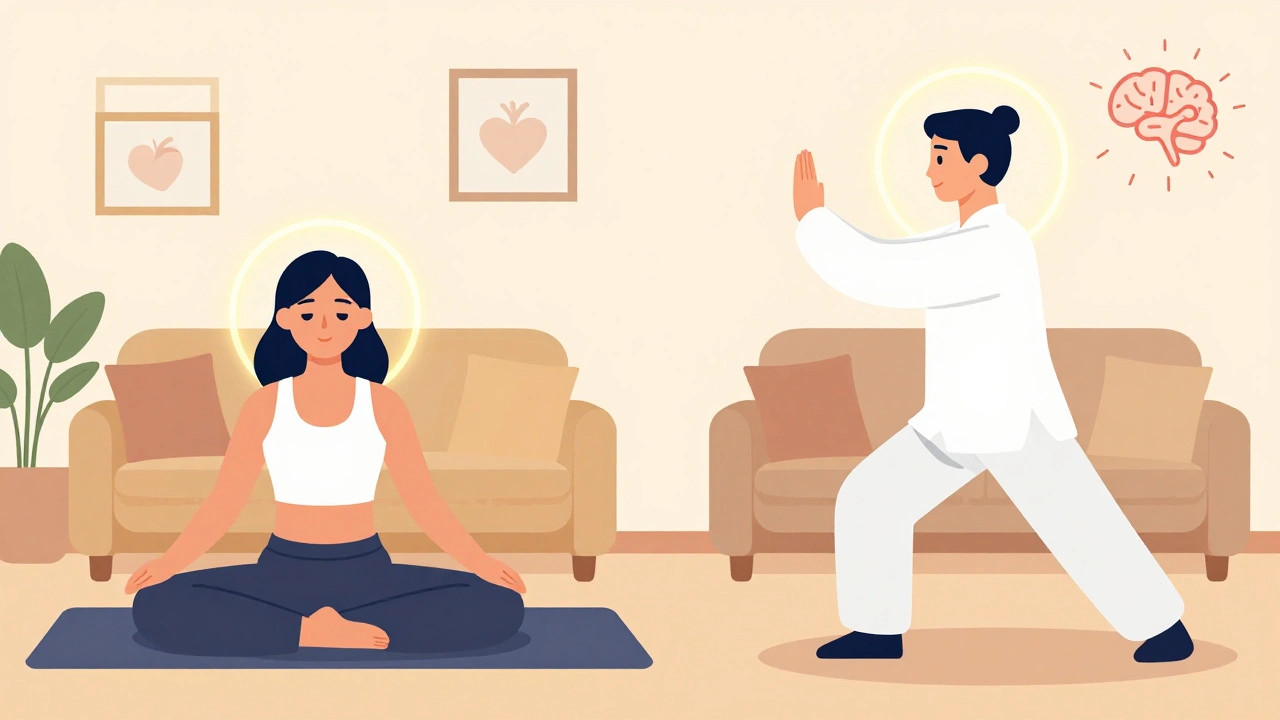
What makes these practices powerful is how they affect your brain. Chronic pain isn’t just a physical signal-it’s tied to stress, fear, and anxiety. Yoga and tai chi lower cortisol levels, calm the fight-or-flight response, and activate the parasympathetic nervous system. A 2018 study in the New England Journal of Medicine showed that people with fibromyalgia who did tai chi twice a week for 12 weeks reported 27% less pain and 31% fewer symptoms of depression than those who only did stretching.
Yoga vs. Tai Chi: Which Is Better for Your Pain?
There’s no single “best” choice-it depends on your body and your goals.
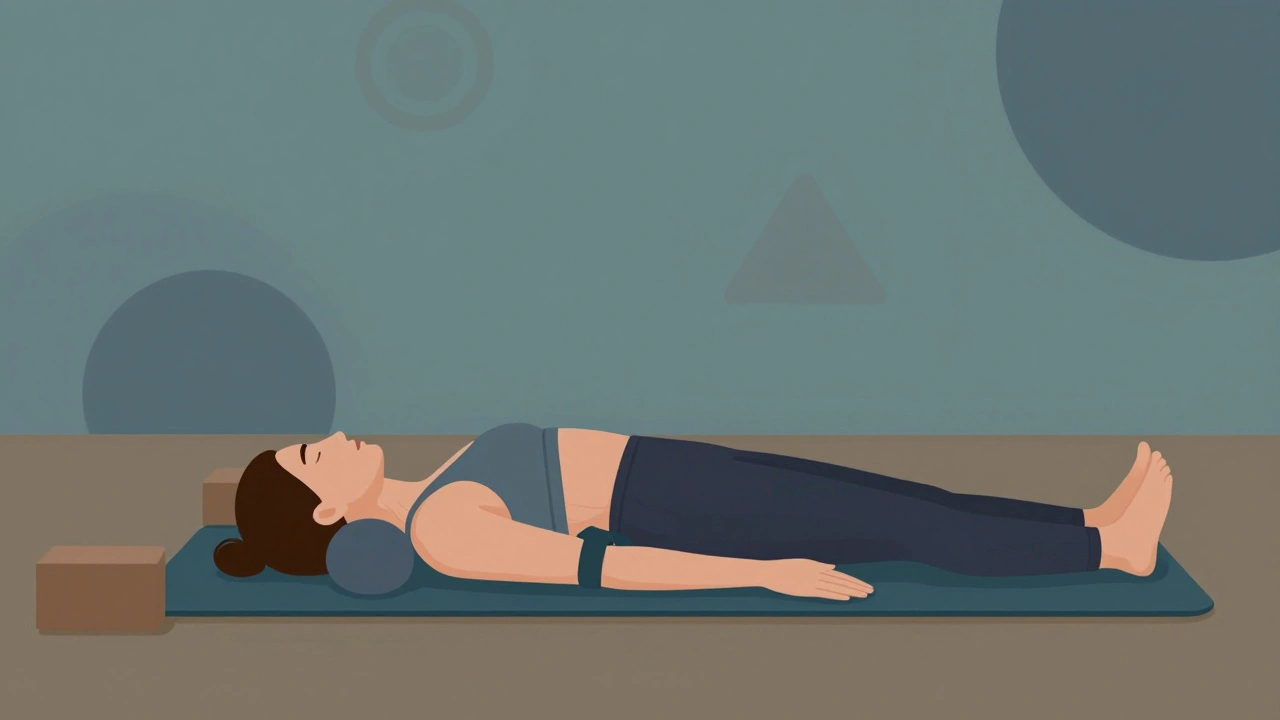
If you struggle with stiffness, tight hips, or lower back pain, yoga might be the better fit. Styles like Hatha and Restorative yoga use props-bolsters, blocks, straps-to support your body in positions that release tension without strain. One study found that yoga with hot sand fomentation reduced neck pain intensity by 42% more than standard physical therapy. That’s not magic-it’s targeted movement combined with warmth to relax deep tissues.
Tai chi shines for people with balance issues, dizziness, or pain that worsens with sudden movements. It’s especially helpful for older adults or those recovering from injury. A 2021 review of 16 studies found tai chi improved balance by 18-25% more than control groups in people with knee osteoarthritis. It’s also uniquely effective for men in their 20s and 30s with acute lower back pain-outperforming regular stretching in one 2021 study.
Here’s how they compare:
| Feature | Yoga | Tai Chi |
|---|---|---|
| Primary movement style | Static holds + flowing sequences | Continuous, flowing movements |
| Best for | Stiffness, back pain, neck pain | Balance, knee pain, dizziness |
| Typical session length | 45-90 minutes | 30-60 minutes |
| Frequency for results | 2-4 times per week | 2-3 times per week |
| Time to feel results | 6-8 weeks | 6-8 weeks |
| Best beginner styles | Hatha, Restorative | Yang, Sun |
| Equipment needed | Mat, blocks, straps | Comfortable shoes, open space |
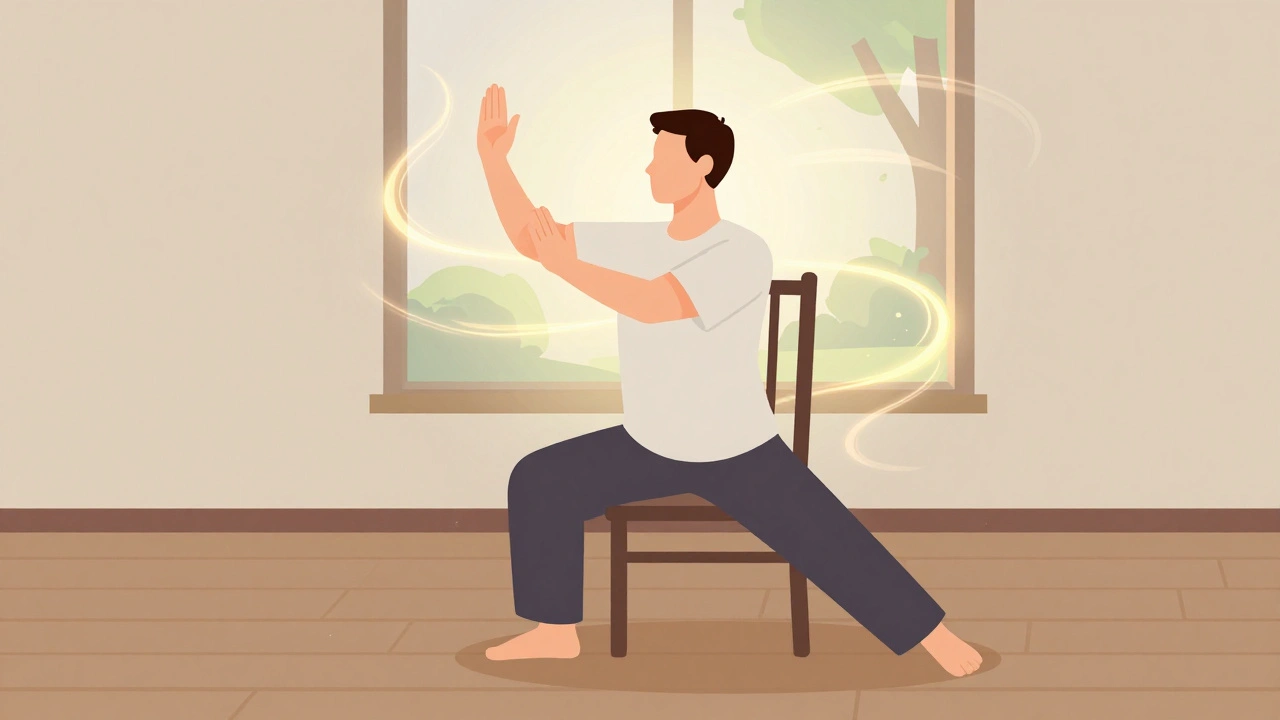
Both can be done seated if standing is too hard. Chair yoga and seated tai chi are just as effective for pain relief-especially for people with arthritis, nerve pain, or severe fatigue.
Real People, Real Results
Online communities are full of stories from people who turned to yoga and tai chi after hitting a wall with traditional treatments.
One Reddit user with rheumatoid arthritis wrote: “I can’t do standing yoga on bad days, but seated tai chi? That’s my lifeline. I do 15 minutes while watching TV. My hands don’t feel like they’re full of glass anymore.”
A veteran using the VA’s pain program said he cut his opioid use in half after six months of tai chi. “I used to fear moving because it hurt. Tai chi taught me that movement doesn’t have to hurt to help.”
But it’s not all smooth sailing. About 34% of negative reviews on Healthline mention difficulty with standing poses. And 28% of complaints focus on finding instructors who understand chronic pain. One person shared: “My first tai chi teacher told me to deepen my stance. My knee flared up for two weeks.”
The key? Find someone who knows how to adapt. Look for classes labeled “pain-friendly,” “senior-friendly,” or “therapeutic.” Many physical therapists now offer yoga or tai chi as part of rehab. The Arthritis Foundation’s “Tai Chi for Arthritis” program is widely available and specifically designed for joint pain.
How to Start Without Getting Hurt
You don’t need to sign up for a 12-week program right away. Start small.
- Try a 10- to 15-minute video daily for two weeks. Look for “beginner yoga for pain” or “seated tai chi for beginners” on YouTube or apps like Yoga Medicine or Tai Chi for Arthritis.
- Listen to your body. If a movement increases pain, stop. Pain during practice should feel like gentle stretching, not sharp or burning.
- Use props. A chair, wall, or pillow can make all the difference. You don’t need to touch your toes-you need to feel safe.
- Time your practice. Avoid doing yoga or tai chi right after taking pain meds if you’re feeling overly relaxed. Do it when you’re alert but not in a flare.
- Pair it with other care. The American Chronic Pain Association says combining these practices with physical therapy or medication leads to 30-40% better results than either alone.
Most people start feeling better after 6-8 weeks. The biggest changes happen around week 12. Consistency matters more than intensity.
Cost, Access, and Insurance
One myth is that these practices are expensive. They don’t have to be.
Community centers often charge $10-$15 per class. Online subscriptions like Glo or Alo Moves run $18-$29 a month. Many public libraries offer free access to these apps with a library card.
Insurance coverage is slowly catching up. Blue Cross Blue Shield now covers medically supervised yoga and tai chi programs in 12 states. The Veterans Health Administration offers tai chi at 92 of its 170 medical centers-free for enrolled veterans.
Starting in January 2025, doctors in the U.S. will be able to bill insurance for referring patients to yoga or tai chi programs under a new AMA coding system. This means more clinics will offer them as part of standard pain care.
When Not to Try Yoga or Tai Chi
These practices are safe for most people, but not if done incorrectly.
Don’t start if:
- You have a recent fracture, spinal injury, or severe osteoporosis without clearance from your doctor.
- You’re in the middle of a severe pain flare and can’t move without intense discomfort.
- You’re working with an instructor who pushes you into painful positions or doesn’t know how to modify for your condition.
Always talk to your doctor before starting-especially if you have heart disease, uncontrolled high blood pressure, or are on blood thinners. Most doctors now understand these practices are low-risk and high-reward. In fact, the American College of Physicians recommends both as first-line options for chronic low back pain, alongside cognitive behavioral therapy.
The Bigger Picture
Chronic pain is not just a physical problem-it’s a whole-body experience. Medications can mask symptoms, but they don’t fix the tension, fear, or disconnection that often come with long-term pain. Yoga and tai chi don’t promise a cure. But they offer something rarer: a way to reclaim control.
They teach you to move again without fear. To breathe through discomfort instead of fighting it. To find calm in a body that’s been screaming for relief.
More than 15 million Americans now live with chronic pain. And for many, the answer isn’t another pill. It’s a slow step forward. A deep breath. A gentle shift of weight. A quiet moment of presence.
You don’t need to be flexible. You don’t need to be strong. You just need to show up-once, twice, three times a week-and let your body remember how to feel safe.
Can yoga or tai chi replace my pain medication?
No, they shouldn’t replace medication unless your doctor says so. Yoga and tai chi work best as part of a broader plan. Studies show combining them with medication or physical therapy leads to 30-40% better results than using them alone. Think of them as tools to reduce your reliance on drugs-not as replacements.
How long until I feel less pain?
Most people start noticing changes after 6 to 8 weeks of regular practice. The biggest improvements-like better sleep, less stiffness, or reduced reliance on painkillers-usually show up around week 12. Consistency matters more than how long each session is. Even 15 minutes a day can make a difference.
I’m too stiff or in too much pain to stand. Can I still do this?
Yes. Chair yoga and seated tai chi are just as effective as standing versions. Many programs are designed specifically for people with limited mobility, arthritis, or fatigue. Look for classes labeled “chair-based” or “adaptive.” You can do these while sitting in a sturdy chair or even in your wheelchair.
Do I need special equipment or clothing?
Not really. For yoga, a non-slip mat helps, and blocks or straps can make poses easier. For tai chi, wear loose, comfortable clothes and flat shoes-or go barefoot if you’re on a safe surface. You don’t need expensive gear. A T-shirt and sweatpants are fine.
Where can I find a good instructor?
Look for instructors certified by Yoga Alliance (for yoga) or the National Certification Commission for Acupuncture and Oriental Medicine (for tai chi). Ask if they’ve trained in working with chronic pain or arthritis. Many physical therapy clinics now offer these classes. The Arthritis Foundation and VA hospitals also offer free, evidence-based programs you can join.
If you’re unsure where to start, ask your doctor for a referral. Many clinics now have yoga and tai chi programs built right into their pain management plans. You’re not alone in this. Thousands of people have walked this path before you-and found their way back to movement, calm, and control.
Rupa DasGupta
December 5, 2025 AT 01:02This is so cheesy 😒 I did yoga for 3 months and my back hurt MORE. Also, why is everyone acting like this is some mystical cure? I’m not buying it.
Also, hot sand fomentation? Sounds like a spa ad, not science.
And don’t even get me started on ‘reclaiming control’-like I’m not already trying? 😤
Marvin Gordon
December 6, 2025 AT 07:13I’ve been doing seated tai chi for 9 months after a herniated disc. No magic, no hype-just consistency.
My pain didn’t vanish, but I stopped dreading movement. That’s the win.
And yeah, props are your best friend. A pillow and a chair changed everything for me.
Don’t let the overzealous posts scare you off. Just start small.
Kylee Gregory
December 7, 2025 AT 10:50There’s something quietly profound about moving slowly when your body feels like it’s screaming. Yoga and tai chi don’t fix pain-they rewire your relationship with it.
It’s not about becoming flexible or perfecting a pose. It’s about learning that discomfort doesn’t always mean danger.
And that’s a lesson worth more than any pill.
Still, I agree with Rupa-some of the language here leans into wellness woo. But the core evidence? Solid.
Maybe we need to separate the science from the sales pitch.
Chris Brown
December 7, 2025 AT 12:10It is deeply concerning that mainstream media and healthcare institutions are now endorsing Eastern mysticism as legitimate medical intervention. Where is the peer-reviewed, double-blind, placebo-controlled evidence that these practices surpass conventional therapeutic modalities? I am not opposed to holistic approaches-but when they are elevated above evidence-based medicine without rigorous scrutiny, we risk enabling dangerous delusions in vulnerable populations.
Furthermore, the reference to the ‘Arthritis Foundation’ as an authoritative source is problematic-they are an advocacy group, not a research institution.
Let us not confuse anecdotal testimony with clinical efficacy.
Michael Dioso
December 7, 2025 AT 18:43Wow, another one of these ‘yoga saves lives’ posts. Let me guess-you also drink celery juice and meditate with crystals?
Look, I get it, people want easy fixes. But if you’re in chronic pain, you don’t need a 45-minute ‘flow’-you need a damn specialist who knows what they’re doing.
And that ‘hot sand fomentation’ stat? Where’s the study? I’ve read the NCCIH reviews-there’s zero mention of sand.
Also, tai chi for 20-something men with back pain? Bro, that’s just stretching with drama.
Don’t waste your time. Go see a PT who actually understands biomechanics, not some guru in a linen suit.
Katie Allan
December 8, 2025 AT 09:50Thank you for writing this with such care. I’ve been living with fibromyalgia for 12 years, and yoga was the first thing that didn’t make me feel like a failure.
It wasn’t about flexibility-it was about learning to listen. My body had been screaming for years, and I’d been trained to ignore it.
Chair yoga saved me. I do 10 minutes every morning before coffee. No one sees it. No one praises it. But I feel it.
If you’re hesitant, start with one breath. One slow movement. That’s enough.
You’re not broken. You’re just tired. And that’s okay.
James Moore
December 8, 2025 AT 15:23Let’s be honest-this entire article is a product of the American wellness-industrial complex, which has successfully repackaged ancient Asian traditions as commodified, middle-class self-help rituals. The Chinese government, for instance, has long recognized tai chi as a public health initiative-but here, it’s sold as a $29/month app subscription. Meanwhile, real, accessible, culturally rooted practices are being stripped of their context and turned into Instagram aesthetics.
And don’t get me started on the ‘VA covers tai chi’ angle-that’s not progress, that’s austerity by another name. They’re not investing in real care; they’re outsourcing pain management to yoga studios because they can’t afford proper rehabilitation.
Also, the reference to ‘15 million Americans with chronic pain’-where’s the data? Is that from CDC? Or just a number pulled from a blog? I demand citations.
And why is no one talking about the fact that most yoga teachers have 200 hours of training and zero medical knowledge? That’s not a therapist-that’s a person who learned how to do a downward dog in six weeks.
There’s a difference between gentle movement and evidence-based intervention-and we’re blurring the lines dangerously.
Krishan Patel
December 8, 2025 AT 16:06While I appreciate the intent behind this post, it is scientifically irresponsible to suggest that yoga and tai chi are comparable to evidence-based medical interventions without specifying the exact protocols, dosage, and control groups used in the referenced studies. The claim that ‘yoga reduced neck pain by 37%’ is meaningless without knowing whether the control group received placebo stretching, no intervention, or standard physical therapy. Furthermore, the citation of the NEJM study on fibromyalgia is misleading-it was a non-inferiority trial, not a superiority trial. Tai chi was not proven to be better than stretching-it was shown to be non-inferior. That is not the same thing.
Additionally, the notion that ‘movement doesn’t have to hurt to help’ is dangerously oversimplified. In cases of neuropathic pain, movement can trigger allodynia, and suggesting otherwise may lead to increased injury risk. I am not opposed to adjunctive therapies-but they must be presented with scientific precision, not emotional rhetoric.
And please stop using the Arthritis Foundation as a primary source. They are not a peer-reviewed journal.
Also, why is there no mention of the placebo effect? These practices are likely powerful because they induce relaxation and expectation of relief-not because they alter nociceptive pathways directly.
Science demands nuance. This post does not.
Carole Nkosi
December 10, 2025 AT 02:12You’re all missing the point. Pain isn’t just in the body-it’s in the story you tell yourself about it.
Yoga and tai chi don’t fix your spine. They fix your fear.
And if you’re still clinging to pills like they’re salvation, maybe you’re not ready to heal.
It’s not about the poses. It’s about showing up when you don’t want to.
And that? That’s the real work.