
Telehealth Medication Reviews: How to Prepare and What to Ask
Medication Review Question Generator
Prepare for Your Telehealth Medication Review
Get a personalized list of questions to ask during your telehealth medication review based on your specific medications and health conditions. This tool will help you make the most of your appointment.
Remember: Patients who bring actual pill bottles have 37% more accurate reviews. Bring your medications and this list of questions to your appointment.
Important note: This tool helps you prepare questions, but it cannot replace a professional medication review. Always bring your actual pill bottles and medication list to your appointment.
When you’re managing multiple medications, a simple mistake can lead to serious side effects. Drug interactions, duplicate prescriptions, or outdated dosages are more common than you think. That’s where telehealth medication reviews come in - a fast, safe way to get your meds checked without leaving home. But unlike a quick chat with your pharmacist, this isn’t just a quick check-in. It’s a full review, often led by a trained pharmacist, and if you don’t show up prepared, you could miss critical warnings.
What Exactly Is a Telehealth Medication Review?
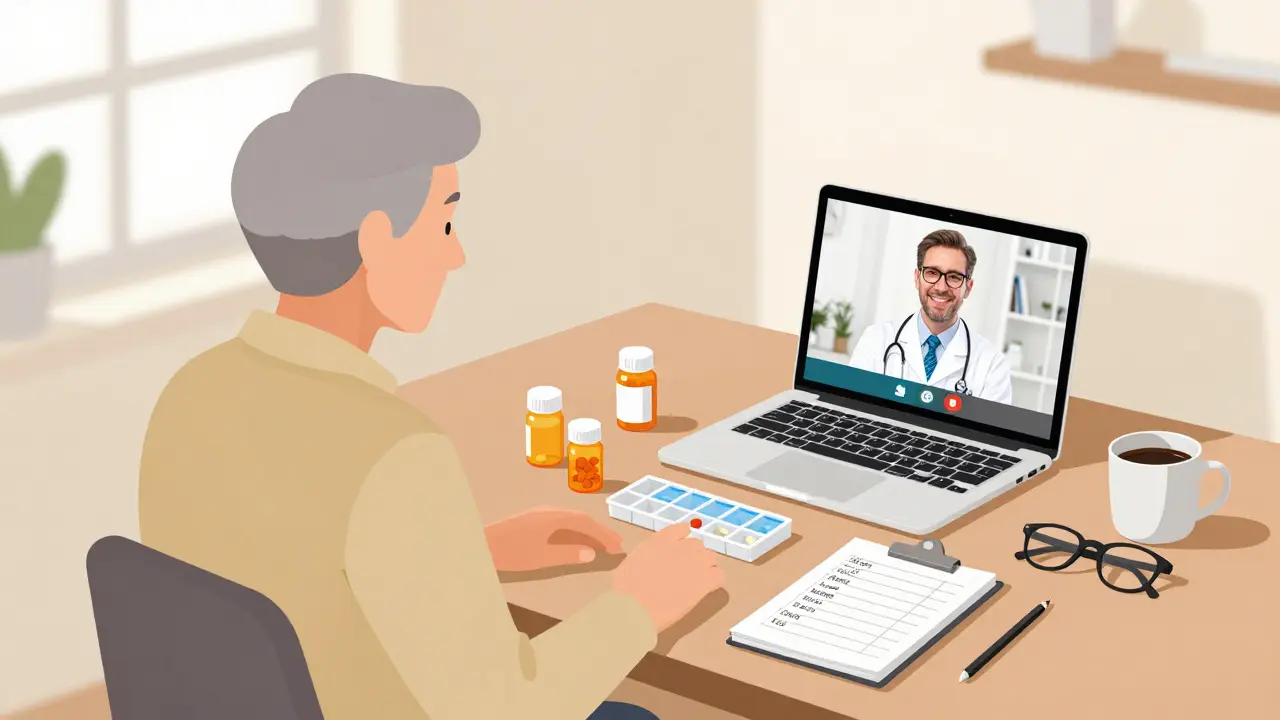
A telehealth medication review is a virtual appointment - usually 30 to 60 minutes long - where a pharmacist or clinical specialist goes through every medication you take. This includes prescriptions, over-the-counter drugs, vitamins, and supplements. They compare your list to your medical records, check for dangerous interactions, and make sure each drug is still necessary. The goal? To cut down on side effects, hospital visits, and unnecessary pills.
This isn’t new. Back in 2019, Medicare started paying for these reviews, and after the pandemic, nearly 80% of U.S. healthcare systems adopted them. They’re especially helpful for older adults on five or more medications. Studies show they reduce bad drug reactions by over 30% compared to regular care. But only if you do your part.
How to Prepare Before Your Appointment
Most people show up to these appointments with a vague idea of what they take. That’s not enough. You need to be ready with exact details.
- Collect every pill bottle, including supplements. Don’t rely on memory. Even if you think you don’t take anything extra, you might be forgetting that daily fish oil or melatonin.
- Write down the name, dose, and time you take each one. If you use a pill organizer, bring it with you. The pharmacist needs to see how you actually take your meds.
- Have your pharmacy records handy. Most pharmacies let you download your full medication history. If you use multiple pharmacies, get a list from each one.
- Check your email or patient portal for any recent lab results - especially kidney or liver function tests. These affect how your body handles drugs.
- Test your tech. Make sure your camera, mic, and internet connection work. Use a platform your provider recommends - like Doxy.me or Zoom for Healthcare. Avoid using public Wi-Fi. A weak signal can ruin the appointment.
A 2023 study found that patients who brought actual pill bottles had 37% more accurate reviews. Why? Because names on labels don’t always match what’s in your chart. One woman thought she was taking "Lisinopril 10 mg," but her doctor had switched her to "Lisinopril/HCTZ 10/12.5 mg" - and she didn’t know the difference.
What to Ask During the Review
You’re not just there to listen. You need to ask smart questions. Here are the top five you should never skip:
- "How are you verifying my medication list against my pharmacy records?" About 43% of medication errors come from mismatched lists. If the pharmacist doesn’t pull your real pharmacy data, they’re guessing.
- "Which of my meds can I stop or reduce?" Many people take drugs that are no longer needed. Blood pressure pills, sleep aids, or pain relievers might be outdated. Ask for a clear reason if something is still prescribed.
- "What are the real side effects I should watch for?" Don’t just get a list. Ask which ones are common, which are dangerous, and what to do if you notice them. For example, dizziness from a blood pressure med might mean you’re on too high a dose.
- "How will you share your recommendations with my doctor?" Only about 63% of telehealth services have a direct, reliable way to send changes to your primary care provider. If they don’t, you’ll have to follow up yourself - and that’s where things fall through the cracks.
- "How will you check on me between appointments?" Most telehealth reviews don’t include ongoing monitoring. Ask if they’ll reach out if your lab results change or if you report a new symptom. Without follow-up, you’re on your own.
One man in Ohio thought his memory issues were aging - until his telehealth pharmacist spotted that he was taking three different drugs that all caused brain fog. He stopped one, and his clarity improved in two weeks.
When Telehealth Reviews Don’t Work
Telehealth isn’t perfect. It’s great for stable conditions like high blood pressure or diabetes, where you just need to tweak doses. But it falls short in some cases:
- If you have dementia or severe depression, a video call might miss signs of confusion or poor adherence.
- If you’re on strong painkillers (like oxycodone), federal rules still require an in-person visit every three months.
- If you’re having new symptoms like swelling, chest pain, or sudden weakness - those need a physical exam, not a screen.
Studies show telehealth reviews are only about 58% effective for complex geriatric cases where physical signs matter. If your pharmacist says they can’t fully assess you over video, trust them. It’s not a failure - it’s knowing your limits.
What Happens After the Review
After the call, you should get a written summary - either by email or through your patient portal. It should list:
- Drugs you’re still taking
- Drugs you should stop
- Drugs that need dose changes
- Next steps - like lab tests or follow-up visits
Don’t assume your doctor already knows what was said. Call your primary care provider’s office and ask if they received the report. If not, send it to them yourself. Many patients miss this step, and then nothing changes.
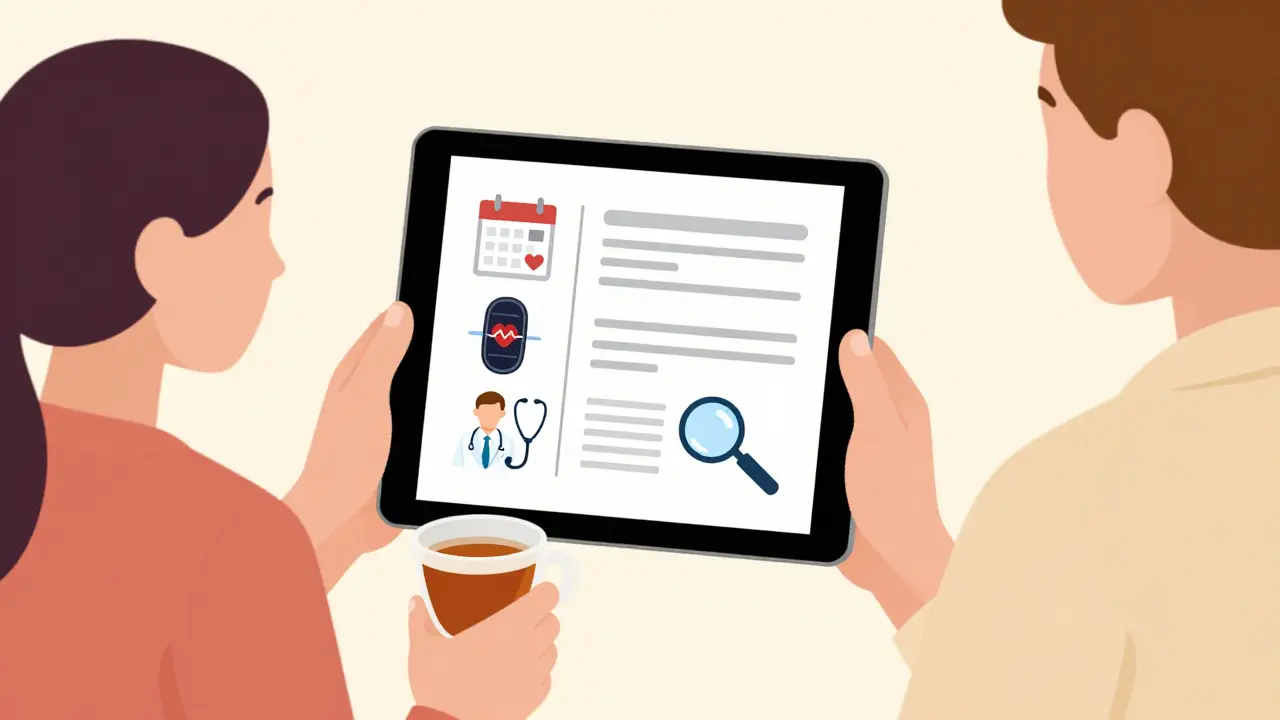
Some systems now connect telehealth reviews to smart pill dispensers or wearable monitors that track heart rate or blood pressure. If your provider offers this, sign up. It turns a one-time review into ongoing safety.
Cost and Insurance Coverage
Medicare covers these reviews under code G2225 - no extra cost if you’re enrolled. Most private insurers do too. But check first. Some plans only pay for reviews tied to chronic conditions like heart disease or diabetes.
Out-of-pocket costs range from $0 to $150, depending on your plan. If you’re paying, ask if the service includes follow-up support. A one-time review with no check-ins isn’t worth much.
What to Do If It Doesn’t Go Well
Technical glitches, rushed appointments, or unclear advice happen. If you feel like the review didn’t help:
- Request a copy of the notes they sent to your doctor.
- Ask for a second opinion - many pharmacies offer free medication reviews in person.
- Use the National Council on Aging’s free medication review tool. It walks you through questions to ask your provider.
- If you had a bad reaction after the review, report it to your provider and to the FDA’s MedWatch program.
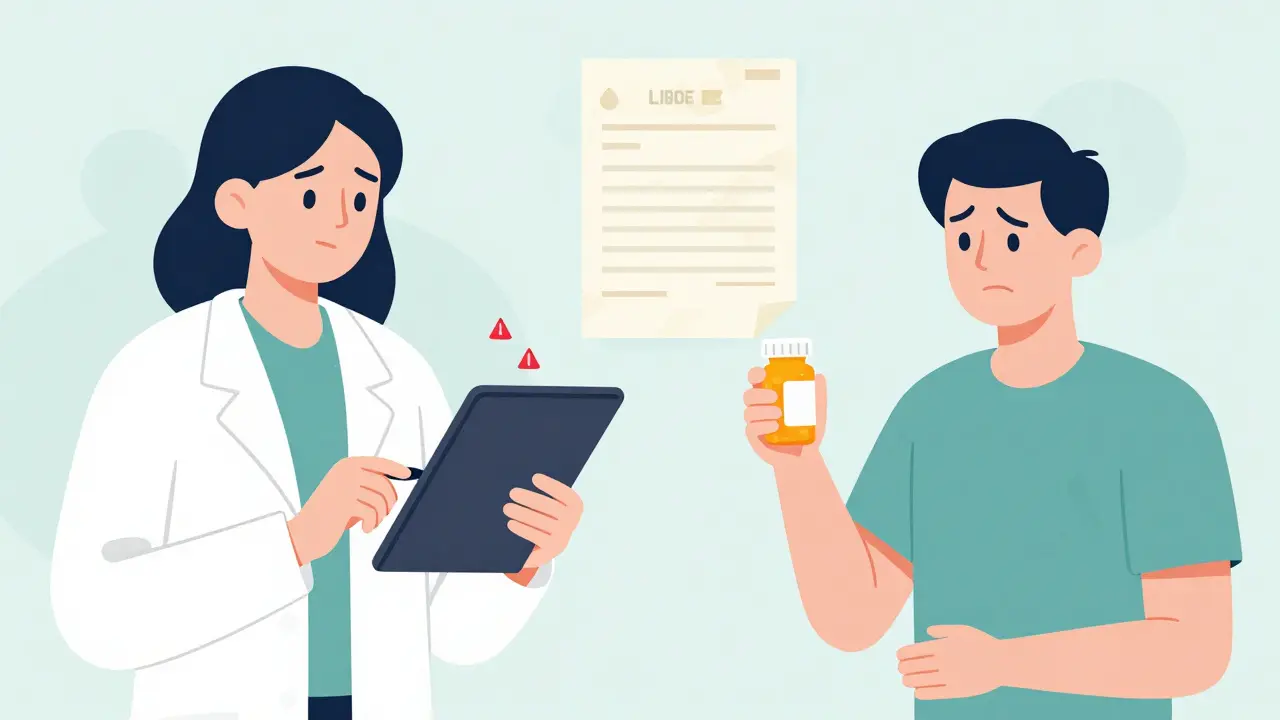
One woman in Florida had her blood thinner dose increased over video. Two days later, she bruised easily and felt dizzy. She called her doctor - the pharmacist had misread her weight. She got the right dose, but only because she acted fast.
Can I do a telehealth medication review without a doctor’s referral?
Yes, in many cases. If you’re on Medicare or have a pharmacy that offers medication therapy management (MTM), you can request a review directly. Some insurers allow self-referrals. Check your plan’s website or call customer service. If you’re not sure, ask your pharmacist - they often know the rules.
Do I need to be tech-savvy for a telehealth review?
Not at all. Most platforms are simple - you just click a link. If you’re unsure, ask for a tech help call before your appointment. Many pharmacies offer 10-minute setup sessions. You can also have a family member join the call to help with the tech side.
What if I’m taking a controlled substance like opioids or Xanax?
You can still have a telehealth review, but federal rules require an in-person visit at least once every three months for Schedule II drugs like oxycodone. For Schedule III-V drugs like Xanax or tramadol, you can manage everything remotely - as long as your provider has a special telemedicine registration. Always confirm what your prescriber’s rules are.
How often should I get a telehealth medication review?
If you’re on five or more medications, aim for at least once a year. If you’ve had a hospital stay, changed doctors, or started a new drug, get one right away. Seniors over 65 should consider reviews every six months - especially if they’ve had falls, memory issues, or new symptoms.
Can a telehealth review help with mental health meds?
Yes - but with limits. A pharmacist can check for interactions, dosing, and side effects. But if you’re on antidepressants or antipsychotics and you’re feeling worse, more confused, or having thoughts of self-harm, you need to see your psychiatrist in person. Telehealth can’t replace a full mental status exam.
Final Tip: Treat It Like a Safety Check
A telehealth medication review isn’t a chore - it’s your safety net. Think of it like an oil change for your body. You wouldn’t skip it for your car. Don’t skip it for your health. Bring your bottles. Ask your questions. Follow up. It’s the easiest way to avoid a hospital visit before it even starts.
gerard najera
January 2, 2026 AT 09:07Medications aren't magic. They're chemicals. And chemicals interact. Always assume the worst until proven otherwise.
Stephen Gikuma
January 2, 2026 AT 15:44They say telehealth is safe but who's really behind the screen? Big Pharma owns the algorithms. They want you on more pills, not fewer. This whole system is a cash grab disguised as care.
Bobby Collins
January 4, 2026 AT 05:29i swear i saw a video of a pharmacist in a basement with 20 monitors and no windows... they're not even real people anymore. just bots feeding us pills through the screen. 🤔
Layla Anna
January 4, 2026 AT 05:36my grandma did this last month and she cried because she realized she'd been taking that sleepy pill for 12 years just because her doctor said so 😭 she stopped it and now she remembers my birthday again. thank you for writing this. 🌸
Heather Josey
January 6, 2026 AT 02:11This is one of the most actionable pieces of healthcare advice I’ve read this year. The emphasis on bringing pill bottles and verifying pharmacy records is critical. Too many patients assume their records are accurate. They’re not. This isn’t just good practice-it’s life-saving protocol.
Donna Peplinskie
January 6, 2026 AT 13:12I just want to say how important it is that we don't forget the human side of this... I mean, yes, the tech and the lists and the labs... but also, the person behind the screen, the one who's scared, the one who's tired, the one who just wants to feel like they're not a walking pharmacy... we need to hold space for that, you know? 🤍
Olukayode Oguntulu
January 8, 2026 AT 08:58The entire telehealth medication review paradigm is a symptomatic manifestation of late-stage neoliberal medicalization. The pharmacological apparatus, now digitized and commodified, reduces existential vulnerability to algorithmic optimization. You’re not managing polypharmacy-you’re optimizing bio-capital efficiency under the guise of safety. The real question isn’t whether you brought your pill bottles-it’s whether you’ve interrogated the ontological violence of the prescribing regime.
jaspreet sandhu
January 8, 2026 AT 17:43People think this is new but in India we've been doing this for decades with local pharmacists who know your whole family history and what your uncle died of and whether your cousin took the same pill and got sick. You don't need a video call. You need someone who remembers your name and your grandma's name and what you ate yesterday. This whole American system is so disconnected it's laughable. You think a screen can replace a man who saw you grow up?
Alex Warden
January 9, 2026 AT 21:01They're pushing this because they don't want you going to a real doctor. Doctors cost money. Pharmacist reviews? Cheap. They'll keep you on meds forever and never fix the root cause. This is how they keep you docile. Don't fall for it.
LIZETH DE PACHECO
January 10, 2026 AT 15:05If you're reading this and you're nervous about your appointment-breathe. You're not alone. Bring your list. Bring your bottles. Bring your questions. You've got this. And if you're scared to speak up? Say 'I need help understanding.' That's all it takes. I'm proud of you already.
Lee M
January 11, 2026 AT 01:39They say 'trust the system' but the system is designed to keep you dependent. The goal isn't health-it's retention. You think they want you off meds? No. They want you on more. The review is just a way to make you feel safe while they keep the machine running.
Kristen Russell
January 11, 2026 AT 18:34My dad did this and they found three meds he didn’t even know he was still on. One was for a heart condition he’d recovered from 8 years ago. He cried. We all did. It’s not about tech-it’s about someone actually looking.
Matthew Hekmatniaz
January 12, 2026 AT 00:10I'm from the U.S. but my brother lives in India. He says their pharmacists know his kids' names, his wife's allergies, and whether he skipped his meds last week because he was feeling down. That kind of care doesn't need a camera. It needs a community. Maybe we're missing that part here.
sharad vyas
January 13, 2026 AT 19:13It's not about the pills. It's about the silence between them. The years we spend taking things we don't understand. The trust we give to strangers in white coats. Maybe the real review isn't of our medications-it's of the belief that someone else knows better than we do.