
Food Interactions: What You Eat Can Change How Your Medications Work
When you take a pill, it doesn’t just disappear into your system—it meets up with everything else in your body, including what you just ate. This is called a food interaction, a change in how a medication works because of something you consumed. Also known as drug-food interaction, it’s not just a footnote in the patient leaflet—it’s a real risk that can lead to side effects, reduced effectiveness, or even hospitalization. Many people don’t realize that grapefruit juice isn’t just a healthy breakfast addition—it can turn a safe dose of simvastatin into a dangerous one, raising your risk of muscle damage. The same goes for dairy products blocking antibiotics like tetracycline or leafy greens thinning out your blood if you’re on warfarin.
These aren’t random quirks. They happen because your body uses the same enzymes and transporters to process both food and drugs. Grapefruit juice, a common culprit in medication interactions, blocks an enzyme called CYP3A4 that breaks down over 50% of oral drugs. That means the drug stays in your blood longer than it should. Probiotics, live bacteria often taken to support gut health during antibiotic treatment, good gut bacteria, need to be spaced hours apart from antibiotics—or they’ll kill each other off before either can do their job. And calcium-rich foods, like milk, cheese, or fortified orange juice, can bind to certain antibiotics and prevent them from being absorbed at all.
It’s not just about avoiding one food. It’s about understanding patterns. Some interactions are immediate, like grapefruit juice and statins. Others build up over time, like vitamin K in spinach slowly undoing the effect of blood thinners. Even coffee, salt, and alcohol can interfere—sometimes in ways you’d never guess. The good news? Most of these risks are avoidable with simple timing, substitution, or a quick chat with your pharmacist. You don’t need to overhaul your diet. You just need to know which foods are playing hide-and-seek with your meds.
Below, you’ll find clear, no-fluff guides on the most common and dangerous food-drug clashes—from why you shouldn’t drink grapefruit juice with your cholesterol pill, to how to time your probiotics so they actually help your gut after antibiotics. You’ll also learn about sulfa allergies that aren’t really allergies, why some generics need special handling, and how to avoid dangerous combos like SSRIs with NSAIDs. These aren’t theory pages. They’re practical checklists written by people who’ve seen what happens when food and medicine collide.
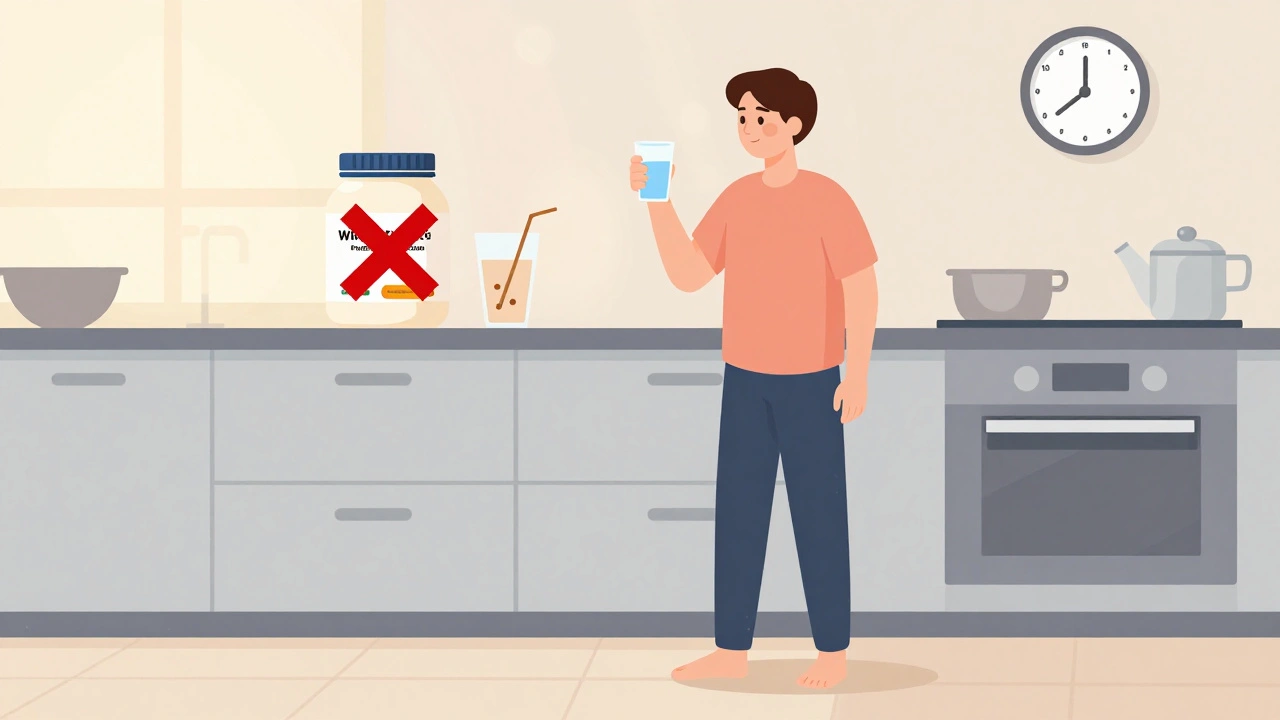
Learn how protein shakes interfere with levothyroxine absorption and what timing strategies actually work to keep your thyroid levels stable without giving up your fitness routine.
Dec, 8 2025