
State Generic Substitution Requirements: Complete 50-State Reference
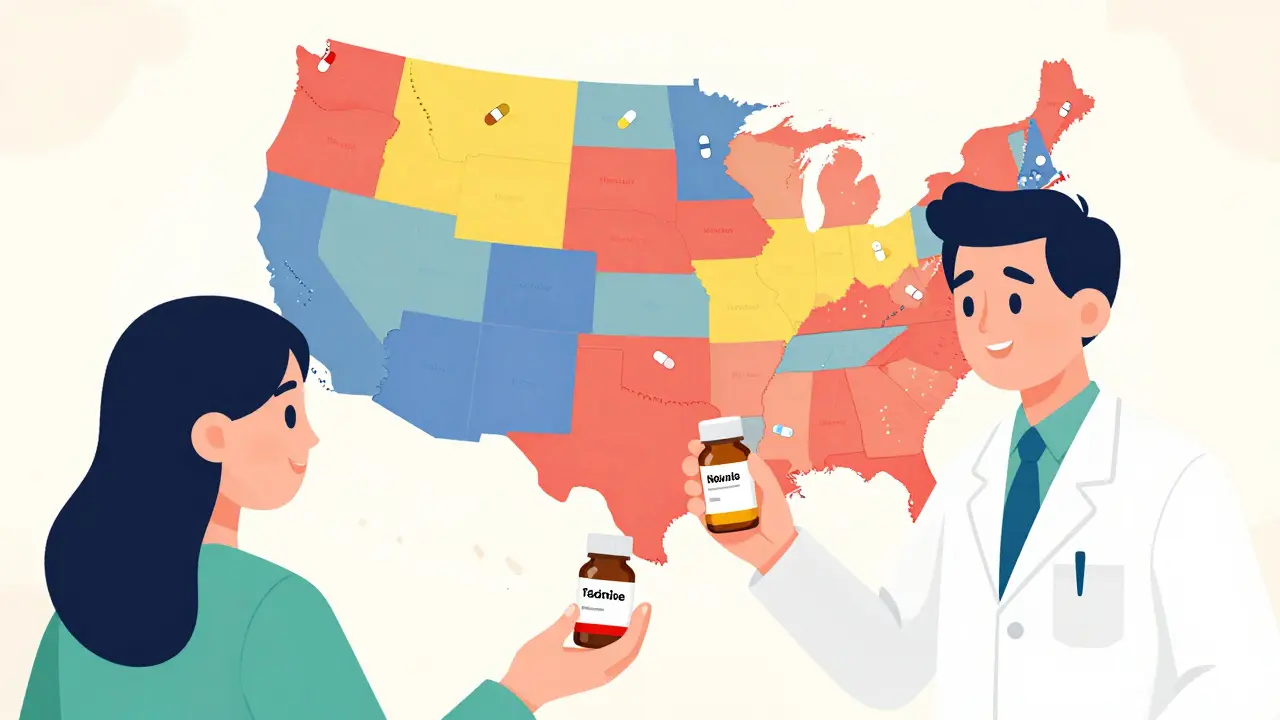
When a pharmacist hands you a pill bottle with a different name than what your doctor wrote on the prescription, it’s not a mistake. It’s generic substitution-a legal process that swaps a brand-name drug for a cheaper, therapeutically equivalent version. But here’s the catch: whether that swap is allowed, required, or blocked depends entirely on which state you’re in. There’s no single federal rule. Each of the 50 states, plus Washington, D.C., has its own law. And those laws aren’t just different-they’re a patchwork of contradictions that confuse pharmacists, delay care, and sometimes put patients at risk.
How Generic Substitution Works (And Why It Matters)
Generic drugs contain the same active ingredients as brand-name drugs. They work the same way. They’re just cheaper-often 80% to 85% less expensive. The FDA requires them to meet the same safety and effectiveness standards. That’s why, in 2023, generics made up 90.2% of all prescriptions filled in the U.S., yet accounted for only 18% of total drug spending. But the law doesn’t always let pharmacists make the switch. Some states force them to substitute. Others say they can, but only if the patient agrees. A few even require the doctor to sign off every time. And then there’s the new frontier: biosimilars. These are complex, biologic drugs-like those used for rheumatoid arthritis or cancer-that mimic expensive brand-name biologics. But because they’re harder to copy, states treat them differently than simple pills.19 States Require Substitution. The Rest Don’t.
Nineteen states have mandatory substitution laws. That means if a generic is available and the prescription doesn’t say "dispense as written," the pharmacist must switch it. These include states like New York, Florida, and Illinois. The goal? Lower costs. Studies show these states see 5-10% higher generic use than states without mandatory rules. That translates to real savings-about $1.2 billion a year across those states alone. The other 31 states (plus D.C.) operate under permissive laws. Pharmacists can substitute, but they’re not required to. In these places, the decision often depends on the pharmacy’s policy, the patient’s preference, or whether the prescriber has blocked it. Some pharmacists in permissive states still substitute routinely because it’s cost-effective. Others hesitate, unsure if they’ll get in trouble if something goes wrong.Consent, Notification, and Liability-The Hidden Rules
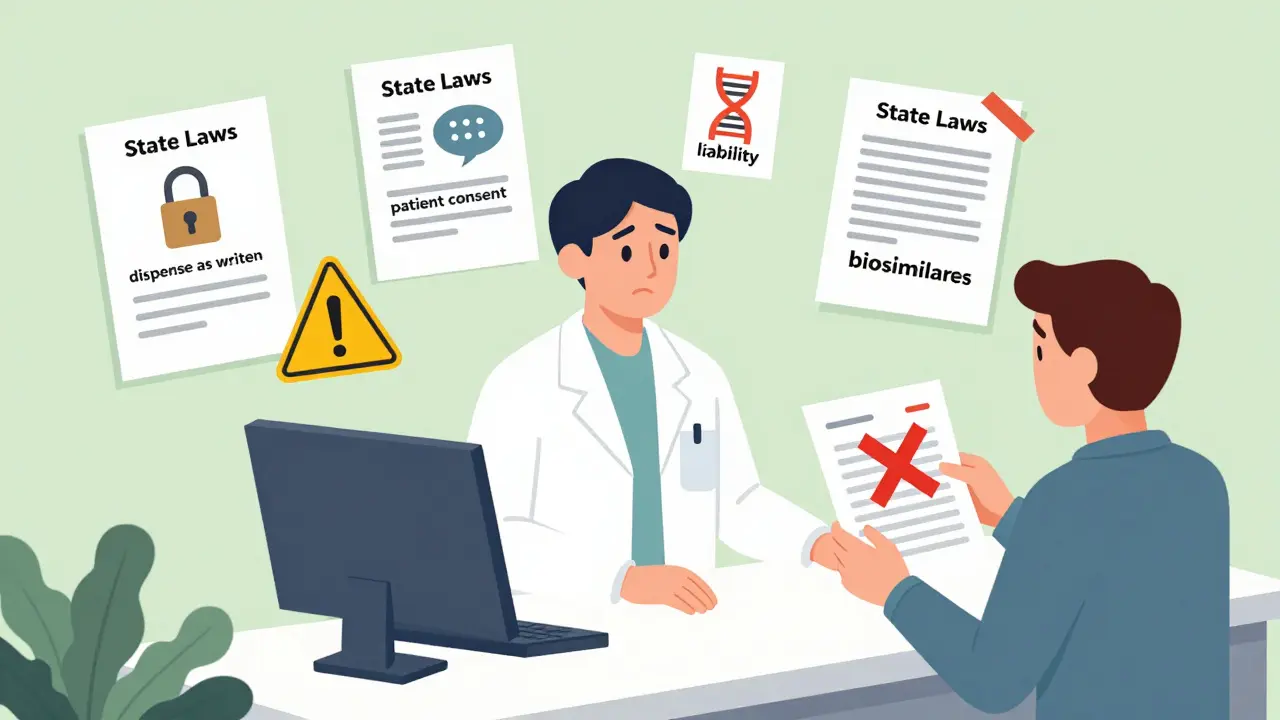
Even in states that allow substitution, there are layers of rules you won’t find on the prescription label. Patient consent: Only 7 states and D.C. require the pharmacist to get your explicit approval before swapping a brand for a generic. That means in 43 states, you might never be told. In states like California and New Jersey, you’ll get a printed notice or a verbal explanation. In most others? Silence. Notification to the prescriber: This is where things get messy. For small-molecule generics (like metformin or lisinopril), only a handful of states require the pharmacist to tell your doctor. But for biosimilars, it’s a different story. Forty-five states (including D.C.) require the pharmacist to notify your doctor within a set time-usually 5 to 10 days. California requires electronic notification that’s accessible through the doctor’s EHR system. Texas requires a written note. Some states allow the prescriber to opt out of notification entirely. Liability protection: If a substitution causes harm, who’s responsible? In 26 states, pharmacists are protected by law as long as they follow the rules. In the other 24, they’re on the hook. That’s why some pharmacists refuse to substitute for high-risk drugs like warfarin, insulin, or seizure medications-even when the generic is FDA-approved and perfectly safe. One pharmacist in Connecticut told a reporter she’d rather lose a sale than risk a lawsuit.Formularies: Positive vs. Negative Lists
Not all generics are treated the same. States use two systems to control which substitutions are allowed:- Positive formulary: Only drugs listed as interchangeable are allowed to be swapped. Think of it like a whitelist. Ohio and Michigan use this system.
- Negative formulary: All generics are allowed unless specifically banned. This is the more common approach. States like Pennsylvania and Georgia use negative formularies, giving pharmacists more flexibility.
Biosimilars: The New Wild West
Biosimilars aren’t just cheaper versions of brand-name drugs. They’re complex biological products made from living cells. Think Humira, Enbrel, or Herceptin. Because they’re harder to replicate, the FDA requires more testing. But states have gone even further. Forty-five states have stricter rules for biosimilars than for regular generics. Most require:- Physician notification
- Patient notification
- Record-keeping
- Product tracing
What This Means for Patients
If you’re on a generic drug and your refill comes with a different brand name, you might not even notice. But if you’re switched to a biosimilar without being told, you could be in for a surprise. Some patients report side effects after a switch-even when it’s clinically appropriate. A 2021 study from the Institute for Safe Medication Practices found that 22% of substitution-related errors happened in states with poor notification systems. Patients in states with consent requirements feel more in control. A 2023 University of Michigan poll showed 68% of patients in those states felt informed. In states without consent, only 42% did. But here’s the flip side: mandatory substitution can save lives. For people on fixed incomes, switching to a $10 generic instead of a $300 brand-name drug means they actually take their medication. One study found that in mandatory states, adherence rates for chronic disease drugs were 12% higher.What This Means for Pharmacists
Pharmacists are on the front lines. They’re expected to know the rules for 51 different jurisdictions. Many spend 8-10 hours a month just checking state laws. A 2023 survey found 63% of pharmacists rank navigating substitution rules as one of their top three administrative burdens. Nearly half have made at least one substitution error in the past year. In multi-state telepharmacy operations, the problem is worse. One pharmacist on Reddit said they spend 15-20 minutes a day just verifying rules for patients in different states. That’s time they could spend counseling patients. Some pharmacies use software like ScriptPro SP 200, which updates state rules in real time. Those pharmacies report 37% fewer errors. But independent pharmacies often can’t afford these tools. They’re left relying on outdated PDFs from state boards or guesswork.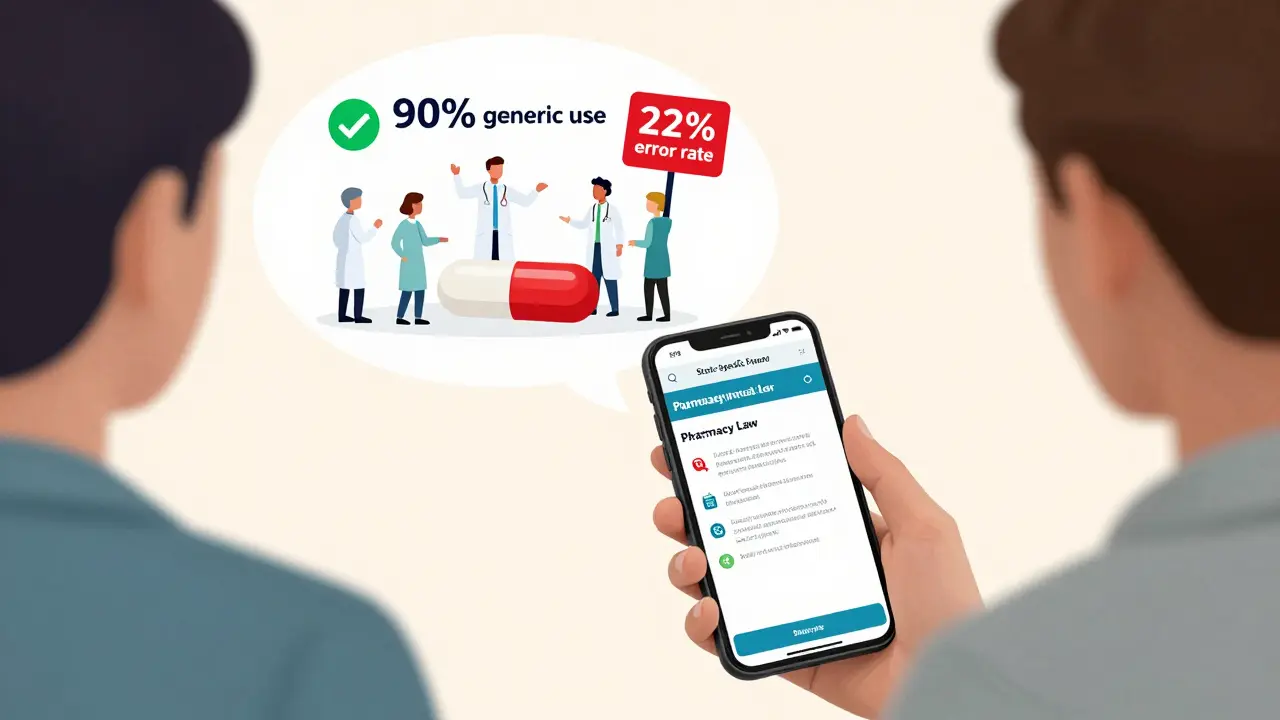
What’s Changing? The Push for Standardization
The system is broken. The Congressional Budget Office estimates that if all states had consistent rules, we could save $14.3 billion over 10 years. That’s why the National Association of Boards of Pharmacy launched a reform project in 2024 to reduce 51 different laws down to three regional models by 2026-2027. The FDA is also pushing for alignment. In February 2024, Commissioner Robert Califf called state-level variation the "single greatest barrier" to biosimilar adoption. Nine states-Texas, Illinois, Pennsylvania among them-passed laws in 2023-2024 to align their biosimilar rules with small-molecule rules. But change is slow. Pharmacy associations are divided. Chain pharmacies support standardization. Independent pharmacies fear losing control. Doctors worry about losing authority. Patients are caught in the middle.What You Can Do
If you’re on a medication that’s been switched:- Check the label. Does it say "generic" or "substituted"?
- Ask your pharmacist: "Was this switched? Is it the same?"
- If you’re on a biologic, ask: "Was I notified? Can I get a copy of the notice?"
- If your doctor wrote "dispense as written," that overrides state law. Keep that prescription.
- Know your state’s rules. Visit your state board of pharmacy website. They’re required to post them.
Where to Find Your State’s Rules
The National Association of Boards of Pharmacy (NABP) offers a free, updated map of all state substitution laws. But it’s not enough. Many pharmacists say it lacks detail on biosimilars. For deeper info, check:- Your state’s Board of Pharmacy website
- Your state’s pharmacy association (e.g., California Pharmacists Association)
- FDA Orange Book for therapeutic equivalence ratings
Can a pharmacist substitute my brand-name drug without telling me?
Yes, in 44 states and D.C., pharmacists are not required to notify you before substituting a generic drug. Only 7 states and D.C. require explicit patient consent. However, pharmacists must still follow state-specific rules on therapeutic equivalence and labeling. Always check the prescription label and ask if you’re unsure.
Are biosimilars treated the same as regular generics?
No. In 45 states and D.C., biosimilars face stricter rules than small-molecule generics. These include mandatory physician and patient notification, electronic record-keeping, and product tracing. Only 11 states treat biosimilars the same as regular generics. This is because biosimilars are more complex and harder to replicate than pills.
What does "dispense as written" mean on a prescription?
"Dispense as written" (DAW) means the prescriber has specifically requested that no substitution be made, even if a generic is available. This overrides state substitution laws. Pharmacists must fill the prescription exactly as written unless the prescriber later changes it. This is common for drugs with narrow therapeutic windows, like warfarin or thyroid medication.
Why do some pharmacists refuse to substitute certain drugs?
Some pharmacists refuse substitutions for high-risk drugs like anticoagulants, seizure medications, or insulin-even when a generic is FDA-approved-because their state doesn’t offer legal liability protection. In 24 states, pharmacists can be sued if a substitution causes harm, even if they followed all rules. This fear leads to unnecessary refusals and higher costs for patients.
Can I request a brand-name drug even if a generic is available?
Yes. In every state, you can ask for the brand-name drug even if a generic is available. However, your insurance may charge you a higher copay. Some states require the pharmacist to inform you of the cost difference. If you’re concerned about switching, speak up-your right to choose is protected, even in mandatory substitution states.
How often do substitution errors happen?
About 41% of pharmacists report making at least one substitution-related error in the past year, according to the National Community Pharmacists Association. Most errors occur in states with complex rules, poor EHR integration, or no liability protection. Common mistakes include substituting a non-interchangeable drug, failing to notify a prescriber, or missing a "dispense as written" instruction.
Is there a national database for generic substitution rules?
The National Association of Boards of Pharmacy (NABP) maintains a free online resource that maps all 51 state laws. However, it’s not always detailed enough for complex cases like biosimilars. Many pharmacists supplement it with state board websites and pharmacy association guides. No single federal database exists, and state laws change frequently-so always verify the most current version.
Joanne Smith
December 28, 2025 AT 05:58So let me get this straight: in 44 states, I can be handed a $300 drug labeled as a $10 generic and never told? And the pharmacist’s liability? Only protected in 26 states. So they’d rather lose a sale than risk a lawsuit… but I’m supposed to trust them? 😏
Meanwhile, my insulin costs more than my rent. Thanks, patchwork.
Prasanthi Kontemukkala
December 29, 2025 AT 01:10This is such an important post. I work with patients in India who struggle to afford medicines, and I see how confusing this is even in places with simpler systems.
Having clear rules helps everyone - patients, pharmacists, doctors. Maybe we can learn from each other? Global health should be less like a legal maze and more like a shared mission.
Alex Ragen
December 30, 2025 AT 02:11Ah, yes - the American healthcare system: where the FDA certifies equivalence, but the states, in their infinite wisdom, decree that ‘equivalence’ must be preceded by a notarized affidavit, a handwritten note from your priest, and a 17-page consent form written in Comic Sans.
It’s not regulation - it’s performative bureaucracy. A postmodern farce masquerading as public policy. The only thing more absurd than the laws? The fact that anyone still believes they’re rational.
Lori Anne Franklin
December 30, 2025 AT 07:49omg i had no idea this was so wild
my pharmacist just swapped my blood pressure med and i thought it was just a different brand
turns out i was never even told??
so many people are gonna get hurt if this keeps up
pls someone fix this
Bryan Woods
December 30, 2025 AT 11:22This is a well-researched and comprehensive overview of a deeply fragmented regulatory landscape. The data on adherence rates and cost savings in mandatory substitution states is particularly compelling.
It is evident that standardization would yield substantial systemic benefits, both economically and clinically. The burden on pharmacists, as highlighted, is unsustainable without technological intervention.
Ryan Cheng
December 31, 2025 AT 22:05Pharmacists are the unsung heroes here. They’re expected to be legal scholars, medical experts, and customer service reps - all while juggling 51 different rulebooks.
Anyone who’s ever worked retail knows how hard it is to keep up with one set of rules. Imagine doing it across state lines every 10 minutes.
Let’s give them better tools. And maybe, just maybe, stop blaming them when the system breaks.
Jeanette Jeffrey
January 1, 2026 AT 06:57Oh wow. So you’re telling me the system is so broken that patients are basically guinea pigs in a state-by-state drug roulette?
And the only people who benefit are the ones who can afford to pay full price for brand names?
Classic America. You don’t fix a problem - you just make it more complicated and then charge people to understand it.
Shreyash Gupta
January 2, 2026 AT 11:46But… what if generics aren’t actually the same? 🤔
I heard from my cousin’s friend’s neighbor who works at a lab in Bangalore that generics sometimes have different fillers… and those can cause allergies?
Also, why do we even have brand names if they’re just the same? 🤷♂️💊
Ellie Stretshberry
January 3, 2026 AT 23:35i never knew this was a thing
my grandma gets her meds from the same place every week
she just takes what they give her
she’s scared to ask questions
we need to fix this
she deserves to know what she’s taking
wendy parrales fong
January 5, 2026 AT 02:14it’s crazy how something so simple could be so messed up
we all just want to get better and not go broke doing it
why can’t we all just agree on the same rules?
people are suffering because of paperwork
we can do better
christian ebongue
January 6, 2026 AT 10:5945 states need to notify docs about biosimilars? Bro.
They’re pills. Not rocket science.
Fix the damn system.
jesse chen
January 7, 2026 AT 10:13As someone who works in EHR integration, I can confirm: the lack of standardized data fields for substitution notifications is a nightmare.
Every state has its own format, its own timing, its own API requirements (or lack thereof).
It’s not just legal chaos - it’s technical chaos. And it’s preventing automation from saving lives.
Dan Alatepe
January 8, 2026 AT 02:25YOOOOO this is wild 😱
imagine being handed a drug and not even knowing if it’s the same thing you were prescribed…
and then your body reacts and you’re like ‘wait… what did they give me??’
this is a horror movie
but real
and it’s happening to your grandma
someone please fix this before someone dies 💔