
SSRI Side Effects: What to Expect from Mild to Severe
SSRI Side Effect Comparison Tool
Select an SSRI
Select an SSRI to view side effects
When you start an SSRI for depression or anxiety, you’re not just hoping for better moods-you’re also signing up for a list of possible side effects. Some are mild and fade quickly. Others stick around, change your life, or even scare you. The truth? SSRI side effects are more common than most doctors admit, and they’re not always talked about before you take that first pill.
What Are SSRIs, Really?
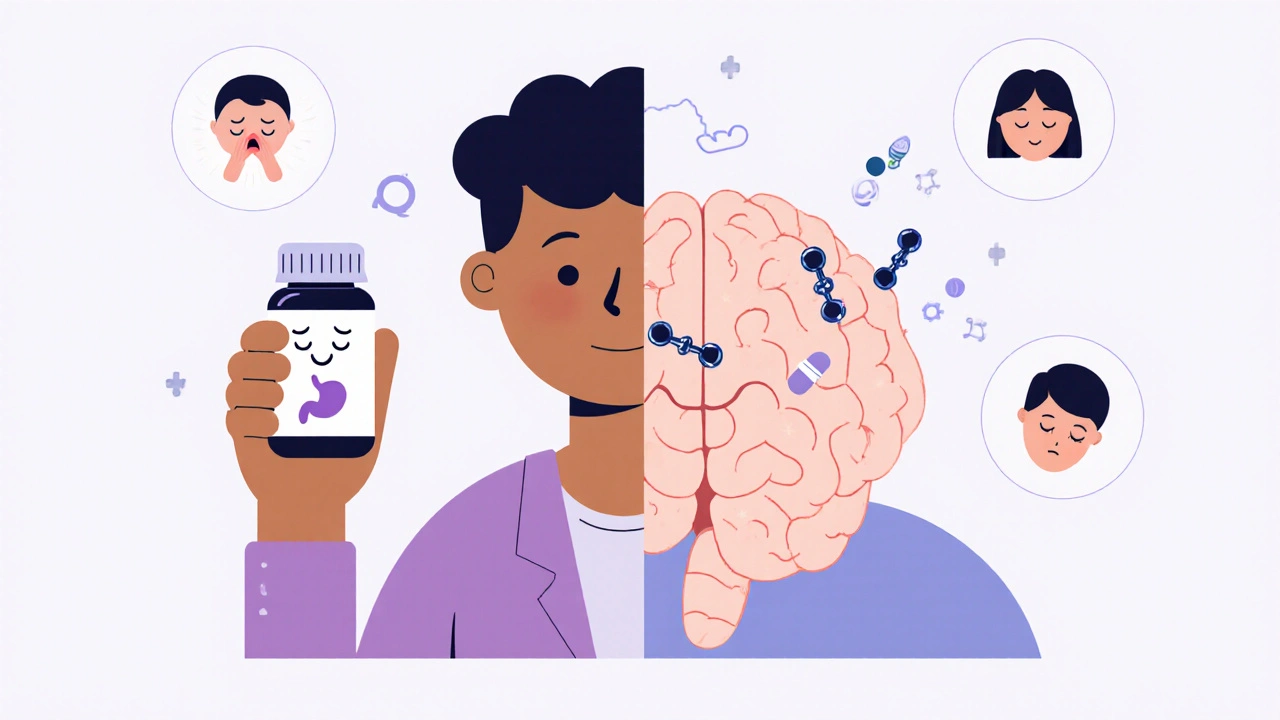
SSRIs stand for Selective Serotonin Reuptake Inhibitors. They’re the most prescribed antidepressants in the U.S., with brands like Zoloft, Prozac, Lexapro, and Paxil filling millions of prescriptions every year. They work by blocking serotonin from being sucked back up too fast in your brain, leaving more of it available to help stabilize mood, reduce anxiety, and improve sleep. But here’s the catch: serotonin isn’t just about mood. It’s involved in digestion, sex, sleep, muscle control, and even how your body regulates sodium. That’s why changing serotonin levels doesn’t just lift your spirits-it can mess with your stomach, your sex drive, your weight, and even your heart rate.Most Common Mild Side Effects (And Why They Happen)
In the first two weeks, about half of people on SSRIs feel something off. These aren’t rare-they’re normal. And most fade.- Nausea and upset stomach - Happens in 50% of users. It’s not just "feeling queasy." It’s actual vomiting, bloating, or diarrhea. Why? Serotonin receptors in your gut are flooded before your brain adjusts. Taking the pill with food cuts this risk by 40%.
- Drowsiness or fatigue - Around 53% report feeling sleepy. Some SSRIs like paroxetine are worse than others. This usually improves in 2-4 weeks. If it doesn’t, moving your dose to the morning helps.
- Headache - Especially common with escitalopram. It’s not a migraine, but a dull, constant pressure. Often gone by week three.
- Dry mouth - Affects 19%. Not dangerous, but annoying. Sipping water, chewing sugar-free gum, or using saliva substitutes helps.
- Insomnia - Happens in 16%. Ironically, while some people feel sleepy, others can’t sleep. Fluoxetine is more likely to cause this than sertraline.
Sexual Dysfunction: The Silent Problem
If you ask a doctor about SSRI side effects, they might mention nausea or drowsiness. But they rarely lead with this: sexual dysfunction affects up to 70% of long-term users. It’s not just "lower libido." It’s:- Loss of interest in sex
- Delayed or absent orgasm
- Difficulty getting or keeping an erection
- Reduced genital sensation
Weight Gain: It’s Not Just "Eating More"
Many assume weight gain on SSRIs means they’re comfort-eating. It’s not that simple. About 49% of users gain weight, often slowly - 5 to 10 pounds over six months. Sertraline and paroxetine are the worst offenders. Fluoxetine tends to suppress appetite early on, but many users gain weight later. Why? SSRIs affect receptors that control hunger, metabolism, and how your body stores fat. A 2023 meta-analysis showed people on SSRIs gained more weight than those on other antidepressants, even when diet and exercise stayed the same. The good news? People who added structured exercise and mindful eating gained 3.2 kg (7 pounds) less over six months than those who didn’t. It’s not a cure, but it helps.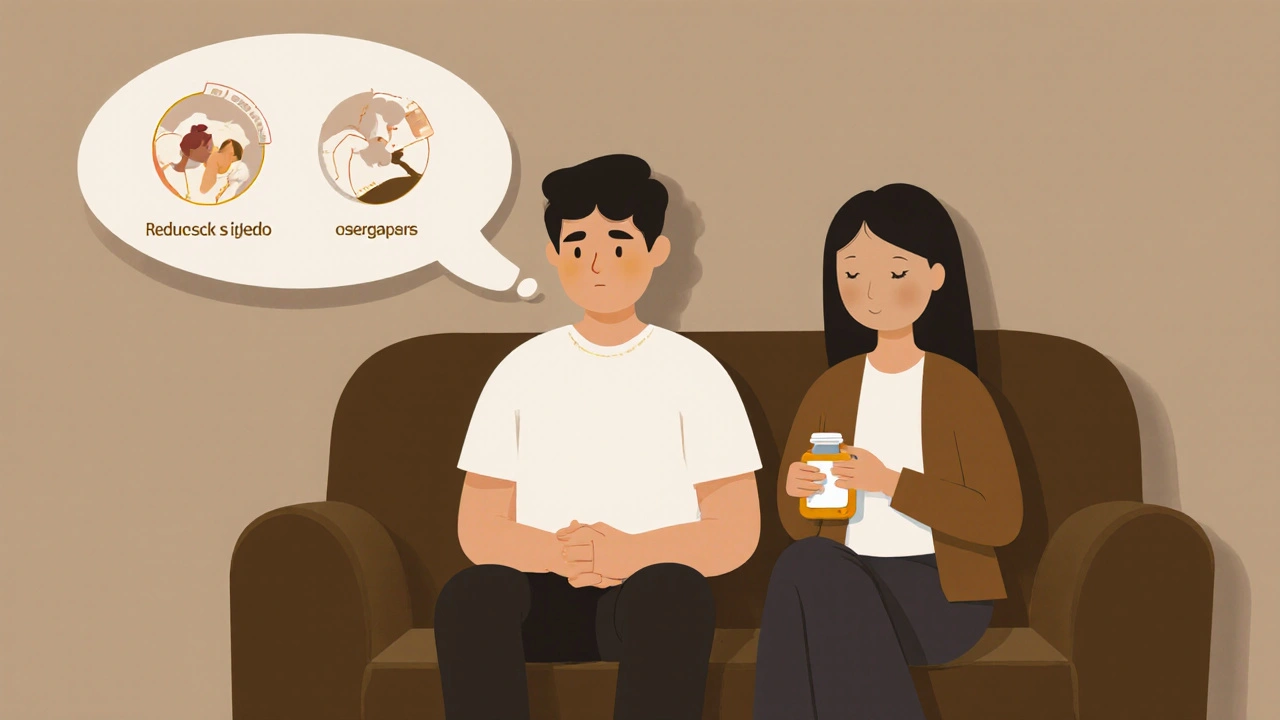
Serious Side Effects You Can’t Ignore
Most side effects fade. These don’t. They need medical help.Serotonin Syndrome
This is rare - less than 1% of users - but deadly if missed. It happens when serotonin builds up too much, usually from mixing SSRIs with other drugs like tramadol, MDMA, or even St. John’s Wort. Symptoms start with:- Rapid heart rate
- Sweating
- Tremors
- Agitation
- High fever
- Seizures
- Loss of consciousness
Hyponatremia (Low Sodium)
SSRIs cause more low sodium than any other antidepressant. It’s most common in older adults, especially women over 65. Symptoms: confusion, nausea, headaches, muscle weakness, seizures. In severe cases, it can lead to coma. A 2021 study found 3% of elderly SSRI users developed dangerous hyponatremia within the first month. That’s why doctors check blood sodium levels early - especially if you’re on paroxetine or fluoxetine.Extrapyramidal Symptoms (EPS)
These are movement problems that look like Parkinson’s. They’re rare, but real.- Akathisia - A feeling of inner restlessness. You can’t sit still. It’s often mistaken for anxiety.
- Dystonia - Involuntary muscle spasms, especially in the neck or eyes.
- Parkinsonism - Shaking, slow movement, stiff muscles.
Severe Skin Reactions
Cases of Stevens-Johnson syndrome or toxic epidermal necrolysis are extremely rare - fewer than 1 in 10,000 - but they’re life-threatening. Signs: blistering skin, painful red rash, peeling skin, fever. If you develop this within the first few weeks, stop the medication and get emergency care.Why Some SSRIs Are Worse Than Others
Not all SSRIs are created equal. Their side effect profiles vary.| Medication | Best For | Worst Side Effects | Discontinuation Risk |
|---|---|---|---|
| Citalopram (Celexa) | General anxiety, mild depression | Heart rhythm changes at high doses | Low |
| Escitalopram (Lexapro) | Depression, panic disorder | Headache, dizziness, memory issues | Low |
| Sertraline (Zoloft) | OCD, PTSD, social anxiety | Weight gain, diarrhea, low appetite | Low |
| Fluoxetine (Prozac) | Long-term use, bulimia | Insomnia, weight gain later, delayed onset | Low |
| Paroxetine (Paxil) | GAD, panic disorder | Sexual dysfunction, weight gain, drowsiness | High |
| Fluvoxamine (Luvox) | OCD | Nausea, dizziness, high discontinuation rate | Very High |
Discontinuation Syndrome: The Withdrawal You Didn’t Expect
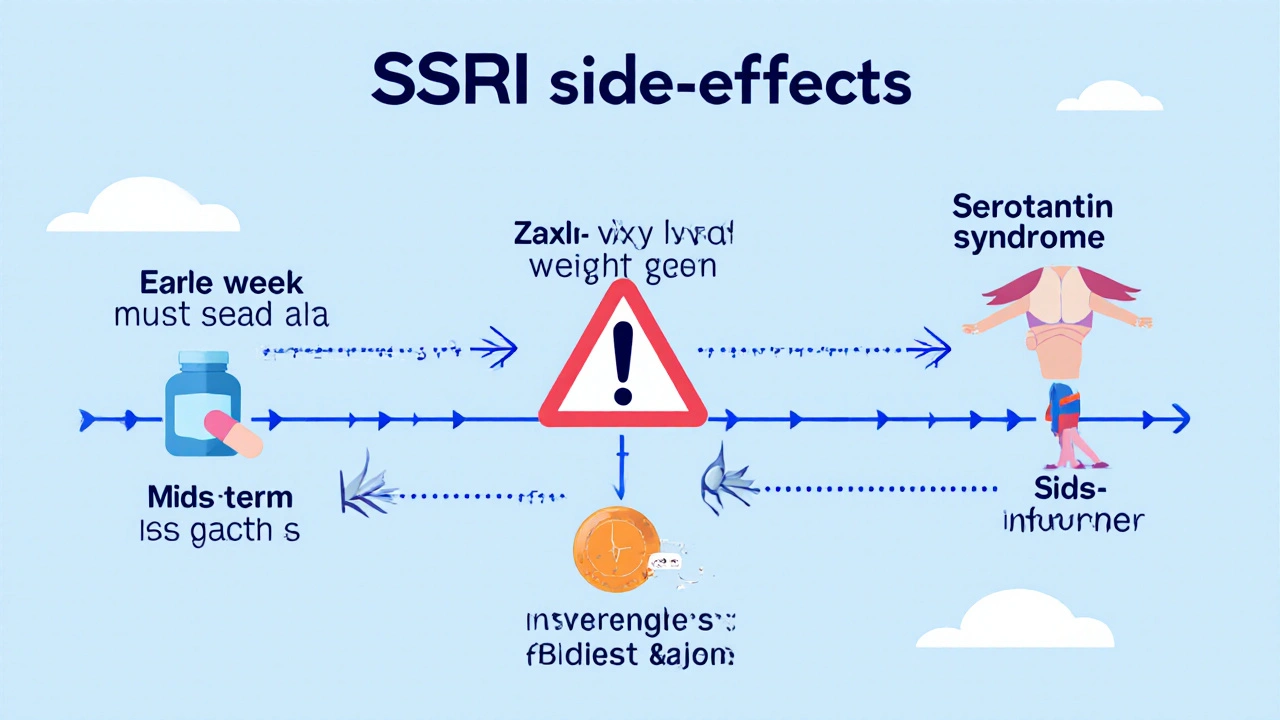
If you stop an SSRI cold turkey, you might feel like you’re coming down with the flu - but worse. Symptoms include:- Dizziness
- Electric shock sensations ("brain zaps")
- Nausea
- Anxiety
- Insomnia
- Irritability
Real Numbers: How Many People Quit Because of Side Effects?
A 2022 NAMI survey found 31% of people stopped their first SSRI within three months. Why?- 38% - Nausea, diarrhea
- 29% - Sexual dysfunction
- 22% - Sleep problems
- 11% - Weight gain
What Can You Do About It?
You don’t have to suffer. Here’s what works:- Take it with food - Reduces nausea by up to 60%.
- Take it in the morning - Helps with drowsiness and insomnia.
- Don’t skip doses - Even if you feel worse, stopping abruptly makes side effects worse.
- Track your symptoms - Write down what you feel, when, and how bad. Bring it to your doctor.
- Ask about alternatives - Bupropion, SNRIs, or therapy might be better for you.
- Consider pharmacogenetic testing - Some clinics now test your genes to predict if you’re likely to have side effects.
The Future: Better SSRIs Are Coming
Pharmaceutical companies aren’t ignoring the problem. One new SSRI in Phase III trials, Lu AF35700, shows 37% less sexual dysfunction than current options. That’s huge. The FDA also updated SSRI labels in 2023 to warn about long-term metabolic risks - including insulin resistance and type 2 diabetes. It’s not common, but it’s real. Mental health advocates are pushing for better education. NAMI’s "Know Your Options" campaign helped 22% more people report side effects to their doctors. That’s progress.Final Thought: Side Effects Aren’t a Bug - They’re a Feature
SSRIs aren’t magic. They’re powerful drugs that change your biology. The side effects aren’t random accidents. They’re direct results of how they work. The goal isn’t to avoid all side effects. It’s to manage them so they don’t stop you from getting better. If one SSRI doesn’t work, another might. If side effects are too much, there are other treatments. You’re not broken for having side effects. You’re human. And you deserve a treatment that works - without costing you your quality of life.How long do SSRI side effects last?
Most mild side effects like nausea, headache, and drowsiness start within the first week and fade within 2 to 6 weeks. Sexual dysfunction and weight gain can last months or longer. If side effects persist beyond 8 weeks, talk to your doctor about adjusting your dose or switching medications.
Can SSRIs cause permanent side effects?
In rare cases, yes. Some people report persistent sexual dysfunction (PSSD) even after stopping SSRIs, though research is still ongoing. Other rare cases involve movement disorders or metabolic changes that may not fully reverse. Most side effects are temporary, but if you notice lasting changes, get evaluated by a specialist.
Do all SSRIs cause weight gain?
No. While about half of users gain weight, some SSRIs are more likely to cause it than others. Paroxetine and sertraline are top offenders. Fluoxetine may cause initial weight loss, but many gain weight later. Citalopram and escitalopram tend to have the least impact on weight.
Is it safe to take SSRIs with alcohol?
It’s not recommended. Alcohol can worsen drowsiness, dizziness, and depression. It also increases the risk of serotonin syndrome if combined with other medications. Even moderate drinking can reduce the effectiveness of SSRIs and make side effects worse.
Can I stop SSRIs if side effects are too bad?
Don’t stop suddenly. Quitting cold turkey can cause withdrawal symptoms like brain zaps, nausea, and anxiety. Instead, talk to your doctor. They can help you taper slowly - usually over several weeks - to reduce discomfort and avoid relapse.
Peter Axelberg
November 30, 2025 AT 03:45Man, I remember starting Lexapro and thinking I was dying. Nausea so bad I’d skip breakfast just to avoid the pill. Then the drowsiness hit - I’d nap on the couch at 3 PM like I was 80. But here’s the thing: by week five, it just… stopped. Like my body finally got the memo. I didn’t quit. I didn’t panic. I just waited. And now? I’m functioning like a normal human again. No brain zaps, no weight gain, no weird tingling in my fingers. It’s not magic. It’s biology adjusting. And yeah, sex drive took a hit - but I’ve learned to live with it. Better than being suicidal, honestly.
Side note: taking it with food? Game changer. I eat a banana before I swallow. Simple. No drama.
Also - don’t listen to people who say "just push through." Some stuff needs to be addressed. But most of it? Just give it time.
Monica Lindsey
December 1, 2025 AT 21:4870% sexual dysfunction? Pathetic. If you can’t handle a little numbness while your brain heals, maybe you shouldn’t be on antidepressants at all. This isn’t a spa day.
jamie sigler
December 2, 2025 AT 22:02Yeah, I got the whole package: nausea, insomnia, zero libido, and then the weight gain. Took me six months to realize I was just… not me anymore. I didn’t quit. I just stopped caring. Now I’m on Wellbutrin. No brain zaps. No shame. Just… me. But man, I wasted so much time pretending it was worth it.
Bernie Terrien
December 3, 2025 AT 12:22SSRIs are serotonin sledgehammers. You crack open the serotonin vault and expect the brain to handle it like a gentle breeze? Nah. It’s like dumping a gallon of diesel into a Prius and wondering why it sputters. The side effects aren’t bugs - they’re the sound of a neurochemical ecosystem screaming as it recalibrates. And yeah, paroxetine? That’s the diesel truck with no muffler. Stay away unless you’re ready to pay the price.
Jennifer Wang
December 5, 2025 AT 04:12It is imperative to emphasize that discontinuation syndrome is not indicative of addiction, but rather a neuroadaptive response to abrupt serotonergic withdrawal. Tapering protocols, as outlined by the American Psychiatric Association, remain the gold standard for minimizing symptom severity. Furthermore, pharmacogenetic testing, while not universally accessible, has demonstrated predictive utility in identifying individuals at heightened risk for adverse effects, particularly CYP2D6 poor metabolizers. Clinicians are strongly advised to engage in shared decision-making and to document baseline side effect profiles prior to initiation.
stephen idiado
December 6, 2025 AT 18:45Western medicine again. You poison the system, then call it treatment. In Nigeria, we use herbal tonics, meditation, and community. No pills. No brain zaps. No weight gain. Just balance. You call this science? I call it pharmaceutical colonialism.
Subhash Singh
December 7, 2025 AT 11:41Thank you for this comprehensive analysis. I am particularly interested in the metabolic implications mentioned in the FDA label update. Could you elaborate on the proposed mechanisms linking SSRI use to insulin resistance? Is this mediated through serotonergic modulation of hypothalamic appetite centers, or through peripheral adipocyte receptor activation? I would appreciate any references to longitudinal cohort studies.
Andrew Keh
December 7, 2025 AT 23:32I appreciate how honest this is. I was on Zoloft for a year. The weight gain was the hardest part - not because I was eating more, but because my body just held onto everything. I switched to therapy and it helped more than I expected. No judgment here. If SSRIs aren’t working for you, that doesn’t mean you’re weak. It just means your body needs something else.
Peter Lubem Ause
December 8, 2025 AT 13:33As someone who’s been on SSRIs for over a decade and helped dozens of friends navigate this journey, I want to say: you’re not alone. The stigma around side effects is real, but silence is what keeps people suffering. I started on Paxil - sexual dysfunction wrecked my relationship. I switched to Celexa, added daily walks, and started journaling. The weight gain slowed. The libido returned slowly. It wasn’t perfect, but it was manageable. And here’s the truth: most doctors don’t know this stuff because they’re rushed. So you have to be your own advocate. Track your symptoms. Bring data. Ask for alternatives. You deserve to feel better - not just less sad. And if one drug fails? Try another. There’s no shame in finding what fits your body. You’re not broken. You’re just adapting. Keep going.