
Severe Bleeding on Medications: What to Watch For and How to Respond
HAS-BLED Bleeding Risk Assessment
Your Personal Bleeding Risk Assessment
This tool calculates your HAS-BLED score, a validated clinical assessment used by healthcare providers to evaluate bleeding risk in patients taking blood thinners like warfarin or DOACs (apixaban, rivaroxaban, etc.).
Each factor you check adds 1 point to your score. Scores of 3 or higher mean you should discuss a safety plan with your doctor.
Check all factors that apply to you:
Your Bleeding Risk Score
Score: 0
Important Medical Disclaimer
This tool provides a risk assessment based on clinical factors, but it is not a substitute for professional medical advice.
Always consult with your healthcare provider for personalized recommendations. If you experience any signs of severe bleeding (like prolonged nosebleeds, black stools, or severe headache), seek emergency medical care immediately.
When you take a blood thinner-whether it’s warfarin, apixaban, rivaroxaban, or dabigatran-you’re trading one risk for another. These drugs prevent strokes and blood clots, but they also make you more likely to bleed. And when that bleeding becomes severe, it can turn life-threatening in minutes. You might not realize it until it’s too late. That’s why knowing the signs, understanding your risk, and acting fast isn’t just advice-it’s survival.
Why Blood Thinners Cause Severe Bleeding
Blood thinners don’t actually thin your blood. They slow down the clotting process. Warfarin blocks vitamin K, while DOACs like apixaban and rivaroxaban target specific clotting factors. That’s good if you have atrial fibrillation or a replaced heart valve. But it’s dangerous if you fall, cut yourself, or develop an internal bleed. The body can’t seal the leak. According to the Mayo Clinic, about 3.1% of patients on DOACs have a major bleeding event in the first year. That might sound low, but when you’re one of them, it’s everything. And the risk isn’t random. It spikes in the first 90 days. Half of all serious bleeds happen within the first three months. Why? Because your body is still adjusting, your dose might be off, or you’re taking other meds that interact with the blood thinner.Who’s at Highest Risk?
Not everyone on blood thinners bleeds. But some people are far more likely to. Here’s who needs extra caution:- People over 75: Bleeding rates jump from 1.25 per 100 treatment-years under age 60 to over 4 per 100 in those over 80.
- Those with kidney problems: Poor kidney function increases bleeding risk by more than double. DOACs are cleared through the kidneys, so if they’re not working well, the drug builds up.
- Patients on multiple blood thinners: Taking aspirin or clopidogrel with a DOAC doubles your bleeding risk.
- People with prior bleeding: If you’ve had a GI bleed, brain bleed, or major bruising before, your chance of another is over four times higher.
- Those with uncontrolled high blood pressure: High pressure bursts weak blood vessels. Combine that with a blood thinner, and even a small tear can become a disaster.
12 Signs You’re Bleeding Severely
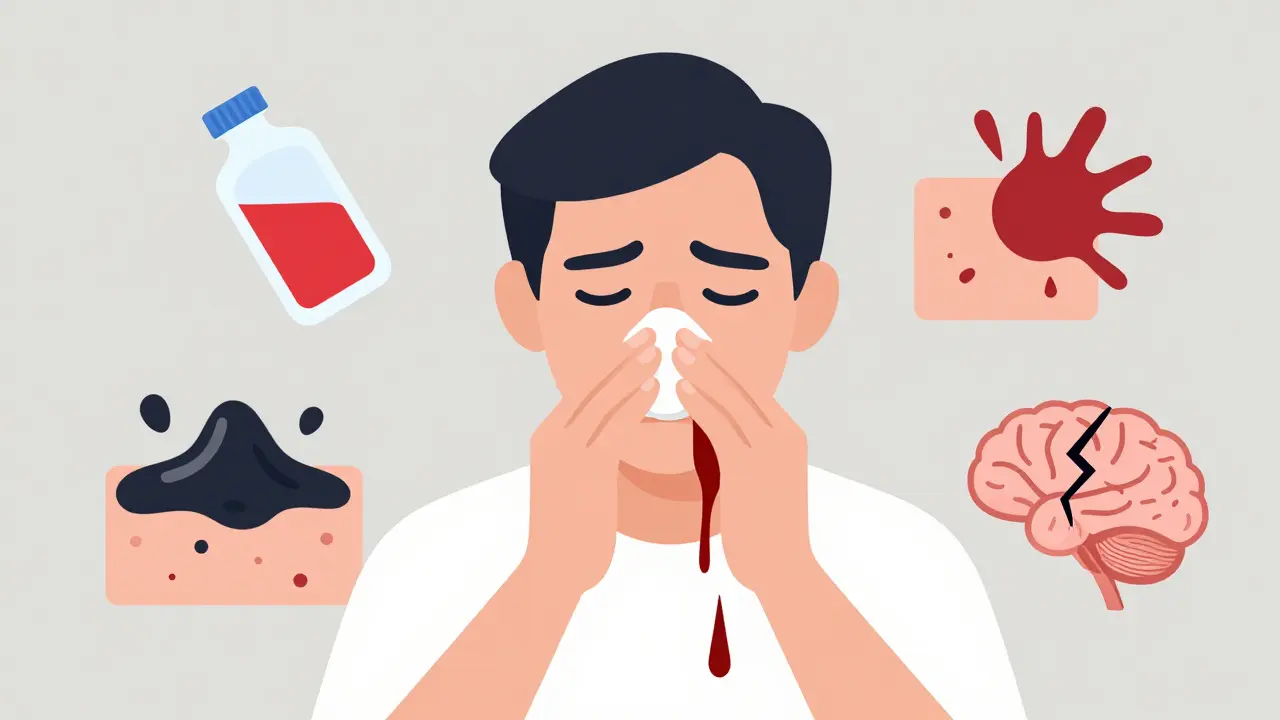
You can’t wait for a massive hemorrhage to realize something’s wrong. Severe bleeding often starts quietly. Here are the red flags that demand immediate action:- Prolonged nosebleeds (more than 10 minutes)
- Red or brown urine (blood in your urine)
- Black, tarry stools (sign of GI bleeding)
- Unexplained bruising-large, spreading, or appearing without injury
- Coughing or vomiting blood-even if it’s just a few drops
- Severe headache or stiff neck (could mean brain bleed)
- Dizziness or fainting-especially if you’ve lost blood internally
- Weakness or numbness on one side of your body
- Blurred or double vision
- Unusually heavy menstrual bleeding
- Joint pain or swelling after minor trauma
- Persistent bleeding from a small cut that won’t stop after 15 minutes of pressure
These aren’t just side effects. They’re emergencies. And most people wait too long to act. A 2023 survey found that 37% of patients waited over two hours before going to the ER. Nineteen percent waited six hours or more. By then, it’s often too late.
What Happens in the ER
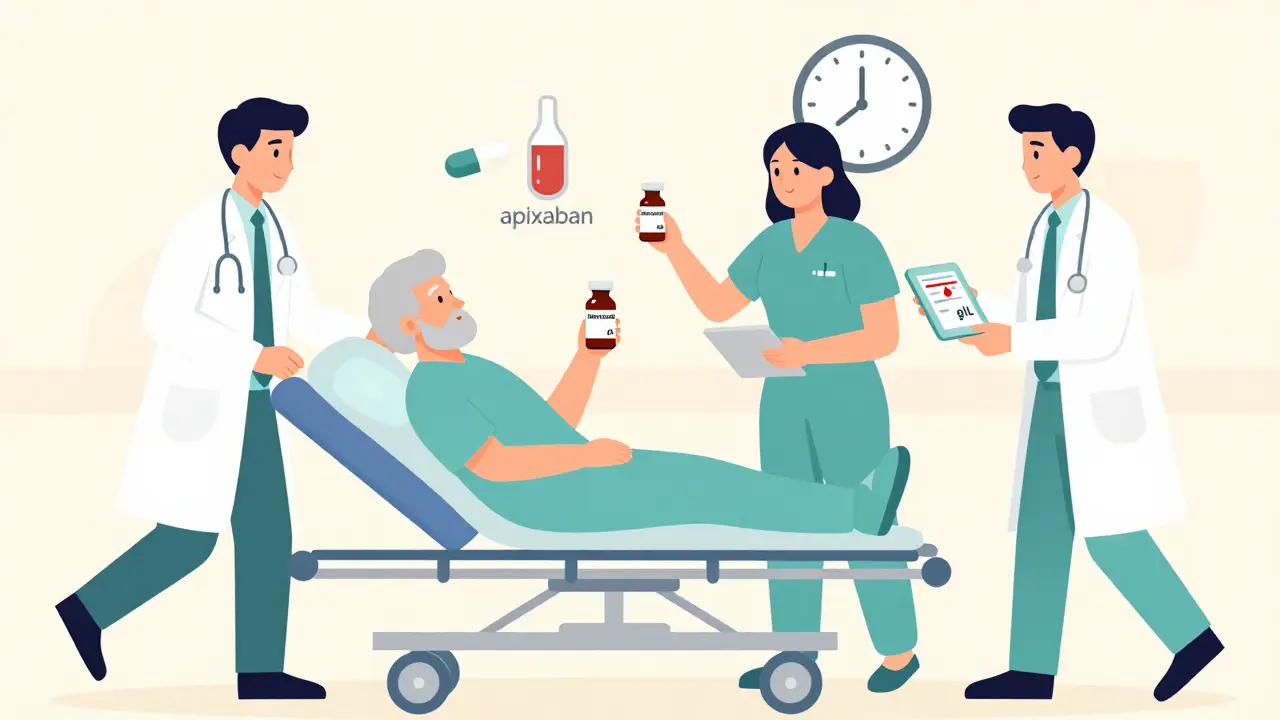
When you arrive with suspected severe bleeding, the hospital will move fast. They’ll check your vital signs, run blood tests, and order imaging. Your hemoglobin level will tell them how much blood you’ve lost. A drop of more than 5 grams per deciliter means you’re in the severe category-likely needing a transfusion. For warfarin users, they’ll give vitamin K and fresh frozen plasma to reverse the effect. For DOACs, they’ll use specific antidotes:- Idarucizumab for dabigatran (costs about $3,500 per dose)
- Andexanet alfa for rivaroxaban, apixaban, and edoxaban (costs around $12,500 per treatment)
These drugs work fast-within minutes. But they’re not always available, especially in smaller hospitals. That’s why timing matters. The sooner you get there, the better your chance of survival.
Which Blood Thinner Has the Lowest Bleeding Risk?
Not all blood thinners are equal. Here’s how they compare based on real-world data:| Medication | Annual Major Bleeding Rate | Key Advantage |
|---|---|---|
| Apixaban | 2.13% | Lowest bleeding risk among DOACs; safer for elderly and those with kidney issues |
| Warfarin | 3.09% | Reversible with vitamin K; cheaper but requires frequent blood tests |
| Dabigatran | 3.11% | Reversible with idarucizumab; lower GI bleeding risk than rivaroxaban |
| Rivaroxaban | 3.6% | Once-daily dosing; higher GI bleeding risk, especially in older adults |
| Edoxaban | ~2.7% | Lower dose for kidney impairment; newer data still emerging |
If you’ve had a GI bleed before, apixaban is your safest bet-it cuts your chance of another by 31% compared to rivaroxaban. If you’re over 75 or have kidney disease, apixaban or edoxaban are often preferred. But even the safest drug can cause bleeding if your dose is wrong or you’re taking something that interacts with it.
What You Can Do to Stay Safe
You can’t eliminate the risk-but you can reduce it dramatically.- Get your HAS-BLED score: This tool (Hypertension, Abnormal kidney/liver, Stroke, Bleeding history, Lab instability, Elderly, Drugs/alcohol) gives you a number. If it’s 3 or higher, your doctor should create a safety plan with you.
- Ask about DOAC level testing: A new point-of-care test (approved in January 2024) can check your drug level in minutes. If you’re in the top 25% of blood concentration, your risk triples. This test is now recommended for patients over 75, those with kidney problems, or anyone who’s bled before.
- Never skip your INR checks if on warfarin: Weekly tests for the first month, then monthly after that. A single high INR above 4 can turn a minor bruise into a life-threatening bleed.
- Review all your meds: Even over-the-counter drugs like ibuprofen, fish oil, or garlic supplements can increase bleeding. Tell your doctor everything you take.
- Carry a medical alert card: It should list your medication, dose, and emergency contact. Many patients don’t have one. That’s a mistake.

What Happens After a Bleeding Episode?
If you’ve had a major bleed, your doctor will reassess everything. Did the benefits of the blood thinner outweigh the risk? Maybe you need a lower dose. Maybe you need a different drug. Or maybe you’re better off without it. Studies show that patients who’ve had a major bleed are at high risk for another-even if they restart the same medication. But stopping it entirely increases stroke risk. That’s the tightrope walk. For some, the answer is switching to apixaban. For others, it’s reducing the dose. A 2024 study found that 58% of bleeding events happened in patients on low-dose regimens-not full doses. That means even "safe" doses aren’t risk-free. It’s not about the label-it’s about your body.Why This Problem Is Getting Worse
More people are on blood thinners than ever. In 2023, 4.7 million Americans were taking DOACs. That’s up from 2 million in 2015. At the same time, the population is aging. One in ten Americans over 65 now takes a blood thinner. That’s triple the rate from 2010. Emergency visits for anticoagulant-related bleeding jumped 27% between 2018 and 2022. Each episode costs the system an average of $18,500. Brain bleeds? Over $52,000. And these aren’t rare events-they’re predictable, preventable, and growing. Regulators are catching on. The FDA now requires all DOAC labels to highlight the first-month bleeding risk. The European Medicines Agency now demands that patient guides include clear bleeding instructions. But knowledge isn’t enough. You need action.Final Takeaway: Knowledge Is Power, But Action Is Life
Blood thinners save lives. But they can also end them-if you don’t know the signs, don’t act fast, or don’t understand your personal risk. You’re not just a patient on a drug. You’re a person with a unique body, history, and risk profile. If you’re on a blood thinner:- Know your 12 warning signs.
- Get your HAS-BLED score.
- Ask about DOAC level testing if you’re over 75 or have kidney issues.
- Never delay care if you think you’re bleeding.
- Carry your medication info with you at all times.
The first 90 days are the most dangerous. The first 10 minutes after you notice a symptom could be the most important. Don’t wait for someone else to tell you it’s serious. Trust your body. Act now.
Jeffrey Frye
December 24, 2025 AT 02:46man i was on rivaroxaban for afib and just ignored the bruising till i passed out in the grocery store. they had to give me 4 units of blood. dumbass doc said 'it's normal' like i'm some kind of lab rat. don't wait till you're in the ER with a hemoglobin of 6.5. trust me.
Andrea Di Candia
December 24, 2025 AT 23:29it’s wild how we treat meds like magic bullets when they’re really just tools with razor edges. we forget the body isn’t a machine you can just plug and play with. that 90-day window? it’s not a glitch-it’s a warning bell. listen to it. your life isn’t a spreadsheet.
bharath vinay
December 25, 2025 AT 08:25pharma paid the FDA to hide that apixaban’s bleeding rate is higher than warfarin in real-world use. the study they cite? funded by Bristol Myers. they don’t want you knowing the truth. your kidney failure? it’s not age-it’s the poison they’ve been dosing you with for years.
John Pearce CP
December 26, 2025 AT 15:50It is a fundamental failure of modern American healthcare that patients are left to self-educate on life-threatening pharmacological risks. The physician-patient relationship has been reduced to a transactional exchange mediated by corporate interests. This is not medicine. This is commodified risk management.
Payson Mattes
December 27, 2025 AT 13:45hey i know this guy who took apixaban and his dog got sick from licking his sweat-he ended up in the ER with a nosebleed. turns out the drug leaks out through skin. you ever heard of that? i think they’re hiding it. also, i read on a forum that microwave ovens interfere with DOACs. maybe that’s why your INR spikes. just saying.
Bhargav Patel
December 28, 2025 AT 05:09The pharmacokinetic variability of direct oral anticoagulants, particularly in elderly populations with concomitant renal impairment, necessitates a paradigm shift from population-based dosing to individualized therapeutic monitoring. The emergence of point-of-care assays for drug concentration quantification represents a significant advancement in mitigating iatrogenic hemorrhagic complications.
Steven Mayer
December 28, 2025 AT 14:13the data is clear: 78% of major bleeds occur in patients with suboptimal pharmacodynamic control. the real issue isn't the drug-it's the lack of therapeutic drug monitoring. we're treating anticoagulation like a one-size-fits-all algorithm when it's a dynamic physiological equilibrium. we need continuous INR-like feedback loops for DOACs, not annual checkups.
Charles Barry
December 30, 2025 AT 08:40they want you scared so you'll keep taking the pills. they don't care if you bleed out in your kitchen. the FDA? owned by big pharma. the doctors? paid by reps. you think that $12,500 antidote exists to save you? no-it's to make you feel like you're getting 'treatment' so you don't sue. you're a revenue stream. wake up.
Rosemary O'Shea
December 31, 2025 AT 22:29how is it that we’ve elevated pharmaceuticals to the status of divine intervention, yet refuse to acknowledge their inherent violence? We treat bleeding like a malfunction, when it’s merely the inevitable consequence of our hubris. We don’t need more drugs-we need humility. And perhaps, a return to the body’s own wisdom.
siddharth tiwari
January 2, 2026 AT 10:57they say apixaban is safest but i saw a guy on it bleed out from a paper cut. doc said 'it's rare' but i think they just don't wanna admit the drugs are all trash. i stopped mine and now i take garlic and turmeric. my bp is better too. maybe the real fix is not pills but food?
Diana Alime
January 2, 2026 AT 17:12why are we even talking about this? i just take my pill and forget about it. if i bleed, i bleed. it’s not like i can afford to go to the ER every time i get a bruise. also i think that table is wrong-i read somewhere that warfarin is actually safer if you’re not lazy about the blood tests. whatever.