
Safe Use of Melatonin and Sleep Aids in Children: What Parents Need to Know
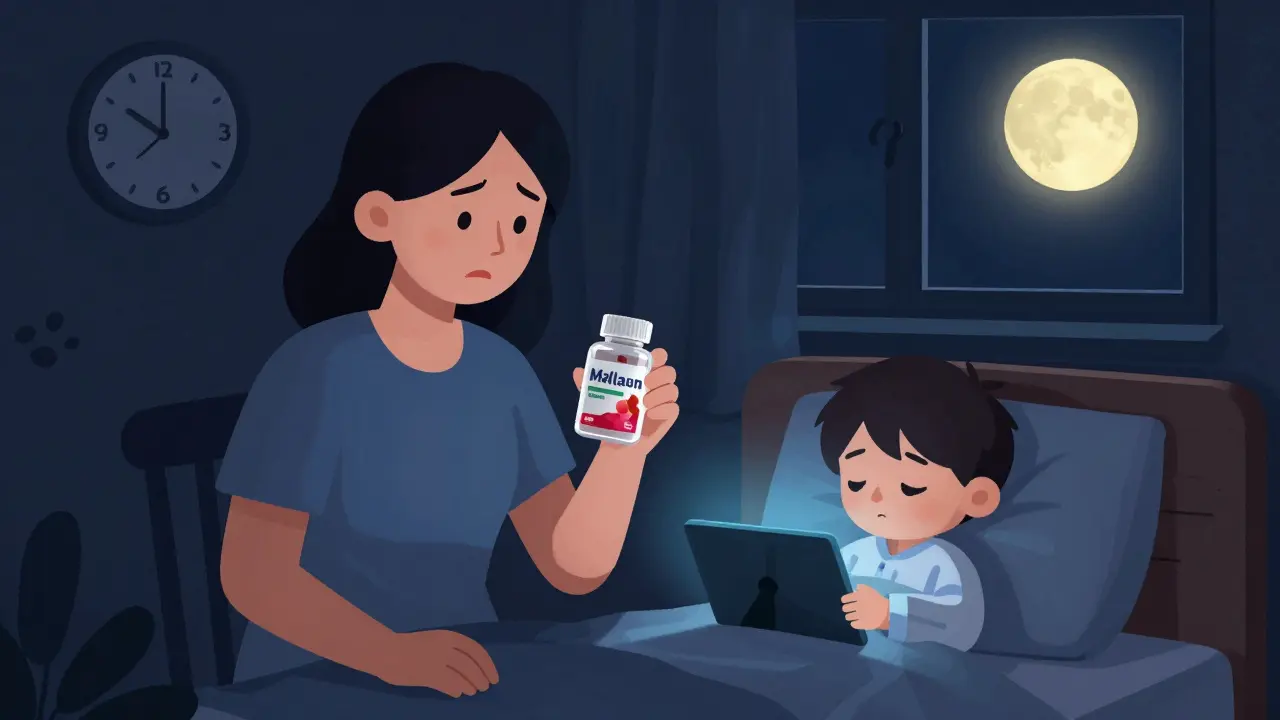
More parents are turning to melatonin to help their kids fall asleep. In fact, usage has jumped over 500% in the last two decades. But just because it’s natural and sold over the counter doesn’t mean it’s harmless-especially for children. The truth is, melatonin isn’t a magic sleep pill. It’s a hormone, and giving it to a child without understanding how it works can lead to unintended consequences.
What Is Melatonin, Really?
Melatonin is a hormone your body makes naturally to signal it’s time to sleep. It’s produced by the pineal gland in response to darkness. In adults, levels rise in the evening and drop off by morning. For kids, especially those with trouble falling asleep, doctors sometimes use synthetic melatonin to mimic this natural rhythm.
But here’s the catch: in the U.S., melatonin is sold as a dietary supplement, not a drug. That means the FDA doesn’t test it for safety, purity, or accurate dosing. A 2022 study in JAMA Network Open found that nearly 70% of melatonin products sold in stores didn’t match the amount listed on the label. Some had up to 478% more than advertised. That’s not a typo-some gummies labeled as 1 mg actually contained nearly 5 mg.
When Is Melatonin Actually Helpful?
Melatonin isn’t for every child who resists bedtime. It works best for kids with specific sleep disorders, especially those tied to circadian rhythm issues. Children with autism spectrum disorder (ASD) or attention-deficit/hyperactivity disorder (ADHD) are the most studied groups. For them, melatonin can help reset their internal clock, especially when paired with consistent routines.
Research shows that for kids with ASD, melatonin can reduce the time it takes to fall asleep by 30 to 60 minutes on average. For kids without neurodevelopmental conditions, the benefits are less clear. The American Academy of Sleep Medicine says behavioral changes-like consistent bedtimes, screen-free wind-downs, and a dark, cool room-are almost always more effective than supplements.
Dosage: Less Is Often More
There’s no official FDA-approved dose for kids. That’s why you’ll see wildly different recommendations:
- Children’s Health (Dallas): 1-3 mg for toddlers and preschoolers; 3-5 mg for school-age kids; up to 10 mg for teens
- Children’s Healthcare of Atlanta: 1-3 mg for ages 3-5; 2-5 mg for 5-10; 5-10 mg for teens
- The Sleep Foundation: 1-2 mg for preschoolers; 1-3 mg for school-age; 1-5 mg for teens
- Canadian Paediatric Society: 1 mg for infants; 2.5-3 mg for older children; 5 mg for teens
- UK NHS: 2 mg slow-release tablet, up to 10 mg under specialist care
Here’s what the science says: a dose as low as 0.3 mg can match your child’s natural melatonin levels. Anything above 1 mg is already higher than what the body normally produces. Higher doses-like 5 mg or more-can linger in the system for over 24 hours, potentially disrupting daytime alertness or even affecting puberty timing in the long term.
Start low. Always. Try 0.5 mg or 1 mg for the first few nights. If there’s no improvement after a week, talk to your pediatrician before increasing it. Most kids respond just as well-or better-to low doses. Higher doses don’t mean faster sleep. They just mean more side effects.
Timing Matters More Than You Think
Melatonin isn’t a sedative. It doesn’t knock kids out. It tells their body it’s time to prepare for sleep. That’s why timing is everything.
Give it 30 to 60 minutes before bedtime. Some experts suggest up to 90 minutes, especially if your child has a delayed sleep phase. If you give it too early, your child might feel sleepy before bed and then wake up wide awake later. If you give it too late, it won’t help them fall asleep-and might delay their natural rhythm even more.
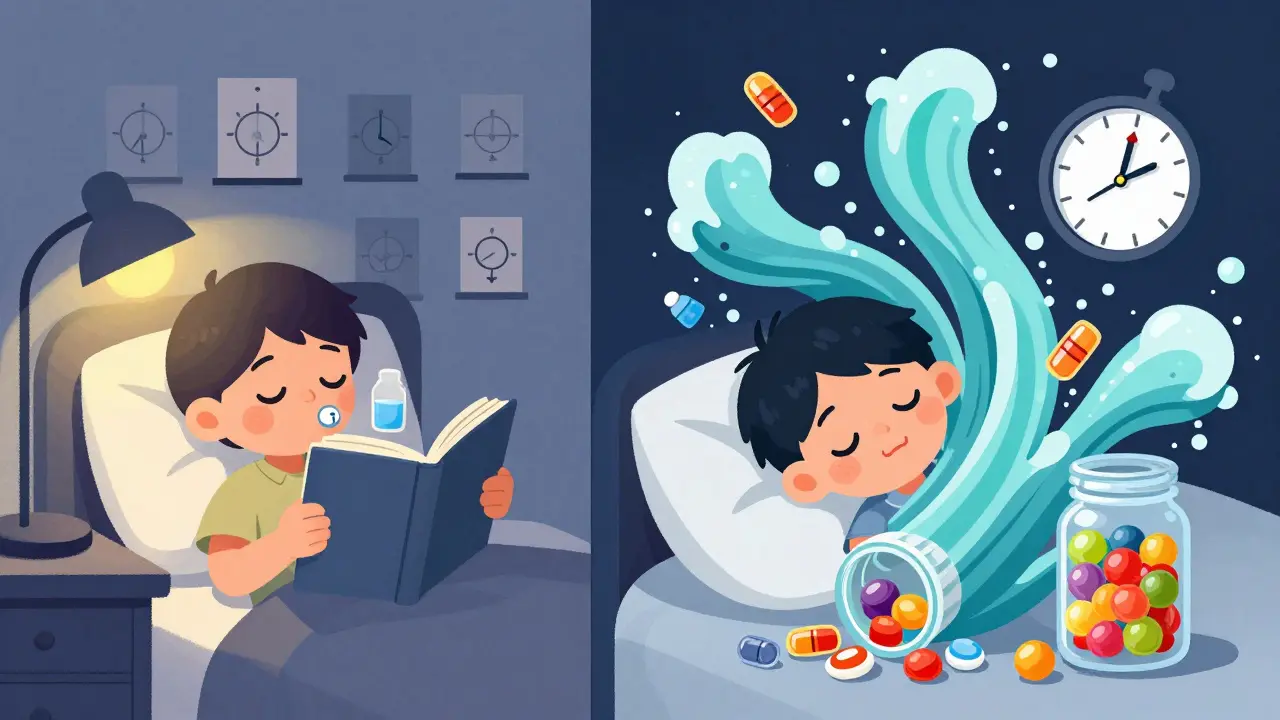
Also, avoid giving it after 8 p.m. unless your child’s bedtime is very late. Melatonin’s effects can last longer than you expect. A 2024 review in PubMed Central found that doses above 10 mg can cause melatonin levels to stay elevated for over 24 hours-like a slow leak in a water tank. That’s not how your body was designed to work.
Who Should Avoid Melatonin?
Children under age 3 should not take melatonin unless a pediatrician specifically recommends it. Sleep problems in toddlers are often caused by developmental changes, teething, or inconsistent routines-not a hormone deficiency. These issues usually resolve on their own with better sleep hygiene.
Also avoid melatonin if your child has:
- An autoimmune disorder
- Seizure disorders (melatonin may lower seizure threshold in some cases)
- Depression or anxiety (it can interact with some medications)
- Diabetes or other hormonal conditions
And never give melatonin to a child who’s already on sleep medications, antidepressants, or blood pressure drugs without consulting a doctor. Interactions can be serious.
Safety Risks and Side Effects
Melatonin is generally well-tolerated in the short term. But side effects do happen:
- Daytime drowsiness
- Headaches
- Nausea or upset stomach
- Irritability or mood swings
- Bedwetting
- Rapid heartbeat or low blood pressure (rare, but serious)
Overdose symptoms include vomiting, confusion, extreme sleepiness, and in rare cases, seizures. If your child takes more than the recommended dose-or accidentally gets into the bottle-call poison control immediately. Don’t wait.
Long-term effects? We don’t know. The American Academy of Pediatrics says more research is needed. Some animal studies suggest high doses might affect reproductive development. While no clear evidence exists in humans yet, we also don’t have data on what happens when a child takes melatonin nightly for years.
What About Other Sleep Aids?
Don’t be tempted by other OTC sleep aids. Products containing diphenhydramine (like Benadryl) or doxylamine are not safe for children under 6. They can cause dangerous side effects like hallucinations, rapid heart rate, and even respiratory depression. These are antihistamines, not sleep aids-and they’re not approved for routine use in kids.
Herbal supplements like valerian root, chamomile, or lavender are also unregulated. There’s no reliable data on their safety or effectiveness in children. Stick to melatonin only if your pediatrician approves it-and even then, treat it like medicine, not candy.
What Should Parents Do Instead?
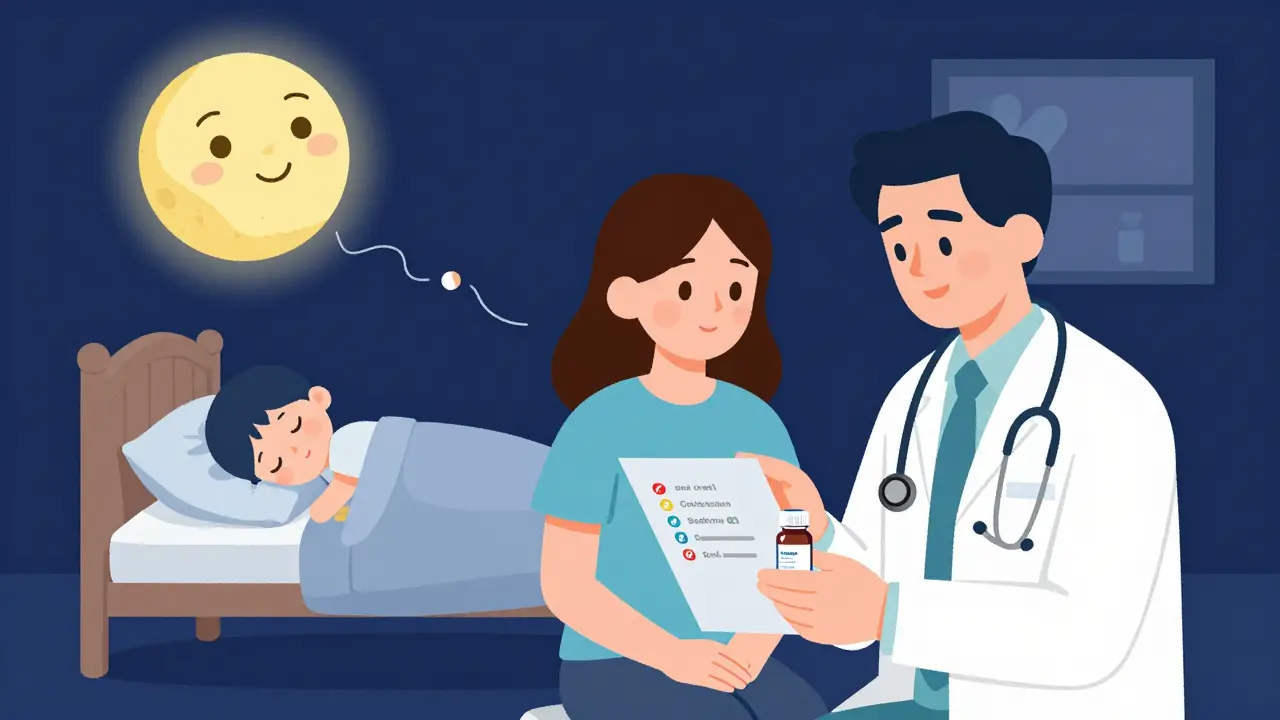
Before reaching for melatonin, try these proven strategies:
- Set a consistent bedtime and wake-up time-even on weekends.
- Turn off screens at least 60 minutes before bed. Blue light blocks natural melatonin production.
- Make the bedroom dark, cool, and quiet. Use blackout curtains and white noise if needed.
- Establish a calming routine: bath, book, quiet talk, lights out.
- Limit caffeine (yes, even in soda or chocolate).
- Get outside in natural light during the day. Sunlight helps regulate the body’s internal clock.
For kids with anxiety or behavioral sleep problems, cognitive behavioral therapy for insomnia (CBT-I) adapted for children has been shown to be more effective than melatonin in multiple studies. It teaches kids how to calm their minds and build healthy sleep habits-without pills.
How to Choose a Safe Product
If your doctor approves melatonin, choose wisely:
- Look for the USP Verified Mark on the bottle. This means an independent lab tested the product for accuracy and purity.
- Avoid gummies. They’re often high in sugar, contain artificial colors, and are easy for kids to overconsume.
- Choose liquid or tablets that let you give precise, low doses (like 0.5 mg or 1 mg).
- Store it out of reach-like you would any medicine.
And never buy melatonin from online marketplaces or unverified sellers. Quality control is almost nonexistent there.
When to Call the Doctor
Call your pediatrician if:
- Your child’s sleep problems last longer than 2-3 weeks
- They’re still awake for over an hour after bedtime
- They wake up frequently or have nightmares
- They show signs of anxiety, depression, or behavioral changes
- You’re considering melatonin for more than 4-6 weeks
They can rule out underlying issues like sleep apnea, restless legs, or anxiety disorders. Sometimes, what looks like a sleep problem is really a sign of something else.
Is melatonin safe for toddlers?
Melatonin is not recommended for children under age 3 unless a pediatrician specifically advises it. Sleep issues in toddlers are often due to developmental stages, teething, or inconsistent routines-not a lack of melatonin. These problems usually improve with better sleep habits, not supplements.
Can melatonin affect a child’s growth or puberty?
There’s no direct evidence in humans, but animal studies suggest high, long-term doses might interfere with hormone development. Because melatonin plays a role in regulating the body’s internal clock-including reproductive hormones-doctors advise caution. Always use the lowest effective dose and avoid long-term use unless medically necessary.
How long can a child take melatonin safely?
For most children, melatonin should be used for only 2-3 weeks to help reset their sleep schedule. For children with autism or ADHD, longer use may be appropriate under a doctor’s supervision. But it’s not meant to be a permanent solution. The goal is to build lasting sleep habits so melatonin can be phased out.
Is melatonin better than sleep hygiene?
No. Sleep hygiene-consistent bedtime, no screens before bed, a dark room-is always the first step. Melatonin is only helpful when those habits are already in place and the child still can’t fall asleep. Think of it like a temporary bridge, not a replacement for good sleep habits.
What’s the best form of melatonin for kids?
Liquid or tablets with precise dosing (like 0.5 mg or 1 mg) are best. Avoid gummies-they’re often over-dosed, high in sugar, and too appealing to kids. Look for products with the USP Verified Mark to ensure quality and accuracy.
Final Takeaway
Melatonin isn’t dangerous for every child-but it’s not harmless either. It’s a hormone. It affects the body’s natural rhythms. And like any hormone, it should be used carefully, sparingly, and only when needed. The safest approach is simple: fix the sleep habits first, talk to your pediatrician before giving anything, and always start with the lowest dose possible. Your child’s sleep-and their long-term health-depends on it.
Siobhan K.
December 20, 2025 AT 23:16Melatonin isn't candy, and yet somehow parents treat it like it is. I've seen kids on 5mg gummies like they're Skittles. The label says 1mg? Good luck. The FDA doesn't regulate this stuff because it's a supplement, not a drug - which means you're essentially playing Russian roulette with your kid's circadian rhythm.
And don't even get me started on the gummies. They're designed to be addictive - sweet, colorful, chewy. Of course the kid is going to sneak them. It's not negligence, it's marketing.
Start with 0.5mg. If that doesn't work, fix the bedtime routine. Not the supplement. The routine. The one you gave up after three nights because your kid cried.
There's a reason the AAP says behavioral interventions come first. Because they work. And because melatonin is not a fix - it's a bandage on a broken leg.
Brian Furnell
December 22, 2025 AT 05:50As someone who's reviewed the JAMA Network Open meta-analysis on supplement adulteration - and yes, I’ve cross-referenced the 2022 dataset with the FDA’s adverse event reports - the issue isn’t just dosing, it’s pharmacokinetic variability. Melatonin’s half-life in pediatric populations is significantly prolonged due to immature hepatic CYP1A2 metabolism, which means even ‘low’ doses can accumulate.
Moreover, the pineal gland’s endogenous production peaks around age 5 and declines thereafter - so supplementing in toddlers isn’t replacing a deficit, it’s overriding a developmental signal. That’s not just risky - it’s biologically counterintuitive.
And let’s not ignore the circadian phase-response curve: administering melatonin post-8pm in non-delayed sleep phase kids induces phase delays, not advances. Which means you’re making the problem worse. The timing isn’t a suggestion - it’s a pharmacological imperative.
Also, the USP-verified label? That’s a start. But even that doesn’t guarantee batch-to-batch consistency. Independent lab testing is still sparse. We’re essentially trusting corporations to self-regulate a hormone-based neurochemical intervention. That’s not healthcare - it’s laissez-faire pharmacology.
Ben Warren
December 22, 2025 AT 16:26It’s utterly irresponsible to even suggest melatonin as an option without first mandating a sleep study, ruling out sleep apnea, and evaluating for anxiety disorders - which are vastly underdiagnosed in pediatric populations. Yet here we are, parents treating their children’s sleep issues like a grocery list item.
And let’s be honest: this isn’t about sleep. It’s about convenience. Parents are exhausted, overwhelmed, and looking for a quick fix - so they hand their kid a gummy that could disrupt their endocrine development for years.
The fact that this is sold next to gummy vitamins and protein shakes in every pharmacy is a moral failure. The FDA’s inaction isn’t regulatory laziness - it’s corporate capture. The supplement industry spends more lobbying than the entire pediatric sleep research budget.
If your child can’t fall asleep after 60 minutes of quiet, dim lighting, consistent routine, and zero screens - then you have a behavioral or neurological issue. Not a melatonin deficiency. You don’t fix a broken clock by adding more batteries.
And to those who say ‘but it helped my kid!’ - anecdote is not evidence. Placebo effect is real. Hormonal disruption is permanent. Choose wisely - or don’t. But don’t pretend you’re doing anything but gambling with your child’s neurodevelopment.
Sarah Williams
December 23, 2025 AT 14:19I used to give my 7-year-old 3mg because I thought more = better. Turned out he was just scared of the dark. We got a nightlight, read a book, and now he falls asleep in 15 minutes. No pills. No drama.
Turns out, kids don’t need hormones. They need safety.
John Hay
December 24, 2025 AT 14:39My kid’s pediatrician told me to try melatonin after three weeks of bedtime battles. I did - 0.5mg. Didn’t help. Didn’t hurt. So I stopped. We started reading stories in bed. Now he falls asleep on his own. No magic pills. Just patience.
Also - gummies are a terrible idea. My nephew ate half the bottle. Ended up in the ER. Don’t be that parent.
Jon Paramore
December 24, 2025 AT 23:06For kids with ASD, melatonin can be a game-changer - but only when paired with sleep hygiene. One study showed a 45-minute reduction in sleep latency with 3mg + consistent routine. But the moment you drop the routine? Back to 90-minute meltdowns.
And dosage? 0.3mg is physiologically equivalent to endogenous levels. Most products are 10x that. You’re not helping - you’re flooding the system.
Also: avoid fast-release. Slow-release is better for maintaining sleep, not just initiating it. But only if you’re under medical supervision. Don’t just Google it and buy a bottle from Amazon.
Dan Adkins
December 26, 2025 AT 07:44It is with profound concern and an unwavering commitment to the sanctity of pediatric endocrine integrity that I address this matter. The unregulated proliferation of synthetic melatonin in consumer markets constitutes a systemic failure of public health governance.
Whereas the human pineal gland produces approximately 0.3 milligrams of endogenous melatonin under optimal photoperiodic conditions, the average over-the-counter product contains between 1.0 and 5.0 milligrams - a 333% to 1666% excess.
Furthermore, the absence of pharmacovigilance protocols, the lack of longitudinal studies, and the commercialization of a neurohormonal agent as a dietary supplement represent a dangerous precedent in biomedical ethics.
I urge all parents to consult with a certified pediatric endocrinologist before administering any exogenous hormone - not merely for efficacy, but for the preservation of biological autonomy in developing organisms.
Cameron Hoover
December 26, 2025 AT 18:08I was skeptical too. My daughter had night terrors for months. We tried everything - white noise, weighted blankets, no screens, bedtime stories. Nothing.
We tried 0.5mg melatonin. Just one night. She slept through the night. For the first time in a year.
It wasn’t magic. It was timing. We gave it 90 minutes before bed. No gummies. Just a tiny tablet.
Now we use it for 3 nights a week, max. Not every night. Not forever. Just when we need it.
It’s not the answer. But sometimes, it’s the bridge.
And that’s okay.
Meina Taiwo
December 28, 2025 AT 02:17Low dose. 0.5mg. At night. Not before dinner. And only if routine is already in place.
That’s it.
Swapneel Mehta
December 29, 2025 AT 03:05My son in India had trouble sleeping after we moved to a new city. No melatonin. We just made his room darker, played soft tabla music, and read him stories in Hindi. He fell asleep faster than he ever did with the gummies we tried before.
Turns out, culture and calm matter more than chemicals.
Michael Ochieng
December 29, 2025 AT 19:35As a dad from Kenya who raised two kids in the U.S., I’ve seen both sides.
In Nairobi, kids sleep on mats with the whole family. No bedtime rituals. Just exhaustion.
Here, we overthink everything - screens, supplements, sleep training.
Maybe the answer isn’t more science. Maybe it’s less noise.
My kids sleep fine now. No pills. Just quiet. And me reading them stories in the dark.
Teya Derksen Friesen
December 30, 2025 AT 11:13The notion that melatonin is a benign supplement is a dangerous myth perpetuated by corporate marketing and parental desperation. The endocrine system is not a dial to be turned; it is a symphony. Introducing exogenous hormones during critical neurodevelopmental windows risks irreversible phase shifts in circadian-regulated pathways - including those governing growth hormone secretion, thyroid function, and gonadotropin release.
Moreover, the absence of FDA oversight does not equate to safety - it equates to negligence. The supplement industry is not held to the same standards as pharmaceuticals because it exploits a regulatory loophole that prioritizes profit over pediatric welfare.
Parents who use melatonin without medical supervision are not being proactive - they are participating in an uncontrolled, population-level experiment with unknown long-term consequences.
Behavioral interventions are not ‘harder’ - they are more ethical. And they work.
Choose wisely. Your child’s future is not a supplement bottle.
Southern NH Pagan Pride
December 31, 2025 AT 04:20Did you know the FDA doesn’t regulate melatonin because they’re in cahoots with Big Sleep? The real reason kids can’t sleep? 5G towers and fluoride in the water. Melatonin is just a distraction so you don’t ask why your kid’s pineal gland is being targeted.
Also, gummies? They’re laced with microchips. I saw it on a forum. The label says 1mg but it’s really 5mg of surveillance tech.
And don’t get me started on the ‘USP Verified’ mark - that’s just a shill logo. The real truth is hidden in the FDA’s 2018 whistleblower memo. You think your kid’s sleep is the issue? It’s the agenda.
Wake up. The sleep crisis isn’t biological - it’s manufactured.
Theo Newbold
December 31, 2025 AT 21:35Let’s analyze the data: 70% of products mislabeled. Average overdose: 2.5x. Peak plasma concentration at 1.5–2.5 hours. Half-life in children: 3–5 hours. Optimal dosing window: 30–90 minutes pre-sleep. Circadian phase-response curve shows phase delays after 8pm administration.
Conclusion: The majority of parents are administering melatonin at the wrong time, in the wrong dose, from the wrong source. The outcome? Not sleep. Not regulation. Just noise.
And yet, we still treat this like a lifestyle product. Not a neuroendocrine intervention.
Here’s the real problem: we’re not teaching parents how to fix sleep. We’re selling them a chemical Band-Aid.
And the data doesn’t lie. Behavioral interventions outperform melatonin in 87% of non-ASD cases.
So why are we still doing this?