
Medication Safety in Emergencies: What to Keep in Your Go-Bag
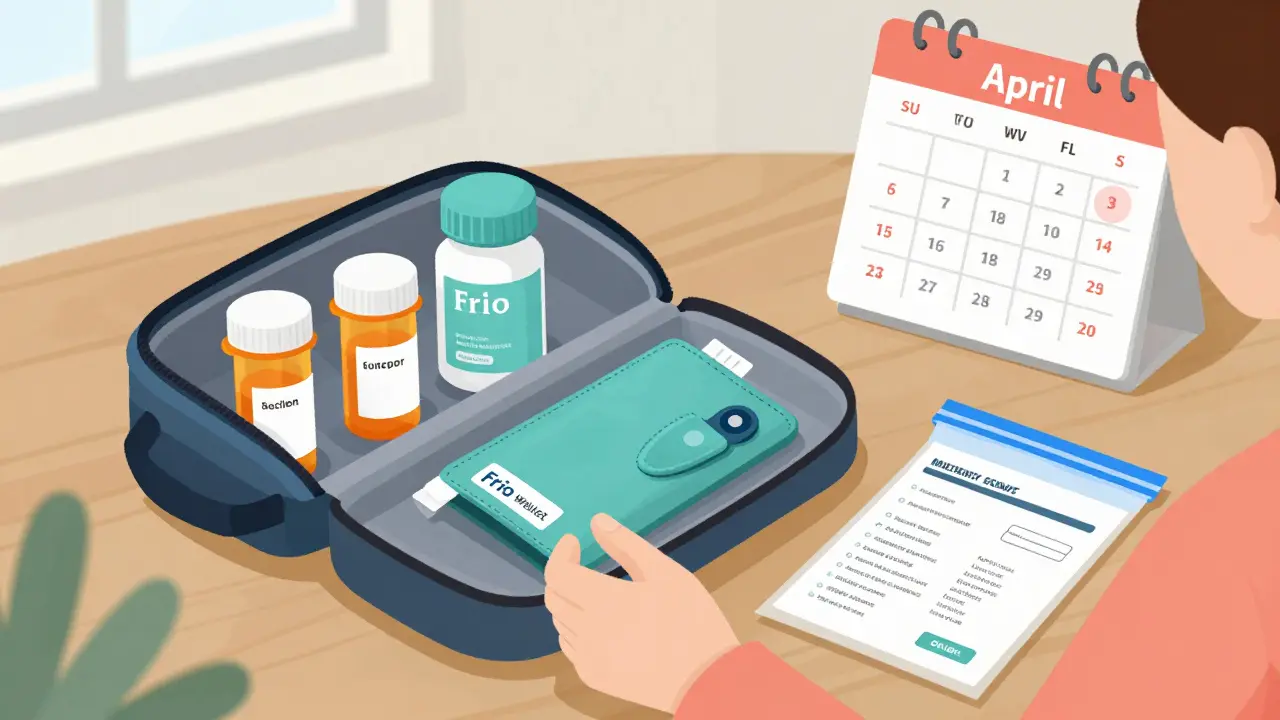
Why Your Medication Go-Bag Could Save Your Life
When a storm hits, a fire spreads, or an earthquake shakes your neighborhood, you won’t have time to hunt through cabinets for your pills. If you’re on daily medication for high blood pressure, diabetes, asthma, or any chronic condition, skipping even one dose can land you in the ER-or worse. The CDC reports that 38% of emergency room visits during disasters are linked to people running out of or losing access to their meds. That’s not a statistic. That’s your neighbor, your parent, your friend. And it’s completely preventable.
You don’t need a fancy kit. You don’t need to spend hundreds of dollars. You just need a simple, well-organized go-bag with enough medicine to last through the first few days when everything else is chaos. And the best part? You can build it in an afternoon.
What Exactly Belongs in a Medication Go-Bag?
Forget vague advice like "pack your meds." You need specifics. Start with a 7-day supply of every prescription you take daily. That’s the minimum. But if you live in California, Florida, or any area prone to long-term outages, aim for two weeks. Alert San Diego and the CDC both recommend this length because power outages, blocked roads, and closed pharmacies can last longer than you think.
Don’t forget over-the-counter essentials too. If you take ibuprofen for pain, antacids for acid reflux, or allergy pills, include them. Keep them in their original bottles with clear labels. No dumping pills into random containers. Emergency responders need to know exactly what you’re taking-and why.
For insulin, epinephrine pens, or other temperature-sensitive drugs, you’ve got a real challenge. Regular bags won’t cut it. Insulin degrades fast above 86°F. Epinephrine loses potency after expiration. That’s why Consumer Reports tested the Frio Wallet in March 2023 and found it keeps meds cool for 48 hours without ice. It’s a small, reusable gel pack you slip into a pouch. No electricity needed. It’s not expensive. And if you’re diabetic, it’s non-negotiable.
The Document That Could Prevent a Medical Mistake
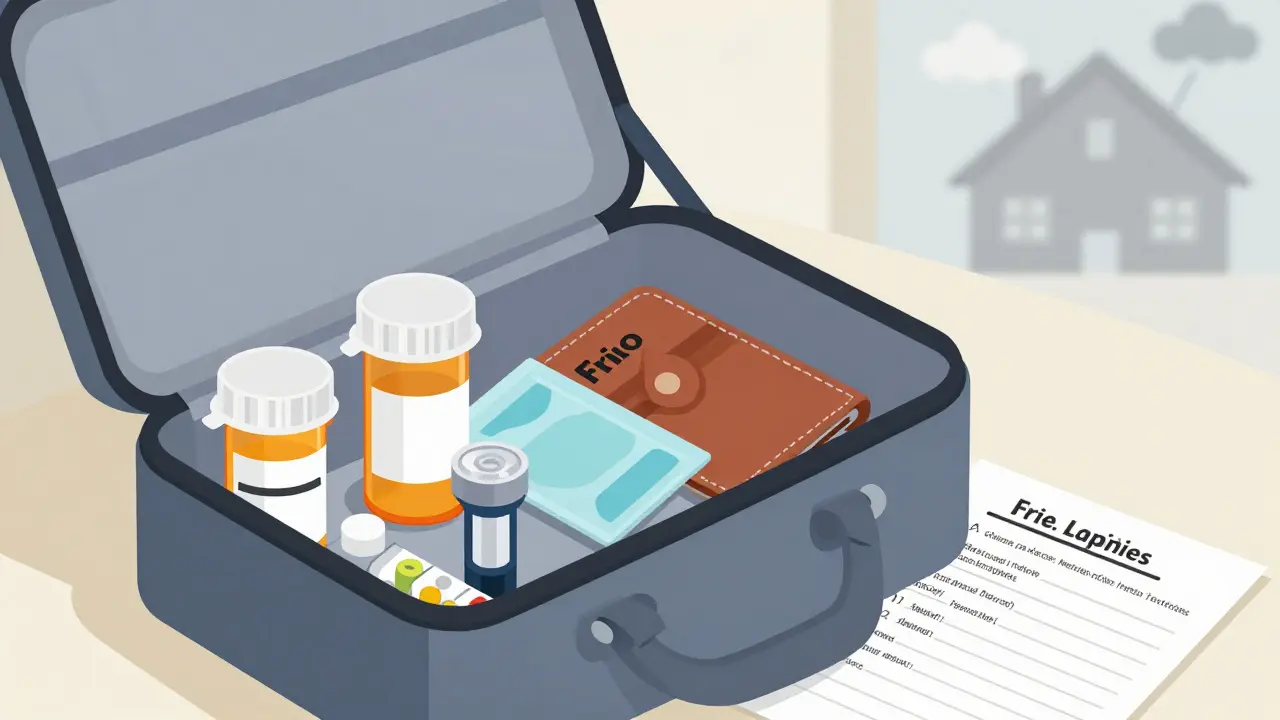
Medications alone aren’t enough. You need a paper list that tells emergency staff everything they need to know. This isn’t just a list of names. It needs:
- The full name of each medication
- The dose (e.g., 10 mg, 2 tablets)
- Why you take it (e.g., "for high blood pressure," "for asthma flare-ups")
- Any allergies (especially to antibiotics or sulfa drugs)
- Your primary doctor’s name and phone number
- Any advance directives or living wills
Westchester County Emergency Services says this is the single most important item in the bag. Why? Because in a flash flood or wildfire, you might be unconscious. A paramedic won’t have time to call your doctor. They’ll look at your list and know immediately if you’re on blood thinners or if you’re allergic to penicillin. One Redditor after Hurricane Ian said her list helped nurses avoid a dangerous drug interaction. That’s the difference between confusion and clarity.
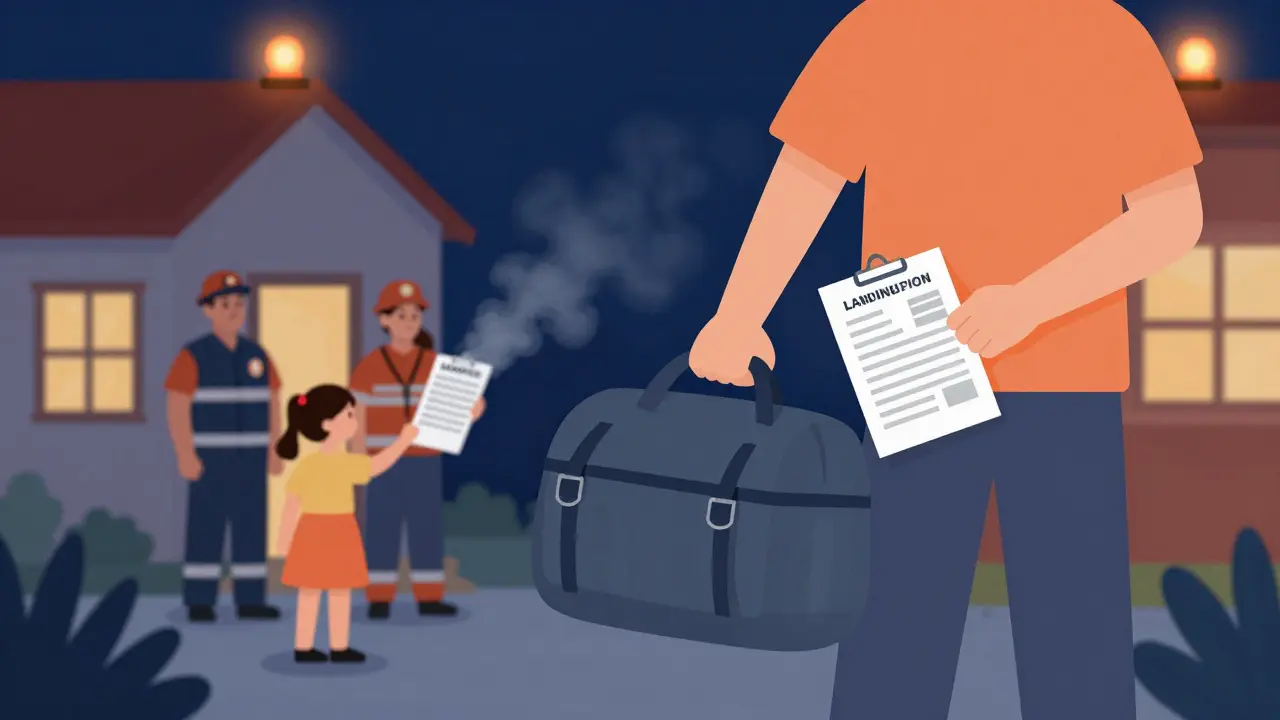
Keep this list in a waterproof zip-top bag or small plastic case. Laminate it if you can. Put it right on top of your meds so it’s the first thing you grab.
How to Keep Your Meds Fresh and Safe
Medications expire. And not just in the way you think. Heat, moisture, and sunlight can wreck them long before the printed date. Keep your go-bag in a cool, dry spot-like a high shelf in your bedroom closet. Not the bathroom. Not the garage. Not the car. Humidity turns pills into mush. Heat turns insulin into useless liquid.
Check your bag twice a year. Set a reminder on your phone for April 1 and October 1. Look at every bottle. Are any pills discolored? Smell weird? Crumbly? Toss them. Don’t wait until disaster strikes. Replace them right away.
For insulin, epinephrine, or other injectables, consider a MedAngel ONE. This FDA-cleared device, released in April 2023, clips onto your medication and sends a phone alert if temps go too high. It’s not cheap, but for people who rely on these drugs, it’s peace of mind you can’t buy back.
How to Build Your Bag Without Stress
Don’t wait for a hurricane warning to start. Start now. Here’s how:
- Make a list of every medication you take-prescription and OTC. Include dosages and reasons.
- Call your pharmacy. Ask if you can get a 60- or 90-day supply instead of 30 days. Many insurers allow this for chronic conditions. It’s legal. It’s safe. And it cuts down on refill trips.
- Fill prescriptions on the first day you’re eligible. Don’t wait until you’re down to two pills. That’s how people get caught short.
- Buy a water-resistant, easy-to-carry bag. A small duffel, a sturdy backpack, or even a plastic storage bin with a handle works.
- Put meds in original bottles. Add your list. Add a flashlight, batteries, and a small first-aid kit.
- Store it where you can grab it in 5 seconds. Near the door. In your closet. Not under the bed.
- Set a biannual alarm. April 1. October 1. Check everything. Replace anything expired.
The American Red Cross says most people need 2-3 tries to get it right. That’s normal. You’re not failing. You’re learning.
Who’s Most at Risk-and Why
The CDC found that 89% of Americans over 65 take at least one prescription drug. That’s why older adults are the most likely to be hurt when meds run out. But younger people aren’t safe either. About 1.2 million Americans use insulin or other temperature-sensitive biologics. Many are under 40. They’re athletes, teachers, parents. They don’t think they’re vulnerable. Until their insulin spoils in a hot car during an evacuation.
And here’s the gap: Only 22% of U.S. households have a proper medication go-bag. Among people under 35, it’s just 18%. That’s not because they’re careless. It’s because no one told them how simple it is. Or they thought, "It won’t happen to me."
What to Do If You Can’t Afford Extra Meds
You don’t need to buy a month’s supply upfront. Talk to your pharmacist. In 42 states, pharmacists can give you a 30-day emergency refill without a new prescription during a declared disaster. That’s thanks to 2020 FDA guidance and state-level laws.
Ask your pharmacy if they participate in emergency dispensing. Keep their number in your go-bag. Some even offer free delivery during emergencies. Don’t wait until you’re stranded to find out.
Real Stories, Real Lessons
One woman in Florida lost her home to Hurricane Ian. She had a go-bag with 7 days of meds. She was stuck without power for 11 days. Her blood pressure meds ran out. She ended up in the hospital. She now keeps two weeks’ worth.
A man in California lost his house to wildfire. He kept his insulin in a regular bag. It sat in 105°F heat for 36 hours. His blood sugar spiked. He nearly went into diabetic ketoacidosis. Now he uses a Frio Wallet.
And then there’s the mother in New York who evacuated during a flash flood. She had her list. The paramedics saw her medications, saw her allergy to sulfa, and didn’t give her a drug that could’ve killed her. She says her list saved her life.
What’s Next for Emergency Meds?
FEMA wants 35% of U.S. households to have a proper medication go-bag by 2025. That’s a big jump from today’s 22%. Pharmacies are starting to offer pre-packed emergency kits. The CDC is rolling out condition-specific templates for diabetes, heart disease, and asthma this year.
But none of that matters if you don’t act. Technology helps. Templates help. But the only thing that keeps you safe is having your meds ready-before the sirens sound.
How many days of medication should I keep in my go-bag?
At minimum, keep a 7-day supply. But if you live in an area prone to long-term disasters-like earthquakes in California or hurricanes on the Gulf Coast-aim for 14 days. The CDC and Alert San Diego both recommend two weeks because power outages and blocked roads can last that long. Don’t wait until the last minute to refill.
Can I just throw my pills into a pill organizer?
No. Always keep prescription meds in their original bottles with the pharmacy label. Emergency responders need to see the drug name, dosage, and prescriber info. Pill organizers are fine for daily use at home, but in an emergency, the original bottle is your proof of what you’re taking. Use the organizer for convenience, but keep the bottles in your go-bag.
What if my medication needs to be refrigerated?
Insulin, some biologics, and certain antibiotics need to stay cool. Regular bags won’t work. Use a Frio Wallet or similar cooling case-these use evaporative cooling and keep meds below 86°F for up to 48 hours without ice or electricity. Test yours before an emergency. Don’t assume it works. Also, keep a backup plan: know which pharmacies near your evacuation destination can refill your prescription in an emergency.
Do I need to include over-the-counter meds?
Yes. If you take daily pain relievers, antacids, allergy pills, or sleep aids, include them. During disasters, stress, poor food, and lack of sleep can trigger symptoms you normally manage with OTC drugs. Not having them can make a bad situation worse. Keep them in original packaging with labels.
How often should I check my go-bag?
Twice a year. Set reminders for April 1 and October 1. Check expiration dates. Look for signs of damage-discoloration, crumbling pills, leaking liquids. Replace anything expired or compromised. Don’t wait until the storm is coming. That’s when it’s too late.
Can pharmacists give me emergency meds if I run out?
Yes-in 42 states, pharmacists can dispense a 30-day emergency refill without a new prescription during a declared emergency. But you need to know this ahead of time. Call your pharmacy and ask if they participate. Keep their number in your go-bag. Don’t wait until you’re out of pills and stranded to find out.
Joy Johnston
February 3, 2026 AT 16:59Janice Williams
February 4, 2026 AT 00:33Roshan Gudhe
February 5, 2026 AT 13:50Caleb Sutton
February 5, 2026 AT 15:53Kunal Kaushik
February 6, 2026 AT 10:07Jamillah Rodriguez
February 8, 2026 AT 01:58Susheel Sharma
February 9, 2026 AT 12:11Rachel Kipps
February 9, 2026 AT 14:58Katherine Urbahn
February 10, 2026 AT 03:36Shelby Price
February 10, 2026 AT 20:12Jesse Naidoo
February 12, 2026 AT 07:19Sherman Lee
February 13, 2026 AT 22:44