
International ICH Guidelines: How Global Harmonization Improves Medication Safety
ICH Guideline Impact Calculator
Before ICH, drug companies had to run separate trials for each market. Now, one study meets requirements globally, reducing time and costs.
Before ICH
3 trials × 3 regions = 9 studies
30 months × 3 = 90 months
After ICH
1 trial for all regions
30 months
Your Impact
According to the article, ICH S1 standardized carcinogenicity studies, reducing animal testing by 40% and cutting trial time by 24 months globally.
Every time you pick up a prescription, whether it’s a simple antibiotic or a complex cancer drug, you’re benefiting from a quiet but powerful global system designed to keep you safe. That system is the ICH guidelines-a set of science-based rules that ensure medicines are developed, tested, and approved the same way no matter where you live. It’s not something you hear about in the news, but it’s why a pill made in Japan works the same way in Seattle, and why a clinical trial in Germany can be accepted by regulators in the U.S. without starting over.
What Are the ICH Guidelines?
The International Council for Harmonisation of Technical Requirements for Pharmaceuticals for Human Use (ICH) was created in 1990 by regulators from the U.S., the European Union, and Japan. Their goal? To stop the same drug from being tested three different ways just because it was going to three different markets. Before ICH, companies had to run duplicate animal studies, clinical trials, and manufacturing checks-wasting time, money, and animals, and delaying life-saving treatments.
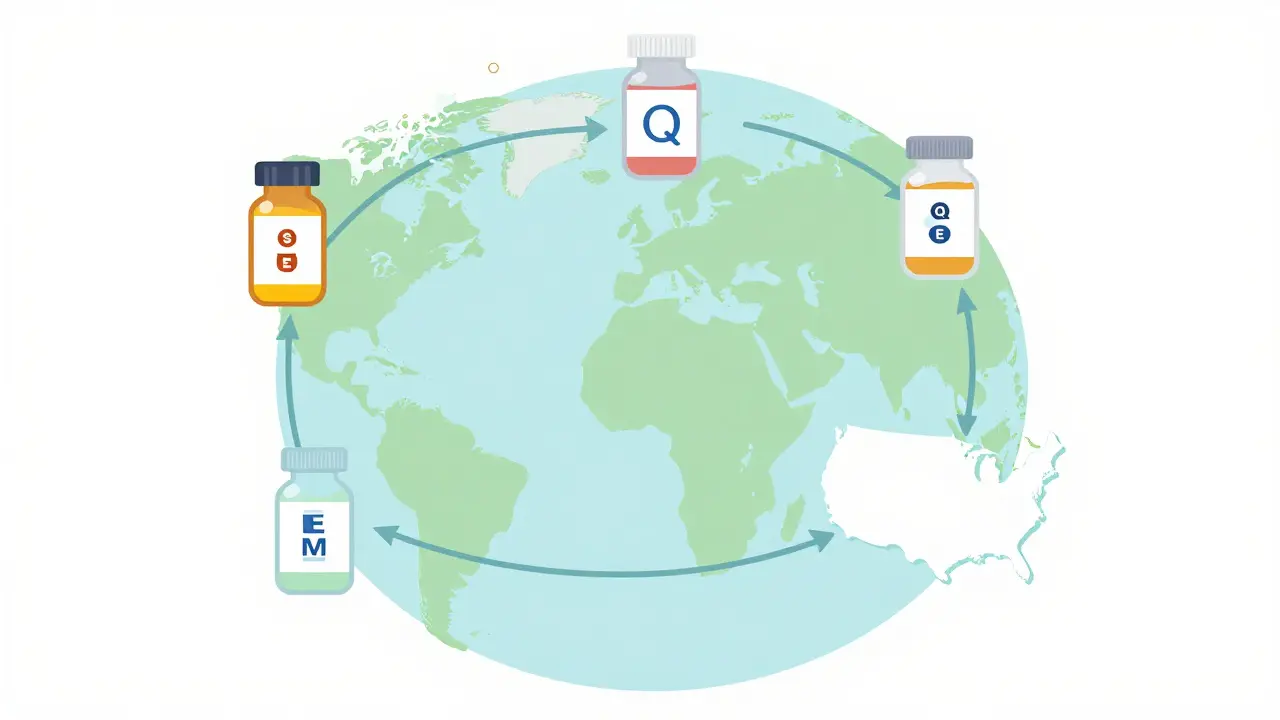
Today, ICH has grown beyond those three founding members. It’s now a legal nonprofit under Swiss law, with regulators from Canada, the UK, Switzerland, South Korea, Brazil, and others fully participating. The guidelines themselves are grouped into four categories: Quality (Q), Safety (S), Efficacy (E), and Multidisciplinary (M). There are over 60 finalized guidelines, each one a detailed technical document that tells manufacturers exactly how to prove their drug is safe, effective, and made the right way.
How ICH Makes Medications Safer
One of the most important sets of ICH guidelines focuses on safety. Take ICH S1, for example. It tells scientists how to test whether a drug might cause cancer. Before this guideline, countries used different animal models and exposure times. Some required two-year studies in mice; others used rats for only 18 months. The result? Confusing data, delayed approvals, and sometimes, unnecessary testing.
ICH S1 changed that. It standardized the design, duration, and analysis of carcinogenicity studies. Now, a single study can satisfy regulators in the U.S., Europe, and Japan. That means fewer animals used, faster reviews, and quicker access to medicines. It’s not just about efficiency-it’s about reducing risk. When everyone follows the same rules, weak safety signals don’t slip through the cracks.
Another key safety guideline is ICH S7A and S7B, which define how to test for heart rhythm problems-a known cause of sudden drug withdrawals. Thanks to these, drugs that could trigger dangerous arrhythmias are caught early, before they reach patients. In 2023, the FDA reported that ICH-based safety assessments helped prevent at least 12 potentially harmful drugs from reaching the U.S. market.
Good Clinical Practice: The Backbone of Human Trials
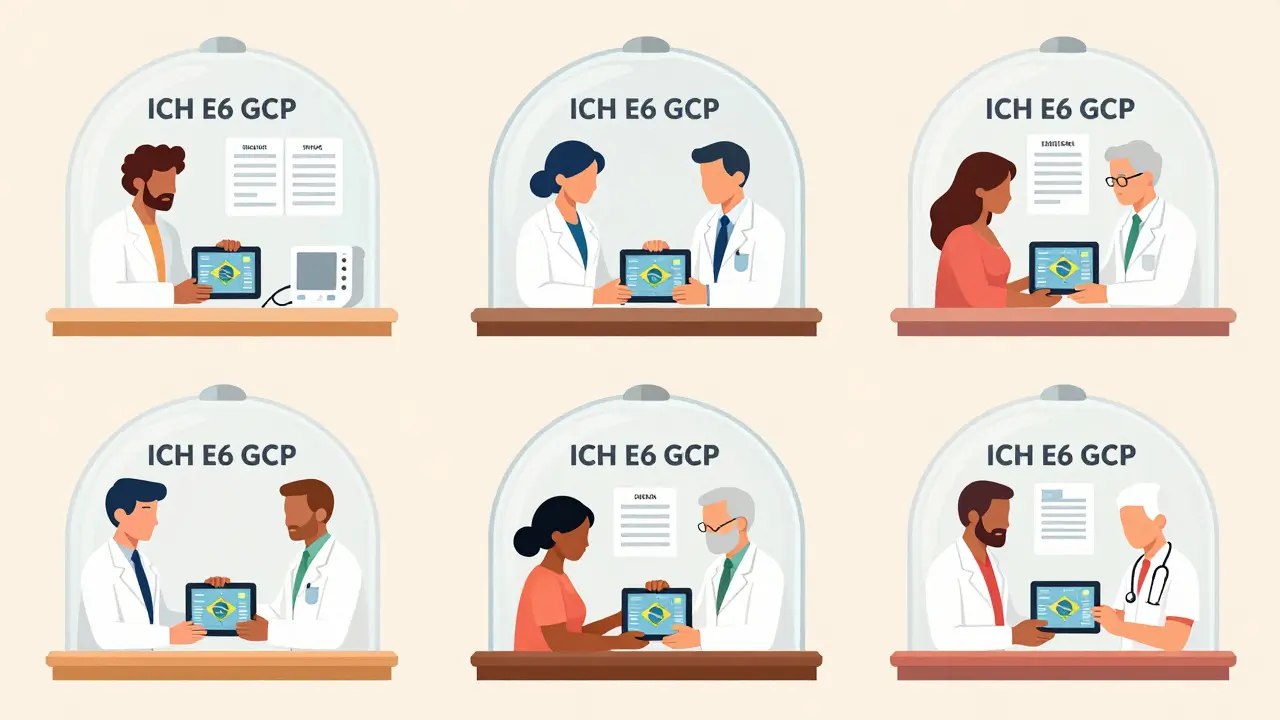
If you’ve ever heard of “Good Clinical Practice,” or GCP, you’ve heard of ICH E6. This is the single most important guideline for anyone involved in clinical trials. It covers everything from how to get informed consent from patients, to how to store data, to what happens if someone has a bad reaction.
Before ICH E6, trial standards varied wildly. In one country, records might be handwritten and stored in file cabinets. In another, they were digital but unsecured. Ethics committees had different rules. ICH E6 changed that. It created a global baseline. Now, no matter where a trial happens, the same protections apply. Patients in India, Brazil, or Poland are covered by the same ethical and data standards as those in the U.S. or Germany.
Pharmaceutical companies don’t just follow ICH E6 because it’s nice-they have to. The FDA treats ICH E6 as mandatory. If your trial doesn’t meet these standards, your application gets rejected. That’s why every major drugmaker trains its staff on ICH E6. It’s not optional. It’s the law.
Real-World Evidence and the Future of Drug Safety
ICH isn’t stuck in the past. In June 2024, it released a major update: a reflection paper on real-world evidence (RWE). This is a big deal. For decades, regulators only trusted data from tightly controlled clinical trials. But those trials often exclude older patients, people with multiple conditions, or those from diverse ethnic backgrounds.
RWE uses data from everyday life-electronic health records, insurance claims, patient registries-to understand how drugs actually perform outside the lab. ICH’s new guidelines aim to standardize how this data is collected, analyzed, and reported. That means regulators can use real-world data to monitor long-term safety, detect rare side effects, or even approve new uses for existing drugs faster.
For example, if a diabetes drug shows unexpected kidney benefits in millions of real patient records, regulators can now evaluate that evidence using the same method whether it comes from the U.S., Japan, or the UK. No more guessing if the data is reliable. ICH makes it clear.
How ICH Is Changing Global Access to Medicines
Harmonization isn’t just about efficiency-it’s about equity. Before ICH, low- and middle-income countries often couldn’t afford to run their own full regulatory reviews. They had to wait for a drug to be approved in the U.S. or EU first. That could take years.
Now, many countries use ICH guidelines as their own standard. They don’t need to reinvent the wheel. If a drug meets ICH Quality (Q) standards for manufacturing, regulators in Kenya, Thailand, or Mexico can approve it faster-sometimes in months instead of years. This has been critical for vaccines, antivirals, and chronic disease medicines during global health emergencies.
Even after Brexit, the UK didn’t abandon ICH. In fact, it strengthened its commitment. In May 2022, the UK’s Medicines and Healthcare products Regulatory Agency (MHRA) became a full ICH member. That sent a clear message: global standards matter more than borders.
What Happens When Guidelines Change?
ICH doesn’t freeze its rules. It updates them. The process is slow-deliberately so. Each new guideline goes through five steps: idea, draft, consultation, final adoption, and implementation. It can take five to seven years from start to finish. That’s because every change must be scientifically proven and agreed upon by regulators and industry alike.
The latest update, ICH M13A, came out in June 2024. It’s about bioequivalence for generic pills-specifically, immediate-release tablets like aspirin or metformin. Before this, different countries had different ways to test if a generic matched the brand-name drug. Now, there’s one standard. That means generic manufacturers can submit one application to multiple countries. It lowers costs, increases competition, and makes medicines cheaper for patients everywhere.
Why ICH Works When Other Systems Don’t
You might wonder: Why hasn’t the WHO or the UN done this? The answer is simple. ICH isn’t a government body. It’s a partnership. Regulators and drug companies sit at the same table. They negotiate. They compromise. They test ideas together. That’s rare in global governance.
Other groups try to set standards, but they lack the technical depth or industry buy-in. ICH has both. The International Federation of Pharmaceutical Manufacturers and Associations (IFPMA) is a standing observer, meaning drug companies help shape the rules-not just follow them. That’s why compliance is so high. Companies invest in ICH because it saves them billions.
And regulators? They trust ICH because the science is rigorous. Every guideline is backed by published research, peer-reviewed data, and years of testing. There’s no politics. Just evidence.
What’s Next for ICH?
As new therapies emerge-gene editing, AI-designed drugs, cell therapies-ICH is already working on new guidelines. The next frontier is digital health tools used in trials. How do you validate an app that tracks a patient’s movement to measure Parkinson’s progression? ICH is figuring that out now.
They’re also looking at how to handle data from wearable sensors, how to use artificial intelligence in manufacturing quality control, and how to make safety monitoring faster using machine learning. These aren’t sci-fi ideas. They’re in active working groups right now.
The goal remains the same: make medicines safer, faster, and fairer. No matter where you’re from, you deserve to know the drug you’re taking was tested the right way. That’s what ICH delivers.
Are ICH guidelines legally binding?
No, ICH guidelines themselves are not laws. But once a regulatory agency like the FDA or EMA adopts them, they become mandatory. In the U.S., ICH guidelines are published as official FDA guidance documents. Companies must follow them to get approval. So while ICH doesn’t enforce rules, the agencies that adopt them do.
Do all countries follow ICH guidelines?
Most major markets do. The U.S., EU, Japan, UK, Canada, Switzerland, South Korea, and Singapore fully implement ICH guidelines. Many other countries, including Brazil, India, and Thailand, use them as a reference to speed up their own approval processes. It’s not universal, but it’s the closest thing the world has to a global standard.
How do ICH guidelines affect generic drugs?
They make it easier and cheaper. ICH M13A, for example, created a single standard for proving that a generic pill works the same as the brand-name version. Before this, manufacturers had to run different bioequivalence tests for each country. Now, one test can be used globally. That reduces costs, increases competition, and lowers prices for patients.
What’s the difference between ICH and WHO guidelines?
WHO guidelines are broad and often focused on public health access, especially in low-resource settings. ICH guidelines are technical and detailed, designed for drug developers and regulators in high-income countries. WHO tells countries how to distribute medicines. ICH tells companies how to make them safely and consistently. Many countries use both.
Why does it take so long for ICH guidelines to be adopted?
Because they’re built on consensus. Every guideline must be reviewed by regulators and industry experts from multiple countries. Public comments are collected. Data is reanalyzed. Changes are debated. This process takes years, but it ensures the science is solid and the rules are practical. Rushing it would risk patient safety.
Lily Steele
January 30, 2026 AT 06:54I’ve been on the other side of this - worked in clinical ops for a big pharma company. Before ICH, we’d spend six months just reformatting dossiers for each country. Now? One submission, three regions. It’s a game changer.
Gaurav Meena
January 31, 2026 AT 14:24As someone from India, I can say this saved lives. When the pandemic hit, we got vaccines faster because we followed ICH standards. No need to wait for local trials to catch up. Thanks to these guidelines, we didn’t have to start from scratch.
Jodi Olson
February 1, 2026 AT 09:44It’s fascinating how a technical framework built by regulators and industry insiders became the de facto global standard without any formal treaty or enforcement body. There’s something quietly revolutionary about consensus-driven science
Carolyn Whitehead
February 2, 2026 AT 02:06Honestly I never thought about this stuff until my mom got her new diabetes med and I checked the label. Turns out it was approved the same way in Japan and Germany. Kinda cool that there’s a system keeping things consistent behind the scenes
Amy Insalaco
February 3, 2026 AT 07:46Let’s be real - ICH is just regulatory capture dressed up as science. The same corporations that profit from drug approvals are the ones drafting the guidelines. ‘Standardization’ is code for ‘making it easier for Big Pharma to bypass inconvenient national oversight.’ The ‘rigorous science’ is just marketing spin wrapped in SAS7B compliance
Katie and Nathan Milburn
February 4, 2026 AT 23:02Interesting how the UK remained committed post-Brexit. That says more about the value of international technical cooperation than any political statement ever could.
Beth Beltway
February 5, 2026 AT 17:52Don’t be fooled. ICH doesn’t make drugs safer - it just makes them faster to market. Look at the opioid crisis. All those approvals followed ICH. Where was the safety? It’s not about standards - it’s about who controls the standards. And it’s not patients.
Marc Bains
February 7, 2026 AT 07:06As someone who’s worked in clinical trials across Africa and Southeast Asia, I can tell you - ICH E6 is the only reason we could even get ethical approval in some places. Before that, trials were a Wild West. Now, a kid in Nairobi gets the same informed consent protections as one in Boston. That’s not just efficiency - that’s justice.
Melissa Cogswell
February 8, 2026 AT 03:12ICH M13A is the unsung hero. Generic manufacturers used to spend millions just adapting tests for each country. Now they can submit once and get approved everywhere. That’s how we get affordable meds. I’ve seen it firsthand - a $500 pill dropped to $12 after M13A rolled out.
Diana Dougan
February 8, 2026 AT 19:35So you’re telling me all this ‘harmonization’ just means we’re letting corporations write their own rules and calling it ‘science’? Wow. And I thought my tax return was confusing.