
How to Work with Your Doctor to Deprescribe and Save Money on Medications

Every year, millions of Americans pay hundreds or even thousands of dollars for medications they no longer need. It’s not just about wasting money-it’s about risk. Taking too many pills can lead to falls, memory problems, hospital stays, and worse. The good news? You don’t have to keep taking them. Working with your doctor to deprescribe-safely stopping medications that don’t help anymore-can cut your costs and keep you healthier.
What Deprescribing Really Means
Deprescribing isn’t just quitting pills. It’s a planned, step-by-step process where you and your doctor review every medication you take and decide what’s still useful-and what’s not. This isn’t about cutting corners. It’s about making smarter choices. According to the American Academy of Family Physicians, the average person on five or more medications has at least two that could be safely stopped. That’s not a small number-it’s a big opportunity to save money and avoid side effects.For example, a 72-year-old woman in Ohio stopped three medications during a simple doctor visit: a $120-a-month sleep aid she hadn’t needed in years, a $45-a-month supplement her cardiologist said was redundant, and a $90-a-month herbal remedy that did nothing her prescriptions didn’t already cover. Her annual savings? $2,340. And she slept better without the sleep aid.
The U.S. Deprescribing Research Network found that eliminating just one unnecessary $50-a-month medication saves $600 a year. Avoid one medication-related hospitalization-often caused by drug interactions or overdoses-and you could save $15,700. These aren’t hypotheticals. They’re real numbers from Medicare data.
Why You’re Taking Too Many Pills
Most people don’t start out with 10 prescriptions. It happens slowly. A doctor prescribes something for a short-term issue-like acid reflux or insomnia. Then, months or years later, someone else adds another drug for a new condition. No one ever sits down and asks: “Do you still need all of these?”That’s the problem with fragmented care. If you see a cardiologist, a neurologist, and a primary care doctor, each might add something without knowing what the others prescribed. A 2022 Health Affairs study found that patients seeing multiple doctors are 300% more likely to get inappropriate prescriptions. And when you’re on five or more meds, your risk of a bad reaction jumps dramatically.
Older adults are especially at risk. About 41% of people over 65 take five or more medications. For those over 85, nearly 7 out of 10 hospital admissions are tied to medication problems. And it’s not just seniors. The CDC says 15% of adults between 40 and 64 are also on multiple prescriptions. If you’re paying out of pocket-or even with Medicare Part D-you’re paying for this mess.
How to Prepare for Your Deprescribing Conversation
You can’t fix this in a 10-minute visit. You need to come prepared. Start by doing a “brown bag review.”- Gather every pill, capsule, patch, liquid, and supplement you take-prescription, over-the-counter, herbal, or vitamin.
- Write down why you take each one. If you don’t know, write “Don’t know.”
- Write down how much each costs per month. Don’t guess. Check your pharmacy receipt or your insurance portal.
- Bring this list to your next appointment. Don’t rely on memory.
Studies show that when patients bring a full list, doctors identify 2.3 unnecessary medications on average. That’s not a fluke. It’s a pattern. One patient brought in 17 items. Turns out, three were duplicates, four were for conditions that had resolved, and two were supplements with no proven benefit. He saved $1,100 a year just by cleaning that list.
Questions to Ask Your Doctor
Don’t let your doctor lead the conversation. You need to ask the right questions. Here are five you should ask about every medication:- Why am I taking this?
- What’s the benefit? Has it been proven to help someone like me?
- What are the risks? Could it make me dizzy, confused, or fall?
- Can I stop or lower the dose? How would we do that safely?
- Who should I check in with if I feel different after stopping it?
These aren’t just questions-they’re your rights. The American Geriatrics Society includes deprescribing in its top five recommendations for older adults. If your doctor brushes you off, ask for a referral to a pharmacist who specializes in medication reviews. Many Medicare Part D plans offer free medication therapy management. These pharmacists can spot duplicates, interactions, and cost-saving alternatives.
What Happens When You Stop a Medication
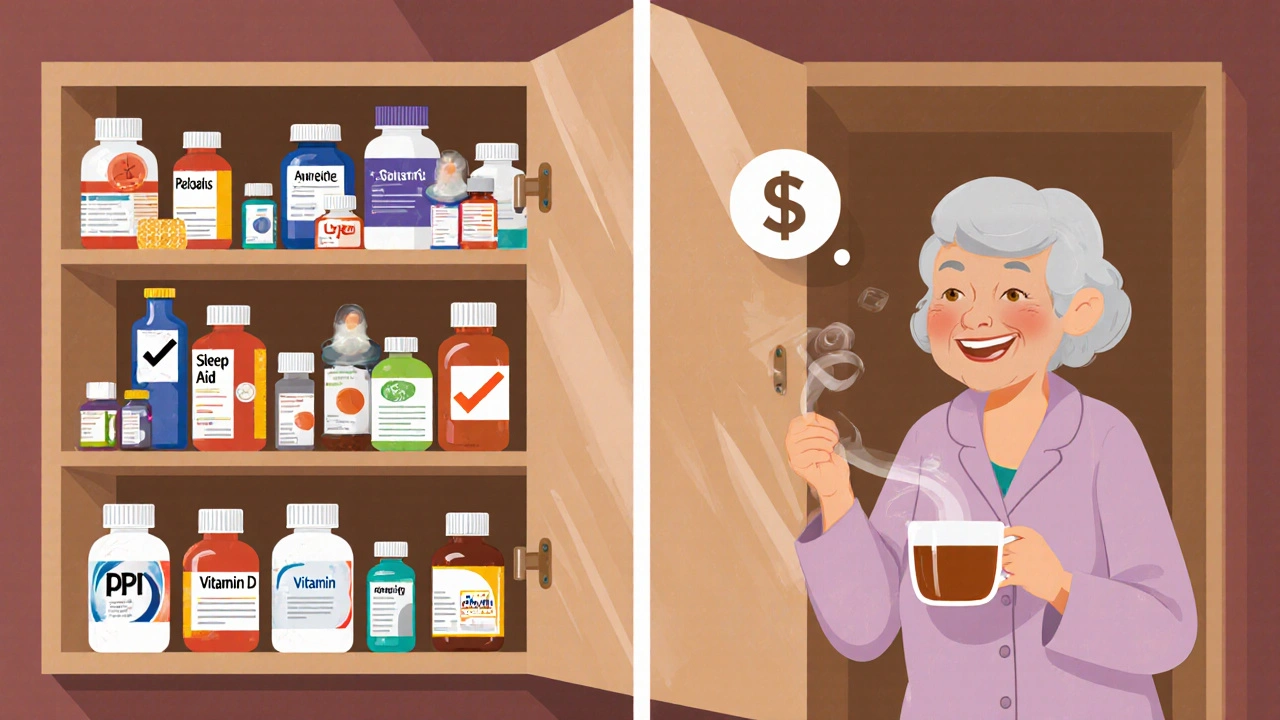
You might worry about withdrawal or rebound effects. That’s valid. Stopping some drugs cold turkey can be dangerous. Blood pressure meds, antidepressants, and steroids need to be tapered slowly. But that’s why you work with your doctor.Good deprescribing doesn’t mean stopping everything at once. It means one medication at a time, over weeks or months. For example, a proton pump inhibitor (PPI) for heartburn might be stopped over 4-8 weeks with a gradual dose reduction. A 2021 JAMA Network Open study showed that patients who stopped PPIs safely saved $420 a year and had a 25% lower chance of getting pneumonia.
On the flip side, rushing it can backfire. A 2019 BMJ study found that 12% of patients who stopped blood pressure meds too fast had dangerous spikes in pressure. That’s why monitoring matters. Your doctor should schedule a follow-up within 2-4 weeks after stopping a med to check how you’re doing.
Where You Can Save the Most Money
Not all meds are created equal. Some are big-ticket items with low benefit for older adults. Here are the top five types of medications most often candidates for deprescribing:- Proton pump inhibitors (PPIs) - Used for heartburn. Often taken for years without need. Average monthly cost: $80-$150. Annual savings if stopped: $420-$1,800.
- Sleep aids - Especially benzodiazepines or “Z-drugs.” Risk of falls, confusion, and addiction. Monthly cost: $60-$120. Savings: $720-$1,440.
- Statins for older adults with limited life expectancy - If you’re 80+ with no history of heart attack, the benefit drops sharply. Monthly cost: $10-$50. Savings: $120-$600.
- Vitamin D supplements - Often prescribed routinely, even when blood levels are normal. Monthly cost: $30-$90. Savings: $360-$1,080.
- Herbal remedies and supplements - Not regulated. Often unnecessary. Monthly cost: $20-$150. Savings: $240-$1,800.
The Lown Institute estimates that 4.9 million older Americans take one or more inappropriate meds each year-costing $13.6 billion in direct drug costs alone. That’s not just a system problem. It’s your wallet problem.
What If Your Doctor Says No?
Sometimes, doctors hesitate. They might say: “It’s fine as long as you’re not having side effects.” Or: “I don’t have time to review everything.” That’s not good enough.Ask for a referral to a clinical pharmacist. Many hospitals and health systems now have medication therapy management programs. Kaiser Permanente’s program reduced inappropriate prescriptions by 35% and saved $1.2 million annually across its system. Patient satisfaction? 92%.
If you’re on Medicare, you’re entitled to a free medication review under Part D. Call your plan’s pharmacy help line and ask: “Do you offer Medication Therapy Management for high-risk patients?” If they say no, ask again. If they still say no, file a complaint with Medicare. You have a right to this service.
And if your doctor still refuses? Get a second opinion. Find a geriatrician or a doctor who specializes in aging. The American Geriatrics Society has a “Find a Geriatrician” tool on their website.
Real Savings, Real Results
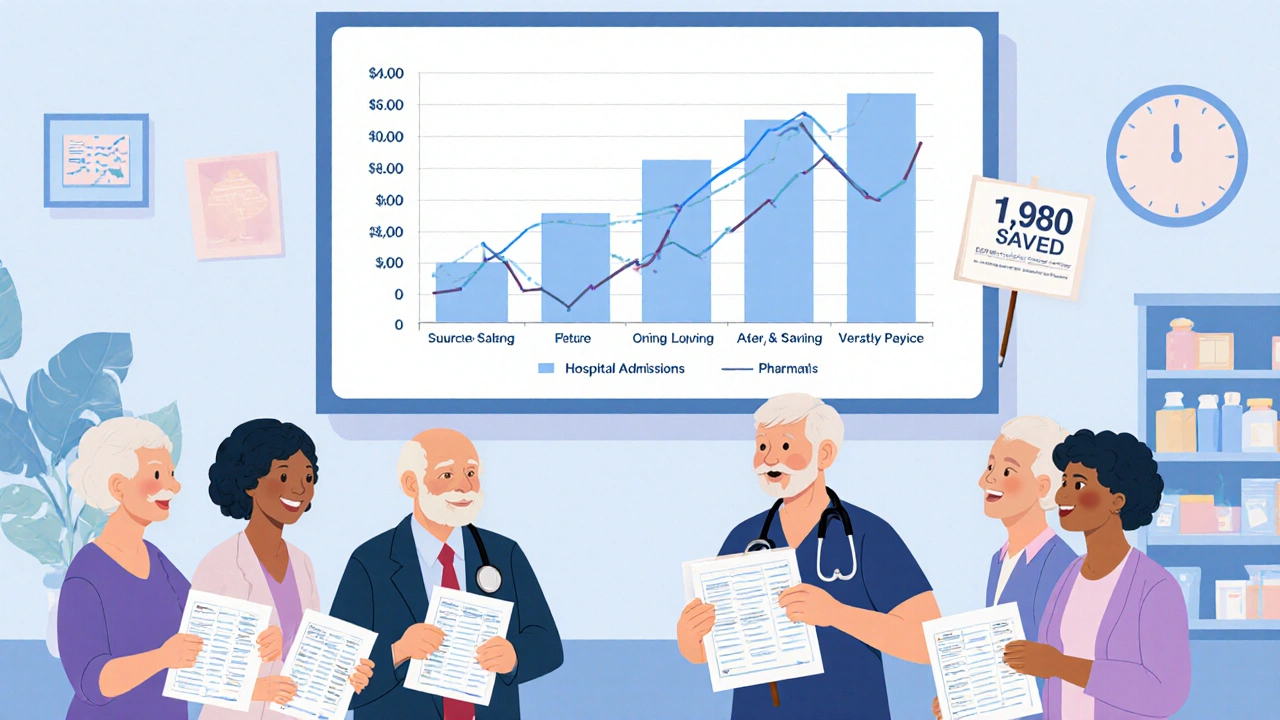
One Reddit user, ‘SeniorSaver87,’ shared how he stopped a $90-a-month vitamin D supplement after a blood test showed his levels were fine. He also quit a $75-a-month herbal blend he’d been taking for “energy.” His annual savings: $1,980. He didn’t feel worse. He felt lighter.Another woman in Florida stopped a $110-a-month antidepressant she’d been on for 12 years after her depression lifted years ago. Her doctor agreed to taper it slowly. After six months, she was off it. No rebound. No relapse. Just $1,320 saved.
These aren’t rare cases. They’re common. The problem isn’t that deprescribing doesn’t work. It’s that most people don’t know how to ask for it.
What’s Changing in 2025
The system is starting to catch up. The 2023 Inflation Reduction Act capped insulin at $35 a month and expanded coverage for medication reviews. In 2024, Medicare Advantage plans now include medication safety in their quality ratings. That means health plans are being rewarded for helping patients stop unnecessary drugs.AI tools like MedStopper are now used in 127 hospitals to flag high-risk prescriptions. They’re 89% accurate at spotting meds that can be safely stopped. These tools aren’t replacing doctors-they’re helping them do their job better.
But you don’t need AI to start. You just need a list, a question, and the courage to ask: “Do I still need this?”
Is deprescribing safe?
Yes, when done properly. Deprescribing is a planned, gradual process guided by your doctor. Stopping medications too quickly can be dangerous, but working with a professional reduces risk. Studies show that when deprescribing is done with monitoring, adverse events drop by 28%. The key is to never stop a medication on your own without a plan.
Can I stop taking my meds if I feel fine?
Feeling fine doesn’t mean a medication is still needed. Many drugs are prescribed for short-term issues that become long-term habits. For example, a sleep aid taken for two weeks after surgery might become a nightly routine for years. If you’re not having symptoms the drug was meant to treat, it may be safe to stop. Always ask your doctor first.
Will my insurance cover a medication review?
Yes-if you’re on Medicare Part D, you’re entitled to free Medication Therapy Management (MTM) if you’re at high risk for medication problems. This includes a one-on-one review with a pharmacist who can identify cost-saving opportunities, duplicates, and unnecessary drugs. Call your plan’s customer service and ask for MTM. If they say no, ask again or file a complaint.
How long does it take to safely stop a medication?
It varies. Some meds, like supplements or low-dose antacids, can be stopped in days. Others, like antidepressants or blood pressure drugs, need weeks or months of gradual reduction. Your doctor will give you a tapering schedule. Never rush it. Follow-up visits every 2-4 weeks are standard to check for side effects or rebound symptoms.
What if I feel worse after stopping a medication?
It’s normal to feel some changes when stopping a drug, especially if it was taken for a long time. But if you feel significantly worse-like increased anxiety, dizziness, chest pain, or confusion-contact your doctor immediately. These could be signs of withdrawal or rebound. Most side effects are mild and temporary, but always report them. Your doctor may need to adjust the taper or restart the medication temporarily.
Can I use a pharmacy to help with deprescribing?
Absolutely. Community pharmacists are trained to spot drug interactions, duplicates, and unnecessary prescriptions. Many offer free Medication Therapy Management under Medicare Part D. They can also suggest cheaper alternatives, like generic versions or mail-order options. Bring your full list to your pharmacist-they often catch things doctors miss.
Next Steps: What to Do Today
You don’t need to wait for your next appointment. Start now:- Collect every pill, bottle, and supplement you take. Put them in a bag.
- Write down the name, purpose, and monthly cost of each one.
- Call your pharmacy and ask: “Do you offer free Medication Therapy Management?”
- Write down your top three questions for your doctor: “Why am I taking this?” “Can I stop it?” “What happens if I do?”
- Book your next appointment and bring your list.
Deprescribing isn’t about giving up treatment. It’s about getting back control. You’re not just saving money-you’re reducing risk, improving clarity, and taking back your health. And that’s worth asking for.
Joanne Beriña
November 28, 2025 AT 22:49Stop taking all these pills? Sounds like another liberal scam to make seniors dependent on government handouts. My grandma took 12 meds and lived to 98-she didn’t need some pharmacist telling her what to stop. This is how we end up with Medicare going broke.
ABHISHEK NAHARIA
November 30, 2025 AT 08:06The concept of deprescribing is not novel in Ayurvedic practice, where polypharmacy is viewed as a disturbance of tridosha equilibrium. Modern medicine, blinded by pharmacological reductionism, fails to recognize that the body possesses innate homeostatic mechanisms. The pharmaceutical-industrial complex profits from perpetual intervention, not healing.
Hardik Malhan
December 1, 2025 AT 10:00Deprescribing requires a systems-level approach to medication reconciliation. Fragmented care pathways lead to therapeutic inertia and cognitive bias in prescribing. Clinical decision support tools integrated with EHRs can reduce inappropriate polypharmacy by up to 40% when paired with pharmacist-led reviews. The data is clear but underutilized.
Casey Nicole
December 2, 2025 AT 08:10I stopped my statin because I’m tired of being told I’m ‘at risk’ when I feel fine. Then my doctor said I might die in 5 years. So I started taking it again. But now I’m mad because I paid $1,200 for nothing. Why does everyone act like my body is a spreadsheet?
Kelsey Worth
December 2, 2025 AT 09:55wait so you’re saying i dont need that $90/mo ‘energy’ supplement i’ve been taking since 2018?? 😳 i thought it was magic. also i think my doctor forgot i exist. but thanks for making me feel less dumb
shelly roche
December 3, 2025 AT 21:34This is so important. I helped my mom go through this last year-she was on 14 meds. We cut it down to 6. She sleeps better, walks without a cane, and saved over $2,000. It wasn’t easy but she felt like herself again. You deserve to feel good, not just not dead.
Nirmal Jaysval
December 4, 2025 AT 10:44everyone thinks they know better than the doc but you dont even know what your meds do. i seen people stop blood pressure pills and end up in ER. this is why america is falling apart. you think its simple but its not. just trust the system.
Emily Rose
December 5, 2025 AT 18:17My cousin was on 8 meds for depression, anxiety, reflux, and ‘joint support’-turns out 5 were useless. She cried when she stopped them because she thought she’d lose herself. But she didn’t. She found herself. And now she’s hiking again. You’re not weak for needing help-you’re brave for asking.
Benedict Dy
December 7, 2025 AT 17:47The data here is cherry-picked. You cite savings from stopping PPIs but ignore the 15% of patients who develop severe gastritis after abrupt cessation. The study sample sizes are small, the follow-up periods inadequate. This isn’t medicine-it’s anecdotal advocacy disguised as public health.
Emily Nesbit
December 9, 2025 AT 12:33There is no such thing as ‘unnecessary’ medication unless it has been clinically proven to provide no benefit. The Lown Institute is not a regulatory body. Medicare does not endorse deprescribing as a blanket policy. This article dangerously oversimplifies complex pharmacological decision-making.
John Power
December 11, 2025 AT 05:06My dad was skeptical too-until he stopped his vitamin D and his bone pain disappeared. He didn’t know his levels were normal. We took the list to the pharmacist and they found three duplicates. He’s been happier, more alert, and saved $1,400. It’s not about quitting meds-it’s about quitting assumptions.
Richard Elias
December 11, 2025 AT 07:52if you dont take your pills you die. period. my aunt stopped her blood thinner and had a stroke. dont be stupid. doctors know what theyre doing. you think you know better? lol
Scott McKenzie
December 12, 2025 AT 12:22Just did this last month! 🙌 Brought my brown bag to the pharmacy-they found 4 things I didn’t even remember taking. Cut out the herbal sleep stuff and the $80/month ‘immune booster.’ My wallet’s happier and I actually remember my keys now. 💊➡️💰 #DeprescribingWins
Jeremy Mattocks
December 13, 2025 AT 02:02I’ve been a clinical pharmacist for 22 years and I can tell you this: the biggest barrier to deprescribing isn’t patient resistance-it’s physician inertia. Most doctors don’t have the time, training, or reimbursement to do comprehensive med reviews. That’s why MTM programs are critical. They’re underfunded, understaffed, and undervalued. But when they work? Patients live longer, healthier, cheaper lives. I’ve seen it. My own mom cut her meds from 11 to 5. She’s 84, walks 3 miles a day, and hasn’t been to the ER in 3 years. It’s not magic. It’s medicine done right.