
How to Teach Family Members to Recognize Overdose Symptoms
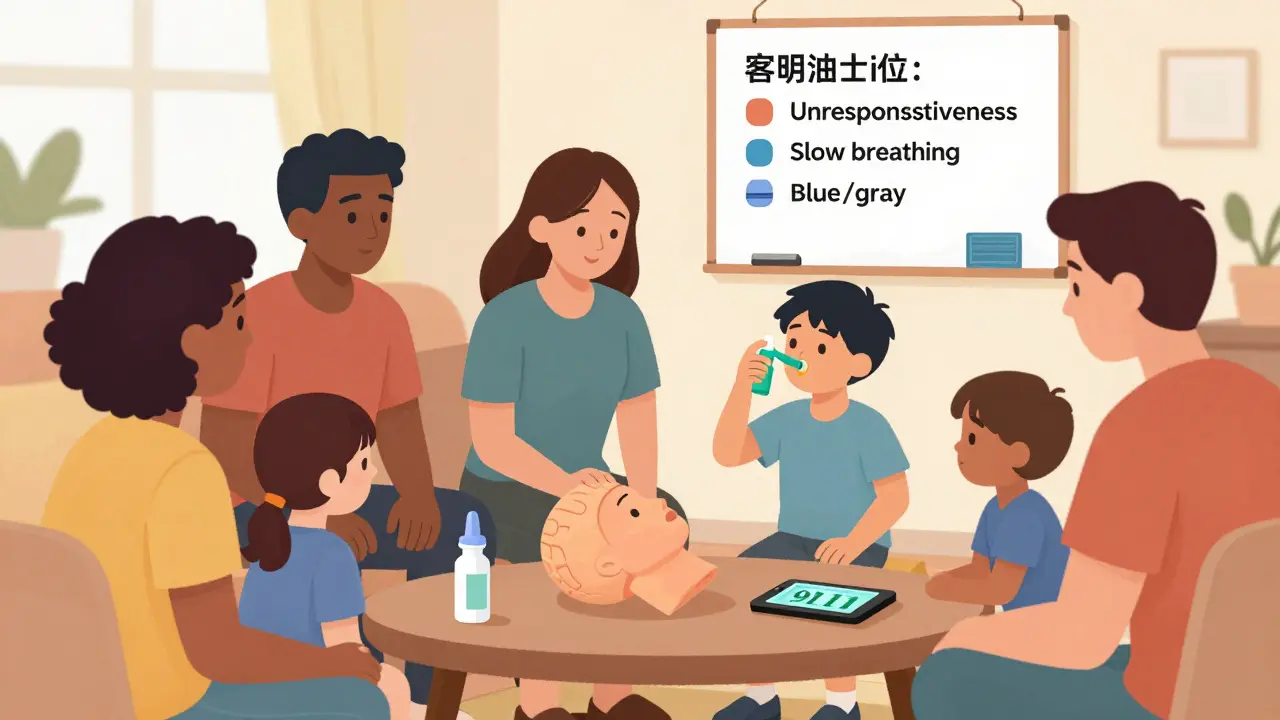
When someone you love is using drugs, the fear of an overdose is real-and it doesn’t have to be silent. Every year, more than 100,000 people in the U.S. die from drug overdoses. Most of those deaths happen at home, not in hospitals. That means the person who might save their life isn’t a doctor-it’s you. A sibling. A parent. A partner. Teaching your family how to recognize the signs of an overdose isn’t about scaring them. It’s about giving them the power to act before it’s too late.
What Overdose Actually Looks Like
People often think overdose means someone is passed out, drooling, or shaking. But that’s not always true. An overdose is when the body can’t handle the amount of a substance anymore. It’s not just being high. It’s a medical emergency that can kill in minutes. For opioids like heroin, fentanyl, or prescription painkillers, there are three clear signs to watch for:- Unresponsiveness - Try shaking their shoulder and shouting their name. If they don’t wake up, even with a firm sternal rub (rubbing the center of their chest with your knuckles), they’re not just asleep.
- Slow or stopped breathing - Count their breaths for 10 seconds. If they take fewer than two breaths in that time, or if their chest isn’t moving at all, this is critical.
- Blue or gray lips and fingernails - This is a sign their body isn’t getting enough oxygen. On lighter skin, it looks bluish-purple. On darker skin, it looks grayish or ashen.
- Limp arms and legs - like a ragdoll
- Clammy, cold skin
- Gurgling or snoring sounds - sometimes called a "death rattle"
- Extreme overheating (body temp over 104°F)
- Seizures
- Chest pain or racing heartbeat
- Confusion or panic that doesn’t make sense
Why Training With Practice Makes All the Difference
You can read all the brochures in the world. But if you’ve never practiced what to do, you’ll freeze when it matters. A 2022 CDC study looked at 47 community programs that taught families how to respond to overdoses. Those that used hands-on training with fake naloxone devices had 89% skill retention after three months. Programs that just talked about it? Only 42% remembered the steps. Why? Because your brain learns by doing. When you practice opening a naloxone kit, pushing the plunger, and placing it in someone’s nose while someone else yells 911, your body remembers. When panic hits, muscle memory kicks in. Real families say the same thing: > "I practiced three times with the training kit. When my son stopped breathing, I didn’t think-I just did it. Narcan worked before the ambulance got there." - Reddit user RecoveryDad42 You don’t need a fancy setup. Get a training naloxone kit (they cost about $35). Use a pillow or mannequin. Practice the steps like you’re rehearsing for a play:- Call 911
- Give two rescue breaths
- Administer naloxone (nasal spray into one nostril)
- Wait two minutes
- If no response, give a second dose
- Keep giving breaths until help arrives
How to Talk About It Without Scaring People
Many families avoid this because they’re afraid it’ll "jinx" things. Or they think, "They’re not going to overdose-they’re trying to get clean." But that’s not how addiction works. Relapse is common. Fentanyl is everywhere. One pill can kill. Start small. Don’t say, "We need to learn how to save someone from dying." Say: > "I found this video from the CDC. It’s only 10 minutes. Let’s watch it together. If something ever happens, we’ll know what to do." Use real stories. Mention that 78% of overdose deaths happen at home. Say that naloxone reverses 98% of opioid overdoses if given within four minutes. That’s not magic. That’s science. Some people will cry. Some will laugh nervously. That’s normal. Keep going. One woman in Georgia told her family, "I don’t want to bury my son. I want him to come home." That’s all it took.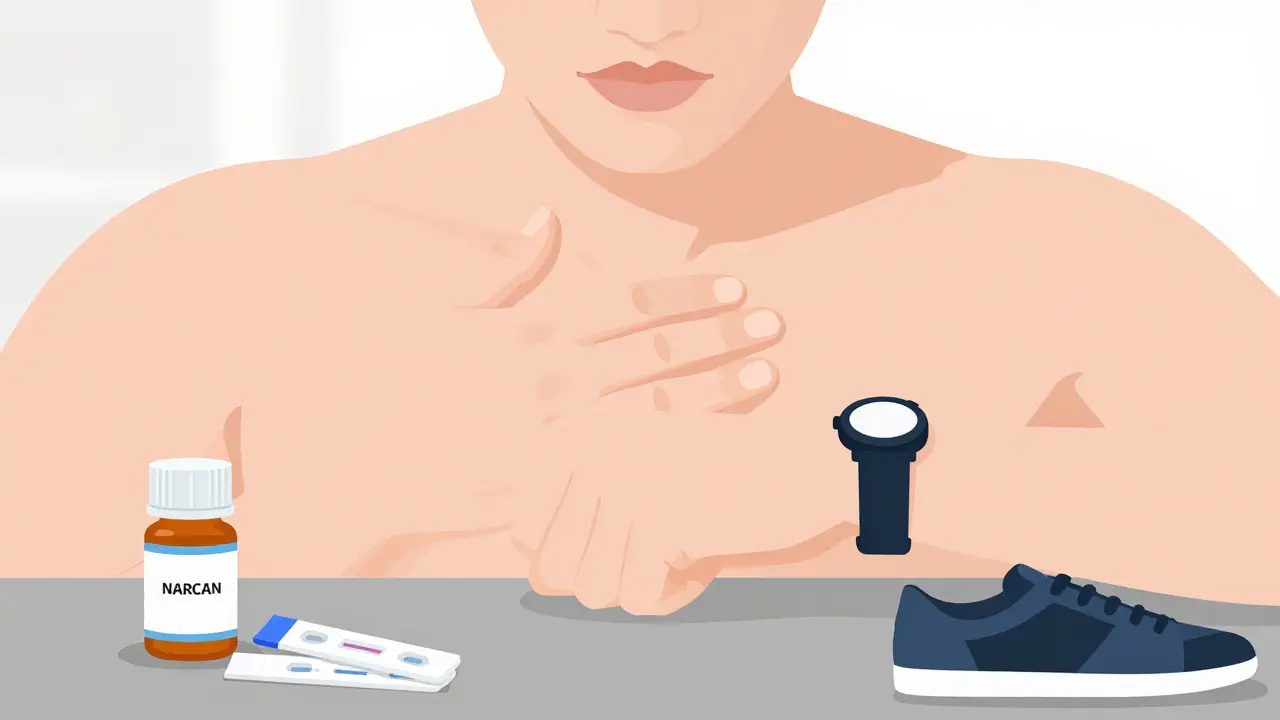
What to Have Ready
You don’t need much, but you need the right things:- Naloxone (Narcan) - Get two nasal spray doses. Keep them in your wallet, purse, or car. They last two years. No prescription needed in 31 states.
- Phone - Charge it. Keep it nearby. Know your address.
- Training kit - Order one free from Harm Reduction Coalition or your local health department.
- Skin tone guide - Download one from the California Department of Public Health. Cyanosis looks different on different skin tones. Don’t assume blue means the same everywhere.
What Happens After You Act
Giving naloxone doesn’t mean the crisis is over. The person will wake up. They might be angry. They might scream at you. They might say, "You ruined my high." That’s okay. Naloxone only lasts 30 to 90 minutes. The drug in their system might last longer. They can slip back into overdose. Stay with them. Keep giving rescue breaths. Wait for EMS. Don’t let them go back to using alone. And after? Talk to them. Not in anger. Not in guilt. Just say: "I love you. I didn’t want to lose you. I’m here if you want help."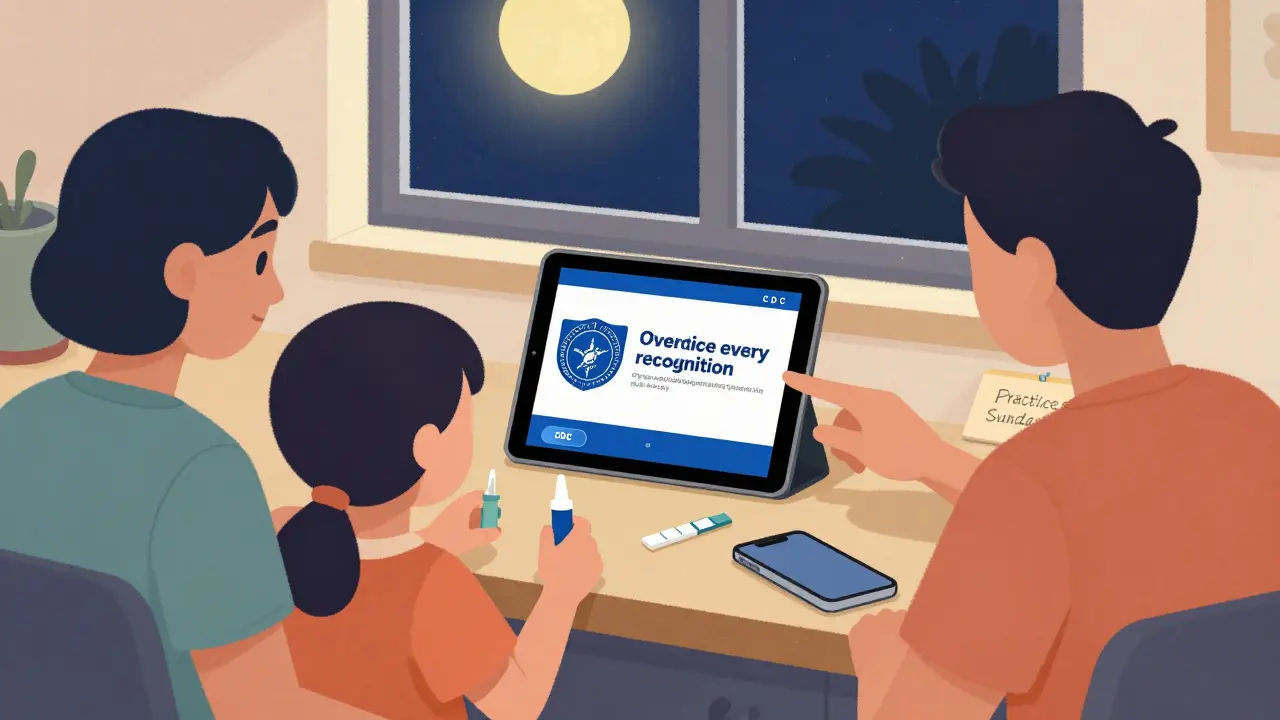
Where to Get Free Training
You don’t have to figure this out alone.- Overdose Lifeline - Offers free online videos and mobile app with step-by-step guides.
- SAMHSA - Their "Stop Overdose" curriculum is used in all 50 states. Visit their website for printable materials.
- Your local health department - Most offer free training and free naloxone kits. No questions asked.
- Pharmacies - In 31 states, you can walk in and ask for Narcan. No prescription needed.
It’s Not About Perfect. It’s About Ready.
You don’t need to be a medic. You don’t need to understand chemistry. You just need to know three signs. One action. One tool. You might never need to use it. But if you do? You’ll be the reason someone comes home.Can I get naloxone without a prescription?
Yes. In 31 states, you can walk into a pharmacy and ask for Narcan nasal spray without a prescription. In other states, you may need to complete a short training, but many health departments give it out for free. Check with your local public health office or visit Harm Reduction Coalition’s website for a state-by-state guide.
What if I give naloxone and they don’t wake up?
Call 911 immediately. Give a second dose of naloxone after two minutes. Keep giving rescue breaths every five seconds until help arrives. Naloxone wears off after 30-90 minutes, and the overdose can return. Stay with the person. Don’t assume one dose is enough.
How do I recognize overdose on darker skin?
Blue or purple lips and fingernails may not show up clearly. Instead, look for grayish, ashen, or pale skin around the lips, fingertips, or nail beds. The skin may feel cold and clammy. Pay attention to breathing patterns and unresponsiveness-these are more reliable than color alone.
Is it safe to give naloxone to someone who didn’t overdose?
Yes. Naloxone has no effect on people who haven’t taken opioids. It’s safe to use even if you’re unsure. Giving it to someone who didn’t overdose won’t harm them-it just won’t do anything. Better to use it and be safe than wait and risk losing someone.
What if the person wakes up angry after I give naloxone?
It’s common. Naloxone can cause sudden withdrawal, which is painful and scary. They may yell, cry, or push you away. Don’t take it personally. Stay calm. Say, "I love you. I didn’t want to lose you." Then stay with them until help arrives. Their anger doesn’t mean you did the wrong thing.
Can I train my whole family at once?
Yes. Many health departments offer group training sessions. You can also use free online videos together. Practice with a training kit as a family. Make it a regular thing-like a fire drill. The more people who know what to do, the better the chance someone survives.
Sabrina Sanches
March 13, 2026 AT 08:47❤️
Ali Hughey
March 15, 2026 AT 06:33Also... fentanyl test strips? Really? That's just giving people a false sense of security. The real solution is ABSTINENCE. Not bandaids.
Dylan Patrick
March 15, 2026 AT 06:43rakesh sabharwal
March 16, 2026 AT 08:51Aaron Leib
March 17, 2026 AT 16:22Elsa Rodriguez
March 18, 2026 AT 09:04Leah Dobbin
March 19, 2026 AT 04:55Shruti Chaturvedi
March 20, 2026 AT 11:15Noluthando Devour Mamabolo
March 20, 2026 AT 18:30Kathy Leslie
March 22, 2026 AT 03:05Serena Petrie
March 23, 2026 AT 03:10Alex MC
March 23, 2026 AT 14:11Amisha Patel
March 25, 2026 AT 03:10