
How to Switch Back from a Generic to a Brand Medication Safely
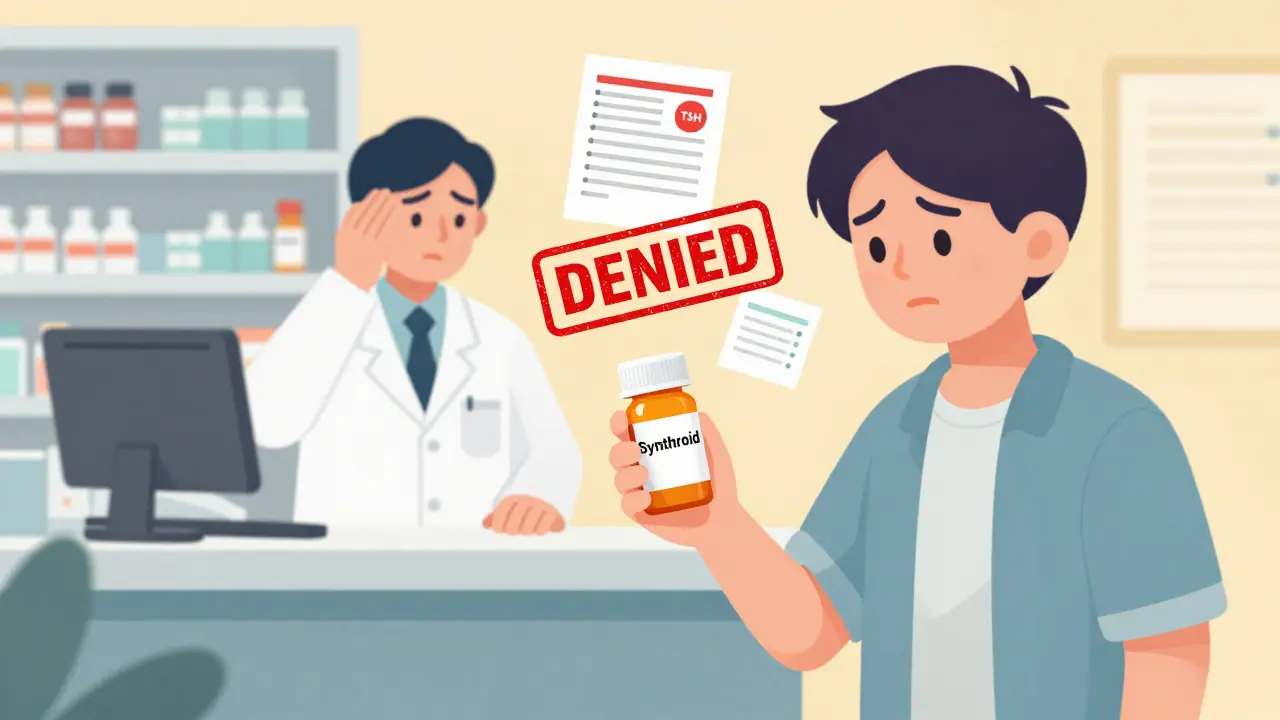
Switching from a generic medication back to the brand-name version isn't as simple as asking your pharmacist for the original package. It’s a medical decision - not a preference. And if done without proper steps, it can lead to treatment gaps, insurance denials, or even dangerous side effects. Millions of Americans have tried this switch, often because they felt worse on the generic. But here’s the truth: switching back isn’t about brand loyalty. It’s about biology, chemistry, and precise medical documentation.
Why Some People Need to Switch Back
Generic drugs are required by the FDA to contain the same active ingredient, strength, and dosage form as the brand. They must also be bioequivalent - meaning they deliver the drug into your bloodstream within 80% to 125% of the brand’s rate. Sounds fair, right? But that range is wide. For most people, it doesn’t matter. For others, even a 5% difference can trigger problems. People who switch back usually do so because:- They developed a rash, nausea, or other reaction linked to an inactive ingredient (like dyes, fillers, or preservatives) in the generic.
- Their condition worsened - like unstable thyroid levels on generic levothyroxine or breakthrough seizures on generic anti-epileptics.
- They were on the brand for years and noticed a change after a generic substitution.
What’s Really Different Between Brand and Generic
The active ingredient? Identical. The inactive ingredients? Often not. Brand-name manufacturers stick to the same formula for years. Generics? They change suppliers. One batch might use cornstarch. The next might use wheat starch. One might use FD&C Red No. 40. Another might use titanium dioxide. For most people, this doesn’t matter. But for someone with a gluten sensitivity, a dye allergy, or a rare metabolic condition? It can be catastrophic. A 2023 NEJM Catalyst study found that while 92.7% of brand-to-generic switches worked without issue, only 84.3% of generic-to-brand switches were successful. Why? Because switching back doesn’t guarantee stability. If the brand formulation changed since you last took it - or if the generic you were on had a unique combination of fillers - your body might still react.When Switching Back Is Medically Necessary
Not every complaint about a generic means you need the brand. But there are clear medical cases where switching back is justified:- Narrow therapeutic index drugs: Warfarin, levothyroxine, lithium, digoxin, and certain anti-seizure meds. Even small changes in blood levels can be dangerous.
- Autoimmune or transplant patients: Drugs like cyclosporine or tacrolimus require precise dosing. A shift in absorption can trigger organ rejection.
- Allergic reactions: If you broke out in hives, developed swelling, or had trouble breathing after a generic, that’s not just “bad luck.” It’s a documented reaction.
- Therapeutic failure: If your condition got worse after switching - and your doctor confirms it - that’s clinical evidence.
The 7-Step Safe Switching Process
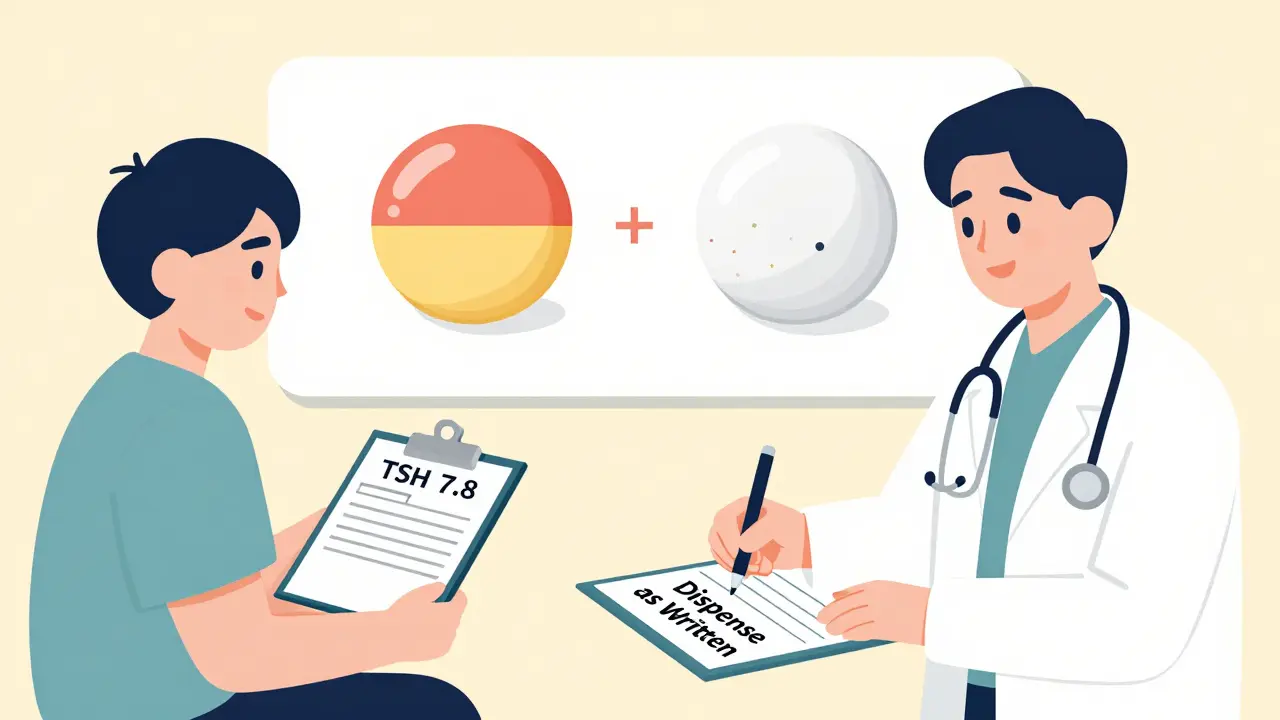
You can’t just walk into a pharmacy and ask for Synthroid instead of levothyroxine. Here’s what actually works:- Document your symptoms. Don’t say “I feel worse.” Say: “My TSH levels jumped from 2.1 to 7.8 after switching to generic levothyroxine. My fatigue and weight gain returned.” Include lab results.
- Get your doctor to write “Dispense as Written” or “Brand Medically Necessary” on the prescription. This tells the pharmacy: “Don’t substitute.”
- Specify the exact brand. Not “the brand.” Not “the one I used before.” Write: “Synthroid 75 mcg tablets.” Different brands aren’t interchangeable - Levoxyl and Tirosint aren’t the same as Synthroid.
- Include lab data. Attach your recent thyroid, INR, or drug level tests. This isn’t optional - it’s required for insurance approval.
- Submit prior authorization. Your doctor’s office must file this. It’s not automatic. Medicare Part D requires this for 68% of brand-name drugs when a generic exists.
- Call the pharmacy ahead. Some pharmacies won’t even stock certain brands. Confirm they have it before you go.
- Follow up in 7-10 days. Monitor symptoms. Retest labs if needed. This isn’t a one-time fix - it’s an ongoing adjustment.
Insurance and Cost Hurdles
Here’s the ugly truth: insurance companies fight these switches hard. In 2023, 82% of Blue Cross Blue Shield requests for brand-name drugs were denied - even when medically justified. Medicare Part D patients reported an average 14.3-day wait for approval. But here’s what helps:- Use the “Brand Medically Necessary” form (CMS Form 1490S) - it’s official.
- Appeal immediately. 63.7% of denials are overturned when you provide lab reports and clinical notes.
- Ask your doctor to write a letter of medical necessity. It’s not a form letter - it needs your name, diagnosis, lab values, and why the generic failed.
What to Avoid
Don’t:- Switch back on your own. No pharmacist can legally do it without a prescriber’s order.
- Assume all generics are the same. One generic made by Teva may be different from one made by Mylan.
- Wait until you feel awful to act. If you notice changes, document them early.
- Use “I prefer the brand” as your reason. Insurance won’t cover it. You need clinical evidence.
What’s Changing in 2026
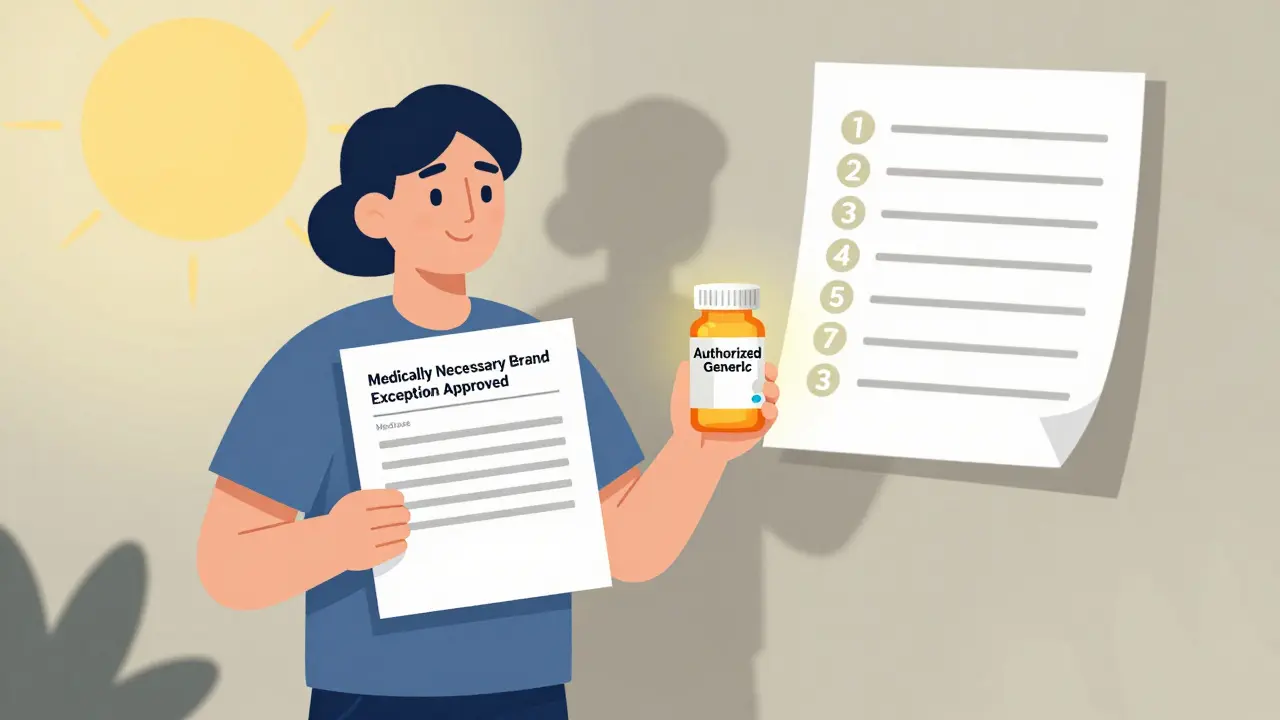
The FDA’s 2023 GDUFA III rules now require generic manufacturers to report formulation changes more transparently. In 2024, Medicare Part D will launch a new “Medically Necessary Brand Exception” pathway with a 72-hour approval guarantee for high-risk drugs. Also, more brand companies are selling “authorized generics” - same formula, same factory, but sold under a generic label. If you’re switching back, ask: “Is this the exact same pill as the brand?” Sometimes, it is.Final Thought
Switching back from a generic to a brand isn’t about privilege. It’s about safety. For 99% of people, generics work fine. But for the rest - the ones with allergies, unstable conditions, or rare metabolic needs - that 1-2% difference matters. You deserve to be treated as an individual, not a statistic. Just don’t skip the steps. The paperwork isn’t bureaucracy - it’s your protection.Can I just ask my pharmacist to give me the brand instead of the generic?
No. Pharmacists are legally required to substitute generics unless the prescription says “Dispense as Written” or “Brand Medically Necessary.” Even if you pay out of pocket, they can’t override the prescription without a new order from your doctor.
Is it safe to switch back and forth between brand and generic?
Not recommended. Each switch - even back to the same brand - can cause your body to react differently. The FDA warns that frequent switching between different manufacturers, including brand and generic, increases the risk of therapeutic failure or adverse reactions, especially for narrow therapeutic index drugs like levothyroxine or warfarin.
What if my insurance denies the brand-name drug?
Appeal immediately. You have the right to a formal review. Provide your doctor’s letter, lab results, and any documentation of adverse reactions. 63.7% of denials are overturned when you submit complete clinical evidence. Also ask about patient assistance programs - many brand manufacturers offer free or discounted medication for qualifying patients.
Are all generics the same? Can I switch between different generic brands?
No. Different generic manufacturers use different inactive ingredients. A change in filler, dye, or coating can affect absorption or trigger allergies. The FDA allows this - but for patients with sensitivities, it’s a risk. If you’re on a narrow therapeutic index drug, stick to one manufacturer unless your doctor approves a change.
How do I know if my drug has a narrow therapeutic index?
Common examples include warfarin, levothyroxine, lithium, digoxin, phenytoin, carbamazepine, and cyclosporine. Your doctor or pharmacist can tell you if your medication is on this list. If it is, avoid unnecessary switches. The FDA recommends extra caution - and often requires “Dispense as Written” on prescriptions.
Can I get the brand-name drug if I can’t afford the generic?
No. Insurance won’t cover the brand if the generic is available and affordable. But if you’re having trouble paying for the generic, ask about patient assistance programs. Many generic manufacturers offer discounts. Some pharmacies have $4 prescription lists. The goal is to keep you on medication - not to force you into a brand you can’t afford.
What if I switch back and still feel bad?
Tell your doctor right away. It could mean the brand you got isn’t the same as before (formulations change), or there’s another issue. Re-test your drug levels. Ask if another brand or formulation (like a capsule instead of a tablet) might work better. Don’t assume the brand is the solution - sometimes it’s not.
Morgan Dodgen
March 9, 2026 AT 01:01Let’s be real - the FDA’s 80-125% bioequivalence window is a joke. It’s not science, it’s corporate lobbying dressed in lab coats. I’ve seen people on generic levothyroxine go from euthyroid to myxedema coma. Not hyperbole. Real cases. And no one talks about how the same generic batch from Teva can have different fillers depending on which factory it came from. One’s got cornstarch, the next’s got gluten. You think your insurance cares? LOL. They’re too busy optimizing their bottom line to notice you’re dying slowly. 🤡
Philip Mattawashish
March 9, 2026 AT 11:08Oh please. You’re all acting like this is some kind of medical mystery. It’s not. It’s capitalism. Big Pharma invented the concept of ‘brand loyalty’ to keep you paying $500 for a pill that costs 7 cents to make. The real tragedy? You’re all so desperate to believe you’re special - ‘I’m not like the others!’ - that you ignore the fact that 99% of people do fine on generics. Your ‘narrow therapeutic index’? That’s just a fancy way of saying you’re fragile. And fragile people don’t belong in a system that runs on efficiency. You want the brand? Pay for it. Stop whining about bureaucracy - it’s the only thing keeping this system from collapsing under its own greed.
Tom Sanders
March 10, 2026 AT 08:10bruh i just switched back to synthroid because my generic made me feel like a zombie and now my insurance is denying it. i paid $12 out of pocket and called it a win. no paperwork, no drama. if you’re making this into a 7-step military operation you’re overcomplicating it. just ask your doc to write ‘dispense as written’ and if they say no, go to a different doc. done.
Jazminn Jones
March 11, 2026 AT 00:00It is imperative to underscore that the regulatory framework governing generic pharmaceuticals is predicated upon a statistical aggregation model that fundamentally disregards interindividual pharmacokinetic variability. The FDA’s bioequivalence criteria - while statistically valid for population-level outcomes - are epistemologically inadequate for patients with rare metabolic polymorphisms or hypersensitivity reactions to excipients. Furthermore, the absence of mandatory batch-level disclosure regarding inactive ingredients constitutes a systemic failure of transparency. Without mandatory, granular labeling (e.g., source of starch, dye composition, coating agents), the current paradigm is not merely flawed - it is ethically indefensible.
Stephen Rudd
March 12, 2026 AT 21:40You Americans are so obsessed with brand names you forget that in Australia, we’ve had generic substitution for decades and no one’s dropping dead. The FDA’s 80-125% range? That’s not a loophole - it’s a safety buffer. You’re not special. You’re not unique. You’re just a person who got lucky with a brand that happened to work. Now you want the system to bend for your personal preference. That’s not medicine. That’s entitlement. And your ‘narrow therapeutic index’? Sounds like you’re just bad at following dosage instructions.
Erica Santos
March 13, 2026 AT 00:26So let me get this straight - you’re telling me that after decades of Big Pharma lying to us about how ‘all drugs are the same,’ we’re supposed to trust the FDA’s word now? 🤡 The same FDA that let OxyContin be marketed as non-addictive? The same FDA that approved Vioxx knowing it killed people? You think they care if you get hives from FD&C Red No. 40? They care about quarterly earnings. And you? You’re just a line item in their spreadsheet. Congrats. You’re the 1.2% of people who matter - and they’re already pricing you out.
George Vou
March 14, 2026 AT 10:37my friend had a seizure after switching to generic keppra and now her insurance wont cover the brand even though she’s on disability. the whole system is rigged. they dont want you to be healthy they want you to be dependent. i think the government is in cahoots with the pharma companies to keep people on generics so they can control the market. i saw a video on youtube that said the fillers are laced with microchips to track us. i dont know if its true but i stopped taking my meds for a week just to be safe.
Scott Easterling
March 14, 2026 AT 22:24Ugh. Another one of these ‘I’m special’ rants. You know what’s worse than generics? People who think their body is so fragile it needs a $300 pill. I’ve been on warfarin for 12 years. Switched from Coumadin to generic 8 years ago. No issues. No seizures. No hives. Just fine. You think your thyroid is so delicate? Maybe you’re just lazy. Or maybe you’re not tracking your INRs. Or maybe you’re not eating the same amount of kale every day. The problem isn’t the pill. It’s you. And your need to be the exception. The system works. You’re just bad at it.
Mantooth Lehto
March 16, 2026 AT 06:50I had a patient last week who broke out in full-body hives after a generic switch. She cried. I cried. She was 72. Had no family. Just her and her cat. The pharmacy didn’t even tell her the filler changed. No one told her. And now? She’s on Synthroid. Approved after 17 days. I’ve been in this job 22 years. This isn’t about money. This is about dignity. We treat people like widgets. And then we wonder why no one trusts medicine anymore. 💔
Melba Miller
March 17, 2026 AT 05:01It’s not about the pill. It’s about control. The government wants you dependent on their system. They want you to beg for approval. They want you to jump through 7 hoops just to get the same drug you’ve been on for 15 years. And the worst part? They know you’ll do it. Because you’re scared. You’re scared of seizures. You’re scared of dying. And they use that fear to keep you quiet. They don’t care if you live. They care if you obey. And if you don’t? You’re just another statistic. They already wrote your obituary. You just haven’t read it yet.
Katy Shamitz
March 17, 2026 AT 23:26Thank you for writing this. I’ve been trying to explain this to my sister for months. She thinks it’s just ‘all the same.’ But when her son had a severe allergic reaction to a generic antiepileptic - with swelling, trouble breathing, the whole thing - and we found out it was because of a dye that’s banned in the EU? That’s not chemistry. That’s negligence. And now we’re fighting insurance for the 4th time. But I’m not giving up. Because kids deserve better. And so do we.