
How to Safely Dispose of Unused Opioids to Prevent Misuse and Overdose
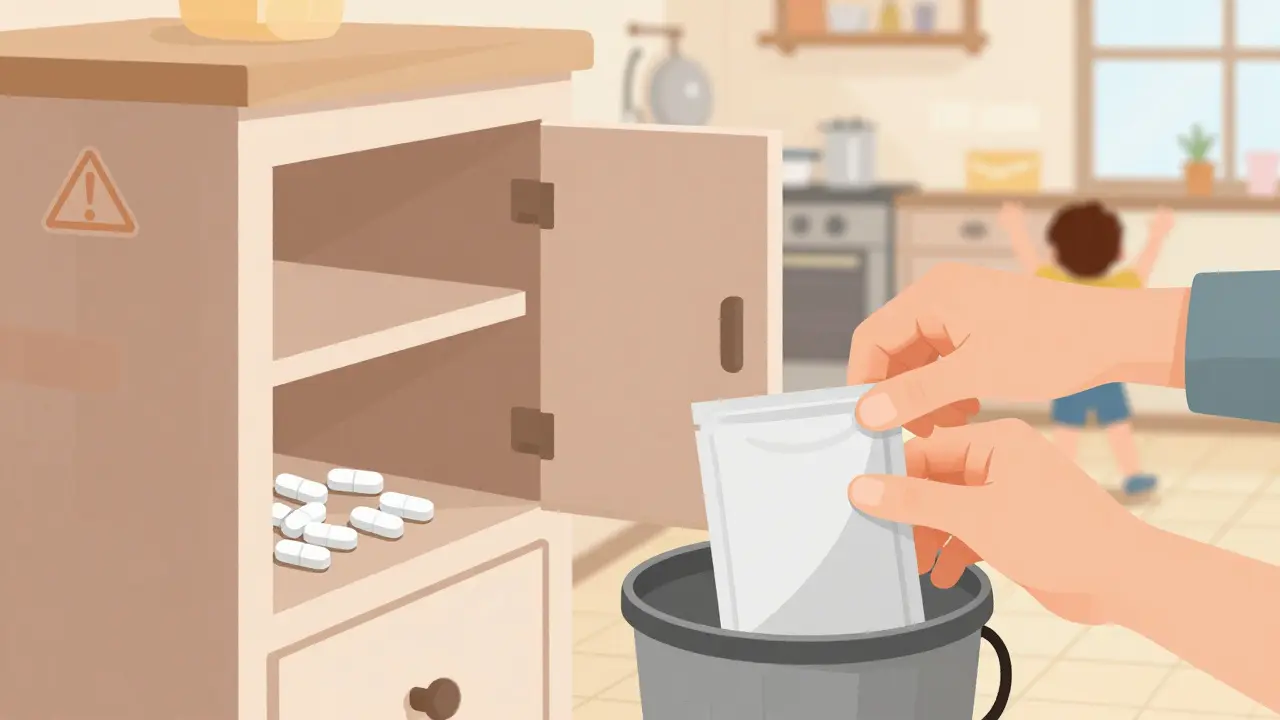
Every year, over 100,000 people in the U.S. die from drug overdoses, and nearly 70% of misused prescription opioids come from medicine cabinets at home. That means the pills sitting in your bathroom drawer or kitchen cabinet could be putting someone at risk-your child, a teenager, a neighbor, or even yourself in a moment of confusion or crisis. The good news? You have real, proven ways to get rid of unused opioids safely. No more guessing. No more hoping it’ll be fine. Here’s exactly how to do it right.
Why Disposal Matters More Than You Think
It’s not just about cleaning up your medicine cabinet. Unused opioids are a major driver of addiction and overdose. The CDC found that in 2021, 107,622 Americans died from drug overdoses, and nearly half of those involved prescription opioids. Most of these drugs didn’t come from illegal dealers-they came from friends or family who never got rid of them. A 2019 national survey showed that 7 out of 10 people who misused opioids got them from someone else’s prescription. That’s not a coincidence. It’s a direct result of poor disposal habits.Method 1: Use a Drug Take-Back Program (The Gold Standard)
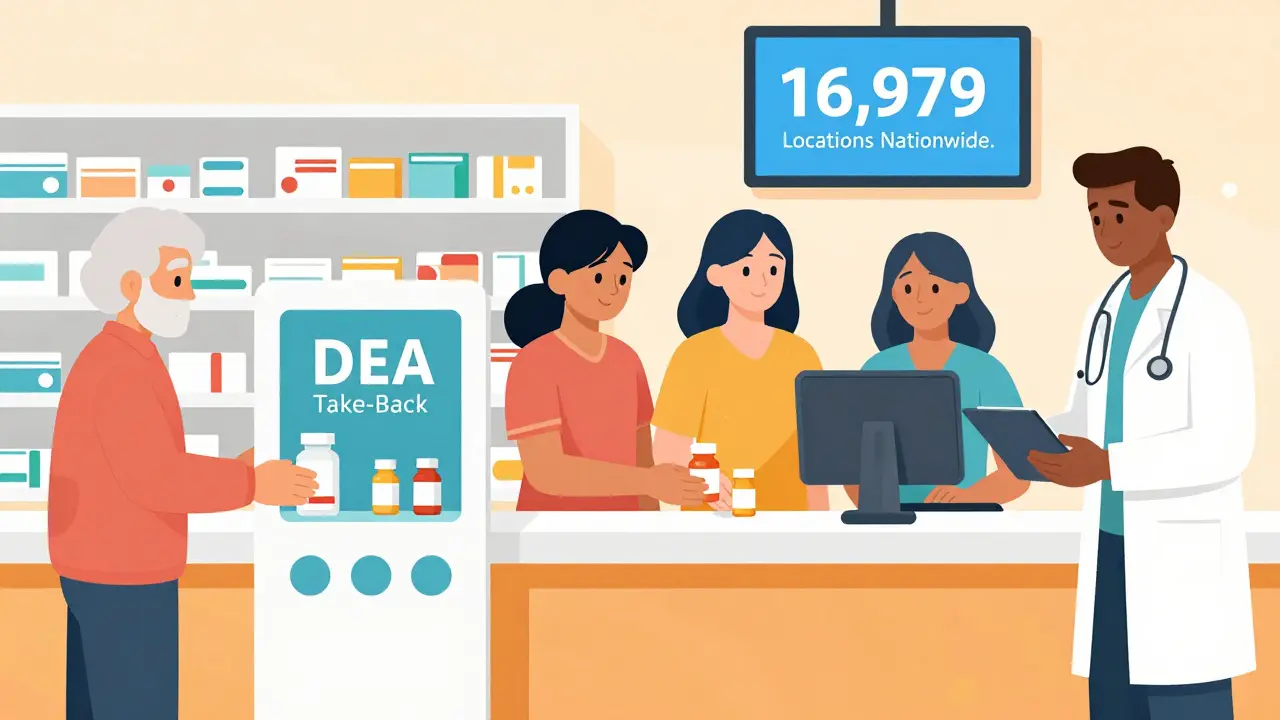
This is the safest, most effective way to dispose of opioids. The DEA runs the National Prescription Drug Take Back Day, but you don’t have to wait for one day a year. There are over 16,979 permanent collection sites across the U.S. as of September 2023. These include:- 12,450 pharmacies (Walmart, Walgreens, CVS, and many independent ones)
- 3,200 police stations and sheriff’s offices
- 1,329 hospitals and clinics
You can find your nearest location in under 30 seconds using the DEA’s online Disposal Locator Tool. Just enter your ZIP code. Most sites accept pills, patches, liquids, and even syringes (in sealed containers). The medications are then incinerated at temperatures over 1,800°F-completely destroying the drugs so they can’t be retrieved or reused.
Take-back programs are 98% effective at preventing diversion. They’re free, anonymous, and require no paperwork. If you live in a city, you’re likely within 5 miles of a drop-off point. Even if you’re in a rural area, check your local pharmacy-many now have kiosks inside the store that accept medications 24/7.
Method 2: Use a Deactivation Pouch (Best for Home Use)
If you can’t get to a take-back site, deactivation pouches are your next best option. These are single-use pouches that neutralize opioids using activated carbon and chemical agents. Brands like Deterra and SUDS are FDA-recognized and widely available.Here’s how to use them:
- Remove the opioid medication from its original container.
- Place pills, patches, or liquid into the pouch.
- Add warm water (usually 2-4 ounces) as instructed.
- Seal the pouch and shake it for 30 seconds.
- Wait 10-30 minutes. The drugs are now chemically deactivated.
- Throw the pouch in the trash.
Studies from the University of Pittsburgh show these pouches deactivate 99.9% of opioids. They’re available at 85% of major pharmacies and cost between $2.50 and $5.00 each. Some states even provide them for free through public health programs. Just make sure you follow the water amount-too little and the deactivation won’t work. A 2021 usability study found 28% of users made this mistake the first time.
Method 3: Household Disposal (When Nothing Else Works)
If you don’t have access to a take-back site or deactivation pouch, the FDA allows a safe household method. It’s not perfect, but it’s better than leaving pills in the open.Follow these steps exactly:
- Take the pills out of their original bottle.
- Mix them with an unappetizing substance-like used coffee grounds, cat litter, or dirt. This makes them unappealing and hard to extract.
- Put the mixture into a sealable container-a jar with a lid, a plastic bag, or an empty yogurt tub.
- Cover the container with tape to seal it shut.
- Scratch out your name and prescription details on the empty bottle with a permanent marker.
- Throw the sealed container in the trash.
This method reduces the risk of diversion by 82%, according to a 2020 evaluation by the Lake County Indiana Health Department. But it only works if done correctly. Many people fail because they leave pills in the original bottle, don’t mix them with absorbent material, or use flimsy bags that tear. A Wyoming Department of Health study found that 68% effectiveness drops to under 50% when users skip steps.
Method 4: Flushing (Only for Specific High-Risk Opioids)
The FDA says you should only flush opioids if they’re on their official Flush List. This list includes 15 high-risk medications that are especially dangerous if accidentally ingested-especially by children or pets. These include:- Fentanyl patches
- Oxycodone (OxyContin, Percocet)
- Morphine sulfate
- Hydromorphone (Dilaudid)
- Tapentadol (Nucynta)
Flushing these drugs prevents accidental poisoning. A 2019 study in Pediatrics found that flushing high-risk opioids prevents 95% of accidental pediatric exposures. But don’t flush anything else. The U.S. Geological Survey found trace amounts of pharmaceuticals in 80% of U.S. waterways, and flushing non-listed drugs contributes to pollution. Only flush the 15 listed by the FDA. If you’re unsure, check the label or ask your pharmacist.
What Not to Do
Avoid these dangerous mistakes:- Don’t flush non-listed opioids. Even if they’re old or expired, flushing adds to water pollution.
- Don’t pour pills down the sink. Same problem as flushing.
- Don’t throw pills in the trash without mixing them. Trash collectors, kids, or pets can find them.
- Don’t reuse empty pill bottles. Even if you scrub off the label, someone with the right tools can recover your prescription info.
- Don’t wait. The longer opioids sit around, the higher the chance they’ll be misused.
Real-World Impact: What Works
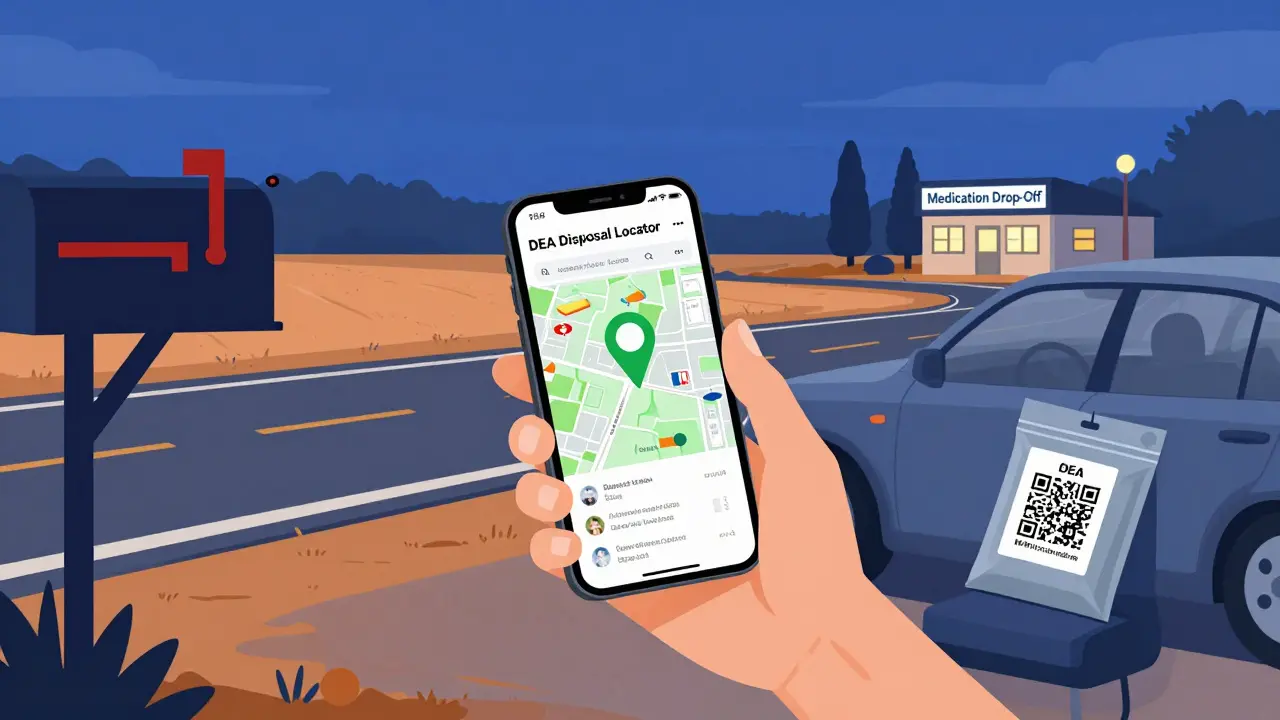
Communities that combine multiple methods see the best results. A University of Florida study found that areas using take-back programs, deactivation pouches, and household disposal together cut opioid diversion by 37%. Hospitals that hand out disposal instructions with prescriptions saw disposal rates jump from 22% to 67%. The Mayo Clinic’s program, which includes disposal education at discharge, achieves 89% compliance.And it’s working. In 2023, over 2.3 million people used the DEA’s disposal locator. States like California and Wyoming invested millions from opioid settlement funds to expand access. The DEA added 1,200 new collection sites in 2023, including ones in Native American communities previously left out. A new pilot program using QR-coded pouches increased disposal rates by 45% in 12 states.
What to Do If You’re Unsure
If you’re not sure what to do:- Call your pharmacy. They know what’s available locally.
- Check the FDA’s official Flush List online.
- Ask your doctor or nurse during your next visit. They’re required to give disposal instructions now.
- Use the DEA’s website or call 1-800-882-9539.
There’s no shame in asking. Over 73% of patients say they’re confused about disposal instructions. You’re not alone.
Final Thought: One Action Can Save a Life
You don’t need to be a doctor, a policymaker, or a public health expert to make a difference. Just one action-taking those unused opioids to a drop-off site, using a pouch, or mixing them with coffee grounds-can prevent a tragedy. The CDC calls safe disposal a Tier 1 prevention strategy. That means it’s one of the most powerful tools we have. And it’s something you can do today.Can I just throw opioids in the trash without mixing them?
No. Throwing pills in the trash without mixing them leaves them accessible to children, pets, or people who go through the trash. Always mix them with an unappetizing substance like coffee grounds or cat litter and seal them in a container. This reduces the risk of accidental ingestion or misuse.
Are deactivation pouches worth the cost?
Yes. Pouches cost $2.50-$5.00 and deactivate 99.9% of opioids. They’re far safer than household disposal and more convenient than driving miles to a take-back site. Many pharmacies give them away for free, and some states provide them through public health programs. For the price of a coffee, you eliminate a major risk in your home.
What if I live in a rural area with no take-back sites?
You’re not out of options. Deactivation pouches are shipped nationwide and available at most major pharmacies. If those aren’t accessible, use the FDA-approved household method: mix pills with cat litter or coffee grounds, seal them in a container, and throw them in the trash. The Wyoming Department of Health found that 61% of rural residents successfully used this method after getting clear instructions.
Why can’t I flush all my old pills?
Flushing non-listed drugs contributes to water pollution. The U.S. Geological Survey detected pharmaceuticals in 80% of U.S. waterways. Only flush the 15 specific opioids on the FDA’s Flush List-fentanyl patches, oxycodone, morphine, and others-because they’re high-risk for accidental poisoning. For all others, use take-back, pouches, or household disposal.
Is it safe to keep unused opioids for "just in case"?
No. The risk of misuse far outweighs the chance of needing them again. Studies show 70% of misused opioids come from home medicine cabinets. Even if you think they’re locked away, teens and visitors can find them. The American Society of Regional Anesthesia recommends removing all unused opioids from the home within 7 days of use.
trudale hampton
March 21, 2026 AT 15:32Really appreciate this breakdown. I had no idea there were that many permanent drop-off sites. Just went to my local Walgreens and found a kiosk right by the pharmacy. Took me 2 minutes. Felt good to clear out my dad’s old oxycodone bottles. He passed last year, and I kept them ‘just in case’ - stupid, now I see it.
Thanks for making it feel doable, not overwhelming.
Shaun Wakashige
March 23, 2026 AT 06:42deactivation pouches?? lmao why not just flush em
Thomas Jensen
March 24, 2026 AT 05:26Let’s be real - this whole ‘take-back’ thing is a government distraction. You think they really want these drugs gone? Nah. They want you to think you’re doing something while they keep selling fentanyl through back channels. The DEA runs these programs? Please. Same agency that let Purdue Pharma laugh all the way to the bank.
And don’t get me started on ‘flushing only 15 drugs.’ Who decides that? Why not 50? Why not 200? Who’s really in control here? I’m not buying it. The system’s rigged. They want us scared, confused, and obedient. Just sayin’.
Solomon Kindie
March 25, 2026 AT 13:56so like if i dont have a pouch and cant get to a site and dont wanna mix with cat litter cause my cat might dig it up then what do i do just leave em in the drawer till i die or what
also why is the flush list so short like why not all opioids theyre all dangerous right
also who even has coffee grounds lying around these days
Natali Shevchenko
March 26, 2026 AT 05:05I’ve been sitting with this for a while, and honestly - it’s not just about disposal. It’s about grief. About loss. About the quiet, unspoken fear that maybe we’re holding onto these pills because we’re afraid of letting go of the person who needed them.
I kept my brother’s fentanyl patches for six months after he died. Not because I thought I’d need them - but because if I got rid of them, it felt like I was erasing him. Like the last physical trace of his pain was vanishing.
But then I thought - if I don’t dispose of them, someone else’s child might find them. Someone else’s parent might lose their kid too. So I used a pouch. And I cried. But I did it.
It’s not about cleanliness. It’s about love. And love sometimes means letting go. Even of the things that hurt.
Johny Prayogi
March 28, 2026 AT 02:20YES. THIS. 🙌 I just got a free pouch from my pharmacy last week. No questions asked. Just handed it to me like it was a Band-Aid. Why isn’t this everywhere? Why isn’t it mandatory? Why do we still treat this like a secret shame?
Stop making it hard. Just give everyone a pouch with their prescription. Done. Problem solved. 🚫💊
Nicole James
March 29, 2026 AT 20:35Wait - so you’re telling me… the FDA… has a FLUSH LIST…? And only 15 drugs? And we’re supposed to trust this? Who wrote this list? Who funds it? Is there a pharmaceutical lobby behind this? And why aren’t we told about the water contamination data? Why is this not front-page news? This feels… controlled. Too controlled. I’m not flushing anything until I see the full study. And I’m not trusting any kiosk that says ‘DEA’ on it. Not after everything.
Nishan Basnet
March 30, 2026 AT 00:12As someone from India where drug disposal is practically nonexistent, I’m stunned by how organized this system is in the U.S. We throw pills in the trash, flush them, or just leave them out - no guidance, no infrastructure. Your approach here is a model. I wish we had deactivation pouches in our rural clinics. Even one kiosk per district would save lives. You’re not just cleaning cabinets - you’re changing culture. Respect.
Allison Priole
March 30, 2026 AT 04:45Okay I just did it - I used the pouch. It felt weirdly emotional? Like I was doing a ritual. I wrote a little note on the pouch: ‘For you, Mom.’ She never took opioids, but I kept them because I was scared I’d need them one day. I don’t know why I thought that. But now? I feel lighter.
Also - I bought two more pouches. One for my sister’s house. One for my neighbor who’s a nurse and said she’s always got extra pills lying around. We’re all just trying to do the right thing. And it’s okay to mess up. Just keep trying.
Casey Tenney
April 1, 2026 AT 04:01If you’re keeping opioids ‘just in case,’ you’re not a caregiver - you’re a liability. Stop romanticizing it. Get rid of them. Now.
Chris Dwyer
April 1, 2026 AT 07:45You’re not alone if this felt overwhelming. I was scared to throw out my dad’s pain meds too. But I did it - took them to the police station. They smiled, said ‘thank you,’ and handed me a free pouch for next time. That’s the kind of community we need.
Here’s the thing - it’s not about perfection. It’s about progress. One pouch. One trip. One conversation with your kid about why we don’t keep medicine lying around.
You’re doing better than you think. Keep going.
matthew runcie
April 2, 2026 AT 00:28Used the DEA locator. Found a site 3 miles away. Went today. No ID. No questions. Just dropped them in. Felt like I did something real.
Thanks.