
How to Safely Dispose of Expired EpiPens, Inhalers, and Medicated Patches
Why Proper Disposal Matters
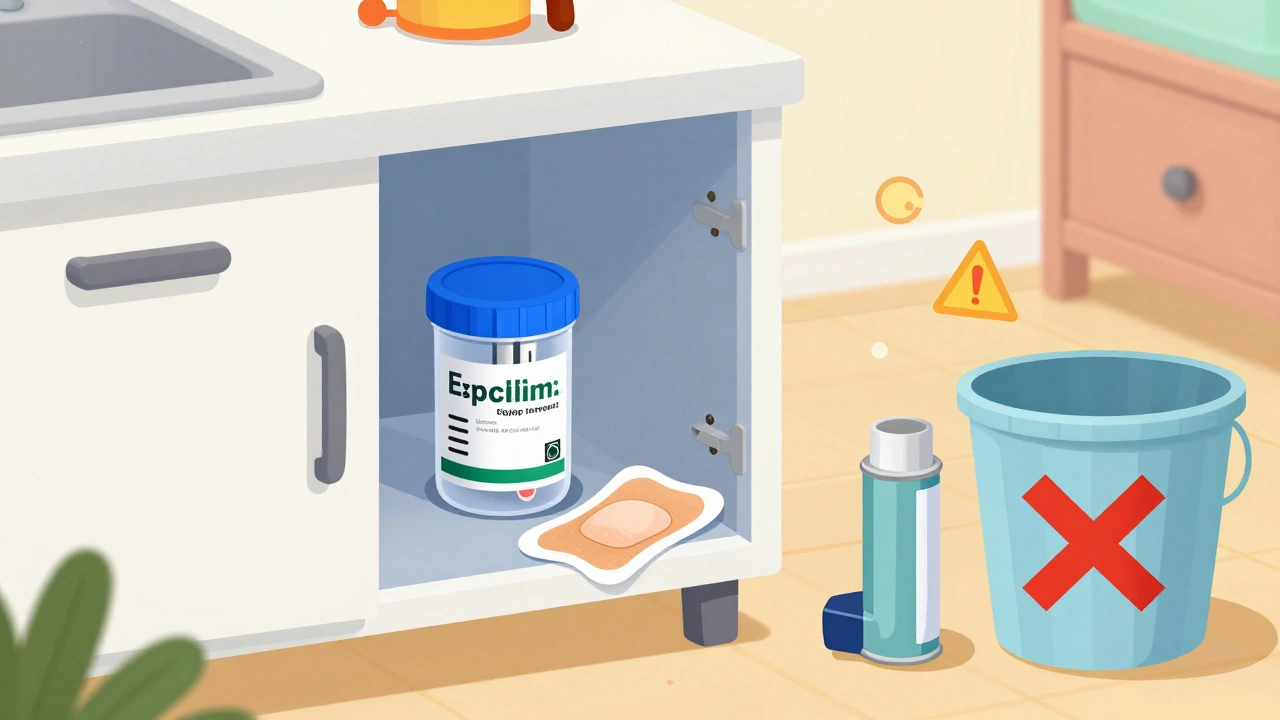
Expired EpiPens, inhalers, and medicated patches aren’t just old plastic and metal-they’re dangerous if thrown in the trash or flushed down the toilet without care. An EpiPen contains a sharp needle and life-saving epinephrine. An inhaler is a pressurized canister that can explode if crushed or burned. A fentanyl patch still holds enough drug to kill a child or pet if left exposed. The FDA reports that 12% of accidental poisonings in kids come from improperly discarded medications. That’s not a statistic-it’s a real risk in your own home.
Improper disposal doesn’t just hurt people. It pollutes waterways. The USGS found pharmaceuticals in 80% of tested streams and rivers. That’s not from hospitals-it’s from people tossing pills, patches, and inhalers into the trash. The EPA and DEA have clear rules because the consequences are real: children finding needles, pets licking sticky patches, sanitation workers getting stuck by hidden sharps.
How to Dispose of an Expired EpiPen
EpiPens are classified as medical sharps by the FDA. That means they’re treated like syringes or lancets-not regular trash. Even if the EpiPen is empty, the needle is still sharp and could cut someone. Here’s what to do:
- Return it to your doctor’s office. Most allergists and clinics have sharps disposal bins. When you go in for a new prescription, bring your expired one. Many offices take them without question.
- Use a pharmacy drop-off. Not all pharmacies accept EpiPens, but some do. Call ahead. CVS, Walgreens, and Kaiser Permanente pharmacies in certain states offer sharps take-back programs. Ask if they take auto-injectors specifically.
- Find a DEA Take Back location. The DEA runs National Prescription Drug Take Back Days twice a year (April and October), but many permanent collection sites exist year-round. Use the DEA’s online locator to find one near you.
- If you must store it at home, use a sharps container. Get a hard plastic container like a laundry detergent bottle. Label it clearly: "BIOHAZARD," "SHARPS," "DO NOT RECYCLE." Seal it tightly. Never use glass jars or soda bottles-they can break.
California requires all sharps to be returned to approved collection centers or mailed back via special programs. Texas allows disposal in household trash if properly contained and labeled. Check your state’s rules-there’s no national standard.
How to Dispose of an Expired Inhaler
Inhalers are tricky. They’re pressurized, contain propellants that harm the environment, and can explode if punctured. About 300 million are thrown away in the U.S. every year. Most end up in landfills, where they leak greenhouse gases.
- Don’t throw it in the trash or recycling. Even if it’s empty, the canister is still under pressure. It can rupture in a compactor truck or incinerator.
- Check if your pharmacy takes them. Some Walgreens and CVS locations accept inhalers, but it’s not guaranteed. Call first. In 2022, only 47% of Walgreens locations offered this service.
- Look for local hazardous waste programs. Cities like New York, Seattle, and San Francisco have special drop-off sites for aerosols. Visit your city’s waste management website and search for "aerosol disposal" or "household hazardous waste."
- Use the inhaler until it’s truly empty. Shake it, spray it into the air (away from people), and count actuations. Most inhalers have a counter. Once it hits zero, it’s safe to dispose of-but still not in recycling. Contact your local waste authority for instructions.
Some manufacturers, like GlaxoSmithKline and Teva, now offer mail-back programs for inhalers. Check the box or visit their website. You’ll often find a prepaid envelope inside the packaging.

How to Dispose of Medicated Patches
Patches like fentanyl, nicotine, or lidocaine are the most dangerous to throw away. Even after use, they still hold up to 80% of their original dose. A single fentanyl patch can kill an adult who isn’t opioid-tolerant.
- For high-risk patches (fentanyl, buprenorphine): Fold and flush. The FDA has a special "flush list" of medications that should be flushed immediately to prevent accidental exposure. Fentanyl patches are on that list. Fold the patch in half, sticky sides together, and flush it down the toilet. Yes, really. This is the only safe option.
- For lower-risk patches (nicotine, pain relief): Use the take-back method. If it’s not on the flush list, take it to a DEA Take Back location or pharmacy drop-off. Bring the patch in its original packaging if possible.
- Never throw a patch in the trash without folding it. If you must dispose of it at home, fold it sticky side to sticky side, then tape it shut. Place it in a sealed container with coffee grounds or cat litter to make it unappealing. Then throw it in the trash. But this is a last resort.
- Avoid DisposeRx® packets for patches. These gel packets work for pills and liquids, but not for transdermal patches. The adhesive doesn’t dissolve, and the drug remains intact.
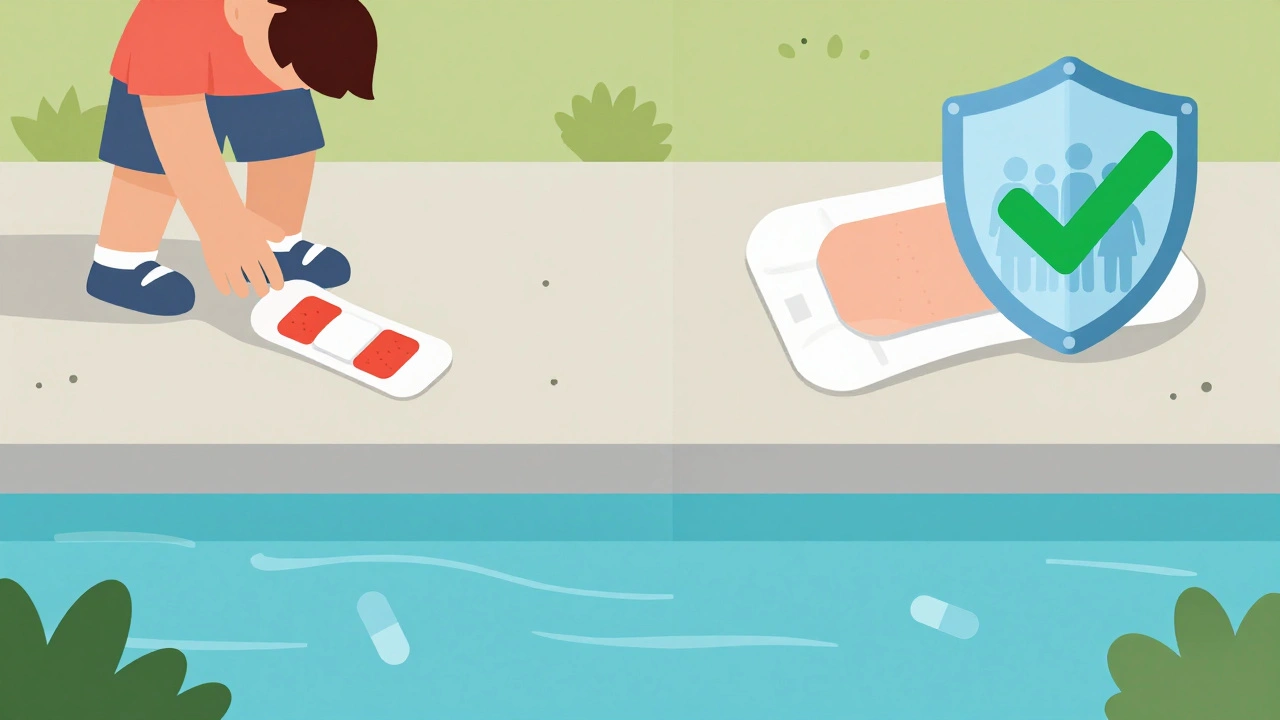
Children and pets are especially at risk. A 2023 study found that 62% of patch-related poisonings happened because someone found a discarded patch in the trash or on the floor.
What Not to Do
There are a lot of myths about disposal. Don’t:
- Put EpiPens in the recycling bin-sharps contaminate recycling streams.
- Try to remove the needle from an EpiPen-this is dangerous and illegal in many states.
- Flush all medications-only those on the FDA flush list (like fentanyl patches) should go down the toilet.
- Leave patches on the counter or in the bathroom-store them in a locked cabinet until disposal.
- Assume your local trash service handles pharmaceuticals-most don’t.
One Reddit user wrote: "My CVS said they only take pills, not auto-injectors." That’s common. Don’t give up. Try your allergist, hospital, or the DEA locator. You’re not alone.
Where to Find Disposal Locations
You don’t have to guess where to take these items. Use these trusted tools:
- DEA National Take Back Day Locator - Find permanent drop-off sites near you: deas.gov/takebackday
- SafeNeedleDisposal.org - Search by zip code for sharps collection centers
- Your state’s environmental agency website - Search for "pharmaceutical disposal" + your state name
- Your pharmacy - Ask if they participate in the Meds Disposal Program or have a sharps bin
In rural areas, options are limited. Only 37% of rural counties have permanent disposal sites, compared to 89% in cities. If you’re in a rural area, mail-back programs or hospital drop-offs are your best bet.
Prevention and Storage Tips
Don’t wait until your EpiPen expires. Make disposal part of your routine:
- Check expiration dates every month. Set a phone reminder.
- Keep expired items in a locked box, away from kids and pets.
- Buy only what you need. Don’t stockpile EpiPens or patches.
- Ask your doctor or pharmacist for disposal instructions when you get a new prescription.
- Keep a small sharps container in your medicine cabinet. They cost $5-$15 at pharmacies.
Some manufacturers, including Mylan (EpiPen’s maker), are now adding QR codes to packaging that link directly to disposal instructions. It’s a small step-but it helps.
What’s Changing in 2025
Regulations are tightening. California’s SB 212, effective January 2024, requires drugmakers to pay for disposal programs. That means more drop-off bins at pharmacies and mail-back kits included with prescriptions. The EPA is also finalizing new rules under the Resource Conservation and Recovery Act to limit pharmaceutical pollution in water. Expect more take-back options in the next two years.
The goal isn’t just safety-it’s responsibility. These aren’t just medical devices. They’re tools that save lives. When they’re done, they need to be handled with the same care.
Can I throw an expired EpiPen in the regular trash?
No. EpiPens contain a sharp needle and are classified as medical sharps. Throwing them in the trash risks injury to sanitation workers and children. Always return them to a healthcare provider, pharmacy with a sharps program, or a DEA take-back location. If you must store one at home, place it in a puncture-proof, labeled container like a heavy plastic detergent bottle.
Is it safe to flush fentanyl patches?
Yes. The FDA specifically lists fentanyl patches on its flush list because they contain enough medication to be lethal if found by children or pets. Fold the patch in half with the sticky sides together and flush it immediately. This is the safest method to prevent accidental exposure. Do not use this method for other patches unless they are on the FDA’s flush list.
Can I recycle my inhaler canister?
No. Inhaler canisters are pressurized and can explode in recycling trucks or incinerators. Even if they seem empty, they still contain propellants. Do not put them in your curbside recycling bin. Contact your local hazardous waste program or check with your pharmacy to see if they accept inhalers for proper disposal. Some manufacturers offer mail-back programs.
What if my pharmacy won’t take my expired EpiPen?
Call your allergist or hospital-they often have sharps disposal bins. If that doesn’t work, use the DEA’s online locator to find the nearest authorized collector. Rural areas may have fewer options, but hospitals and law enforcement agencies often accept them. Don’t assume your pharmacy can’t help-ask for the pharmacy manager or call ahead. Many don’t know the policy until asked.
Are there any home disposal kits for EpiPens or patches?
There are no home kits approved for EpiPens-they must be treated as sharps. For patches, you can fold them and flush them (if on the FDA flush list) or use a sealed container with cat litter or coffee grounds as a last resort. For pills and liquids, DisposeRx® packets work, but they’re not effective for patches or auto-injectors. The safest option is always a take-back program.
Final Thoughts
Disposing of expired medical devices isn’t just about following rules-it’s about protecting your family, your community, and the environment. You wouldn’t leave a loaded gun in the open. Don’t leave an expired EpiPen or fentanyl patch where someone might find it. Take the extra five minutes. Call your pharmacy. Use the DEA locator. It’s not a burden-it’s a responsibility. And when you do it right, you’re not just following guidelines. You’re saving lives.
Benjamin Sedler
December 4, 2025 AT 04:51zac grant
December 4, 2025 AT 15:28michael booth
December 6, 2025 AT 07:05Heidi Thomas
December 7, 2025 AT 17:20Dematteo Lasonya
December 9, 2025 AT 10:33Rudy Van den Boogaert
December 10, 2025 AT 00:21Gillian Watson
December 10, 2025 AT 22:05Jordan Wall
December 10, 2025 AT 23:36Gareth Storer
December 11, 2025 AT 23:41Jessica Baydowicz
December 12, 2025 AT 02:03val kendra
December 12, 2025 AT 21:57Ashley Elliott
December 13, 2025 AT 12:15Chad Handy
December 14, 2025 AT 00:13Augusta Barlow
December 15, 2025 AT 14:57Joe Lam
December 16, 2025 AT 06:09