
How to Read Supplement Labels and Spot Dangerous Drug Interactions
Drug Interaction Checker
Check if your supplements interact dangerously with prescription medications. Based on FDA data and clinical studies.
Enter Your Medications
Every year, millions of Americans take supplements alongside prescription drugs-without knowing if it’s safe. You might think, It’s just a vitamin. But what if that vitamin is quietly canceling out your blood thinner, or making your thyroid medication useless? The truth is, supplement labels don’t tell you the whole story. And that’s not an accident-it’s the law.
Why Supplement Labels Are Missing Critical Warnings
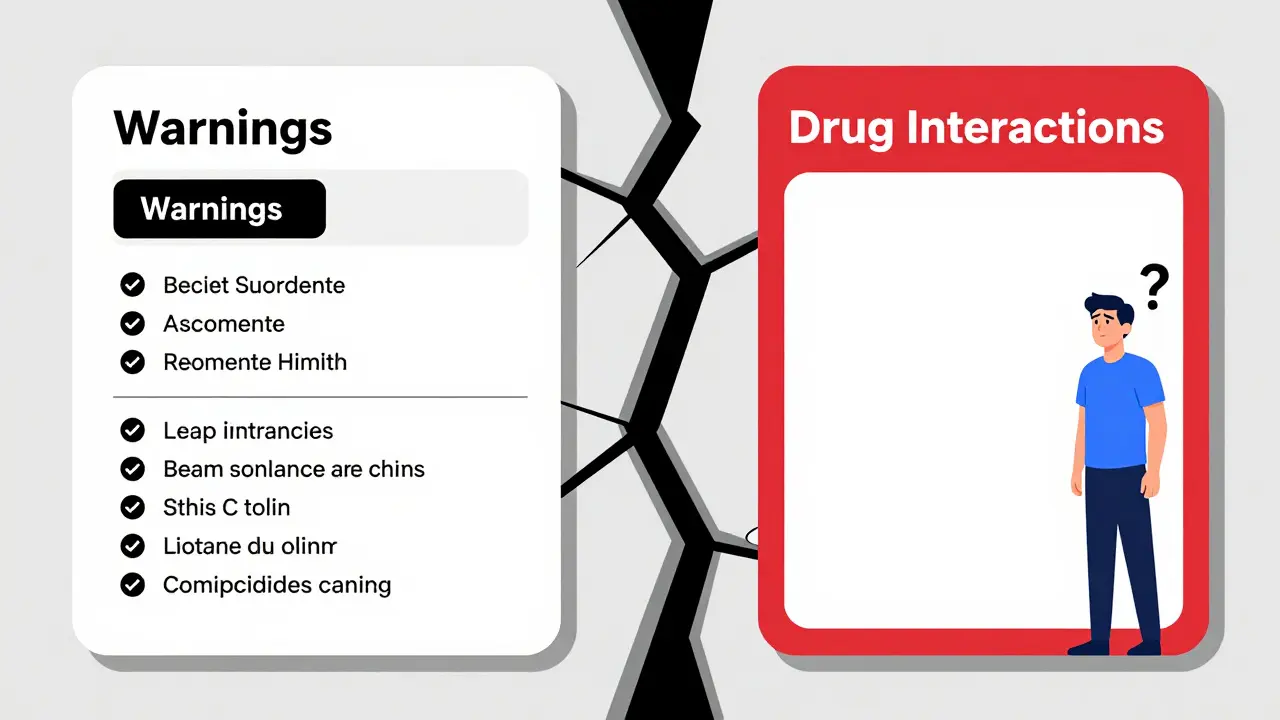
Unlike prescription and over-the-counter drugs, dietary supplements aren’t required by law to list drug interactions on their labels. The Dietary Supplement Health and Education Act (DSHEA) of 1994 made supplements more like food than medicine. That means manufacturers don’t need to prove safety or effectiveness before selling. They also don’t need to test for interactions with medications. The FDA doesn’t review supplements before they hit shelves. Instead, they wait for reports of harm. In 2022, over 1,960 adverse events linked to supplements were reported to the FDA. Nearly 28% of those involved possible drug interactions. That’s not a small risk. That’s a silent epidemic. Compare that to prescription drugs: 97.3% of them include detailed interaction warnings. OTC pain relievers? 89% do. But only 12.7% of popular supplements even mention interactions. That’s not a gap. That’s a chasm.What’s Actually on a Supplement Label
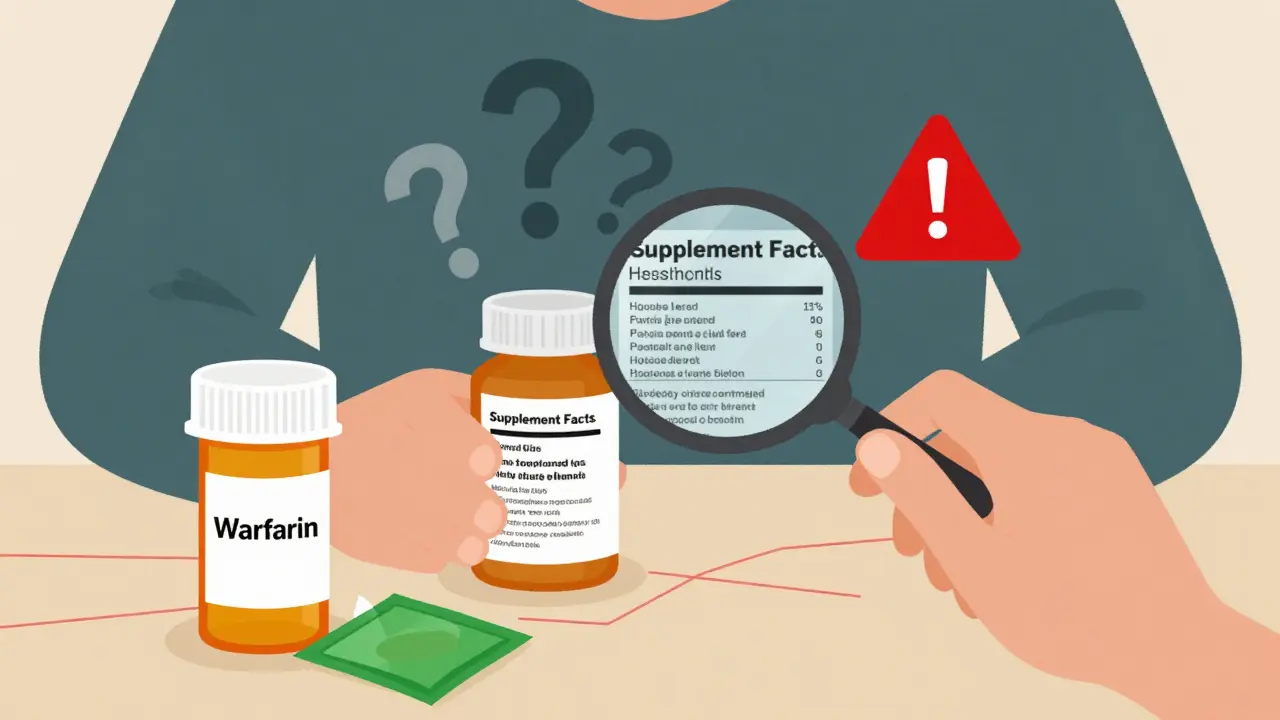
Every supplement must have a Supplement Facts panel. It looks like a nutrition label, but it’s missing key details. Here’s what you’ll find:- Serving size - This isn’t the whole bottle. Many people take multiple servings and overdose without realizing it.
- Amount per serving - How much of each ingredient is in one dose.
- % Daily Value - Based on outdated FDA guidelines. Many supplements exceed this, and that’s legal.
- Ingredient list - Includes all active and inactive ingredients. Look for allergens like soy, milk, or nuts.
What’s on a Drug Label (That You Should Never Ignore)
Prescription and OTC drug labels follow strict FDA rules. They use the Drug Facts format. The most important section? Warnings. Here’s what to look for in the Warnings section:- Do not use with - Lists specific medications to avoid.
- May interact with - Shows possible conflicts.
- Consult your doctor - If you’re on any other meds.
- Black Box Warning - The FDA’s highest alert. Found on about 500 medications. These carry life-threatening risks.
Real-World Interactions That Can Kill
Some interactions aren’t theoretical. They’ve caused hospitalizations and deaths.- St. John’s wort + digoxin - Reduces digoxin levels by 26%. Can cause heart failure in people with atrial fibrillation.
- Green tea extract + warfarin - Lowers INR levels by 30-50%. Increases clotting risk.
- CoQ10 + warfarin - Shortens prothrombin time by 15-25%. FDA confirmed this in 2023.
- Milk thistle + metformin - Can cause dangerous drops in blood sugar. One diabetic patient’s glucose hit 42 mg/dL after adding milk thistle.
- Vitamin C (over 1,000 mg/day) + antiretrovirals - Reduces drug effectiveness by 22% by changing stomach pH.
How to Protect Yourself
You can’t rely on the label. You have to take action.- Take a photo of every supplement bottle - Show it to your doctor or pharmacist. Don’t rely on memory.
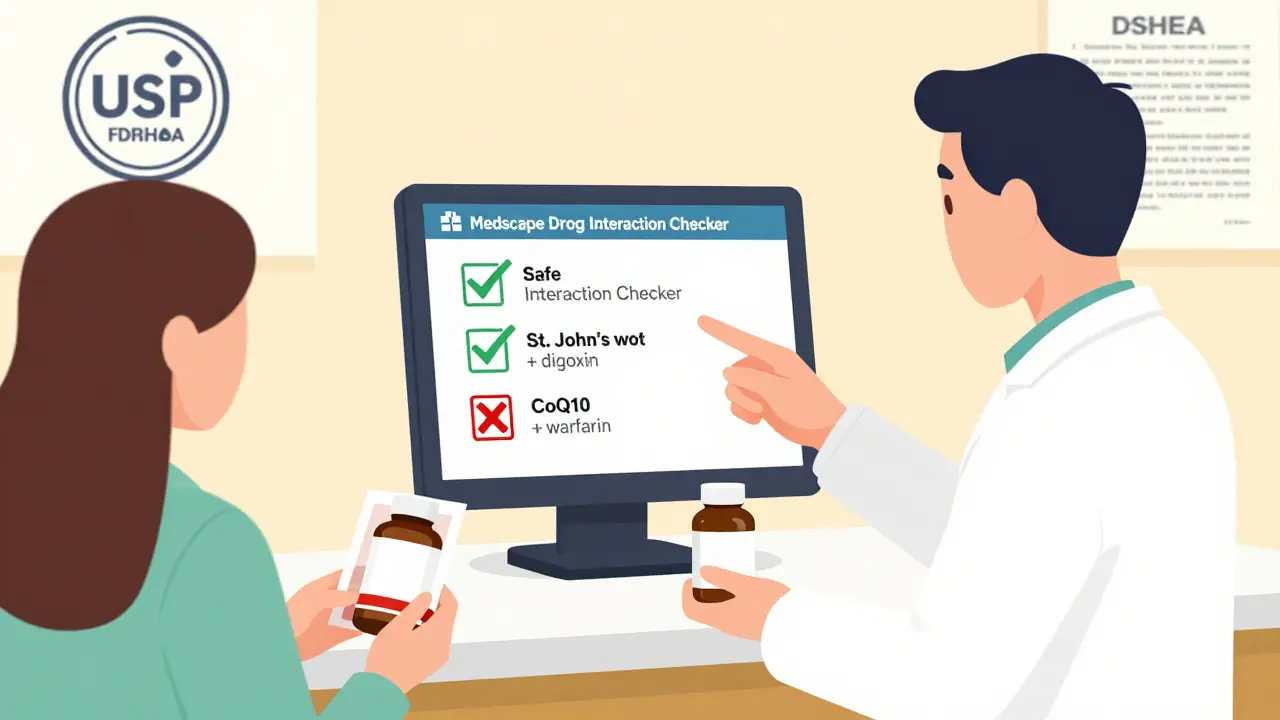
- Use the Medscape Drug Interaction Checker - It’s free, online, and analyzes over 24,000 drug pairs. Type in your meds and your supplement.
- Check for USP verification - Look for the USP seal. Only 18% of supplements have it, but those that do are 92% accurate in ingredient labeling. Non-certified ones? Only 67% accurate.
- Ask your pharmacist - They’re trained to spot interactions. Most will check for free.
- Never assume "natural" means safe - Red yeast rice contains the same active ingredient as lovastatin, a prescription statin. It can cause muscle damage and liver injury, especially with other cholesterol meds.
The Bigger Problem: Regulation Isn’t Keeping Up
The supplement industry made $53.1 billion in 2023. Over 77% of Americans take at least one supplement. But the FDA’s Office of Dietary Supplement Programs has a budget of just $4.7 million-0.03% of the FDA’s total budget. In 2023, the FDA found 1,247 supplement products with misbranded or adulterated labels. Only 28% were recalled. Why? They don’t have the staff or authority to enforce safety. The Dietary Supplement Listing Act of 2022, which would have required manufacturers to register products with the FDA before selling, failed in Congress. So the system stays broken. The FDA is now testing QR codes on supplement labels that link to real-time interaction databases. That’s a step forward. But until the law changes, you’re on your own.What to Do Today
If you take any prescription medication-thyroid drugs, blood thinners, antidepressants, diabetes meds, heart meds-stop and think. Do you know what’s in your supplement? Do you know if it’s safe? Don’t wait for an emergency. Don’t assume your doctor knows. Most doctors don’t ask about supplements unless you bring it up. Next time you open a supplement bottle, don’t just glance at the label. Read it like your life depends on it-because it might.Do supplement labels have to list drug interactions?
No. Unlike prescription and OTC drugs, dietary supplements are not required by U.S. law to list potential drug interactions on their labels. This is due to the Dietary Supplement Health and Education Act (DSHEA) of 1994, which treats supplements more like food than medicine. Only about 12.7% of supplement brands voluntarily include interaction warnings, according to FDA analysis.
What should I look for on a supplement label?
Check the Supplement Facts panel: serving size, amount per serving, and the full ingredient list. Watch out for proprietary blends, which hide ingredient amounts. Look for allergens like soy or nuts. Also, check for a USP verification mark-this means the product was independently tested for accuracy and purity.
Can natural supplements really interact with my meds?
Yes. "Natural" doesn’t mean safe. St. John’s wort can reduce digoxin levels by 26%, increasing heart failure risk. Green tea extract and CoQ10 can interfere with warfarin, raising the risk of clots. Milk thistle can cause dangerous drops in blood sugar when taken with metformin. These are not myths-they’re documented medical facts.
How do I check if my supplement interacts with my medication?
Use the free Medscape Drug Interaction Checker. Enter your prescription drugs and supplement names. You can also show your supplement bottle to your pharmacist-they’re trained to spot interactions. Never rely on Google or social media advice. Real interaction data comes from clinical studies and pharmacy databases.
Why don’t supplement companies warn about interactions?
Because they don’t have to. The FDA doesn’t require it under current law. Testing for drug interactions is expensive and time-consuming, and most companies skip it. Without regulation, there’s no incentive to warn consumers. The industry relies on the assumption that people believe supplements are harmless-which is dangerously untrue.
Should I stop taking supplements if I’m on medication?
Not necessarily-but you must check first. Some supplements are safe and even helpful. Others can be dangerous. The key is to talk to your doctor or pharmacist before starting any new supplement. Bring the bottle. Take a photo. Ask: "Could this interact with my current meds?" There’s no shame in asking. It’s the smartest thing you can do.
Susannah Green
January 23, 2026 AT 03:15Just saw this and had to share: I’m on warfarin and started taking CoQ10 for heart health. No warning on the bottle. My pharmacist caught it during a refill check-INR was dropping like a rock. Thank god I didn’t ignore the label. Always show your bottle. Always.
Also, skip proprietary blends. If they won’t tell you what’s inside, they don’t want you to know.
Kerry Evans
January 24, 2026 AT 16:35Of course the FDA doesn’t regulate this. They’re too busy chasing TikTok influencers who say ‘turmeric cures cancer.’ Supplements are a $50 billion loophole. The law’s broken, but people keep buying snake oil because it’s ‘natural.’
And no, ‘natural’ doesn’t mean ‘safe.’ Poison ivy is natural. So is arsenic.
Sue Stone
January 26, 2026 AT 03:50My mom took milk thistle with metformin and passed out at the grocery store. She’s fine now, but she doesn’t touch supplements anymore. Just say no unless your pharmacist says yes.
Stacy Thomes
January 27, 2026 AT 00:59STOP. RIGHT. NOW. If you’re on ANY prescription med and you’re popping supplements like candy-you’re playing Russian roulette with your organs. I’ve seen people end up in the ER because they thought ‘it’s just a pill.’ It’s not. It’s chemistry. And chemistry doesn’t care if you ‘believe’ in it.
Anna Pryde-Smith
January 27, 2026 AT 12:59They don’t warn you because they’re making bank off your ignorance. The supplement industry is a cult with a marketing budget. They sell hope. And hope doesn’t come with a warning label.
My uncle died from a heart arrhythmia caused by St. John’s wort + digoxin. No one told him. No one. That’s murder by omission.
Andrew Smirnykh
January 29, 2026 AT 07:29Interesting how this parallels the opioid crisis-big industry, weak oversight, people suffering silently. The FDA’s underfunded and overworked. Meanwhile, companies exploit legal gray areas like it’s a sport.
QR codes on labels? A start. But real change needs legislation, not tech bandaids.
Laura Rice
January 29, 2026 AT 14:09I used to think supplements were harmless. Then I started reading the fine print. Now I take ZERO supplements unless my doctor says so-and even then, I bring the bottle. I don’t trust labels. I trust people who know what they’re talking about.
Also: USP seal? Non-negotiable. If it’s not there, I’m not taking it.
Janet King
January 31, 2026 AT 01:32Always check with your pharmacist. They are the unsung heroes of medication safety. They see more drug interactions than most doctors. And they do it for free. Don’t be shy. Bring the bottle. Ask the question. It’s your life.
Vanessa Barber
February 1, 2026 AT 22:53Wait, so the government lets companies sell stuff that can kill you without telling you? And you’re surprised people are confused? This isn’t negligence. It’s capitalism. We’re the product.
Oladeji Omobolaji
February 2, 2026 AT 03:35I’m from Nigeria and we don’t have this problem because supplements here are sold in pharmacies, not gas stations. You need a prescription for anything that affects your body. Maybe we should borrow that model.
dana torgersen
February 2, 2026 AT 23:26It’s… so… ironic… that we live in an age of… hyper-information… yet… we’re… deliberately… kept… in the… dark… about… what’s… in… our… own… bottles… because… profit… >… safety… and… because… we… were… taught… to… trust… labels… when… they… were… never… meant… to… be… trusted…
… i… think… i… need… a… nap…
Kerry Moore
February 4, 2026 AT 09:21Thank you for this comprehensive and clinically relevant overview. The data presented aligns with current pharmacovigilance literature and underscores the critical need for patient education in polypharmacy contexts. I would respectfully suggest that future iterations include citations from peer-reviewed journals such as JAMA Internal Medicine and the American Journal of Health-System Pharmacy to further substantiate the claims regarding interaction prevalence and clinical outcomes.
charley lopez
February 6, 2026 AT 07:15USP verified. Always. Everything else is a gamble. I’ve seen too many people lose.