
How to Build a Personal Medication Safety Plan with Your Care Team

Medication errors are more common than most people realize. One in five patients receiving home care or infusion therapy experiences a preventable adverse drug event. Many of these mistakes aren’t caused by doctors or pharmacists alone-they happen because of broken communication, unclear instructions, or forgotten pills. But here’s the good news: you don’t have to wait for something to go wrong. You can build a personal medication safety plan with your care team before a problem occurs.
Start with a complete list of everything you take
Write down every pill, liquid, patch, injection, vitamin, herb, or supplement you use. Don’t leave anything out-not even the over-the-counter pain relievers or the ginkgo biloba you took because you heard it helps memory. These can interact with your prescriptions in dangerous ways. Include the name, dose, how often you take it, and why you’re taking it. If you’re not sure, call your pharmacy or check the bottle. A 2023 study from the American College of Clinical Pharmacy found that patients who omitted supplements from their lists were twice as likely to experience a harmful drug interaction.Keep this list updated. Every time you start, stop, or change a medication-even if your doctor told you to-add it right away. Don’t wait for your next appointment. Use a notebook, a notes app on your phone, or a printable template from your doctor’s office. The Alzheimer’s Association recommends carrying a physical copy in your wallet or purse. In an emergency, first responders need to know what’s in your system right now.
Ask your doctor and pharmacist to review it together
Don’t just hand them the list. Sit down with both your doctor and pharmacist and go through it line by line. Ask: “Is this still necessary?” “Could any of these be causing my dizziness or confusion?” “Are there any new interactions I should worry about?” Pharmacists are medication experts-they catch interactions doctors miss all the time. One patient in Seattle reported that her pharmacist flagged a dangerous combo of a blood pressure med and a common cold medicine she’d been taking for months. That interaction was raising her potassium to unsafe levels. She had no idea.If you’re seeing multiple specialists, make sure they all have the same list. A cardiologist might prescribe a new beta-blocker without knowing your neurologist added an antipsychotic last month. That’s how dangerous overlaps happen. Ask your primary care provider to be the coordinator. They don’t have to be the one managing everything, but they should know what everyone else is prescribing.
Use clear labeling and secure storage
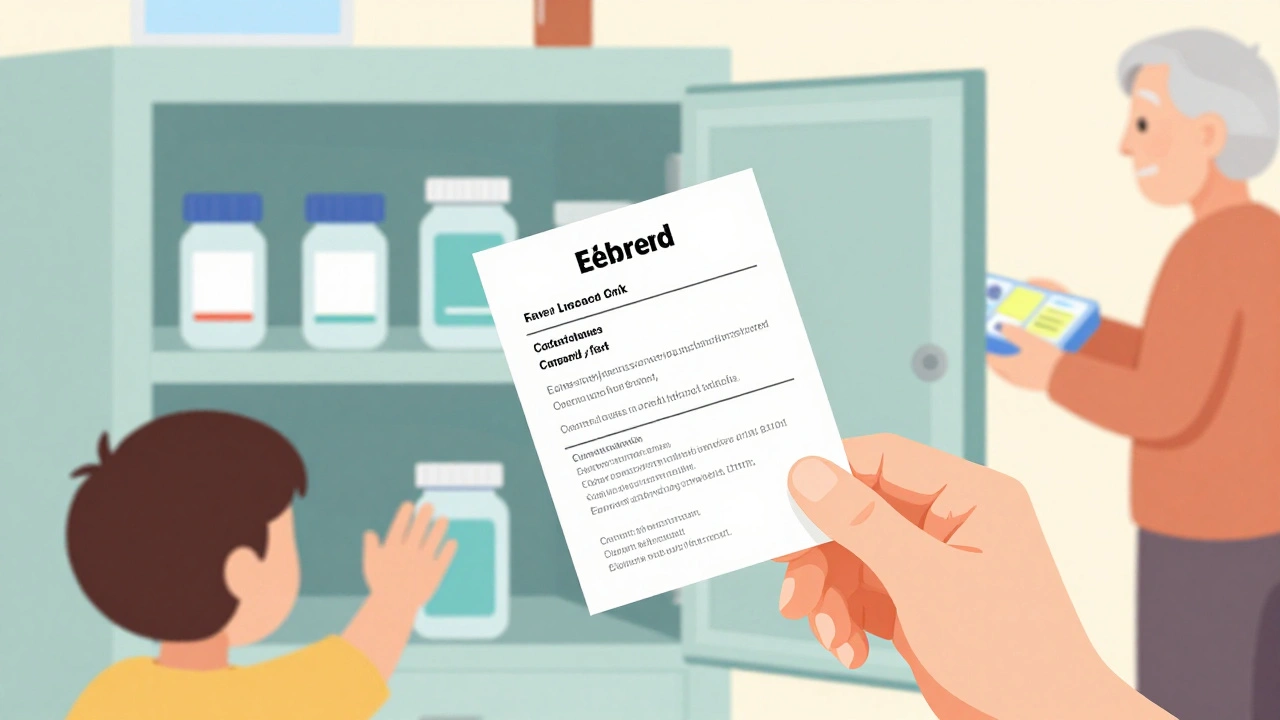
All your medication containers should have clear labels with your full name, the drug name, dosage, and instructions. If a bottle says “Take one by mouth daily,” but you’re not sure if it’s for your heart or your sleep, you’re already at risk. The Institute for Safe Medication Practices says 30% of medication errors in older adults happen because of unlabeled or poorly labeled containers.Store your meds safely. Keep them in a locked cabinet or a locked box-not on the bathroom counter, not in the kitchen drawer next to your cereal. If you live with kids, teens, or someone with memory issues, this isn’t optional. Innerspace Counseling recommends locking up high-risk medications like opioids, benzodiazepines, and insulin. Even if you think you’re careful, accidents happen. One caregiver shared on a Reddit forum that her mother took a double dose of her heart medication because she couldn’t read the label and thought it was her blood pressure pill. She ended up in the ER.
Create a daily routine with tools that work for you
A pill organizer isn’t just for seniors. Anyone taking more than three medications daily benefits from one. Use a weekly or monthly box with compartments for morning, afternoon, evening, and bedtime. Fill it once a week. Set phone alarms if you need to. If you forget to take your meds, you’re not lazy-you’re human. Systems help.For people with memory problems, use simple language. Instead of “Take 10 mg orally once daily,” write: “Take this pill for your heart. Do it every morning with breakfast.” Put a sticky note on the pill box. Record a voice reminder on your phone. The Alzheimer’s Association says clear, consistent cues improve adherence by up to 60%.
Build in regular check-ins with your care team
Don’t wait for symptoms to get worse before you talk to your doctor. Schedule a medication review every six months-even if you feel fine. Bring your updated list. Ask: “Are any of these causing side effects I haven’t mentioned?” “Is there a simpler way to take these?” “Could any of these be removed?”Some medications lose their purpose over time. A painkiller you took after surgery? A sleep aid you started during a stressful period? These can become unnecessary-and risky-long-term. The FDA and ASHP both warn that long-term use of certain drugs increases fall risk, confusion, and organ damage. Your care team should be checking for this, but they won’t unless you bring it up.
Plan for emergencies
What happens if you collapse at home? Or get taken to the ER after a fall? Will the staff know what you’re taking? That’s why you need a printed emergency card. Keep it in your wallet, taped to your fridge, and give a copy to a trusted friend or neighbor. Include:- All current medications and doses
- Your primary doctor’s name and number
- Your pharmacy’s name and number
- Any allergies or past reactions
- Emergency contact names and numbers
Also, designate one person to help manage your meds if you’re ever unable to. It could be a family member, a neighbor, or a home care aide. Make sure they know where your list is, how to use the pill box, and who to call if something seems off. You don’t have to do this alone.

Know the red flags
Some changes aren’t normal aging. They’re warning signs. If you notice:- Increased confusion or memory lapses
- Frequent dizziness or unexplained falls
- New rashes, nausea, or unusual fatigue
- Changes in mood, sleep, or appetite
Don’t assume it’s just getting older. These could be signs of a bad drug interaction, an overdose, or a medication that’s no longer right for you. The American Society of Health-System Pharmacists says 50-60% of preventable adverse events come from prescribing or monitoring failures-not pharmacy errors. That means your voice matters. If something feels wrong, speak up.
Technology helps-but it doesn’t replace human oversight
There are apps that remind you to take pills, track refills, and even alert your pharmacist if you miss a dose. Some even sync with your electronic health record. But studies show that tech alone doesn’t reduce errors. The real magic happens when a person uses the tool and talks to their care team about what it shows.One 78-year-old man in Tacoma used a smart pill dispenser with a camera that sent alerts when he missed a dose. His daughter got notified and called his doctor. They discovered his blood thinner dose was too high. He’d been taking it for years without a check-up. The app didn’t save him-it gave him a chance to be saved.
Use tools. But never rely on them completely. Your care team needs to know what’s going on. And you need to know your own body well enough to say, “This isn’t right.”
You’re not just a patient-you’re the leader of your care
Medication safety isn’t something your doctor does to you. It’s something you do with them. You know your body better than anyone else. You know when you feel off. You know if you’ve forgotten a pill. You know if a new medicine made you dizzy after dinner.Build your plan. Update it. Share it. Ask questions. Push back if something doesn’t feel right. The system isn’t perfect. But when patients take charge-when they work with their care team as partners-preventable harm drops. Studies show that patients who actively manage their meds have 40% fewer hospital visits related to drug problems.
You have the power to make your medication use safer. Start today. Write down what you take. Talk to your doctor. Lock up the pills. Set the alarm. Make a plan. Your life depends on it.
What should I do if I miss a dose of my medication?
Don’t double up unless your doctor or pharmacist tells you to. Check the label or call your pharmacy for specific instructions. Some meds can be taken late, others can’t. Missing a dose of blood pressure or insulin medication can be dangerous. Keep a log of missed doses and mention them at your next check-up.
Should I bring my supplements to doctor visits?
Yes. Many people forget to mention vitamins, herbs, or supplements-but they can interact with prescription drugs. St. John’s Wort can make antidepressants ineffective. Garlic supplements can thin your blood and increase bleeding risk during surgery. Always list everything you take, even if you think it’s harmless.
How often should I update my medication list?
Update it every time you start, stop, or change a medication. Even if it’s just a new over-the-counter pain reliever. At a minimum, review and rewrite your full list once every six months. Many clinics will give you a printed form to bring to appointments-use it.
Can I use a smartphone app instead of a pill box?
Apps can help with reminders, but they don’t replace physical organization. If you forget your phone or it dies, you’re left guessing. A pill box gives you a visual cue. Use both: the app for alerts, the box for certainty. For people with memory issues, physical tools are more reliable.
What if my care team doesn’t take my concerns seriously?
If you feel dismissed, ask for a referral to a pharmacist who specializes in medication reviews. Many hospitals and clinics have clinical pharmacists who focus on this. You can also request a medication therapy management (MTM) session through your pharmacy-these are often covered by Medicare Part D. Your safety matters. Keep pushing until you get answers.
Is it safe to keep all my meds in one place?
Only if that place is locked and secure. Keeping all medications together makes it easier to manage and track-but it also increases risk if someone else accesses them. Store them in a locked box or cabinet, not in a purse or drawer. Never leave them in the car, bathroom, or kitchen counter. High-risk drugs like opioids, sedatives, and insulin need extra protection.
What’s the biggest mistake people make with their meds?
The biggest mistake is assuming nothing will go wrong. People think, “I’ve taken this for years, it’s fine.” But medications change. Your body changes. Other drugs get added. That’s why regular reviews and open communication with your care team are non-negotiable. Prevention beats reaction every time.
May .
December 3, 2025 AT 08:28Jessica Ainscough
December 5, 2025 AT 00:00Also, I use a pill organizer with big labels and set alarms for each slot. My phone dies sometimes, but the box? Always there.
Sara Larson
December 5, 2025 AT 19:51Now I bring my supplements to every doc visit. Even the turmeric. Even the gummy vitamins. No shame. Safety > pride.
Josh Bilskemper
December 7, 2025 AT 12:53Storz Vonderheide
December 8, 2025 AT 23:07So if you’re helping someone, don’t just say 'you should do this.' Sit with them. Fill out the list together. Call the pharmacy with them. Make it a ritual, not a chore.
dan koz
December 9, 2025 AT 14:02Kevin Estrada
December 10, 2025 AT 07:26Also, I think the whole 'care team' thing is just corporate speak for 'your doctor is too busy to care.'
Katey Korzenietz
December 11, 2025 AT 09:34Ethan McIvor
December 11, 2025 AT 23:41For me, it’s not about avoiding errors. It’s about honoring the fact that my body is doing work every day just to keep me here. The list? It’s a love letter to my future self.
Mindy Bilotta
December 12, 2025 AT 13:47Turns out, 3 of her 8 meds were outdated. She felt so relieved.
Michael Bene
December 13, 2025 AT 18:40And don’t get me started on 'natural supplements.' If it’s not FDA-approved, it’s a gamble. And you’re the sucker holding the dice.
Brian Perry
December 14, 2025 AT 06:47Now I have a laminated card in my wallet, a locked box in my closet, and my daughter gets a text if I don’t check in by 8am.
Don’t wait for the ER to teach you. Do it now. Your family will thank you.