
How to Avoid Overdose When Restarting a Medication After a Break
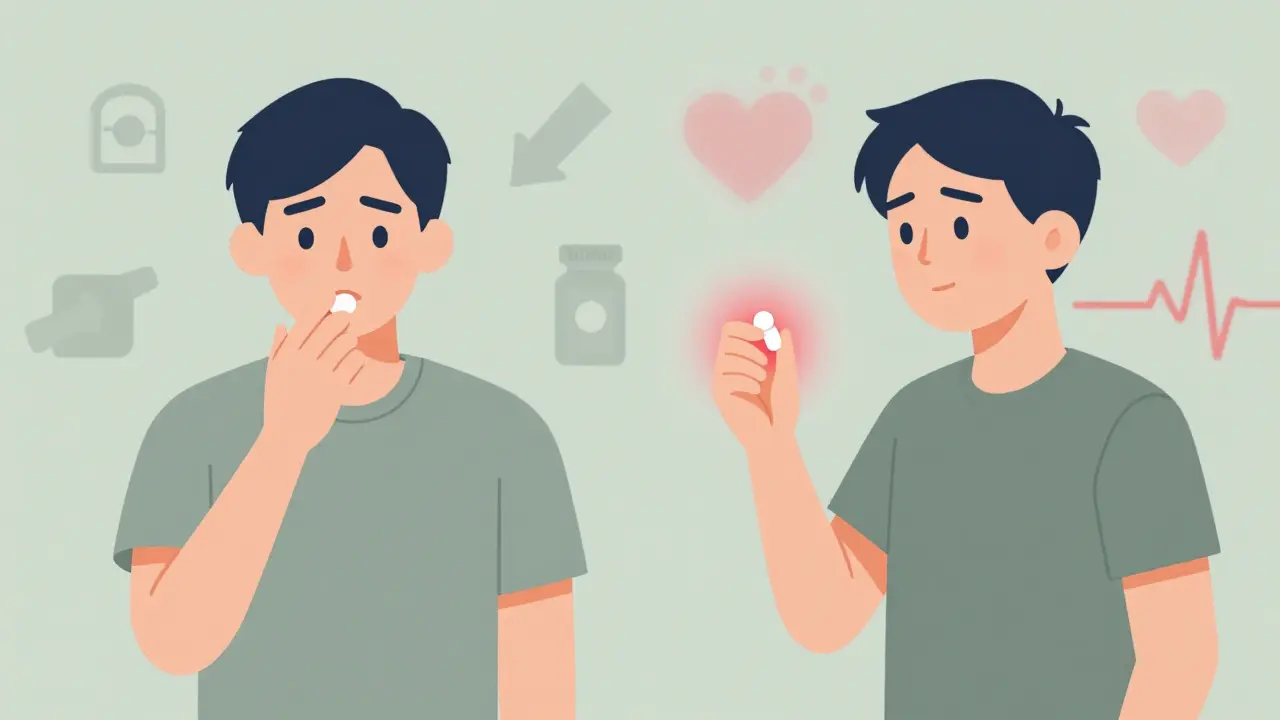
Restarting a medication after taking a break can be deadly if you don’t know what you’re doing. It’s not just about picking up where you left off. Your body changes when you stop. What used to be a safe dose can now kill you. This isn’t theoretical. People die from this every day - often after months or years of being stable, clean, or off the drug. They take their old dose, thinking they’re back to normal. Their body isn’t. And that’s when it goes wrong.
Why Your Body Can’t Handle the Same Dose Anymore
When you take a medication regularly - especially opioids like oxycodone, methadone, or fentanyl, or benzodiazepines like Xanax or Valium - your body adapts. It builds tolerance. That means you need more to get the same effect. But when you stop, that tolerance doesn’t stay. It fades fast.For opioids, tolerance can drop by half in just 3 to 5 days. That’s not a guess. It’s what the Washington State Department of Health documented in their overdose prevention guide. If you were taking 60 mg of oxycodone daily before your break, and you restart at that same dose after a week off, your body has no idea how to handle it. Your breathing slows. Your brain stops signaling you to breathe. That’s how overdose happens - not because you’re using too much, but because your body forgot how to cope.
This isn’t just about street drugs. It happens with prescribed medications too. People get hospitalized after restarting antidepressants like paroxetine or venlafaxine after a few weeks off. Some even develop serotonin syndrome when restarting after stopping MAOIs. The risk isn’t just in the drug - it’s in the timing, the dose, and the lack of medical oversight.
The Most Dangerous Times to Restart
Some situations are especially risky. If you’ve been out of treatment, out of jail, or out of the hospital, your risk of overdose spikes. Washington State data shows 62% of fatal opioid overdoses happen within 72 hours of release from incarceration or a detox center. Why? Because during those stays, medication was stopped. Tolerance dropped. And when they got out, they went right back to their old habits - with the same dose.Same thing happens after residential rehab. Someone spends 30 days sober, gets discharged, and thinks, “I’m clean now, I can handle it.” They take a dose they used to use before treatment. They don’t survive. Evoke Wellness in Texas reports that 87% of patients who restarted medication under medical supervision stayed safe. Only 42% of those who did it alone made it through without incident.
And it’s not just opioids. Benzodiazepines, sleep aids, even some antipsychotics like quetiapine - if you stop and restart without adjusting, you risk severe dizziness, falls, low blood pressure, or respiratory failure. The Medicines Learning Portal notes that restarting quetiapine at full dose after just one week off can cause dangerous postural hypotension. Your blood pressure crashes when you stand up. You pass out. You hit your head. You could die.
How to Restart Safely: The 4 Rules
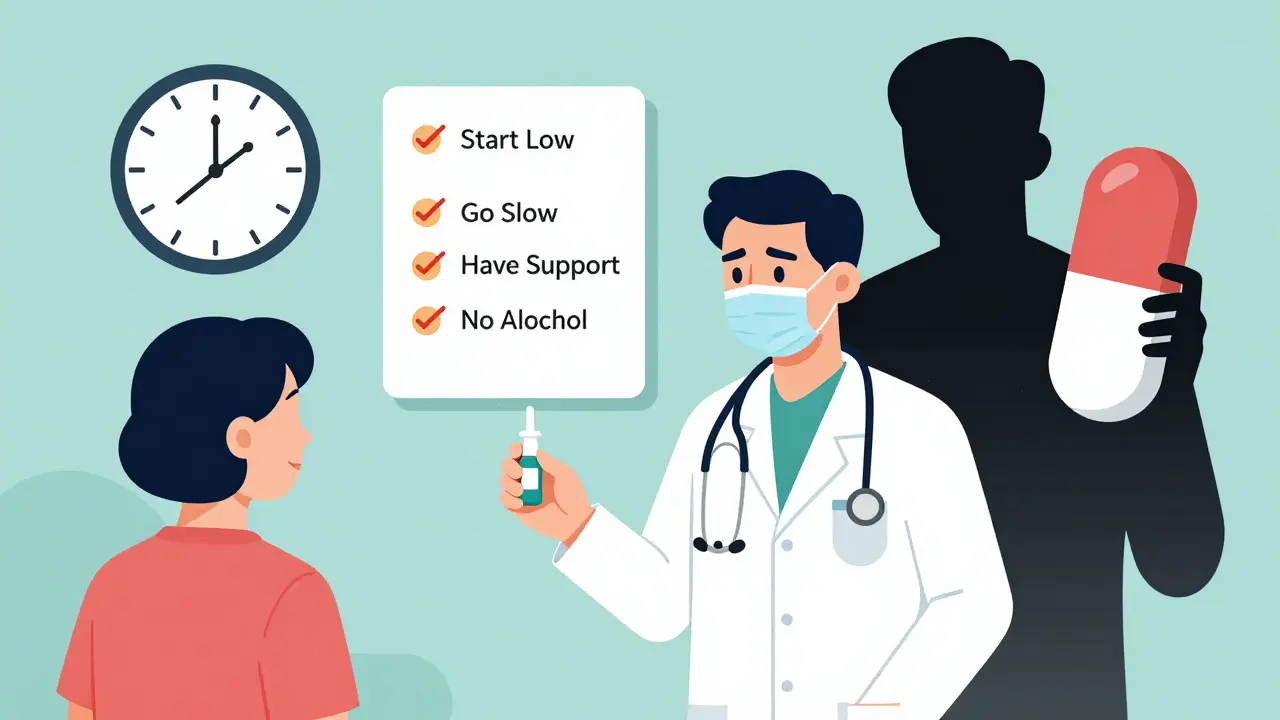
There’s no magic formula. But there are proven steps. Here’s what works:- Start lower than you think. Don’t restart at your old dose. Start at 25% to 50% of what you used to take. For opioids, that’s the official recommendation from Washington State and Calgary Clinical Pharmacology. If you were on 100 mg of methadone, start at 25 mg. Wait. See how you feel. Then, slowly increase.
- Go slower than you want. Don’t rush. Increase the dose by no more than 10-25% every 3 to 7 days. For methadone, the standard is to wait at least 7 days between increases. For antidepressants, it can take weeks. Your liver and brain need time to re-adapt.
- Get medical supervision. This isn’t optional. A doctor or pharmacist should be involved. They can check for drug interactions, monitor your vitals, and adjust based on your history. If you’re restarting opioids, they should give you naloxone - and make sure someone close to you knows how to use it.
- Avoid mixing substances. Alcohol, sleeping pills, benzodiazepines, even some OTC cold meds can multiply the depressant effect. One study showed that 70% of fatal opioid overdoses involved at least one other sedating drug. Don’t add fuel to the fire.
What to Watch For - Signs of Overdose
You need to know the red flags. Overdose doesn’t always look like someone collapsing. Sometimes it’s quiet. Here’s what to watch:- Slowed or shallow breathing - fewer than 12 breaths per minute is dangerous.
- Pinpoint pupils - a classic sign of opioid overdose.
- Unresponsiveness - if you can’t wake someone up, even with loud noise or shaking, it’s an emergency.
- Blue lips or fingernails - means oxygen isn’t getting through.
- Extreme drowsiness or confusion - not just tired. Like they’re in a fog and can’t snap out of it.
If you see any of these, call 911 immediately. Give naloxone if you have it. Naloxone reverses opioid overdoses. It’s not a cure - it’s a time-buyer. You still need emergency care. But it can save a life.
Naloxone Isn’t Optional - It’s Essential
If you’re restarting any opioid, you need naloxone. Not “maybe.” Not “if you can get it.” You need it. And you need to give it to someone you trust.Washington State’s guidelines say it plainly: “This resource should be shared with a friend or family member.” The same goes for anyone restarting after a break - even if they’re on a prescription. Insurance now covers naloxone for free in most cases. Medicare and 87% of private insurers pay 100%. You can get it at any pharmacy without a prescription in most states.
Keep it in your wallet. In your car. With your roommate. Make sure someone knows where it is and how to use it. Naloxone kits come with simple instructions. Practice with the trainer kit. Don’t wait until it’s too late.
Special Cases: MAOIs, Antidepressants, and Other Complex Meds
Not all medications are the same. Some require longer waits.If you stopped an MAOI (like phenelzine or tranylcypromine) for depression, you need to wait at least 14 days before starting any SSRI, SNRI, or even certain pain meds like tramadol. Mixing them can cause serotonin syndrome - a life-threatening spike in body temperature, heart rate, and blood pressure. Dr. Mason’s case study in 2016 showed a patient who restarted venlafaxine just 10 days after stopping an MAOI. They ended up in the ICU.
For antidepressants like paroxetine or sertraline, restarting after a few weeks off can cause dizziness, nausea, or brain zaps. But the real danger isn’t overdose - it’s instability. The body needs time to rebuild neurotransmitter balance. A 2019 study in PMC found that restarting paroxetine too soon led to plasma levels that were too high too fast. Doctors recommend waiting 3-4 weeks and starting at a quarter of the previous dose.
For antipsychotics like quetiapine or olanzapine, restarting at full dose after a week off can cause sudden drops in blood pressure. The Medicines Learning Portal recommends starting at 25 mg daily and increasing by 50 mg every few days.
What’s Changing in 2026 - New Tools, New Standards
The medical world is catching up. In 2023, the FDA released draft guidance on restarting opioid therapy after interruption. In early 2024, the American Society of Addiction Medicine rolled out a 10-point scoring system to calculate safe restart doses based on how long you were off, your old dose, your age, and any other health conditions.Researchers at Johns Hopkins found that giving extended-release naltrexone before restarting opioids cuts overdose risk by 73% in the first 30 days. Naltrexone blocks opioids from working. It’s not addictive. It’s a safety net. Some clinics are starting to use it as a bridge - giving it for a few weeks before slowly reintroducing the medication.
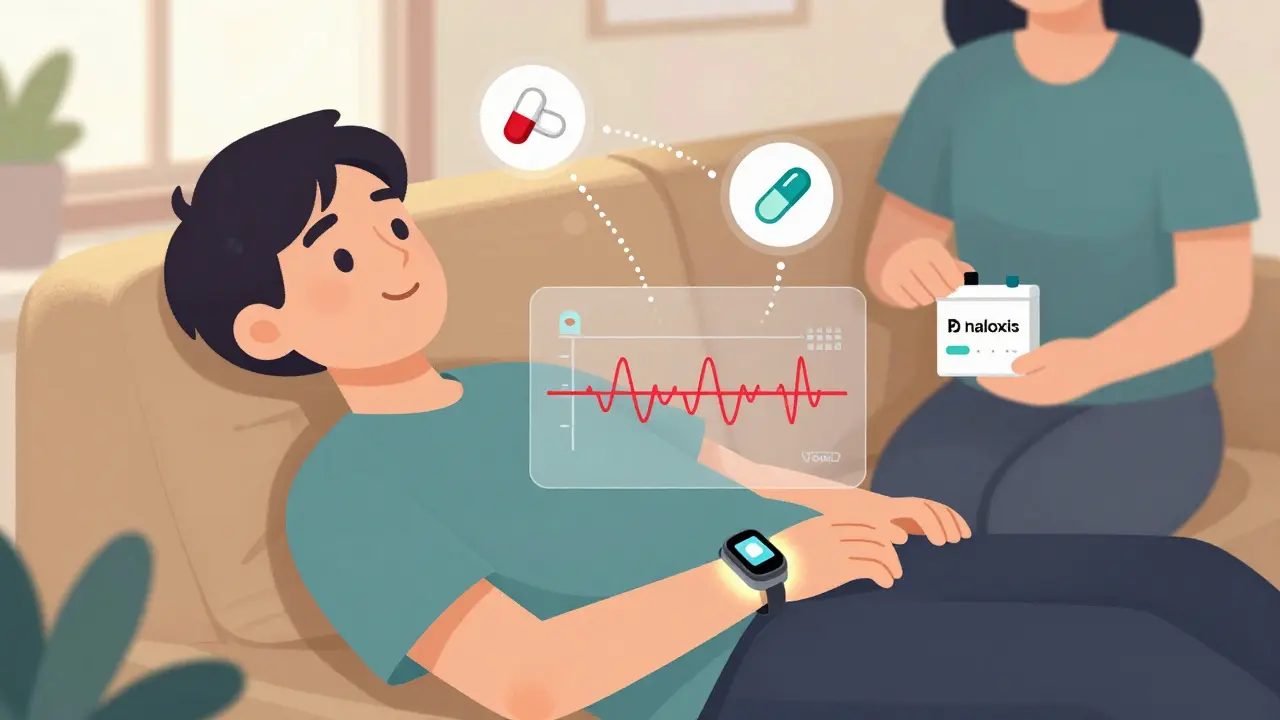
And new tech is coming. Wearable monitors that detect slow breathing and automatically inject naloxone are in Phase 3 trials. OpiSafe Technologies is testing them in high-risk populations. In a few years, these devices could be standard for people restarting after a break.
What You Can Do Right Now
If you’re planning to restart a medication after a break - whether it’s for pain, anxiety, depression, or addiction - here’s your action plan:- Call your doctor or pharmacist before you take your first dose. Tell them you’ve been off the medication and for how long.
- Ask: “What’s the safest starting dose for me?” Don’t assume it’s the same as before.
- Get naloxone. Even if you think you won’t need it. Get two doses. Give one to someone you trust.
- Don’t use alone. Have someone with you for the first 24-48 hours after restarting.
- Write down your plan: start dose, when to increase, warning signs, emergency contacts.
This isn’t about fear. It’s about control. You’re not weak for needing help. You’re smart for asking. The fact that you’re reading this means you care enough to do it right. That’s the difference between life and death.
Can I restart my medication on my own if I feel fine?
No. Feeling fine doesn’t mean your body is ready. Tolerance drops faster than you realize. Even if you feel strong, your breathing, heart rate, and brain chemistry are still adjusting. Restarting without medical guidance is the leading cause of overdose after a break. Always consult a doctor first.
How long does it take to lose tolerance to opioids?
For short-acting opioids like oxycodone or heroin, tolerance can drop by half in 3-5 days. For longer-acting ones like methadone, it takes 7-10 days. But even after just one day off, your body is already less able to handle the same dose. Never assume your old dose is safe.
Is naloxone only for street drugs?
No. Naloxone works on any opioid - including prescription painkillers like hydrocodone, oxycodone, or fentanyl patches. If you’re restarting any opioid medication after a break, you need naloxone. It doesn’t matter if it’s legal or prescribed. The risk is the same.
Can I restart antidepressants the same way I restart opioids?
No. Antidepressants don’t cause respiratory depression, so overdose risk is different. But restarting too fast can cause serotonin syndrome (especially after MAOIs) or severe withdrawal symptoms. Always follow your doctor’s plan. For MAOIs, you need a 14-day washout before starting SSRIs. For others, start at 25% of your old dose and increase slowly over weeks.
What if I can’t get to a doctor right away?
If you’re in a rural area or can’t get an appointment, call a pharmacist. They can advise on safe starting doses and help you get naloxone. Many community health centers offer free medication restart counseling. The Opioid Response Network has trained providers in 49 states - find one at opioidresponse.org. Don’t wait. Don’t guess. Someone can help you.
Overdose after restarting medication isn’t an accident. It’s preventable. But only if you act with care, not habit. Your body remembers less than you think. Respect that. Protect yourself. And if you’re helping someone else - remind them. This isn’t just about taking pills. It’s about staying alive.
Ian Long
January 9, 2026 AT 08:53I’ve been through this twice. First time I restarted my oxycodone after 10 days off and nearly died. Didn’t even feel high - just couldn’t breathe. Second time? I started at 10mg instead of 60. Lived to tell the story. If you’re reading this and thinking ‘I’m fine,’ you’re already in danger.
Pooja Kumari
January 9, 2026 AT 19:17Oh my god, I just read this and I’m crying. My brother did this last year - took his old dose after rehab, thought he was strong now, and ended up in the ICU for 5 days. They said if his roommate hadn’t had naloxone, he wouldn’t be here. I’m sending this to everyone I know who’s on meds. You think you know your body? You don’t. Not after a break. Not even close. I’m so angry that no one told him this before. So angry. And so grateful you wrote this. Thank you. From the bottom of my heart.
Jacob Paterson
January 10, 2026 AT 15:02Wow. Another ‘you’re not special’ PSA for people who think they can outsmart biology. Congrats on writing a 2000-word essay on how not to die. But let’s be real - if you’re restarting opioids after a break and you don’t have a doctor holding your hand, you’re already a statistic waiting to happen. Stop pretending you’re in control. You’re not. You’re just a guy with a prescription and a death wish. Naloxone isn’t a safety net - it’s a funeral deposit.
Angela Stanton
January 12, 2026 AT 14:32TL;DR: Tolerance plummets faster than your ex’s interest. Opioid half-life decay = exponential. Pharmacokinetic recalibration post-abstinence = non-linear. Naloxone isn’t optional - it’s a pharmacological fail-safe. SSRIs? Watch for serotonin syndrome - 5-HT2A receptor hypersensitivity post-washout is real. Quetiapine? Postural hypotension risk spikes 300% at full dose after 7 days off. Pro tip: Use the ASAM Restart Risk Calculator v2.1 - it’s validated in JAMA Psychiatry 2024. Also, get the wearable OpiSafe monitor. Phase 3 trials show 73% reduction in early-stage overdoses. Just saying.
Jerian Lewis
January 12, 2026 AT 16:39People like you think you’re helping, but you’re just feeding the fear machine. If you’re scared of your own medicine, maybe you shouldn’t be taking it. I’ve been on methadone for 12 years. Took a 3-week break for travel. Came back and took my usual dose. Felt fine. No drama. No hospital. Just common sense. Not everyone’s a weakling.
Kiruthiga Udayakumar
January 14, 2026 AT 03:47Oh honey, I love you for writing this. My cousin in Delhi died last year like this - he was on antidepressants, took a break for Diwali, came back and doubled his dose because he ‘felt better.’ They found him in the bathroom. No one knew about serotonin syndrome. I’m sharing this with every family WhatsApp group I’m in. We need to stop pretending this doesn’t happen. You’re a light in the dark.
Patty Walters
January 14, 2026 AT 11:02Thank you for this. I’m a nurse and I’ve seen too many people come in after restarting wrong. One guy took his old 80mg oxycodone after 2 weeks off - his wife had to call 911. He’s fine now, but he’s on a 10mg dose and we’re titrating slow. Please, if you’re doing this - don’t wing it. Call your pharmacist. They’ll help you. No judgment. I’ve got naloxone in my purse. You should too. 💕
Catherine Scutt
January 15, 2026 AT 06:18Ugh. I just got off my anxiety meds for 3 months. Thinking about going back. Now I’m terrified. Like… what if I die? I didn’t even know tolerance dropped that fast. I thought I’d just pick up where I left off. Holy crap. I’m calling my doctor tomorrow. And I’m getting naloxone. Even though I’m on Xanax. Because why the hell not. You’re right - this isn’t fear. It’s smart.
Darren McGuff
January 16, 2026 AT 06:02My brother died like this. 2019. Off opioids for 11 days after a surgery. Took his old dose. Didn’t wake up. I found him. I had to do CPR. No naloxone. No one knew. I’ve spent 5 years screaming into the void trying to make people understand. You wrote the speech I wish someone had given me. I’m sharing this with every rehab center, every prison outreach group, every pharmacy in Glasgow. This isn’t just advice. It’s a lifeline. Thank you.