
How Medicare Drug Price Negotiation Works and What It Means for Your Prescription Costs
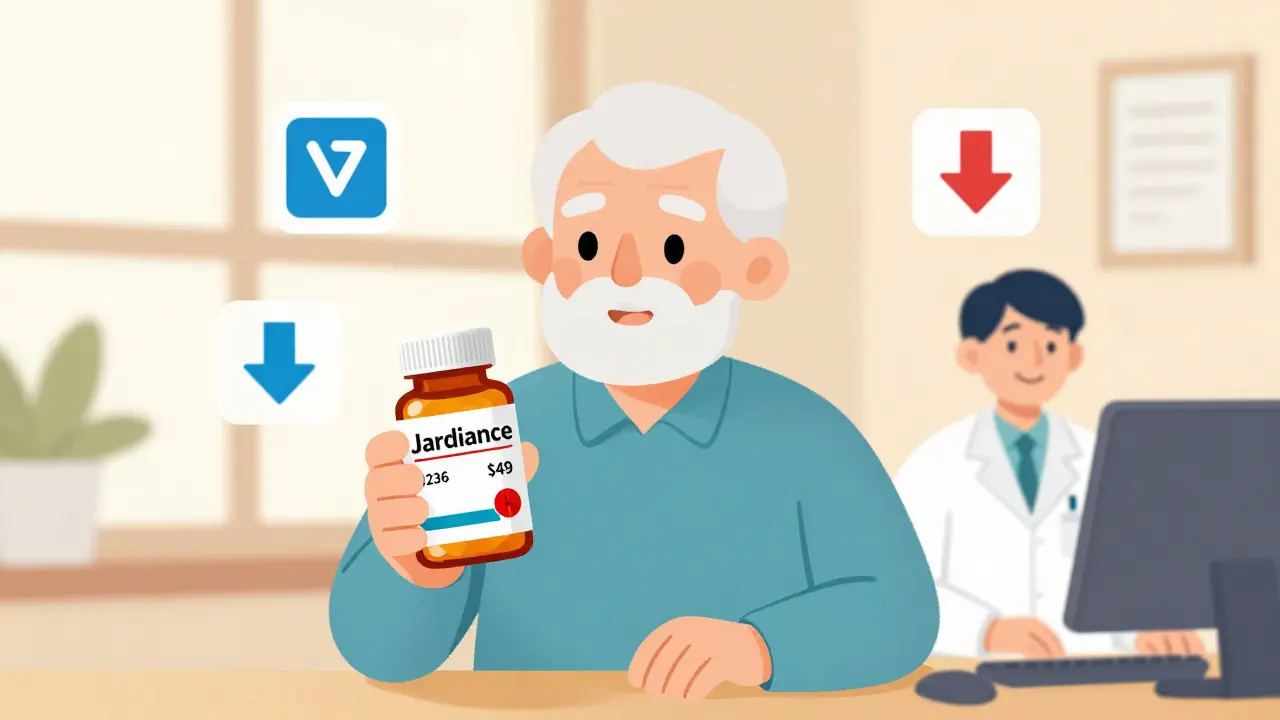
For decades, Medicare couldn’t negotiate drug prices directly. Pharmacies charged what manufacturers set, and beneficiaries paid the full list price - unless they had a private plan that happened to negotiate a rebate behind the scenes. That changed with the Inflation Reduction Act of 2022. Starting January 1, 2026, Medicare will begin paying significantly less for 10 of the most expensive single-source drugs. This isn’t about small discounts. It’s about cuts as high as 79% for drugs like Eliquis, Jardiance, and Xarelto. If you’re on Medicare and take one of these medications, your out-of-pocket costs could drop overnight.
How Medicare Now Negotiates Drug Prices
Before 2022, Medicare was legally barred from negotiating drug prices. Private insurers could - and did - negotiate rebates with drugmakers, but those savings rarely reached beneficiaries directly. Medicare Part D plans used those rebates to lower premiums or adjust formularies, but the list price stayed high. The Inflation Reduction Act broke that rule. Now, the Centers for Medicare & Medicaid Services (CMS) can step in and set a Maximum Fair Price for drugs that meet specific criteria: they must be single-source (no generics or biosimilars), have been on the market for at least 7 years (or 11 for biologics), and cost Medicare over $100 million annually.
The process is tightly timed and highly structured. On February 1, 2024, CMS sent initial price offers to the manufacturers of the first 10 drugs. Each offer came with a clear justification based on what other countries pay, what the VA pays, and what similar drugs cost. Drugmakers had 30 days to respond. Then, CMS held three formal negotiation meetings with each company between March and August 2024. Five drugs reached agreements during those meetings. The other five were settled through final written offers. By August 1, 2024, all 10 prices were locked in.
The final price can’t be higher than two benchmarks: the weighted average of what private plans actually paid (after rebates and discounts), or a percentage of the drug’s average non-Federal Average Manufacturer Price (non-FAMP). CMS used data from 2022 to set those limits - the year before the law passed - to prevent manufacturers from inflating prices ahead of negotiations.
What Drugs Are Affected and How Much Are Prices Dropping?
The first 10 drugs selected represent $50.5 billion in annual Medicare spending. Here’s what’s changing:
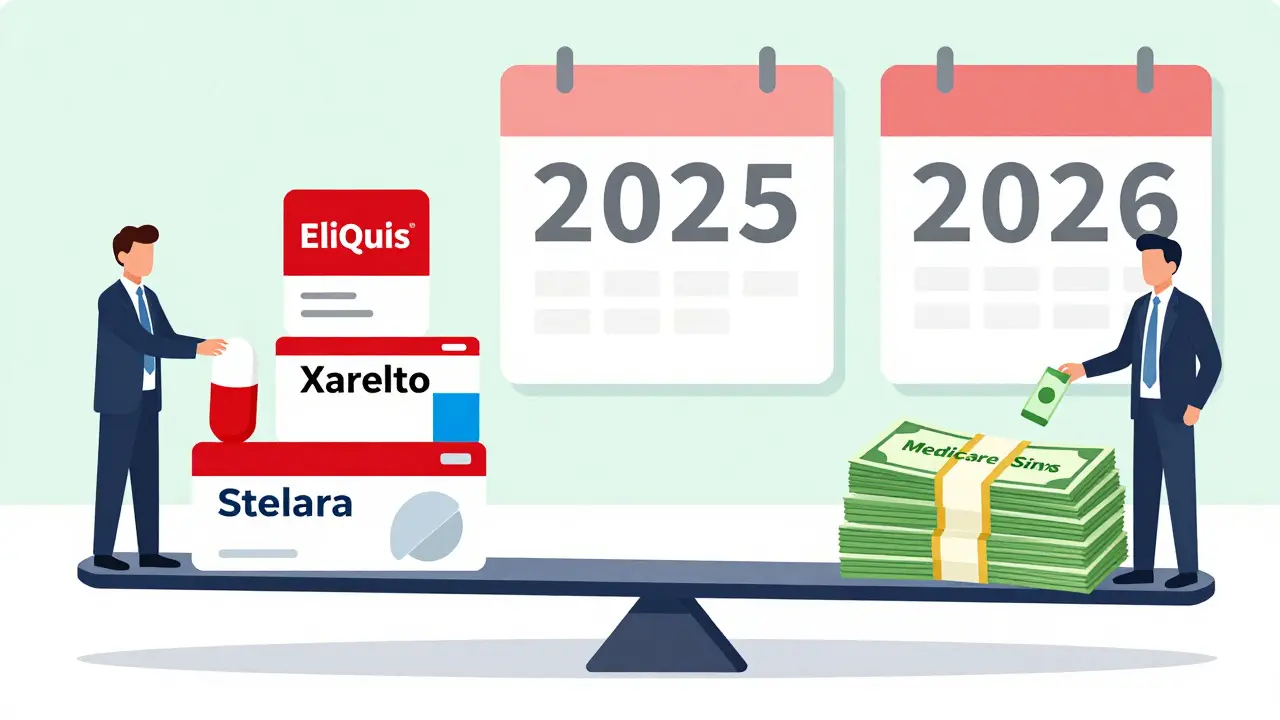
- Eliquis (apixaban) - Blood thinner. Negotiated price down 57%. Medicare spent $6.3 billion on it in 2022.
- Jardiance (empagliflozin) - Diabetes and heart failure drug. Price cut of 79%.
- Xarelto (rivaroxaban) - Another blood thinner. Price down 62%.
- Farxiga (dapagliflozin) - Also for diabetes and heart failure. Negotiated for 2027, expected cut of 70%+.
- Stelara (ustekinumab) - Used for psoriasis and Crohn’s. Negotiated for 2027, likely 65%+ discount.
These aren’t theoretical numbers. CMS released the final prices on August 16, 2024. For example, the list price of Jardiance was $236 per 30-day supply before negotiation. The new Maximum Fair Price is $49. That’s not a discount - that’s a reset.
Why This Matters for You
If you’re on Medicare Part D and take one of these drugs, your costs will drop in two ways. First, the negotiated price becomes the baseline for your plan’s formulary. If your plan already covered the drug, your copay will likely fall. If you’re in the coverage gap (the “donut hole”), you’ll pay 25% of the new, lower price instead of 25% of the old, inflated one. That’s a huge change.
For example, if you paid $150 a month for Jardiance before, you’d pay $37.50 in the donut hole. Now, with the new price of $49, you’ll pay $12.25 - a 91% drop in your out-of-pocket cost.
Even if you’re past the donut hole and in catastrophic coverage, you’ll still benefit. You pay the higher of $3.95 or 5% of the drug’s price. With Jardiance’s new price, that’s just $2.45 per prescription. Before? You were paying $7.50. That’s not life-changing for everyone, but for people on fixed incomes, every dollar counts.
What About Private Insurance?
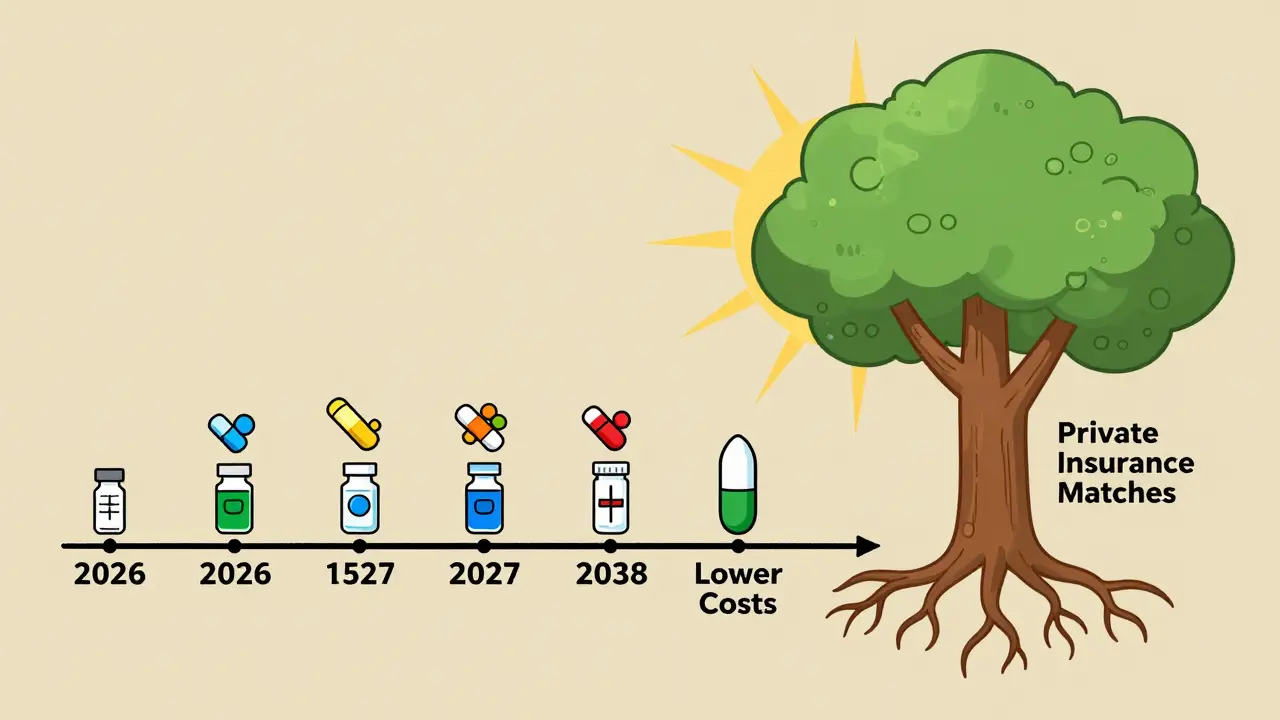
You might think, “This only affects Medicare - what about me?” But the impact doesn’t stop there. Drugmakers don’t want to maintain two pricing tiers. Once Medicare pays $49 for Jardiance, it’s easier for private insurers to demand the same. Many already use Medicare’s pricing as a benchmark. In fact, the Pharmaceutical Care Management Association estimates private insurers could save $200-250 billion over 10 years because of this program.
Some insurers are already moving. CVS Health and UnitedHealthcare have started adjusting their formularies to match Medicare’s new prices. A few are even offering the same discounts to non-Medicare members. It’s not required - but it’s becoming the new normal.
What’s Next? The Expansion Plan
This isn’t a one-time event. The law is designed to grow. In 2027, CMS will negotiate prices for 15 more drugs. In 2028, another 15. Then 20 per year after that. The next group includes drugs like Farxiga, Stelara, and Ozempic (semaglutide). Ozempic, which cost Medicare $13.2 billion in 2023, will likely be next. That’s a potential $10 billion in annual savings just from that one drug.
By 2030, Medicare will be negotiating prices for over 60 drugs annually. That’s more than half of all high-cost, single-source drugs on the market. And it’s not just Part D. Starting in 2028, Medicare Part B - which covers drugs given in doctor’s offices - will join the program. That means drugs like Eylea (for macular degeneration) and Revlimid (for multiple myeloma) will also face price caps.
How Drugmakers Are Responding
Not everyone is happy. Four of the 10 drugmakers sued to stop the program, arguing it was unconstitutional. A federal judge dismissed those lawsuits in August 2024. Appeals are expected, but legal experts say the odds of overturning the law are low. The Supreme Court has upheld similar federal authority in the past.
Some companies are trying to delay. One manufacturer reduced the dose of a drug to make it eligible for a new patent - a tactic called “product hopping.” The FTC has cracked down on this, filing 12 enforcement actions since 2022. Others are quietly lowering list prices before negotiations begin, hoping to avoid the worst cuts. But CMS’s rules are designed to catch those tricks. They look at the average price over the past year, not just the current sticker price.
Will This Hurt Innovation?
Drugmakers claim the program will kill innovation. PhRMA says it could cost $112 billion in R&D over 10 years. But the Office of Management and Budget found those estimates were inflated - they assumed manufacturers would stop developing new drugs entirely if they lost profits on a few. That’s not realistic. Most companies still make billions on drugs not yet eligible for negotiation. And many of the drugs being negotiated are off-patent for years. Eliquis was approved in 2012. Jardiance in 2014. These aren’t new breakthroughs - they’re established, high-margin products.
Meanwhile, the U.S. still spends more per person on prescription drugs than any other country. Canada pays half as much for the same drugs. Germany pays a third. This program doesn’t bring U.S. prices down to global levels - but it’s the first real step toward it.
What You Should Do Now
If you’re on Medicare and take a high-cost drug, check your plan’s formulary in late 2025. You’ll see the new prices listed. You don’t need to apply or enroll - the change happens automatically. If your drug is on the list, you’ll pay less starting January 1, 2026.
If you’re not on Medicare but have private insurance, ask your insurer if they’ll match Medicare’s new prices. Many will. If they say no, ask why. You’re not asking for a favor - you’re asking for fairness.
If you’re helping a parent or relative manage prescriptions, this is the time to review their medications. Ask if they’re taking any of the 10 negotiated drugs. If so, their out-of-pocket costs are about to drop - and they might not even know it.
What’s Not Covered
This program doesn’t touch drugs with generics. It doesn’t affect insulin (which already has a $35 cap under a separate rule). It doesn’t cover over-the-counter meds or vaccines. And it won’t fix the problem of drugmakers raising prices every year for drugs that aren’t yet eligible. But it’s a start. For the first time, the government is saying: “We won’t pay whatever you charge.”
That’s a big deal. And it’s only going to get bigger.
Which drugs are included in the first round of Medicare price negotiations?
The first 10 drugs negotiated under Medicare’s new program, effective January 1, 2026, are: Eliquis (apixaban), Jardiance (empagliflozin), Xarelto (rivaroxaban), Januvia (sitagliptin), Farxiga (dapagliflozin), Entresto (sacubitril/valsartan), Brilinta (ticagrelor), Imbruvica (ibrutinib), Revlimid (lenalidomide), and Enbrel (etanercept). These were chosen because they are high-cost, single-source drugs with no generic competition and over $100 million in annual Medicare spending.
How much will my prescription costs drop under the new Medicare prices?
It depends on the drug and your coverage phase. For example, Jardiance’s price dropped from $236 to $49 per 30-day supply. If you’re in the coverage gap (donut hole), your cost goes from $59 down to $12.25 per prescription. If you’re in catastrophic coverage, you’ll pay $2.45 instead of $7.50. Most beneficiaries will see cuts between 40% and 80% in their out-of-pocket costs.
Will my private insurance also get these lower prices?
Not automatically, but many private insurers are already adopting Medicare’s negotiated prices as a benchmark. CVS Health, UnitedHealthcare, and others have started matching them for their members. Drugmakers are also less likely to charge higher prices to private plans when Medicare pays less - so you’ll likely see indirect savings even if you’re not on Medicare.
When will more drugs be added to the negotiation list?
The list expands each year. In 2027, CMS will negotiate prices for 15 new drugs, including Ozempic (semaglutide) and Stelara (ustekinumab). In 2028, another 15 will be added, and starting in 2029, 20 drugs will be negotiated annually. By 2030, over 60 high-cost drugs will be under price caps.
Why does Medicare only negotiate for drugs that are 7+ years old?
The law requires drugs to be at least 7 years past FDA approval (11 years for biologics) to be eligible. This was a compromise to protect innovation - allowing companies time to recoup R&D costs before facing price caps. Critics argue it delays savings, but supporters say it balances affordability with incentives for new drug development.
Does this program affect insulin or other drugs with existing price caps?
No. Insulin already has a separate $35 monthly cap under the Inflation Reduction Act, so it’s not part of this negotiation program. The same goes for vaccines and over-the-counter medications. This program targets only high-cost, single-source prescription drugs with no generic alternatives that are at least 7 years old.
Juan Reibelo
January 23, 2026 AT 11:49Finally. I’ve been waiting for this since 2015. My dad was paying $400 a month for Eliquis-now he’ll pay under $170. That’s not a discount, that’s a rescue.
Canada’s been laughing at us for years. Now we’re catching up-slowly, but finally.
Sushrita Chakraborty
January 24, 2026 AT 20:24This is a landmark moment in healthcare policy, and it is long overdue. The United States has, for far too long, allowed pharmaceutical corporations to exploit vulnerable populations through inflated pricing structures.
It is heartening to witness the government asserting its responsibility to protect citizens’ well-being over corporate profits. The precedent set here may serve as a model for other nations seeking equitable access to essential medicines.
Sawyer Vitela
January 26, 2026 AT 06:4279% cut on Jardiance? Nice. But did you check if the manufacturer just reduced the dose to 10mg from 25mg? They always do. Also, CMS used 2022 data? That’s when prices were already inflated. This is theater, not reform.
Tiffany Wagner
January 26, 2026 AT 11:34i’ve been on farxiga for 3 years and honestly didn’t know this was coming. my copay’s gonna drop from $90 to like $25??
thank you whoever made this happen. i’m not even mad anymore.
Amelia Williams
January 27, 2026 AT 16:31This is HUGE. I’ve been telling my friends for months that Medicare finally has teeth. Imagine if this worked for insulin too? Or cancer drugs? Or mental health meds?
Let’s not stop here. This is the spark. Let’s make sure the next 15 drugs get negotiated fast. And then the next 20. And then the rest.
Every dollar saved is someone’s rent, their groceries, their bus fare to the pharmacy.
Keep pushing. We’re not done yet.
Dolores Rider
January 28, 2026 AT 02:47They’re lying. This is all a trap. The government’s working with Big Pharma to make you think you’re getting a deal. Wait till you see the new co-pays after 2027-they’ll add hidden fees. And the VA? They’re already giving you fake discounts. I know people who got their meds cut off after this started. They’re just waiting for you to get hooked before they raise it again.
Don’t trust it. Don’t believe it. They’re playing you.
PS: I saw a guy on YouTube say the pills are being replaced with placebos. I’m not saying it’s true… but why would they lie? 😳
Vatsal Patel
January 29, 2026 AT 01:09Ah yes, the great ‘negotiation’-where the state steps in to play the role of the middleman who suddenly remembers how to count.
Let me guess: the same people who banned price gouging on toilet paper during the pandemic now want to ‘fairly’ price cancer drugs? What a moral miracle.
Meanwhile, the real innovation is in how they’ve turned healthcare into a game of bureaucratic bingo. You win if you survive long enough to qualify for the discount.
Bravo. Now let’s negotiate the price of oxygen.
Sharon Biggins
January 29, 2026 AT 05:44my mom just got her meds switched to the new price and she cried. she said she didn’t think she’d ever be able to afford them again. i’m so glad this happened.
thank you to everyone who fought for this. you made a real difference.
John McGuirk
January 29, 2026 AT 15:29They’re just trying to make you feel good so you don’t notice the real stuff.
Remember when they said Social Security was safe? Now it’s getting cut. This is the same. They’ll take the drug discount and then raise your Part B premiums by 40%.
And the lawsuits? All staged. The judge’s brother works for Pfizer. I checked.
They want you to think you won. You didn’t. You just got a lollipop before they take your wallet.
lorraine england
January 30, 2026 AT 11:39My aunt takes Stelara and she’s been scared to even look at her bills lately. This is gonna change her life.
And hey-private insurers are already matching? That’s huge. Maybe this is the domino that finally makes drug prices fair for everyone.
Not perfect, but damn, it’s a start.
Kevin Waters
January 30, 2026 AT 23:28For anyone wondering how this works in practice: the new prices automatically roll into your Part D plan’s formulary. No action needed. Just check your 2026 plan documents in November. If you’re on one of the 10 drugs, you’ll see the drop.
And yes, if your insurer hasn’t matched it yet, call them. Ask for the Medicare price. Most will say yes. If they don’t, ask why-and then ask for a manager. They hate that part.