
FDA Serious Adverse Events Explained: What Patients Need to Know
Serious Adverse Event Checker
Understand FDA's Definition
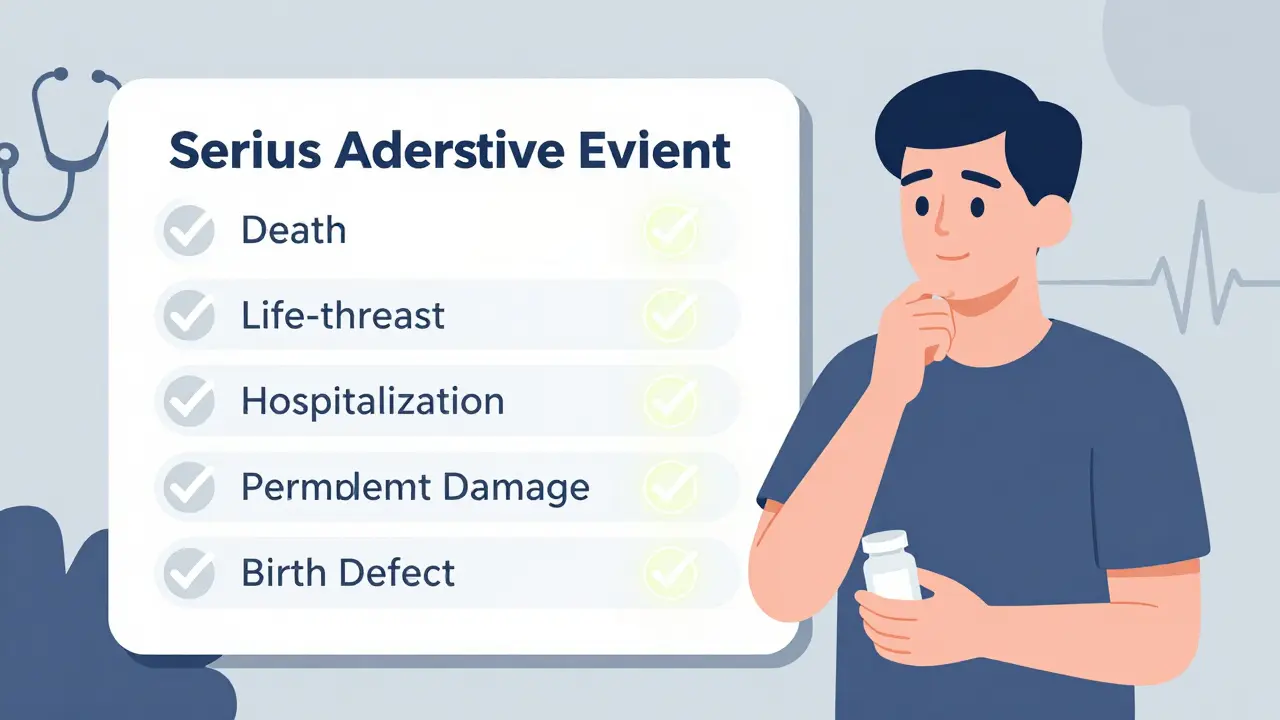
The FDA defines a Serious Adverse Event (SAE) as any unexpected medical problem that leads to one of these five outcomes:
- Death
- Life-threatening condition (you were in real danger of dying)
- Hospitalization (required admission or extended stay over 24 hours)
- Permanent disability or damage (incomplete recovery)
- Birth defect (if pregnant or planning pregnancy)
Note: serious does not mean severe. A mild symptom that leads to hospitalization is an SAE, but a severe symptom that doesn't cause one of these outcomes is not.
Check Your Experience
Describe your medical experience to see if it qualifies as a Serious Adverse Event:
When you're taking a new medication or joining a clinical trial, you might see the term serious adverse event in your paperwork. It sounds scary. And it should - because it's meant to flag real risks. But here's the thing most patients don't realize: serious doesn't mean severe. And confusing those two words can make you unnecessarily worried - or worse, miss a real danger.
What Exactly Is a Serious Adverse Event?
The U.S. Food and Drug Administration (FDA) defines a Serious Adverse Event (SAE) as any unexpected medical problem that happens while you're using a drug, vaccine, or medical device - and it leads to one of five specific outcomes:- Death
- Life-threatening condition (you were in real danger of dying at the time)
- Hospitalization (you had to go in, or stayed longer than 24 hours)
- Permanent disability or damage (your body didn’t recover fully)
- Birth defect (if you're pregnant or planning to be)
That’s it. No gray area. If it doesn’t hit one of those five, it’s not a serious adverse event - even if it felt awful.
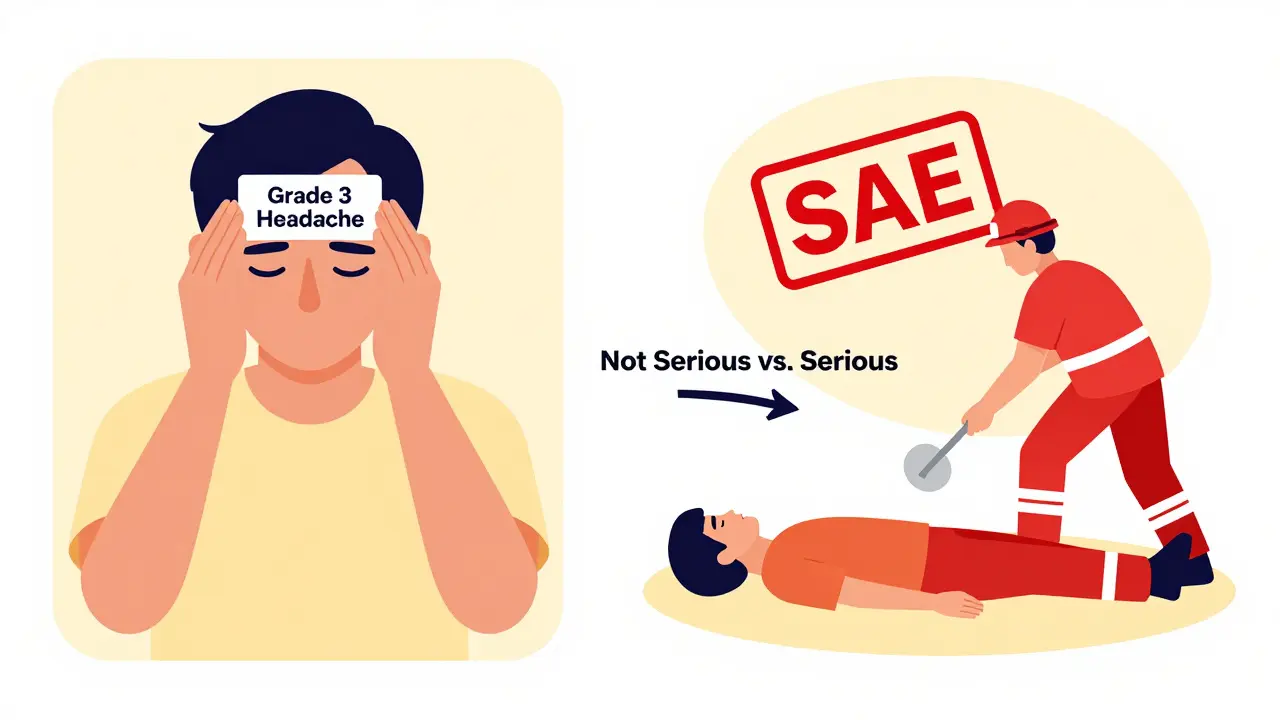
For example, if you get a bad headache after taking a new pill, that’s not an SAE - unless the headache caused you to pass out and end up in the ER. If you feel nauseous for three days and can’t keep food down, that’s not an SAE - unless you got so dehydrated you needed IV fluids in the hospital.
Why This Distinction Matters
Doctors and researchers use severity grades to describe how intense a side effect is. That’s different. The National Cancer Institute’s grading system (CTCAE v5.0) rates side effects from 1 to 5:- Grade 1: Mild (you barely notice it)
- Grade 2: Moderate (annoying, but you can still function)
- Grade 3: Severe (you need medical help, maybe hospitalization)
- Grade 4: Life-threatening (intensive care needed)
- Grade 5: Fatal
Now here’s where people get tripped up. A Grade 3 side effect - like low blood cell counts requiring treatment - might not be an SAE if it didn’t cause hospitalization or permanent damage. In cancer trials, 68% of Grade 3 or 4 events were not classified as serious because they were expected and reversible with treatment.
On the flip side, a Grade 1 rash that leads to an allergic reaction and hospitalization? That’s an SAE. The event itself wasn’t severe - but the outcome was.
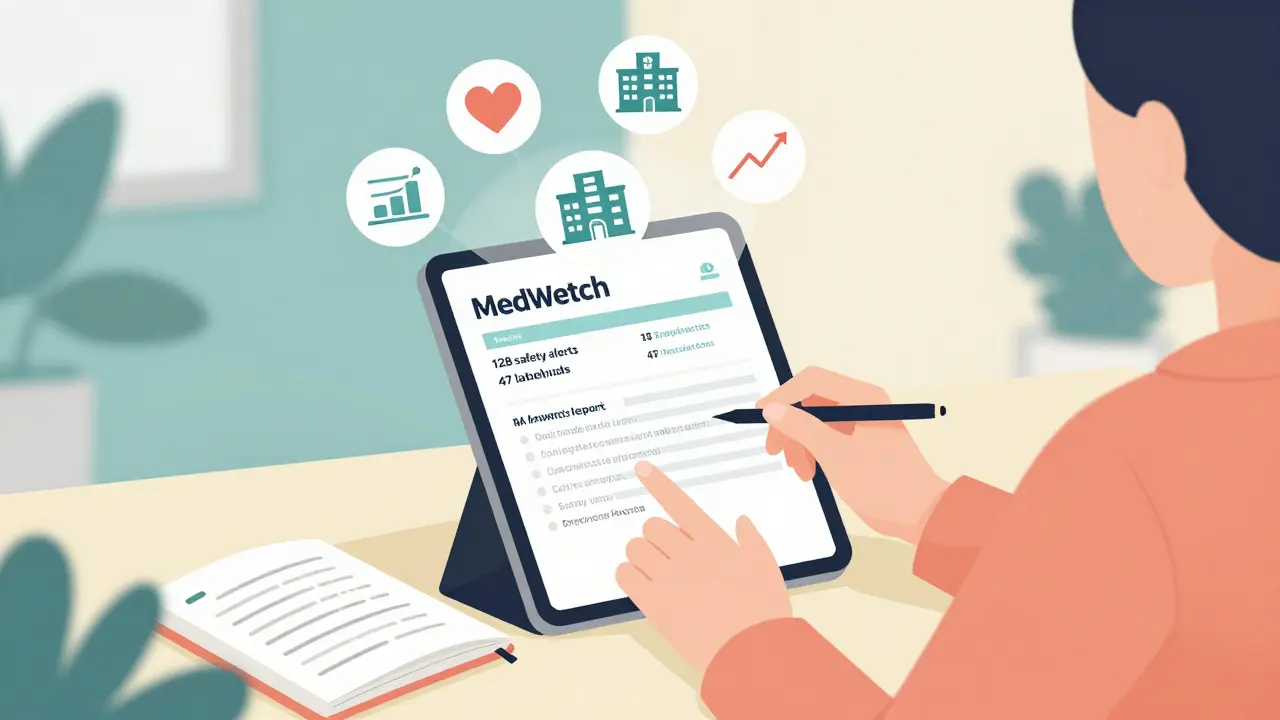
This isn’t just semantics. It’s how the FDA decides whether a drug needs a warning label, a recall, or a safety alert. In 2022 alone, this system helped trigger 128 safety alerts and 47 label changes.
What About ‘Important Medical Events’?
There’s another category the FDA calls Important Medical Events (IMEs). These are side effects that don’t meet the five criteria above - but could become serious if not treated. Think: high blood pressure that’s not yet dangerous, or abnormal liver tests that could lead to damage if ignored.These used to slip through the cracks. But since the FDA updated its guidance in 2018, doctors and trial sponsors must report IMEs as serious if they require urgent medical attention to prevent a worse outcome. In 2022, this change led to 18,452 previously missed events being reported - a 14.7% jump in safety signals.
How Often Do These Events Happen?
You might hear about a drug causing a serious side effect and assume it’s common. It’s not. Most SAEs are rare. For example, a medication might list “serious infections occurred in 2.3% of patients” in its warning section. That means 97.7% didn’t have one.But here’s the problem: underreporting is huge. Experts estimate only 1% to 10% of actual adverse events get reported to the FDA. Why? Because most people don’t know how to report them. Many assume their doctor will, or they think it’s not “serious enough.”
That’s why the FDA created MedWatch - a free, easy way for patients to report side effects directly. You can fill out Form 3500B online or by mail. In 2022, 38,452 reports came from patients like you. That’s up 12.3% from the year before.
What Should You Look For in Your Trial or Prescription?
If you’re in a clinical trial, your consent form should have a section titled “Risks and Discomforts” or “Adverse Events.” It should list what counts as serious and how they’ll be handled. Look for:- Specific outcomes mentioned (hospitalization, death, etc.)
- Incidence rates - like “1 in 100 patients experienced serious liver injury”
- A glossary defining “serious adverse event” in plain language
For prescription drugs, check the Medication Guide that comes with your pill bottle. The FDA requires it to include a “Warnings and Precautions” section. That’s where you’ll find the SAEs they know about.
And if you don’t see a glossary? Ask for one. The FDA’s 2022 guidance says sponsors should make this clear. You have a right to understand what you’re signing up for.
Real Stories: When Understanding SAEs Changed Everything
One patient on the Inspire forum, “CancerWarrior2022,” saw “Grade 4 neutropenia” listed in her trial results and panicked. She thought it meant she was dying. Her nurse explained: neutropenia (low white blood cells) was common with her chemo. It was severe - but not serious, because it was expected and reversed with medication. She felt relieved. Another patient, “DiabetesFighter,” shared that knowing hospitalization for diabetic ketoacidosis counted as an SAE helped him recognize when to call 911. He’d had two episodes before joining the trial. Now he understood why his doctors were so urgent about it.A 2022 survey found 78% of patients confused “serious” with “severe.” That’s not just confusing - it’s dangerous. You might ignore a mild symptom that turns serious, or stress over a severe but harmless side effect.
What’s Changing in 2025?
The FDA is making big moves to fix this confusion. By 2025, all clinical trial registries must include a plain-language summary of SAEs - no jargon. They’re also launching a patient education portal by the end of 2024, built on lessons from the pandemic, when they processed over a million reports with 99.2% accuracy.AI is now helping prioritize the most urgent reports. What used to take 30 days to review can now be flagged in 7 days. And patient feedback is being baked into drug approval decisions. In 2023, 78% of new drugs included patient-reported outcomes in their safety data - up from 42% in 2015.
It’s not perfect. Some experts say drug companies underreport side effects. Others say the system still misses non-hospitalized events. But it’s getting better - and you have a role in making it better.
What You Can Do Right Now
1. Know the five criteria. Death. Life-threatening. Hospitalization. Permanent damage. Birth defect. If it doesn’t hit one of these, it’s not an SAE. 2. Ask for plain-language explanations. Don’t settle for “Grade 3.” Ask: “Could this lead to hospitalization or permanent harm?” 3. Report anything unusual. Even if you’re not sure. Use MedWatch. Your report helps protect others. 4. Don’t panic over severity alone. A bad headache isn’t an SAE unless it causes you to collapse. A rash isn’t an SAE unless it triggers anaphylaxis. 5. Keep a side effect journal. Write down symptoms, dates, and how they affected your day. That helps your doctor spot patterns.The FDA’s system isn’t designed to scare you. It’s designed to protect you. But it only works if you understand it - and speak up when something doesn’t feel right.
Eileen Reilly
January 12, 2026 AT 07:55Monica Puglia
January 12, 2026 AT 15:29steve ker
January 12, 2026 AT 18:17Rebekah Cobbson
January 14, 2026 AT 15:55Rinky Tandon
January 16, 2026 AT 08:15Darryl Perry
January 17, 2026 AT 09:07Windie Wilson
January 18, 2026 AT 11:31Daniel Pate
January 18, 2026 AT 17:55Amanda Eichstaedt
January 20, 2026 AT 17:35Abner San Diego
January 21, 2026 AT 17:13Cecelia Alta
January 21, 2026 AT 19:55George Bridges
January 22, 2026 AT 04:44Faith Wright
January 23, 2026 AT 17:23