
Facial Flushing from Medications: Common Triggers and Real Relief
Medication Flush Checker
Check if Your Medication Causes Facial Flushing
Enter your medication name to see if it's a known trigger for facial flushing. Based on the latest medical research and common side effect data.
Common triggers:
- Vasodilators (e.g., Amlodipine, Nifedipine)
- Niacin (Vitamin B3)
- Opioids (e.g., Morphine)
- Vancomycin
- Corticosteroids (e.g., Cyclosporine)
- Cancer drugs (e.g., Tamoxifen)
- Sildenafil (Viagra)
When your face suddenly turns red, feels hot, and seems to glow under the lights - especially when you didn’t do anything to cause it - it’s easy to panic. Is it an allergic reaction? Am I having a stroke? Or worse, is it something I did? More often than not, especially if you’re on medication, the culprit is something far more common: facial flushing from medications.
This isn’t just a cosmetic nuisance. For many people, it’s a daily disruption. It can make you avoid social situations, skip doses, or even quit a life-saving drug. The good news? You’re not alone, and there are real ways to manage it - if you know what’s causing it.
What Exactly Is Medication-Induced Facial Flushing?
Facial flushing isn’t blushing from embarrassment. It’s a physical reaction caused by blood vessels in your face, neck, and upper chest suddenly widening. This lets more blood flow through, making your skin turn red and feel warm - sometimes even burning. It can last seconds or minutes, and in some cases, it happens again and again.
It’s not dangerous in most cases, but it can be terrifying if you don’t know why it’s happening. The key is understanding that this isn’t an allergy. It’s a direct effect of how certain drugs interact with your body’s blood vessels and nervous system.
Top Medications That Cause Flushing
Not all drugs cause flushing - but many common ones do. Here are the biggest offenders, grouped by class:
- Vasodilators and Calcium Channel Blockers: These are designed to open up blood vessels to lower blood pressure or relieve chest pain. But they don’t pick and choose. If they widen arteries in your heart, they widen them in your face too. Common ones include amlodipine, a calcium channel blocker used for high blood pressure and angina, nifedipine, another calcium channel blocker often prescribed for hypertension, hydralazine, a direct vasodilator used in heart failure, and nitroglycerin, used for chest pain.
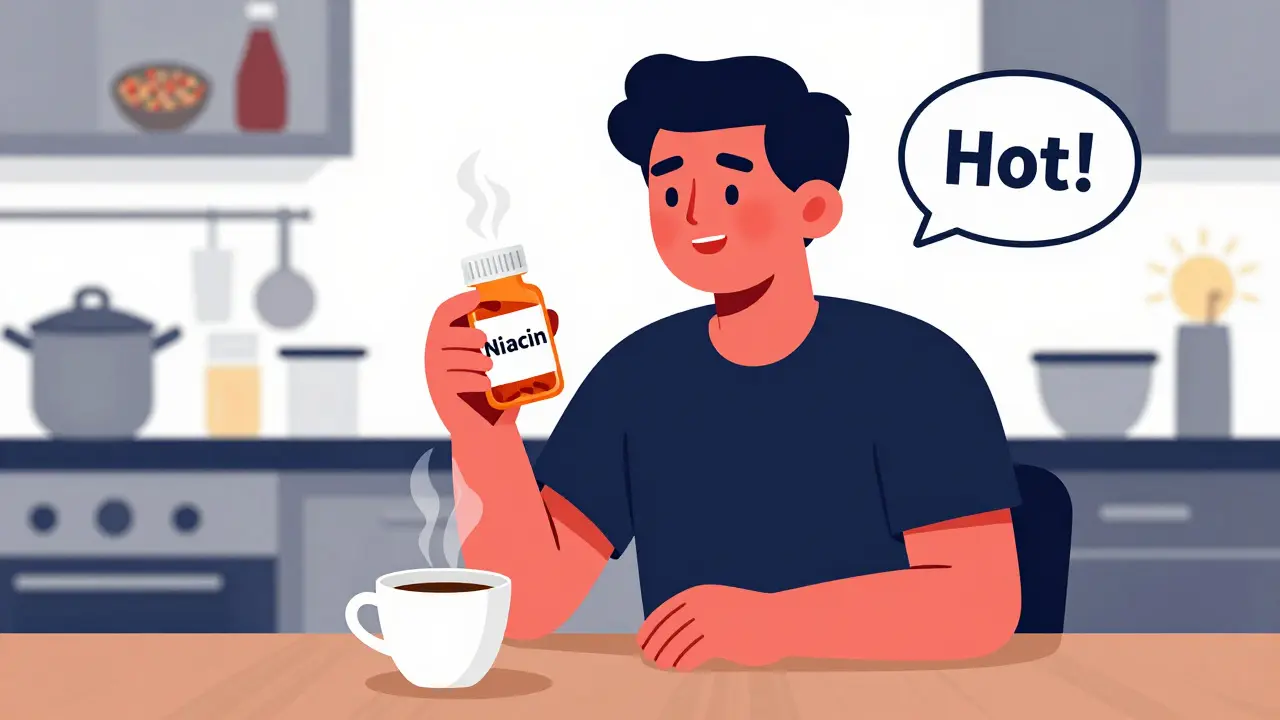
- Niacin (Vitamin B3): This one’s notorious. People take niacin to lower cholesterol, but nearly 80% of users get the infamous "niacin flush." It’s a deep, burning redness that can feel like a sunburn. It’s caused by prostaglandins - chemicals your body releases in response to niacin. Aspirin can help, but only a little - about 30% reduction at best.
- Opioids: Morphine, oxycodone, and other strong painkillers can trigger flushing because they cause your mast cells to release histamine. This isn’t an allergy, but it feels like one. You might also get itchy skin or a rash along with the redness.
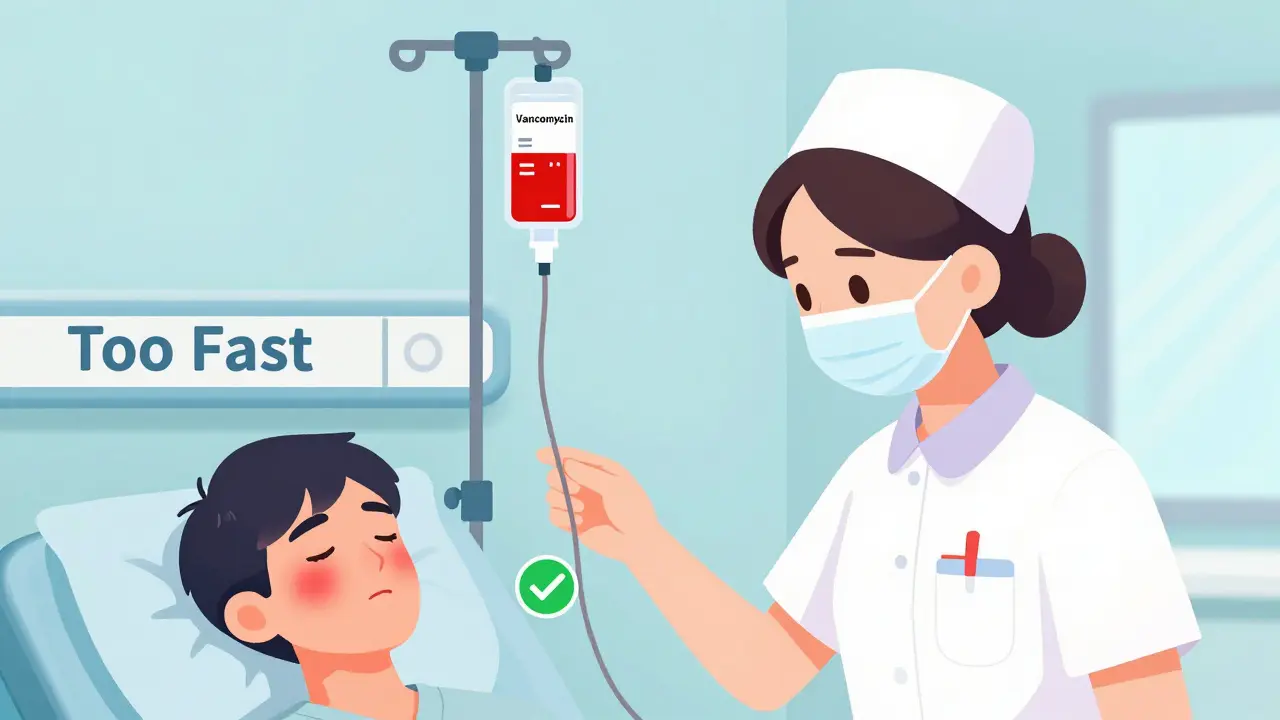
- Vancomycin: This antibiotic, used for serious infections, can cause "red man syndrome." The face, neck, and chest turn bright red, sometimes with dizziness or low blood pressure. It’s usually tied to how fast the drug is given. Slowing the infusion cuts the risk dramatically.
- Corticosteroids and Immunosuppressants: Drugs like cyclosporine, used after organ transplants or triamcinolone, an oral steroid can cause flushing as part of their broad effect on inflammation and blood vessel tone.
- Hormone and Cancer Drugs: Tamoxifen, used for breast cancer, goserelin, for prostate cancer, and even doxorubicin, a chemotherapy agent can trigger flushing. The mechanism? Often tied to hormonal shifts or direct vascular effects.
- Sildenafil (Viagra): Yes, the same drug that helps with erections can cause a flushed face. It works by relaxing blood vessels everywhere - including in your cheeks. It’s common, expected, and usually harmless.
Why Do Some People Flushing More Than Others?
Two people on the same drug can have wildly different reactions. Why?
- Genetics: Some people have a genetic variation that makes them more sensitive to certain drugs. For example, many people of East Asian descent have a slower version of the enzyme that breaks down alcohol. This leads to a buildup of acetaldehyde - which causes flushing. Combine that with a medication like metronidazole or disulfiram, and the flush can be intense.
- Dosage: Higher doses almost always mean more flushing. A low dose of niacin might cause a slight warmth. A high dose? Full-blown red face.
- Route of administration: IV drugs like vancomycin or DDAVP cause faster, stronger reactions than pills.
- Other substances: Alcohol, spicy food, hot drinks, or even MSG can make flushing worse - especially if you’re already on a flushing drug.
How to Stop or Reduce Flushing
There’s no one-size-fits-all fix. But there are proven strategies - and they depend on the cause.
1. Take Aspirin Before Your Dose
For niacin flushing, taking 325 mg of aspirin 30 minutes before your dose can help. It blocks the prostaglandins that trigger the reaction. It won’t stop it completely, but it can cut the severity by a third. Same goes for other prostaglandin-driven flushes.
2. Use Antihistamines for Histamine-Related Flushing
If your flushing comes with itching or feels like an allergic reaction (like with opioids or vancomycin), try an H1 blocker like cetirizine, a non-drowsy antihistamine or fexofenadine, another common antihistamine. These won’t help with niacin or vasodilator flushes - only histamine-triggered ones.
3. Slow Down the Infusion
If you’re getting vancomycin or another IV drug, ask your nurse to slow the drip. Giving it over 60-90 minutes instead of 20 minutes cuts the risk of red man syndrome by over 80%.
4. Try Clonidine or Beta-Blockers
These aren’t first-line, but they’re used off-label for stubborn flushing. Clonidine, a blood pressure medication that reduces sympathetic nervous system activity can calm down overactive blood vessels. Nadolol, a beta-blocker that reduces heart rate and blood vessel response is sometimes used for anxiety-related flushing. Both require a prescription and careful monitoring.
5. Botox or Laser Treatments
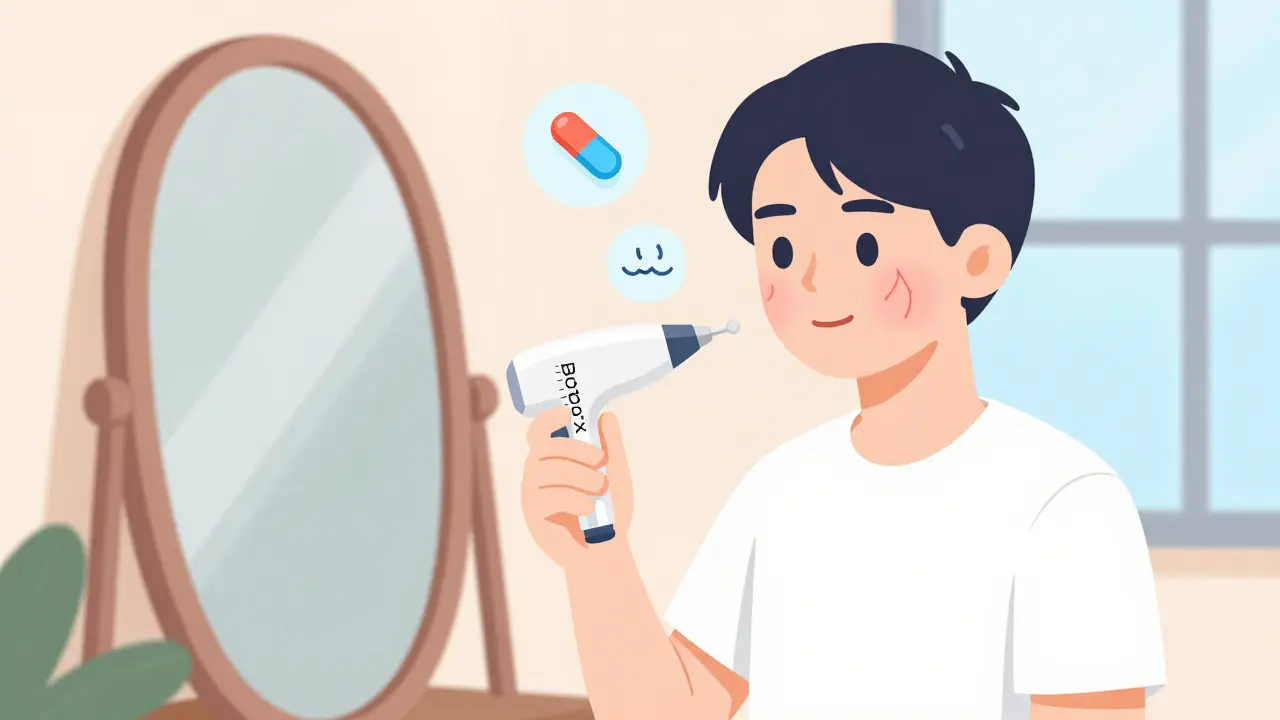
For people with chronic, severe flushing that doesn’t respond to anything else - like those with rosacea or extreme drug sensitivity - botulinum toxin (Botox), used to temporarily block nerves that trigger flushing injections in the face can help. Effects last 4-6 months. vascular laser therapy, a treatment that targets small surface blood vessels can reduce the permanent redness that sometimes follows repeated flushing. Both are procedures, not cures, but they offer real relief.
What You Can Do at Home
Medications aren’t the only trigger. Avoiding everyday irritants can make a huge difference:
- Avoid alcohol - especially if you’re taking antibiotics like metronidazole or sulfa drugs.
- Skip spicy food - chili peppers, hot sauces, and curry can set off flushing.
- Stay cool - hot showers, saunas, and even hot coffee can worsen it.
- Watch for MSG - it’s hidden in many processed and restaurant foods. If you notice flushing after eating out, try avoiding it.
- Manage stress - anxiety can trigger flushing even without medication. Deep breathing, meditation, or even therapy can help.
When to See a Doctor
Not all flushing is harmless. Call your doctor if:
- The flushing comes with trouble breathing, swelling of the lips or tongue, or dizziness - these could mean a true allergic reaction.
- You’re on a new drug and the flushing is severe or getting worse.
- You’re flushing constantly, even when you’re not taking medication.
- You’re considering stopping a drug because of flushing - talk to your doctor first. Sometimes switching to a different drug in the same class helps.
For example, if niacin flushing is making you quit cholesterol treatment, ask about alternatives like ezetimibe or statins. If calcium channel blockers are causing too much redness, your doctor might switch you to an ACE inhibitor instead.
Bottom Line: You Can Manage This
Facial flushing from medication is common, often misunderstood, and rarely life-threatening. But it can be deeply frustrating. The key is identifying the trigger, understanding the mechanism, and matching the right fix - whether it’s aspirin before niacin, slowing down an IV, or using a different drug entirely.
Don’t suffer in silence. Don’t quit your medication without talking to your provider. And don’t assume it’s "just in your head." This is a real, measurable, and treatable side effect. With the right approach, you can keep your treatment - and your skin - calm.
Can facial flushing from medication be dangerous?
In most cases, no - it’s uncomfortable but not dangerous. However, if flushing is accompanied by swelling, trouble breathing, dizziness, or low blood pressure, it could signal a serious allergic reaction or drug toxicity. Seek immediate medical help if these symptoms occur.
Does niacin flushing go away over time?
Yes, for many people, the flushing lessens after a few weeks of consistent use. The body adapts to niacin, and the prostaglandin response becomes milder. Taking aspirin beforehand and starting with a low dose can help ease this transition.
Can I take antihistamines for any type of flushing?
Only for flushing caused by histamine release - like from opioids or vancomycin. Antihistamines won’t help with niacin, calcium channel blockers, or vasodilators, because those work through different pathways. Using them for the wrong type of flushing won’t help and might mask symptoms.
Why does my face flush when I drink alcohol while on medication?
Some medications - like metronidazole, certain antibiotics, or disulfiram - block the enzyme that breaks down alcohol. This causes acetaldehyde to build up, which widens blood vessels and triggers flushing. It’s not an allergy - it’s a chemical reaction. Avoid alcohol completely if you’re on one of these drugs.
Is there a permanent cure for medication-induced flushing?
There’s no permanent cure unless you stop the medication causing it. But for many, symptoms can be controlled with lifestyle changes, timing of doses, or alternative drugs. In rare, severe cases, procedures like Botox or laser therapy can reduce long-term redness - but they don’t stop the underlying drug effect.
Gretchen Rivas
March 3, 2026 AT 09:31Stephen Vassilev
March 4, 2026 AT 17:41Mike Dubes
March 5, 2026 AT 07:37John Smith
March 5, 2026 AT 17:50Ethan Zeeb
March 6, 2026 AT 10:52Megan Nayak
March 7, 2026 AT 11:36Divya Mallick
March 9, 2026 AT 08:02Pankaj Gupta
March 10, 2026 AT 18:45Alex Brad
March 12, 2026 AT 10:29Renee Jackson
March 12, 2026 AT 14:18RacRac Rachel
March 13, 2026 AT 17:27Jane Ryan Ryder
March 14, 2026 AT 11:23