
Dofetilide and Cimetidine: Why This Drug Pair Can Trigger Deadly Heart Rhythms
Dofetilide-Cimetidine Interaction Checker
Check for Dangerous Combination
Enter medications and click 'Check Combination' to see if you have this dangerous interaction.
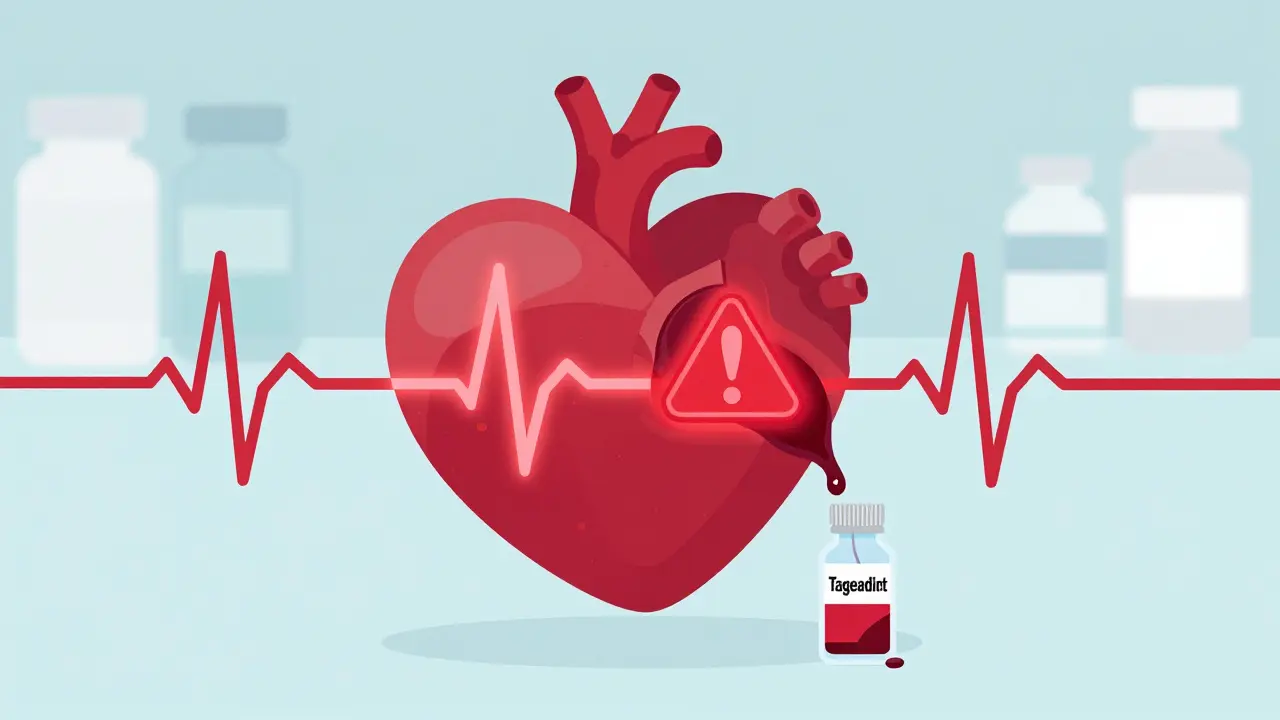
Imagine taking a medication to control your irregular heartbeat, only to unknowingly add something that turns that treatment into a ticking time bomb. That’s exactly what happens when dofetilide and cimetidine are taken together. This isn’t a rare edge case. It’s a well-documented, life-threatening interaction that has sent patients to the ICU - and even killed them - because it’s so predictable, yet still slips through the cracks.
What Dofetilide Does - and Why It’s So Sensitive
Dofetilide, sold under the brand name Tikosyn, is a powerful antiarrhythmic drug used to restore and maintain a normal heart rhythm in people with atrial fibrillation or atrial flutter. It works by blocking specific electrical channels in heart cells, slowing down abnormal signals. But here’s the catch: it has an extremely narrow safety window. Too little, and it doesn’t work. Too much, and it can trigger a chaotic, deadly heart rhythm called torsades de pointes.
This drug is eliminated almost entirely by the kidneys - about 80% of it leaves the body unchanged through a specific transport system called the renal cation exchange pathway. That’s why dosing is based on kidney function. If your creatinine clearance drops below 20 mL/min, you shouldn’t take it at all. But even if your kidneys are fine, something else can still overload your system.
Cimetidine: The Silent Saboteur
Cimetidine, known as Tagamet, was once one of the most common heartburn medications. It blocks stomach acid production by targeting H2 receptors. But unlike newer alternatives like famotidine (Pepcid) or proton pump inhibitors like omeprazole, cimetidine has a dangerous side effect: it shuts down that same kidney transport system that clears dofetilide.
Studies show cimetidine can increase dofetilide levels in the blood by 50% to 100% within just 24 hours. That’s not a small bump - it’s a massive spike. The FDA-approved prescribing info for Tikosyn says this interaction raises the risk of dangerous QT prolongation from 3-5% with dofetilide alone to 12-18% when cimetidine is added. QT prolongation means your heart takes longer than normal to recharge between beats. When it gets too long, it can spiral into torsades de pointes - a form of ventricular tachycardia that looks like a twisting pattern on an EKG and often leads to sudden cardiac arrest.
The Numbers Don’t Lie
The evidence isn’t theoretical. A 2021 study in Circulation: Arrhythmia and Electrophysiology analyzed over 12,000 patients and found the risk of QT prolongation was more than four times higher with cimetidine than without. The FDA’s own adverse event database recorded 23 confirmed cases of torsades de pointes directly linked to this combo between 2010 and 2022. That’s not an outlier - it’s a pattern.
One case from the Journal of Cardiovascular Electrophysiology involved a 72-year-old man on stable dofetilide who started cimetidine for heartburn. Three days later, he went into torsades de pointes and needed emergency cardioversion. Another case, published in Mayo Clinic Proceedings, described a 65-year-old woman who fainted after taking a single 300 mg dose of cimetidine. She had no prior history of heart problems - just dofetilide and a quick fix for acid reflux.
Why Famotidine Is Safe - And Cimetidine Isn’t
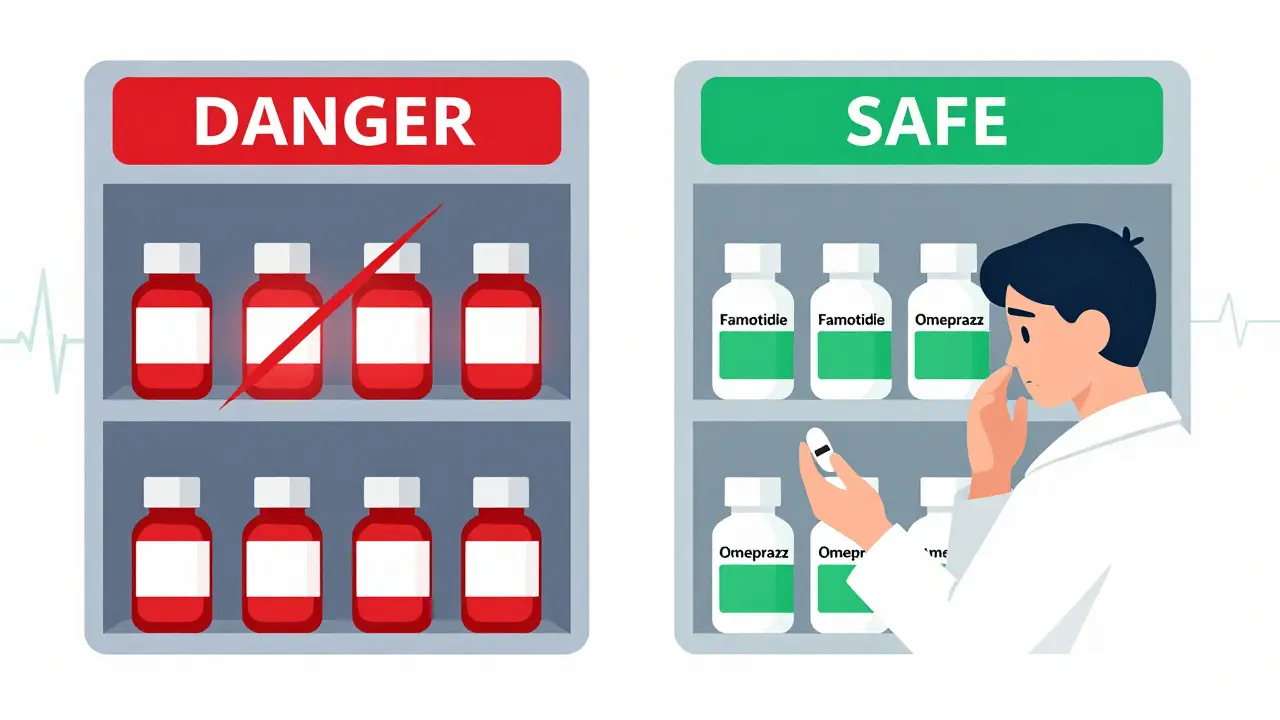
This is where it gets critical: not all acid blockers are equal. Famotidine (Pepcid) and ranitidine (Zantac, now largely off the market) do not interfere with the kidney’s cation transport system. Clinical trials (DOF-30001 and DOF-30002) showed that famotidine caused no meaningful change in dofetilide levels. That’s why experts say: if you need acid suppression while on dofetilide, use famotidine or a PPI like omeprazole. Not cimetidine. Ever.
The American College of Cardiology and the European Heart Rhythm Association both list this combination as contraindicated. Dr. Jonathan Piccini from Duke University called it “one of the clearest contraindications in clinical cardiology.” Dr. Bruce Wilkoff from Cleveland Clinic said its occurrence today is a “systems failure.” In other words: if this happens, someone dropped the ball.
How This Interaction Slips Through
Here’s the scary part: many patients don’t even realize they’re taking cimetidine. It’s sold over-the-counter. Someone might grab a bottle for “a little heartburn” without telling their cardiologist. Or a nurse in a nursing home might give it because it’s cheap and available. Elderly patients, especially those on multiple medications, are at highest risk.
A 2022 survey of 47 academic medical centers found that 12-15% of unexpected torsades de pointes cases in dofetilide patients involved unrecognized cimetidine use. Even short-term exposure - as little as 48 hours - can be enough. Dr. Anne Curtis warned that “even brief use can precipitate life-threatening arrhythmias.”
What Should You Do?
If you’re on dofetilide:
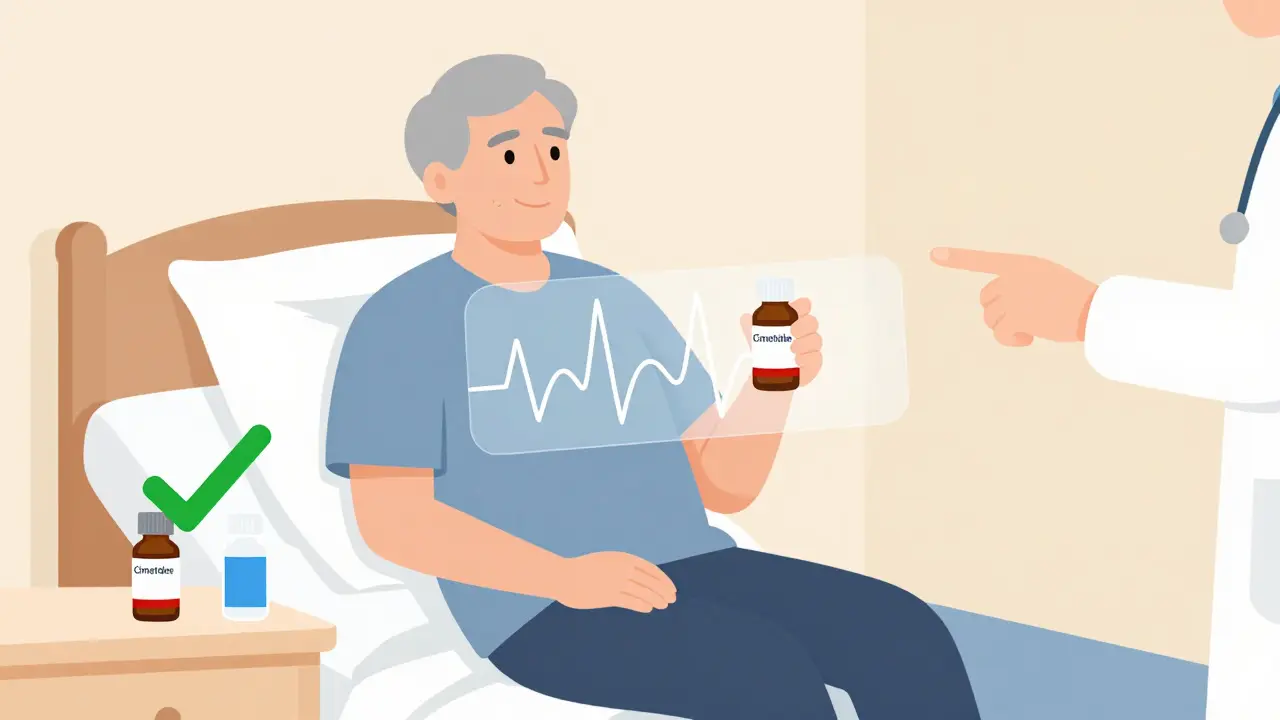
- Never take cimetidine (Tagamet) - even once.
- Check all your medications - including OTC ones. Look for “cimetidine” on the label.
- Switch to famotidine (Pepcid), omeprazole (Prilosec), or another PPI for acid reflux.
- Ask your pharmacist to run a drug interaction check before starting any new medication.
- Get your QT interval checked before starting dofetilide and again if you start a new drug.
- Keep potassium levels between 4.0 and 5.0 mmol/L. Low potassium makes the risk even worse.
If you’re a clinician:
- Screen for cimetidine use before prescribing dofetilide.
- Use electronic health record alerts - most major systems (Epic, Cerner) now block this combo.
- Document the switch to a safer acid suppressant in the patient’s plan.
- Remember: this isn’t just about avoiding a side effect - it’s about preventing sudden death.
The Bigger Picture
This interaction isn’t just about two drugs. It’s a window into how dangerous polypharmacy can be. The average patient with atrial fibrillation takes nearly seven prescription medications. Each one adds risk. The American Heart Association estimates that avoiding just this one interaction saves about $47,500 per case in emergency care, hospitalization, and long-term complications.
Since 2015, automatic EHR alerts have cut inappropriate co-prescribing from 8.7% to just 1.2%. That’s progress. But it’s not enough. AI systems now predict this interaction with 94.7% accuracy 72 hours before it happens - giving doctors time to intervene. Still, the American Geriatrics Society lists this combo as one of the most inappropriate for older adults.
The takeaway? This isn’t a theoretical warning. It’s a hard rule: dofetilide and cimetidine must never be used together. There’s no safe dose. No safe duration. No exception. The science is clear. The deaths are real. And the fix? Simple: switch to something else.
Can I take cimetidine if I’m on dofetilide, even for a few days?
No. Even a single dose of cimetidine can raise dofetilide levels enough to trigger torsades de pointes. This interaction happens within 24 hours and can be fatal. There is no safe short-term use. If you need acid relief, switch to famotidine or a proton pump inhibitor immediately.
Is famotidine safe to use with dofetilide?
Yes. Unlike cimetidine, famotidine (Pepcid) does not inhibit the kidney transport system that clears dofetilide. Clinical studies show no significant change in dofetilide levels when taken with famotidine. It is the preferred H2 blocker for patients on dofetilide. Doses up to 40 mg twice daily are considered safe.
What should I do if I accidentally took cimetidine while on dofetilide?
Stop cimetidine immediately and contact your cardiologist or go to the nearest emergency room. You may need an EKG to check your QT interval and possibly blood tests to monitor electrolytes. Do not wait for symptoms. QT prolongation can be silent until it turns into a life-threatening rhythm. Your dofetilide dose may need to be held or adjusted.
Why is cimetidine still available if it’s so dangerous?
Cimetidine is still sold over-the-counter because it’s inexpensive and effective for acid reflux - but only if you don’t take other medications that interact with it. The danger is specific to certain drug combinations, like dofetilide. Most patients use it safely. The problem arises when patients on high-risk drugs like dofetilide aren’t aware of the interaction. That’s why education and EHR alerts are critical.
Can other drugs besides cimetidine cause the same interaction?
Yes. Dofetilide can also interact dangerously with verapamil, trimethoprim, ketoconazole, and some antibiotics like clarithromycin. All of these inhibit the same kidney transport system. Always review all medications - including antibiotics and antifungals - before starting dofetilide. Your pharmacist should flag these risks.
Robin bremer
February 21, 2026 AT 17:32bro i took cimetidine for like 2 days last month and didn’t think twice 😳 literally just grabbed it off the shelf… now i’m paranoid AF. gotta check my meds list rn.
Ellen Spiers
February 23, 2026 AT 08:32The pharmacokinetic interaction between dofetilide and cimetidine is mediated via inhibition of the renal cation transporter OCT2 and MATE1, resulting in a statistically significant elevation in plasma concentration (p < 0.001). This is not a hypothetical risk-it is a Class I contraindication per ACC/AHA guidelines. The absence of electronic health record (EHR) alerts in 12% of cases represents a systemic failure in clinical decision support infrastructure.
John Cena
February 24, 2026 AT 04:29I get why this is scary, but also… how many people even know what dofetilide is? Most folks just take their pills and don’t read the tiny print. Maybe the real issue isn’t cimetidine-it’s that we’re dumping complex meds into elderly patients’ medicine cabinets without clear, simple warnings. A sticker on the bottle? A voice alert when you pick it up? Something.
Irish Council
February 25, 2026 AT 14:37they say cimetidine is dangerous but what if it’s all a drug company scam? I heard famotidine was pulled because of cancer links and they just swapped labels. who really controls the FDA? you think they want you to live? or just keep you on meds?
Freddy King
February 26, 2026 AT 07:49Let’s be real-the fact that this interaction persists despite EHR alerts and FDA black box warnings speaks to a deeper pathology in healthcare: fragmentation. We have siloed prescribing, disconnected pharmacy records, and patients who self-medicate because they don’t trust the system. This isn’t a drug interaction-it’s a sociotechnical failure. The data is clear. The deaths are real. But the system? It’s still asleep.
Laura B
February 26, 2026 AT 14:36I’m a nurse and I’ve seen this happen. A sweet 78-year-old lady on dofetilide started cimetidine because her daughter bought it for her ‘to help with digestion.’ No one asked. No one checked. She coded in the hallway. We revived her, but it was terrifying. Please, if you’re on this med-ask your pharmacist. Even if you think it’s ‘just heartburn.’
Caleb Sciannella
February 27, 2026 AT 06:02The clinical significance of this interaction cannot be overstated. Dofetilide, as a Class III antiarrhythmic, exerts its therapeutic effect through selective blockade of the rapid delayed rectifier potassium current (IKr). When cimetidine inhibits the renal tubular secretion of dofetilide via organic cation transporters, the resulting plasma concentration increase exceeds the therapeutic window, leading to prolonged QT intervals and subsequent torsades de pointes. This is not merely an adverse event-it is a pharmacodynamic cascade with a predictable, preventable endpoint. The integration of automated clinical decision support systems has demonstrably reduced incidence rates by 86%, yet human factors remain the weakest link in the chain.
Oana Iordachescu
February 28, 2026 AT 22:55Why is cimetidine still sold? Because the FDA is bought by Big Pharma. They don’t want you to know that famotidine was banned too-just quietly. They just rebranded it. They’re all connected. You think your doctor knows? They’re told what to say. The real danger isn’t the drug-it’s the system hiding the truth. Check the patent filings. Look at the lobbyists. This isn’t medicine. It’s control.
Michaela Jorstad
March 1, 2026 AT 11:30Just a quick note: if you're on dofetilide, please-please-check every single OTC med. Even 'natural' heartburn remedies can have hidden cimetidine. I had a patient who took 'herbal tablets' and it had cimetidine as a filler. No one told her. She almost died. Please, please, please ask your pharmacist. It's not paranoia. It's survival.
Chris Beeley
March 3, 2026 AT 00:51Look, this isn't just about two drugs-it's about the collapse of medical literacy. We live in an age where people think 'OTC' means 'harmless.' Meanwhile, polypharmacy is a silent genocide of the elderly. Do you know how many patients I've seen with 14 medications? 14. And no one audits the interactions. The system is designed to keep you dependent, not healthy. The real villain isn't cimetidine-it's the pharmaceutical-industrial complex that profits from your ignorance. They don't care if you live. They care if you keep buying.
Arshdeep Singh
March 3, 2026 AT 15:29Everyone’s acting like this is some groundbreaking discovery. Newsflash: this interaction has been known since the 1990s. The real tragedy? We still have people taking this combo because they don’t read the leaflet. Or because their doctor didn’t bother to ask. It’s not a drug problem-it’s a human problem. Lazy prescribing. No follow-up. No patient education. And now we’re surprised when people die? Wake up. This is the cost of treating patients like numbers, not people.