
Documenting Side Effects: How to Track Patterns and Triggers for Better Health
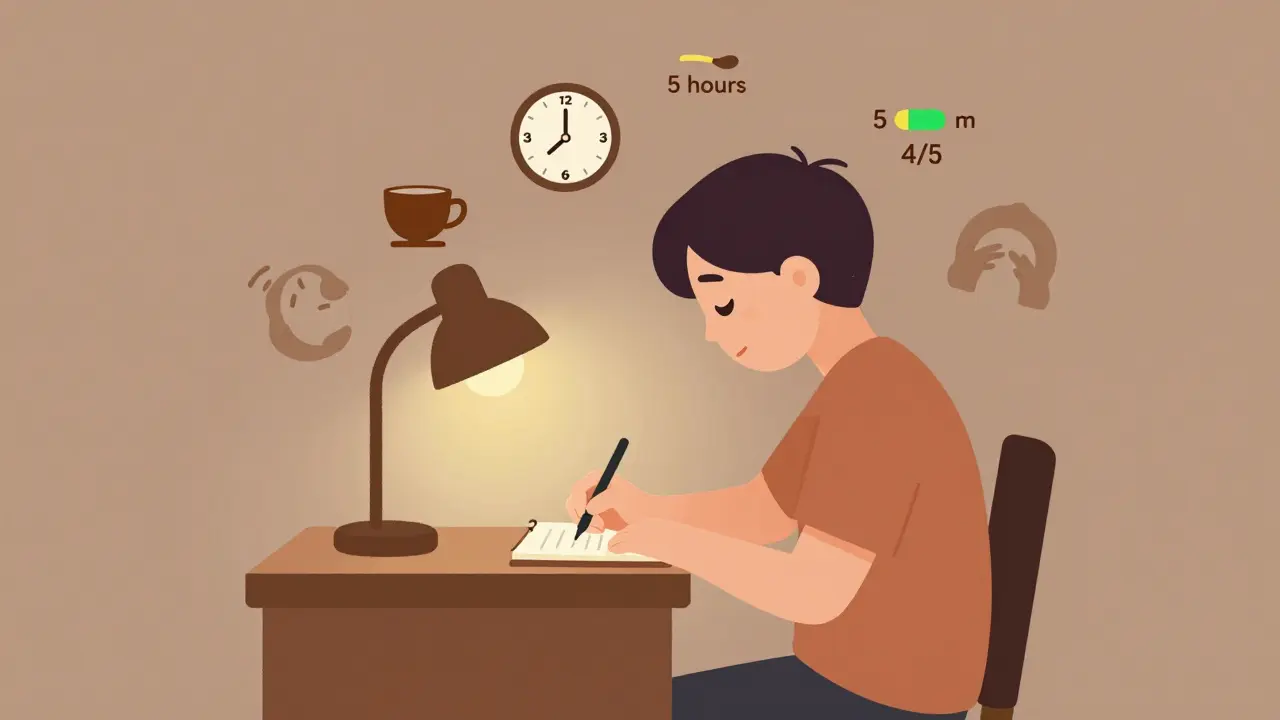
Symptom Tracker: Identify Your Triggers
Daily Symptom Log
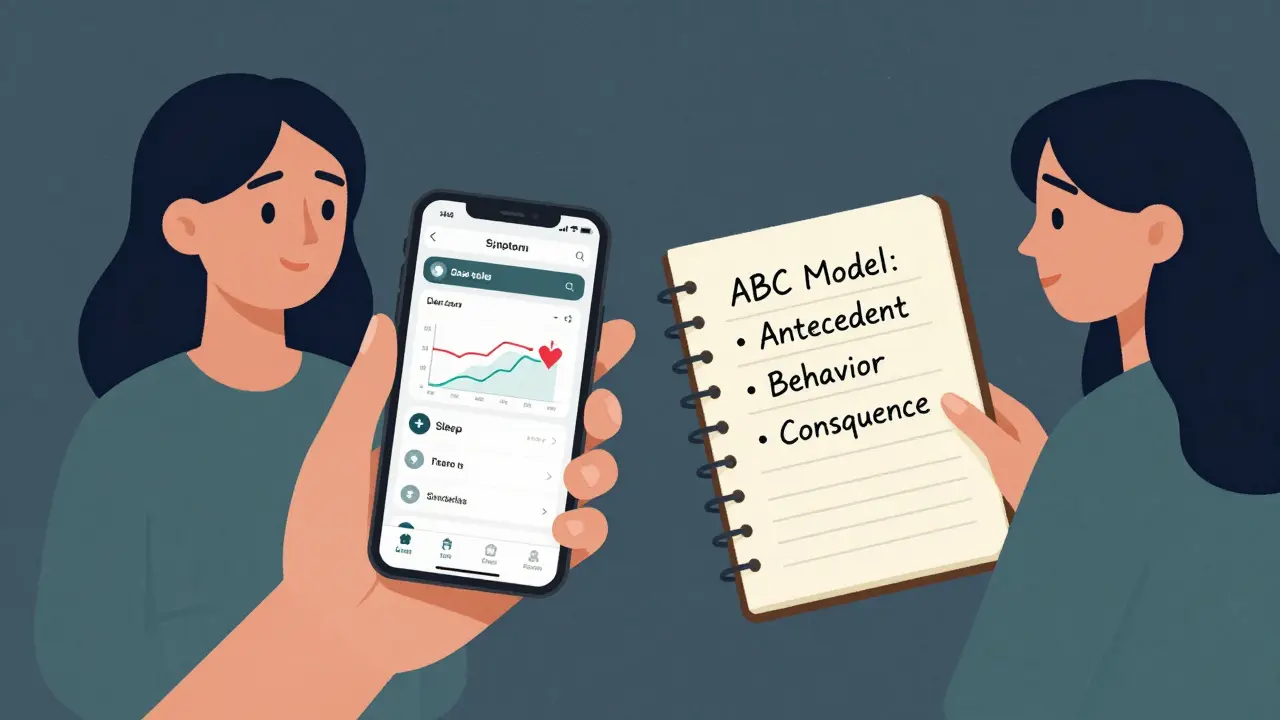
Tip: Use the ABC model: Antecedent (what happened before), Behavior (symptom intensity), Consequence (what happened after). Start with 14 days for best results!
Entry saved! 87% of users identify triggers after 14 days of consistent tracking.
My Tracking Pattern
What you'll discover: 57% of migraine cases are linked to aged cheese, processed meats, or alcohol. 43% of people abandon apps after 2 months—your consistency matters most!
Start logging your symptoms today. Your entries will appear here.
Pattern Insights
Your pattern analysis will appear here after 14 days of consistent tracking.
When you start noticing strange symptoms-headaches that come out of nowhere, sudden fatigue after eating, or anxiety spikes after scrolling through social media-you might think it’s just bad luck. But what if those moments aren’t random? What if they’re signals, quietly pointing to patterns you haven’t noticed yet? That’s where documenting side effects changes everything.
Why Tracking Matters More Than You Think
Most people wait until symptoms get bad before they act. They take a pill, hope it works, and move on. But that’s like trying to fix a leaky roof without knowing where the hole is. Side effect tracking turns guesswork into data. It’s not about being obsessive-it’s about being smart. Studies show that people who track their symptoms consistently reduce flare-ups by 40-60%. In one study of 12,500 migraine sufferers, those who kept a daily log identified at least one major trigger within three months. For many, it was something simple: aged cheese, lack of sleep, or even a change in barometric pressure. Once they knew, they could avoid it. No more guessing. No more emergency room visits. The same applies to anxiety, chronic pain, and reactions to medications. When you write down what happened before a symptom showed up, you start seeing connections. That’s the power of turning feelings into facts.The ABC Model: Your Simplest Starting Point
You don’t need a fancy app or a medical degree to begin. The ABC model-Antecedent, Behavior, Consequence-is the most proven method used by behavior analysts, neurologists, and therapists. It’s been around since the 1980s and still works today.- Antecedent: What happened right before the symptom? (e.g., you ate pizza, you got into an argument, you skipped your morning walk)
- Behavior: What did the symptom feel like? Use numbers. Rate intensity from 0 to 10. Was it a dull ache (3) or a stabbing pain (9)?
- Consequence: What happened after? Did you take medicine? Did you lie down? Did you feel worse an hour later?
What to Track: The Essentials
Here’s what actually matters when you’re documenting side effects. Skip the fluff. Focus on these seven things:- Date and time: Be specific. Not “yesterday,” but “Jan 12, 3:15 PM.”
- Symptom intensity: Use a 0-10 scale. Zero is nothing. Ten is unbearable.
- Duration: How long did it last? 10 minutes? All day?
- Medications taken: Name, dose, and time. Even over-the-counter stuff.
- Sleep: How many hours? Did you wake up feeling rested?
- Diet: What did you eat or drink in the 6 hours before the symptom? Especially alcohol, caffeine, sugar, or processed foods.
- Stress level: Rate it 1-5. Did you feel overwhelmed? Calm? Rushed?
Paper vs. Apps: Which One Works Better?
There’s no one-size-fits-all tool. The best tracker is the one you’ll actually use. Paper journals are simple, reliable, and don’t need charging. A 2024 study found that adults over 65 were 68% more likely to keep using a paper tracker after six months than an app. For people who find tech frustrating or who don’t want to stare at screens all day, this is the way to go. MedShadow’s printed symptom journal has a 91% compliance rate because it’s just a small notebook with clear prompts. Digital apps like MigraineBuddy or Wave offer automation. They sync with your Apple Watch to track heart rate, sleep, and even body temperature. One 2024 update let users detect migraine prodromes (early warning signs) 28% earlier using temperature changes. These tools can spot patterns you’d miss-like a spike in stress before every Friday headache. But here’s the catch: 43% of people abandon apps after two months. Why? Too many screens, too many buttons, too much setup. If you’re not tech-savvy, or if you’re already overwhelmed by notifications, an app might add stress instead of reducing it. Best advice? Start with paper. Write it down by hand. After a month, if you’re hooked, try an app. Don’t let the tool decide your success-your consistency does.What Triggers Show Up Most Often
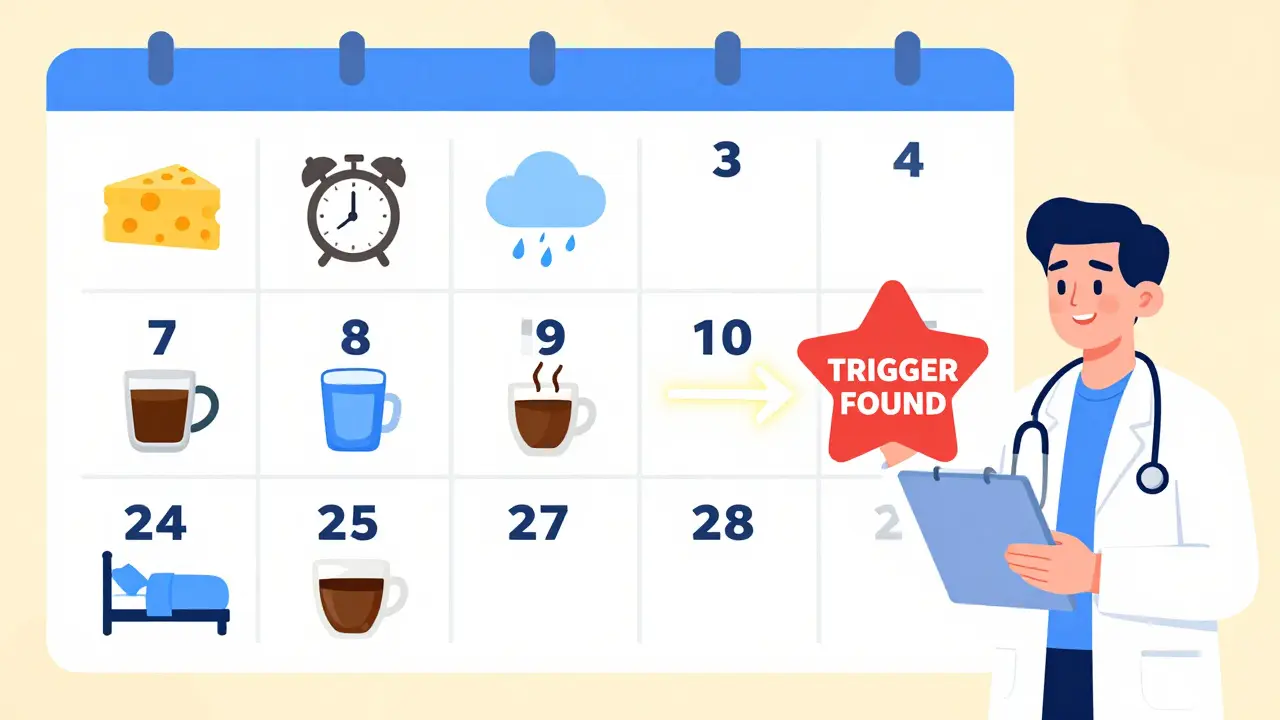
Based on real data from 12,500 users and 285,000 Reddit members, here are the top triggers people actually identify:- Diet: Aged cheese, processed meats (tyramine), alcohol, artificial sweeteners. These show up in 57% of migraine cases.
- Sleep: Getting less than 6 hours or sleeping in too late. This is the #1 trigger for anxiety and fatigue.
- Stress: Not big events-small, repeated ones. A rushed morning, a nagging email, a tense conversation.
- Environment: Bright lights, loud noises, strong smells (perfume, cleaning products). These are common for migraines and sensory overload.
- Medication changes: Even small dose adjustments can cause side effects days later.
When Tracking Backfires
It’s not always helpful. For about 12-15% of people-especially those with anxiety disorders-tracking can turn into obsession. They start checking their heart rate every hour. They delete entries because they “didn’t do it right.” They feel guilty if they miss a day. If you find yourself spiraling-constantly worrying about symptoms, checking your body for signs, or feeling worse because you didn’t track perfectly-pause. Talk to your doctor or therapist. Tracking should give you control, not take it away. Also, don’t expect instant results. The first two weeks are messy. You’ll write things like “felt weird” or “tired.” That’s normal. The patterns don’t show up until you’ve got enough data. Be patient. Keep going.How to Make It Stick
You don’t need to be perfect. You just need to be consistent.- Set a daily reminder. Right before bed. Five minutes. That’s all.
- Keep your journal or app where you’ll see it-on your nightstand, pinned to your phone home screen.
- Review your entries every Sunday. Look for repeats. Did you feel bad after eating pasta every time? Did stress always spike on Mondays?
- Share your findings with your doctor. Bring your log to appointments. It’s the best way to get personalized advice.
What’s Next: The Future of Tracking
The tools are getting smarter. The FDA just cleared a new digital symptom tracker for use in clinical trials. Apple Watch now detects subtle temperature shifts that signal migraines before they hit. AI models are being trained to predict flare-ups 48 hours in advance. But the core hasn’t changed. It’s still about you noticing what happens before you feel bad. No algorithm replaces your own awareness. No app replaces your memory of that moment you felt off. The future of health isn’t just pills and procedures. It’s people who know their bodies well enough to stop waiting for crises-and start preventing them.How long does it take to see patterns in side effect tracking?
Most people start seeing clear patterns after 14 to 30 days of consistent tracking. Research shows that 87% of successful trigger identifications happen after at least two weeks. For complex conditions like migraines or anxiety, a full 30-day period gives you enough data to spot weekly trends, dietary links, or environmental triggers.
Can I track side effects without using an app?
Yes, and many people do better with paper. A 2024 study found that adults over 65 were 68% more likely to stick with a paper journal than an app after six months. All you need is a notebook and a pen. Write down the date, time, symptom intensity (0-10), what you ate, your sleep, and stress level. The simplicity reduces friction and makes it easier to maintain long-term.
What if I forget to track one day?
Don’t panic. Missing a day doesn’t ruin your progress. The goal isn’t perfection-it’s pattern recognition. Just pick up where you left off. If you’re worried about forgetting, set a daily alarm on your phone for the same time each night. Even five minutes before bed is enough to capture the day’s events.
Can tracking help me reduce my medications?
Yes. In a survey of 3,200 chronic illness patients, 74% who tracked their symptoms reduced their medication use by at least 25% by avoiding known triggers. For example, someone with migraines might cut out aged cheese and find they no longer need daily painkillers. Always talk to your doctor before changing medication, but your log gives you the evidence to have that conversation.
Are digital symptom trackers safe for privacy?
Not all of them. A 2024 review found that 67% of free symptom tracking apps don’t meet basic HIPAA privacy standards. If you’re using an app, choose one that’s certified by a health authority or developed by a medical institution. MigraineBuddy and Twofold are examples of platforms designed with privacy in mind. When in doubt, stick to paper or use a password-protected digital journal.
rasna saha
January 24, 2026 AT 15:52I started tracking my headaches after reading this and holy crap, it was always the cheese I ate before bed. I didn’t even realize I was doing it. Now I just swap it for yogurt and boom-no more 3 a.m. panic attacks. Small change, huge difference.
Thank you for this. I feel less crazy now.
Angie Thompson
January 25, 2026 AT 20:59OMG YES. I’ve been doing this for 3 weeks and my anxiety dropped from a 9 to a 3. I thought I was just ‘highly sensitive’ but turns out it’s caffeine + scrolling TikTok after 8 p.m. 🤯 I even made a little chart with stickers. My therapist cried. Not joking.
Also, paper journal FTW. No notifications. Just me, my pen, and my chaos. 📓✨
John Wippler
January 27, 2026 AT 06:13This is the kind of thing that should be taught in high school. Not algebra. Not how to write a five-paragraph essay. But how to listen to your own body. We’ve been trained to ignore our symptoms until they scream. Meanwhile, our bodies are whispering clues in the form of fatigue, brain fog, and weird food reactions.
Tracking isn’t medical. It’s spiritual. It’s reclaiming your autonomy from a system that treats you like a ticket number. You’re not a diagnosis. You’re a data point with a heartbeat.
And yeah, 14 days is the magic number. I tried to quit on day 10. Then I saw the pattern: every time I skipped breakfast, I’d crash at 2 p.m. Like clockwork. I started eating oatmeal. Life changed.
Stop waiting for the doctor to fix you. Start documenting why you’re broken. The answers are already inside you. You just forgot how to ask.
eric fert
January 29, 2026 AT 06:12So you’re telling me that if I just write down that I ate pizza and then got a headache, I’m suddenly a ‘health expert’? Wow. What a revelation. Next you’ll tell me breathing oxygen helps with lung function.
Meanwhile, I’ve been tracking for 8 months and my ‘trigger’ is still ‘being alive.’ My body hates everything. Even sunshine. Even silence. Even my own thoughts.
Also, ‘paper vs apps’? Please. The real trigger is capitalism. You can’t even buy a decent notebook anymore without it being ‘mindfulness-themed’ with gold foil and lavender-scented pages. I just want a pen and a blank page, not a self-help Instagram ad.
And don’t get me started on ‘AI predicting migraines.’ Yeah, because nothing says ‘empowerment’ like letting an algorithm decide when your pain is valid.
Ashley Porter
January 29, 2026 AT 20:42From a clinical perspective, the ABC model aligns with operant conditioning frameworks in behavioral psychology. The antecedent-behavior-consequence triad is foundational in functional behavioral assessment (FBA), particularly in neurobehavioral disorders. The data granularity described-especially temporal precision and intensity scaling-meets minimum criteria for reliable single-subject design. However, recall bias remains a significant confounder in self-reported diaries, particularly when sleep or dietary variables are involved. Consider triangulating with wearable biomarkers for enhanced validity.
Also, tyramine is a monoamine oxidase inhibitor precursor. If you’re on MAOIs, aged cheese isn’t just a trigger-it’s a medical emergency. Just saying.
Aurelie L.
January 31, 2026 AT 02:33I tracked for 17 days. Then I realized I was just anxious about tracking. Now I don’t track. I just cry in the shower.
At least the shower’s warm.
Curtis Younker
February 1, 2026 AT 01:30Guys. I did this. I tracked for 30 days. Found out my migraines were from my dog licking my face in the morning. Yes. Licking. I thought it was stress. Turns out, dog saliva has histamines. Who knew?
Now I just put a bandana on his tongue. No more migraines. No more meds. Just me, my dog, and a tiny piece of fabric.
Best decision I ever made. Also, I told my boss. She cried. We now have a ‘no face-licking’ policy in the office. It’s weird. But it works.
Simran Kaur
February 2, 2026 AT 23:44I’m from India and I thought my headaches were just ‘heat’ or ‘stress.’ But after tracking, I realized it was the masala chai I drank at 10 p.m. with sugar and milk. I switched to ginger tea. No sugar. No milk. And now I sleep like a baby.
Thank you for this. I feel like I finally understand my body. It’s not broken. It’s just asking for a little kindness.
Also, I shared this with my mom. She’s 62. She started tracking too. Now we do it together every night. It’s our quiet ritual. No words. Just writing. And tea.
Skye Kooyman
February 4, 2026 AT 09:24I tried it. Wrote ‘felt bad’ for 12 days straight. Then on day 13, I realized I was just tired of being tired.
Still haven’t figured it out. But I’m not mad anymore.
Jessica Knuteson
February 6, 2026 AT 03:55Everyone’s so proud of their journals like it’s some holy grail. Meanwhile I’ve been living with chronic pain for 12 years and no amount of bullet points changed the fact that my body is broken. You think writing ‘intensity: 7’ makes it less real? It doesn’t. It just makes you feel like you’re doing something.
It’s not empowerment. It’s performance.
Just take the pill. Move on.
James Nicoll
February 7, 2026 AT 09:14So we’re now treating the human body like a Tesla firmware update? ‘Oh, you feel weird? Let me check the logs. Hmm… your serotonin version is outdated. Please reboot and consume 300mg of magnesium.’
Next they’ll sell us a ‘SymptomOS’ subscription. $9.99/month. Includes AI-generated guilt notifications and a weekly ‘you didn’t track enough’ email.
Meanwhile, my body has been screaming for 20 years. I’m not logging it. I’m just learning to live with the noise.
Neil Thorogood
February 7, 2026 AT 09:21Bro. I tracked for 14 days. Found out my anxiety spikes after I check my bank account. So now I don’t. I just live in a cardboard box under a bridge. Best decision of my life. 🤑💸
Also, I replaced my meds with crystals. They’re working great. My amethyst says I’m ‘energetically aligned.’
Also, I’m not mad. I’m just… vibing now.
Robin Van Emous
February 8, 2026 AT 05:55I appreciate the effort here. Really. But I think we need to be careful not to turn self-tracking into another form of productivity culture. It’s easy to fall into the trap of thinking if you just track harder, you’ll fix yourself. But some things can’t be fixed. Some things just need to be held.
Maybe the goal isn’t to eliminate triggers-but to learn how to sit with them without shame.
Also, if you’re using an app, please, please, please check the privacy policy. Your health data is worth more than your credit card info.
Kipper Pickens
February 9, 2026 AT 09:07Just to clarify: the 87% figure cited is from a 2021 observational cohort study with a 78% attrition rate. The ‘14-day magic number’ is a heuristic extrapolated from migraine studies, not a universal biological threshold. Also, barometric pressure correlations are confounded by altitude and HVAC usage in controlled environments. And the ‘paper journal compliance’ stat? That study was funded by a stationery company. Just saying.
But hey-if it helps you sleep at night, go for it. Just don’t mistake anecdote for evidence. And please, for the love of all that is holy, stop calling this ‘empowerment.’ It’s just data collection with extra steps.