
Dental Procedures on Blood Thinners: What You Need to Know About Bleeding Risk and Safety
Blood Thinner Dental Risk Calculator
Enter your information above to see safety assessment
When you’re on blood thinners, even a routine dental cleaning can feel scary. You’ve heard stories about people bleeding for hours after a tooth extraction. Maybe your doctor told you to stop your medication before going to the dentist. But here’s the truth: stopping blood thinners for most dental procedures is no longer recommended-and doing so might put you at greater risk than just leaving them on.
Why Stopping Blood Thinners Is Riskier Than You Think
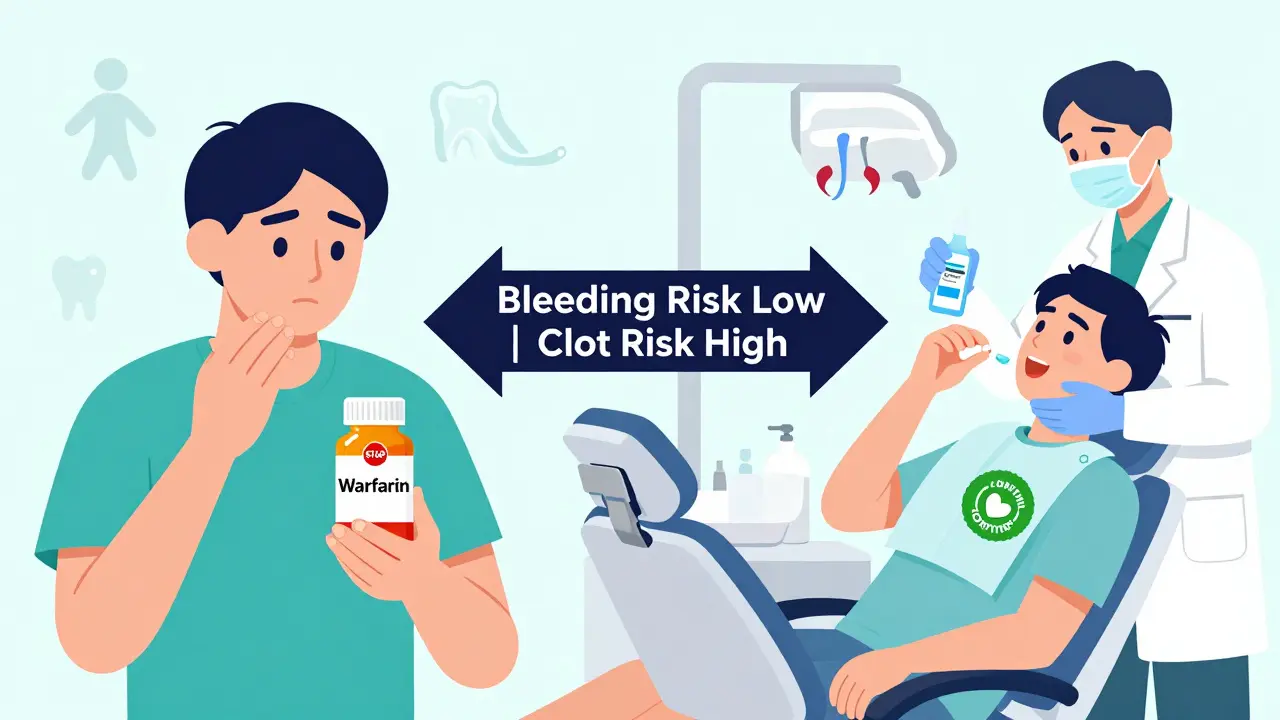
For years, dentists and doctors assumed it was safer to pause anticoagulants before any dental work. That changed after years of research showed the opposite. Holding warfarin or DOACs (direct oral anticoagulants) for a few days before a simple filling or cleaning doesn’t reduce bleeding much-but it dramatically increases your chance of a stroke, heart attack, or blood clot.
A 2022 study from the American Dental Association found that stopping single antithrombotic agents (like aspirin, clopidogrel, or warfarin) for minor dental procedures raised the risk of acute thrombotic events by up to 5 times, with no meaningful drop in bleeding complications. In fact, most bleeding from dental work is minor and stops quickly with simple measures. The real danger isn’t the procedure-it’s the clot that forms when you stop your medication.
Not All Blood Thinners Are the Same
There are two main types of blood thinners: warfarin (a vitamin K antagonist) and DOACs like apixaban, rivaroxaban, dabigatran, and edoxaban. How you handle them depends on which one you’re taking.
Warfarin (VKA): Your doctor checks your INR level-a number that tells how long your blood takes to clot. For most dental work:
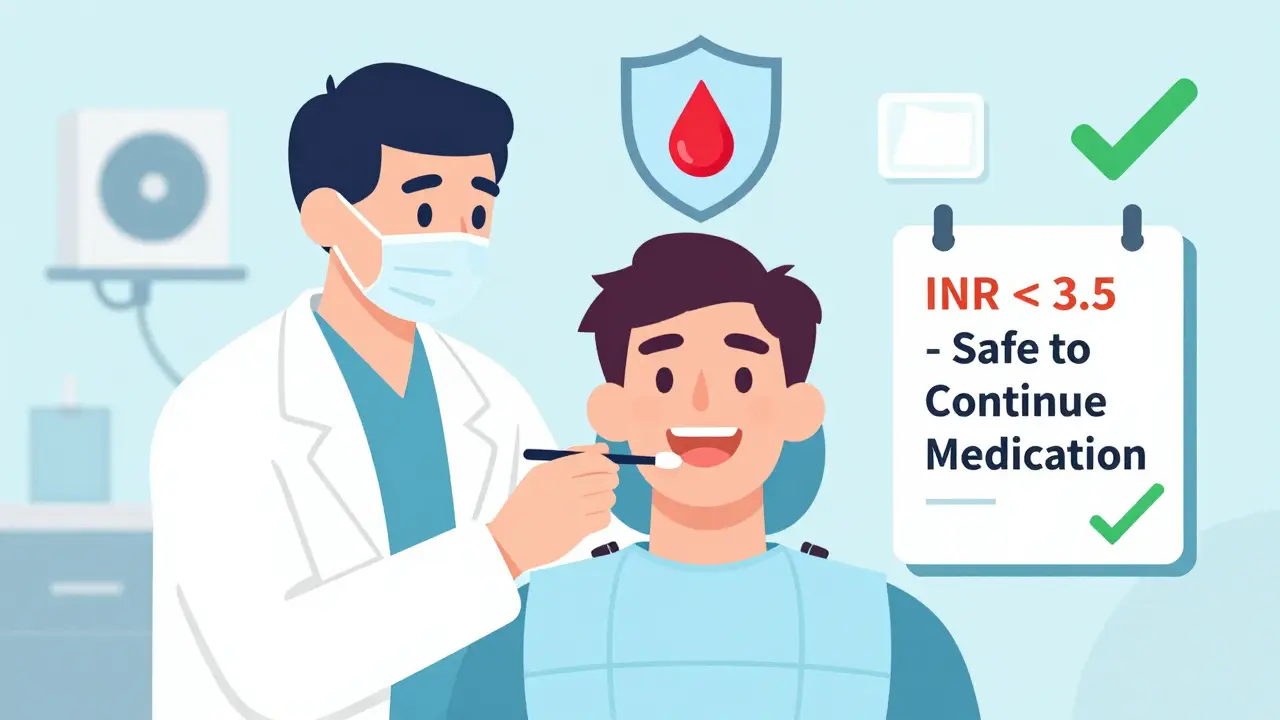
- Low-risk procedures (cleanings, X-rays, fillings): Safe with INR under 3.5
- Low-moderate risk (root canals, deep cleaning): Safe with INR under 3
- Moderate risk (single tooth extraction): Safe with INR under 3.5 if you use extra hemostatic measures
If your INR is above these thresholds, your dentist will likely call your doctor to see if a temporary adjustment is needed. But even then, it’s usually only for a day or two.
DOACs (Apixaban, Rivaroxaban, etc.): These don’t need regular blood tests. For most procedures, you don’t need to stop them at all. For higher-risk procedures like multiple extractions, your dentist might suggest skipping your morning dose on the day of surgery. That’s it. Waiting at least 4 hours after your last dose helps reduce bleeding without increasing clot risk.
What Dental Procedures Are Safe?
Not every dental job carries the same bleeding risk. Here’s how experts classify them:
- Low-risk: Routine cleanings, X-rays, impressions, fluoride treatments. No changes needed to your medication.
- Low-moderate risk: Fillings, root canals, scaling and root planing (deep cleaning). Continue your blood thinner.
- Moderate risk: Single tooth extraction, gum surgery, crown prep. Continue medication. Use local hemostatic techniques.
- High-risk: Multiple extractions (especially 3+ teeth), oral surgery, bone grafts. May require a short hold-but only after consulting your doctor.
Here’s a key point: Even if you need a few teeth pulled, your dentist won’t remove them all at once. They’ll space them out over multiple visits. Pulling two molars side by side? That’s risky. Pulling one, waiting a week, then pulling another? Much safer.
What If You Bleed After the Procedure?
Bleeding after dental work isn’t unusual-even if you’re not on blood thinners. But if you’re on anticoagulants, you need to know how to manage it.
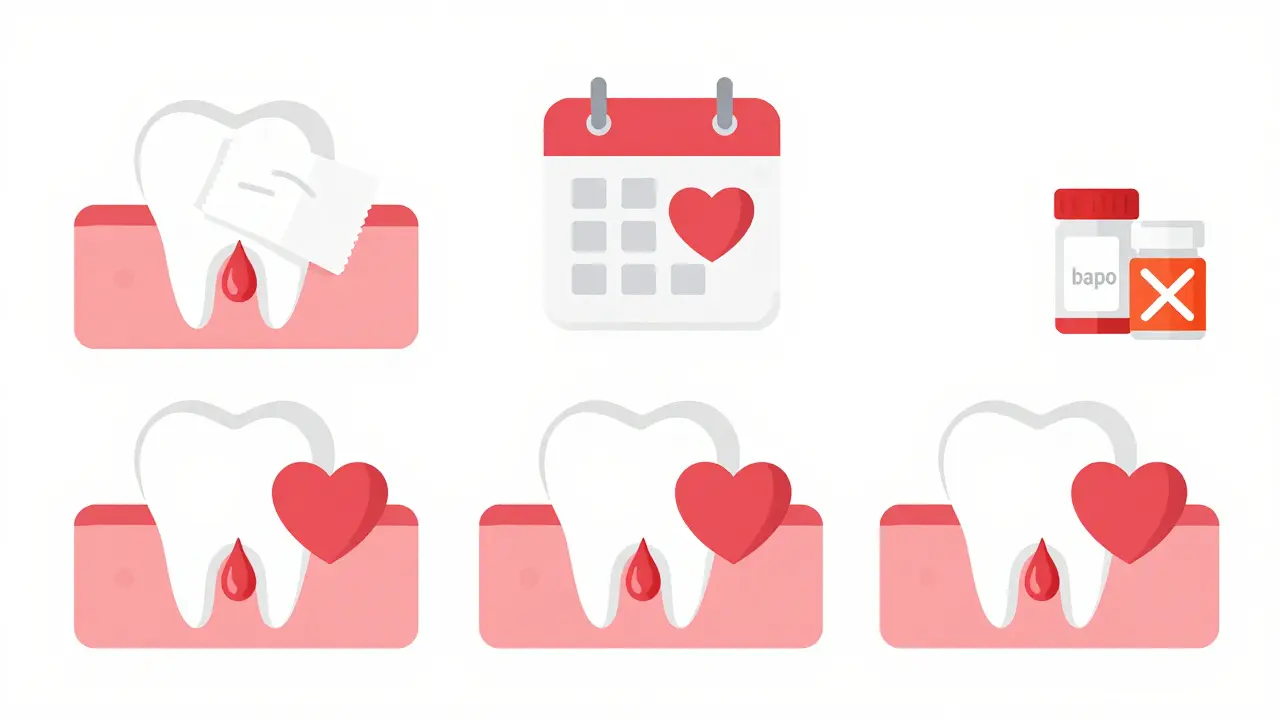
First, bite down firmly on a gauze pad for 30-45 minutes. Don’t peek. Don’t spit. Don’t rinse. Let the clot form.
If bleeding continues, your dentist may give you a special mouthwash: tranexamic acid 5%. This isn’t a magic potion-it’s a clot-stabilizing agent. You swish 10mL in your mouth for 1-2 minutes, then spit. Repeat every 2 hours if needed. The solution lasts 5 days in the fridge. Many dentists now keep it on hand.
Also avoid:
- Hot foods and drinks (they dilate blood vessels)
- Alcohol (thins blood further)
- Aspirin or NSAIDs like ibuprofen (they interfere with clotting)
- Smoking (delays healing and increases clot risk)
Drug Interactions You Can’t Ignore
Some medications you take for other reasons can make bleeding worse. Here’s what to watch out for:
- NSAIDs: Ibuprofen, naproxen, diclofenac-these are common painkillers, but they increase bleeding risk when combined with blood thinners.
- Aspirin: Even low-dose aspirin for heart protection can add to the risk. If you’re on dual antiplatelet therapy (aspirin + clopidogrel), your dentist might advise stopping the clopidogrel but keeping the aspirin.
- Antibiotics: Some, like metronidazole and fluconazole, can interfere with warfarin metabolism and spike your INR.
- Herbal supplements: Garlic, ginkgo, ginger, ginseng, and fish oil can all thin your blood. Tell your dentist about everything you take-even “natural” ones.
Your dentist doesn’t need to know your entire medical history. But they do need to know what’s in your medicine cabinet.
Who’s Really at Risk? It’s Not Just Older People
Most people think blood thinners are for seniors with atrial fibrillation. But today, younger patients are on them too:
- A 25-year-old with a blood clot after a long flight
- A 32-year-old athlete with a new diagnosis of AFib
- A 28-year-old postpartum woman recovering from a pulmonary embolism
These cases aren’t rare. And they bring unique challenges. Pregnancy, kidney disease, liver problems, low platelets-all of these can change how your body handles bleeding and clotting. That’s why one-size-fits-all advice doesn’t work. Your treatment plan needs to be personalized.
The Bottom Line: Keep Taking Your Blood Thinners
Here’s what you need to remember:
- Don’t stop your blood thinner without talking to your doctor and dentist together.
- Most dental procedures are safe with your medication running normally.
- Bleeding is usually minor and easy to control.
- Stopping your medication puts you at higher risk for stroke or clot than continuing it.
- Always tell your dentist what you’re taking-and ask them what they recommend.
Studies show that over 78% of U.S. dental practices now follow these updated guidelines. That’s because the evidence is clear: the bleeding risk from dental work is low. The clotting risk from stopping your meds is high.
If your dentist says you need to stop your blood thinner, ask: "What’s the evidence?" and "Can you call my doctor to confirm?" You’re not being difficult-you’re being smart.
Should I stop my blood thinner before a dental cleaning?
No. Routine cleanings are low-risk and do not require stopping blood thinners. The risk of stroke or clot from stopping your medication is far greater than any bleeding risk from the cleaning. Always inform your dentist about your medication so they can use proper techniques to manage bleeding.
What if my INR is too high before a dental procedure?
If your INR is above 3.5 for a low-risk procedure or above 3 for a moderate one, your dentist will likely contact your prescribing doctor. They may temporarily lower your dose or delay the procedure slightly. Never adjust your dose yourself. Most cases are resolved with a small adjustment, not a full stop.
Can I take ibuprofen after a tooth extraction if I’m on blood thinners?
No. Ibuprofen and other NSAIDs increase bleeding risk when combined with anticoagulants. Use acetaminophen (Tylenol) instead for pain relief. Always check with your dentist or pharmacist before taking any over-the-counter painkiller.
How long should I wait after taking my DOAC before a dental extraction?
For moderate-risk procedures like single extractions, skip your morning dose and schedule the extraction at least 4 hours after your last dose. For example, if you take rivaroxaban at 8 a.m., schedule your appointment for noon or later. This reduces bleeding risk without increasing clot risk.
Is it safe to get multiple teeth pulled at once if I’m on blood thinners?
It’s not recommended. Pulling 2-3 teeth in a row increases bleeding risk significantly. Instead, your dentist will space out extractions over multiple visits-usually one tooth per appointment. This reduces trauma and makes bleeding easier to control. Always ask for a staged approach.
What to Do Next
Before your next dental visit:
- Make a list of every medication and supplement you take-including doses and times.
- Call your prescribing doctor (cardiologist, hematologist, etc.) and ask: "Is it safe for me to continue my blood thinner for dental work?"
- Give that information to your dentist before your appointment.
- Ask your dentist if they use tranexamic acid mouthwash-it’s a simple, effective tool.
- Follow their post-op instructions exactly. No rinsing, no smoking, no aspirin.
The goal isn’t to avoid dental care. It’s to get it safely. Millions of people on blood thinners get fillings, cleanings, and extractions every year without serious issues. You just need to be informed-and make sure your dentist is too.
Daniel Dover
February 14, 2026 AT 16:41Just had a cleaning last week while on rivaroxaban. No issues. Dentist didn’t even blink. Just asked if I’d taken my pill that morning. Said skip it before the appointment and we’re good. Seriously, stop overthinking it.
Josiah Demara
February 14, 2026 AT 20:27You people are still operating on 2010 guidelines. The ADA updated this in 2021, and the European Heart Journal confirmed it in 2023. Stopping DOACs for a cleaning is like refusing a seatbelt because you’re only driving to the grocery store. You’re not protecting yourself-you’re playing Russian roulette with your cerebral vasculature.
Esha Pathak
February 15, 2026 AT 18:55It’s funny how we fear the needle more than the clot. 😔 We’ll panic over a little blood but ignore the silent killer in our veins. Maybe if we stopped treating dentists like second-class medical professionals, we’d stop making dangerous choices. Just a thought.
Betty Kirby
February 16, 2026 AT 22:46Anyone else notice how people still think ibuprofen is harmless? It’s not a candy. It’s a bleeding accelerator. And yet, half the comments here are like "I took two Advil after extraction, no big deal." No, it’s a big deal. You’re lucky you didn’t stroke out.
Erica Banatao Darilag
February 17, 2026 AT 05:22I appreciate this comprehensive overview. As a patient with atrial fibrillation and a history of minor bleeding after dental work, I found the section on tranexamic acid particularly helpful. I will be requesting it from my dentist at my next appointment. Thank you for the clear, evidence-based guidance.
Charlotte Dacre
February 17, 2026 AT 10:15Oh wow, so the dentist is the new knight in shining armor? "Just keep taking your blood thinners, darling, I’ve got this." Meanwhile, I’m sitting there thinking, "You’re a human, not a blood clot prevention robot." Also, why is no one talking about how dentists charge $300 to give you a mouthwash you can buy online for $12? 🤔
Mike Hammer
February 19, 2026 AT 10:08Been on apixaban for 3 years. Got 4 teeth pulled last year. Didn’t stop meds. Just skipped my morning dose. Used the tranexamic rinse. Bled a little for 20 mins, then stopped. No clot, no stroke, no drama. Honestly? It’s less scary than waiting in the DMV.
Joe Grushkin
February 19, 2026 AT 23:3678% of U.S. dental practices follow these guidelines? That’s not a statistic. That’s a prayer. Half the offices I’ve been to still ask if I’m on "blood thinners" like it’s a dirty word. And they hand you a gauze pad like it’s a tissue. You need sutures, not napkins.
Virginia Kimball
February 20, 2026 AT 14:04This is the kind of info that saves lives. Seriously. I used to be terrified of dental visits. Now I know: my meds aren’t the enemy, ignorance is. I’m sharing this with my whole family. If you’re on anticoagulants, read this. Then call your dentist. Don’t wait until you’re in pain.
Michael Page
February 21, 2026 AT 01:26There’s a deeper philosophical question here: Why do we assume medical authority knows best? What if the consensus is wrong? What if the studies are funded by pharma? The bleeding risk is real. The clot risk is abstract. Abstract fears don’t keep you up at night. Blood on your pillow does.
Mandeep Singh
February 22, 2026 AT 10:01Let me break this down for the uneducated masses. DOACs are not "magic pills." They’re expensive, poorly monitored, and have no antidote in most ERs. Warfarin at least has vitamin K and fresh frozen plasma. You think skipping one dose is safe? Try having a hemorrhage in a rural hospital where they’ve never heard of idarucizumab. Then come back and tell me how "safe" it is. You’re not brave-you’re reckless.
Kaye Alcaraz
February 22, 2026 AT 23:25Thank you for the detailed and scientifically accurate information. As a healthcare provider, I cannot emphasize enough the importance of patient education in this area. The convergence of cardiology and dentistry requires deliberate communication. I will be incorporating this into my patient handouts. Your clarity is invaluable.
Sarah Barrett
February 24, 2026 AT 14:57While the data supports continuing anticoagulants for most procedures, I’ve seen cases where patients with severe thrombocytopenia or liver cirrhosis bleed uncontrollably despite precautions. Personalization is not optional-it’s essential. A one-size-fits-all approach, even if evidence-based, can still fail in high-risk subpopulations.
Chiruvella Pardha Krishna
February 25, 2026 AT 09:19Human beings have always feared the body’s own fluids. Blood, once sacred, now a statistic. We fear the dentist’s drill more than the silent thrombus. We fear the needle more than the stroke. Perhaps the real procedure is not the extraction-but the unlearning of our ancestral terror of the vessel, the vein, the crimson flow that once meant life, and now, in our sterile clinics, means danger. What is safety, if not the illusion of control?