
Cranberry Juice and Medications: What You Really Need to Know
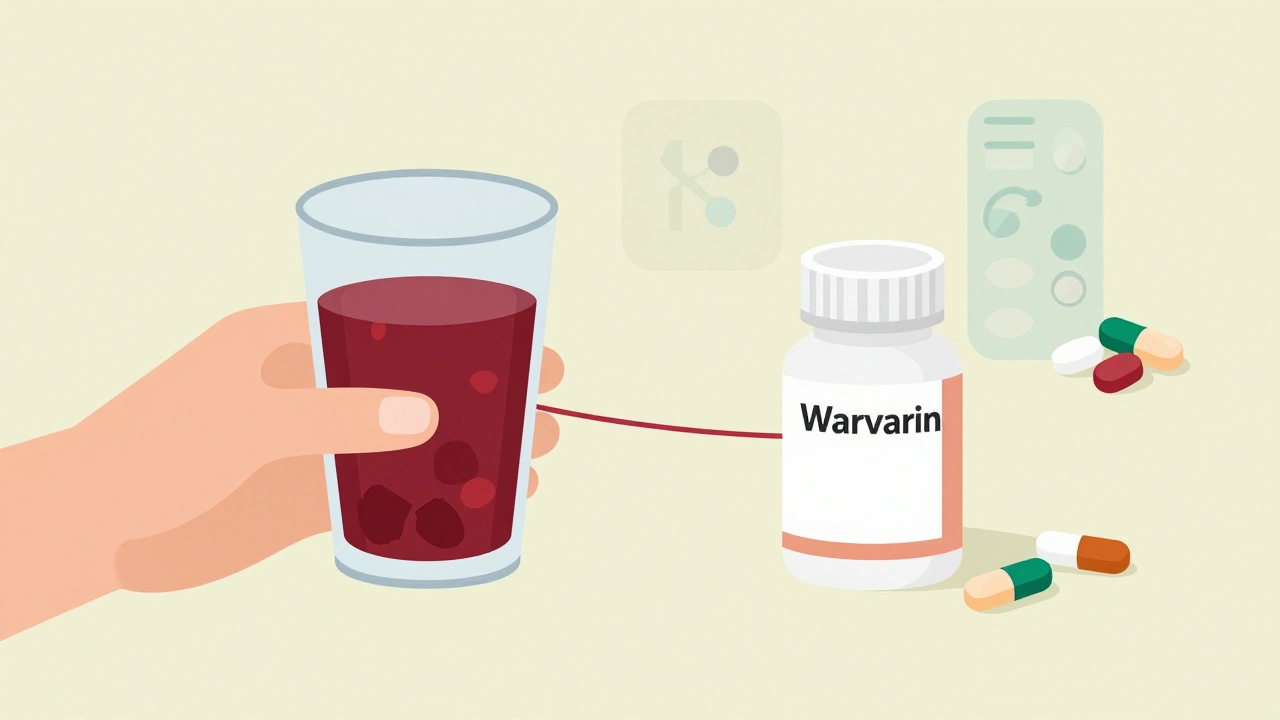
Cranberry-Warfarin Interaction Checker
How This Works
Based on current medical research, this tool helps you understand potential interactions between your warfarin dosage and cranberry juice consumption. Remember: Most medications are safe with cranberry juice - but warfarin requires special attention.
Every year, millions of people drink cranberry juice to avoid urinary tract infections. It’s a common habit-especially among women. But if you’re on medication, especially blood thinners like warfarin, you’ve probably heard conflicting advice: avoid it at all costs… or it’s perfectly safe. So which is it?
The truth isn’t simple. Some doctors tell you to stop drinking it. Others say it’s fine. And the science? It’s messy. But here’s what actually matters: if you’re taking warfarin, you need to be careful. For almost every other medication, cranberry juice is unlikely to cause problems-especially if you’re drinking the kind you find in grocery stores.
Why the Confusion Exists
The scare started in 2003, when a Canadian patient on warfarin had a dangerous spike in his INR (a measure of blood clotting) after drinking cranberry juice. The case made headlines. Pharmacies started putting warning stickers on cranberry products. Doctors began advising patients to cut it out entirely.
But that one case didn’t prove anything. It was an anecdote. And over the next decade, researchers ran dozens of controlled studies. Some found no effect. Others found tiny, clinically meaningless changes. A 2010 review of 15 studies found that while 8 case reports suggested a link between cranberry juice and warfarin, the 4 well-designed clinical trials showed no significant change in INR levels.
Here’s the kicker: the strongest evidence for interaction comes from people taking concentrated cranberry supplements, not juice. Most of the scary stories involve pills or powders with way more cranberry extract than you’d ever get from a glass of juice.
What Actually Happens in Your Body
Cranberry juice contains compounds called proanthocyanidins and flavonoids. In test tubes, these can slow down enzymes in your liver-specifically CYP3A4 and CYP2C9-that break down certain drugs. That sounds bad. It sounds like cranberry juice could make your meds build up to dangerous levels.
But your body isn’t a test tube. When you drink 8 ounces of cranberry juice cocktail (the kind with added sugar and water), you’re getting maybe 27% pure cranberry. The concentration of active compounds is too low to significantly affect how your liver processes most medications.
Studies on antibiotics like amoxicillin and cefaclor showed no real change in how the drugs were absorbed or cleared from the body-even when people drank 12 ounces of cranberry juice daily. The same goes for statins, blood pressure meds, and antidepressants. No meaningful interaction.
The one exception? Warfarin. It’s metabolized by CYP2C9, and cranberry compounds can inhibit it. But even here, the clinical evidence is inconsistent. A 2009 study with 12 healthy volunteers drinking cranberry juice three times a day for two weeks found no change in warfarin levels. Yet other case reports show real INR spikes.
Warfarin: The Real Risk
If you’re on warfarin, don’t panic-but don’t ignore it either. The risk isn’t high, but the consequences can be life-threatening. An INR that climbs too high means you could bleed internally. That’s why experts are split.
Some, like Dr. Lisa Stamp from New Zealand, say cranberry should be avoided entirely with warfarin. Others, like Dr. David Ang-Lee from Maryland, say the evidence isn’t strong enough to ban it-just to be cautious.
The American College of Clinical Pharmacy recommends avoiding cranberry products if you’re on warfarin. But they also admit: no large, controlled study has proven a clear, consistent interaction.
So what should you do? Two practical options:
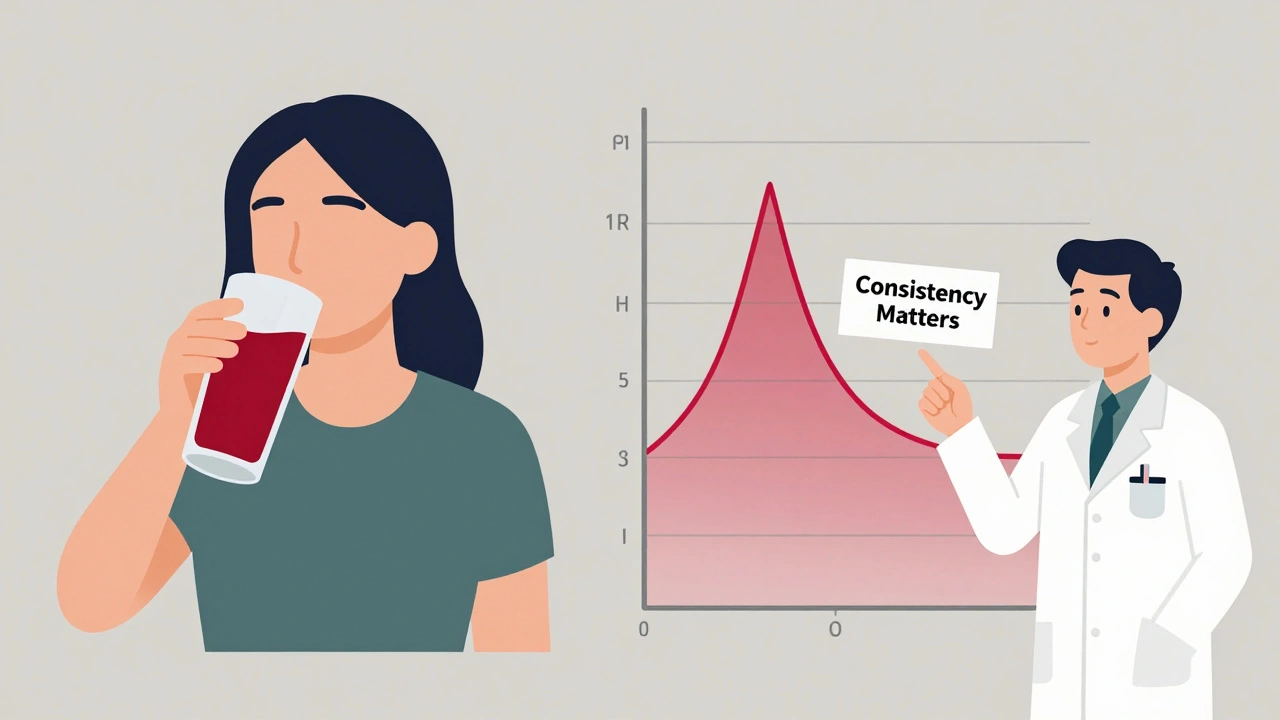
- If you love cranberry juice and take warfarin: stick to one 8-ounce glass per day, and never change your intake. Don’t start drinking more after a week of not drinking it. Consistency matters more than avoidance.
- If you want to be extra safe: skip it. Talk to your pharmacist or doctor about alternatives like D-mannose or probiotics for UTI prevention.
And if you’ve been told to avoid it entirely, ask for the evidence. Chances are, your doctor is following old advice based on case reports-not modern clinical data.
What About Other Medications?
For nearly every other drug, cranberry juice is fine. Here’s the breakdown:
- Antibiotics (amoxicillin, cefaclor): No interaction. Studies show no change in drug levels.
- Statins (atorvastatin, simvastatin): No evidence of interaction. Unlike grapefruit juice, cranberry doesn’t affect the same liver enzymes at normal doses.
- Blood pressure meds (lisinopril, amlodipine): No known interaction.
- Antidepressants (sertraline, fluoxetine): No clinical evidence of risk.
- Alprazolam (Xanax): Theoretically possible, since it’s broken down by CYP3A4. But no human studies show it happens.
The only real red flag? Concentrated cranberry supplements. These can contain 36mg or more of proanthocyanidins per serving-far beyond what’s in juice. If you’re taking one of these, treat it like a drug, not a beverage. Talk to your pharmacist before using it, especially if you’re on any prescription meds.
Why Grapefruit Juice Is Different
People often confuse cranberry juice with grapefruit juice. That’s a mistake. Grapefruit juice has 17 documented, serious interactions with medications-including statins, blood pressure drugs, and immunosuppressants. It doesn’t just slightly affect liver enzymes-it shuts them down hard and long.
Cranberry juice? It’s nothing like that. Even at high doses, it doesn’t have the same power. If your doctor warns you about grapefruit juice, don’t assume cranberry juice is the same. They’re not interchangeable.
What the Experts Recommend Today
The American Urological Association updated its guidelines in 2021: “Cranberry products may be used for UTI prevention in patients not taking warfarin, with no dosage restrictions for other medications.” That’s a big shift from their 2010 stance, which advised complete avoidance.
Mayo Clinic says: limit cranberry juice to one 8-ounce glass a day if you’re on meds. Avoid supplements unless you’ve talked to your pharmacist.
University of Michigan’s safety guidelines say: if you’re on warfarin, either avoid cranberry completely-or keep your intake exactly the same every day. And check your INR more often if you start or stop drinking it.
Bottom line? Don’t overreact. But don’t ignore it either. If you’re not on warfarin, you’re probably fine. If you are, be smart.
What Patients Are Actually Experiencing
On Reddit, pharmacists say patients ask about cranberry and warfarin every week. But when they dig into the cases, many are taking supplements-not juice. One nurse posted: “I’ve seen three patients on warfarin with INR spikes after starting cranberry supplements. But my hospital’s pharmacists say the evidence isn’t strong.”
That’s the gap: patient stories vs. clinical studies. Real people report changes. But controlled trials don’t always confirm them. Why? Because supplements vary wildly in strength. One pill might have 10x the active compounds of another. And many people don’t know what they’re actually taking.
Also, 83% of cranberry supplement users don’t know about potential interactions, according to a Johns Hopkins survey. That’s not their fault-it’s because labels don’t clearly warn people.
What You Should Do Right Now
Here’s your action plan:
- If you’re on warfarin: Talk to your doctor or pharmacist. Don’t assume you need to quit cranberry juice. But do track your intake. Don’t drink it one week and then double down the next. Consistency is key.
- If you’re on any other medication: You’re almost certainly safe with 8-12 oz of standard cranberry juice per day. Skip the supplements unless you’ve discussed them with a professional.
- If you’re taking cranberry supplements: Check the label. If it says “high potency” or lists proanthocyanidins above 36mg per serving, treat it like a drug. Ask your pharmacist if it’s safe with your meds.
- If you’re unsure: Write down your meds and your cranberry habits. Bring it to your next appointment. No judgment. Just facts.
There’s no need to fear cranberry juice. But there’s also no need to be careless. The science has evolved. The fear hasn’t. You deserve clear, honest answers-not outdated warnings.
What’s Next?
Researchers are now studying cranberry’s effects on newer blood thinners like apixaban and rivaroxaban. These drugs don’t rely on the same liver enzymes as warfarin, so the risk may be even lower. Early data is promising.
Meanwhile, industry groups are pushing for better labeling on cranberry supplements. The Council for Responsible Nutrition proposed voluntary warnings in 2022: if a product contains more than 27% proanthocyanidins, it should say “May interact with blood thinners.” That’s a step forward.
For now, the best advice is simple: know what you’re drinking. Stick to juice, not pills. Be consistent. And talk to someone who knows your meds.
sharon soila
December 13, 2025 AT 06:39Just because something is natural doesn't mean it's harmless. Cranberry juice isn't candy-it's a bioactive substance. If you're on warfarin, consistency is your best friend. One glass a day, same time, same brand. Don't experiment. Your body isn't a lab, and your blood isn't a suggestion.
Rawlson King
December 13, 2025 AT 23:36Doctors still cling to case reports like gospel. Meanwhile, real science shows no consistent interaction. The real problem? Pharma doesn't profit from juice. They profit from fear, pills, and unnecessary INR tests. This whole panic is a side effect of profit-driven medicine.
Michael Gardner
December 14, 2025 AT 23:12Wait, so grapefruit is dangerous but cranberry is fine? That’s the same fruit family, right? You’re telling me one shuts down liver enzymes and the other just whispers? Sounds like someone’s cherry-picking data to sell more juice.
Ronan Lansbury
December 16, 2025 AT 12:46Did you know the FDA approved cranberry supplements as ‘dietary aids’ in 1999 without any clinical trials? The same year warfarin warnings started popping up. Coincidence? Or did someone quietly fund the panic to shift people toward patented anticoagulants? The labels don’t say ‘may interact’-they say ‘may prevent UTIs.’ That’s not transparency. That’s manipulation.
And don’t get me started on how supplement manufacturers hide the actual cranberry extract content behind ‘proprietary blends.’ One pill could be 10x stronger than another, and you’d never know. Your pharmacist? They’re reading the same outdated guidelines you are.
I’ve seen three people on warfarin with INR spikes after switching brands. Not because they drank juice. Because they bought a ‘premium’ capsule labeled ‘10x potency.’ No warning. No label. Just a pretty bottle and a lie.
They don’t warn you because they can’t. If they did, lawsuits would flood in. So they tell you to ‘avoid it’ and let you panic. Meanwhile, the real threat is unregulated supplements-and nobody’s regulating them.
Next time your doctor says ‘avoid cranberry,’ ask them if they’ve ever read the 2010 Cochrane review. Or if they’ve even seen a bottle of the stuff. Chances are, they haven’t. They’re just repeating what they were told in med school in 2005.
Willie Onst
December 18, 2025 AT 05:57My grandma drinks cranberry juice every morning with her blood pressure meds. 80 years old, no issues. She doesn’t even know what warfarin is. But she knows her body. If it felt weird, she’d stop. Trust your experience. Not fear.
Also, grapefruit juice is like a sledgehammer to your liver. Cranberry juice? It’s a gentle nudge. Don’t confuse the two. I used to work in a pharmacy-we’d tell people to skip grapefruit. Cranberry? We shrugged and said ‘as long as you’re not chugging bottles, you’re fine.’
Jennifer Taylor
December 18, 2025 AT 11:12Okay but what if the juice is from a store that uses concentrate from China? What if the concentrate was sprayed with pesticides that alter the enzyme inhibition? What if the warfarin you’re taking is from a batch that’s slightly off? What if your gut microbiome changed last month because you took antibiotics for a sinus infection? What if your INR spike wasn’t the juice-it was the stress of worrying about the juice?
It’s not just the juice. It’s the whole system. The system is broken. The labels are lies. The science is politics. And you’re just trying to stay alive while everyone else is selling you fear.
I stopped drinking cranberry juice because I got scared. Then I started again because I was tired of being scared. Now I drink it. I check my INR. I log everything. I’m not a patient. I’m a data collector.
And if you’re not doing that? You’re letting corporations and doctors decide what’s safe for you. That’s not health. That’s surrender.
Shelby Ume
December 20, 2025 AT 08:44I’m a pharmacist with 18 years in community care. I’ve seen over 200 patients on warfarin who drink cranberry juice daily. Only two had INR spikes-and both had recently switched to a new brand of supplement labeled ‘pure cranberry extract.’ The juice? Never an issue. Not once.
My advice: if you’re drinking juice from the grocery store, keep doing it. Just don’t change your habits suddenly. No sudden binges. No switching brands mid-month. Consistency is your safety net.
Supplements? Those are different. They’re concentrated. They’re unregulated. They’re not food. Treat them like medicine. Ask your pharmacist before taking them. If they don’t know, ask someone who does.
And please, for the love of science, stop comparing cranberry to grapefruit. They’re not the same. Grapefruit has furanocoumarins that permanently disable liver enzymes. Cranberry has flavonoids that might, possibly, cause a tiny shift in enzyme activity under lab conditions. That’s not the same thing.
You’re not risking your life with a glass of juice. You’re risking it with a pill you bought online with no label.
Richard Ayres
December 20, 2025 AT 18:37Thank you for this clear, evidence-based breakdown. Too often, medical advice is rooted in fear rather than data. The shift in guidelines-from blanket avoidance to cautious consistency-is exactly how science should work. It’s not about absolutes. It’s about understanding risk, dose, and context.
For patients: if you’re on warfarin, your goal isn’t to eliminate cranberry juice. It’s to maintain stability. Your INR is your real metric-not your beverage choices. Track it. Talk to your care team. Don’t assume you need to quit something because a label says so.
And to the medical community: we need better patient education. Not warnings on juice bottles. Not vague ‘avoid’ statements. We need clear, accessible summaries: ‘Juice = safe if consistent. Supplements = consult your pharmacist.’
This post is a model of responsible health communication. Let’s make more of it.