
Cost vs Benefit: When Expensive Medications Are Worth the Price Despite Side Effects
Medication Cost-Benefit Calculator
This tool helps you evaluate whether an expensive medication is worth the investment for your specific situation, based on the framework from the article "Cost vs Benefit: When Expensive Medications Are Worth the Price Despite Side Effects".
Answer the questions below, and we'll calculate a score to determine if the potential benefits outweigh the costs for your case.
Your Medication Assessment
Your assessment result will appear here...
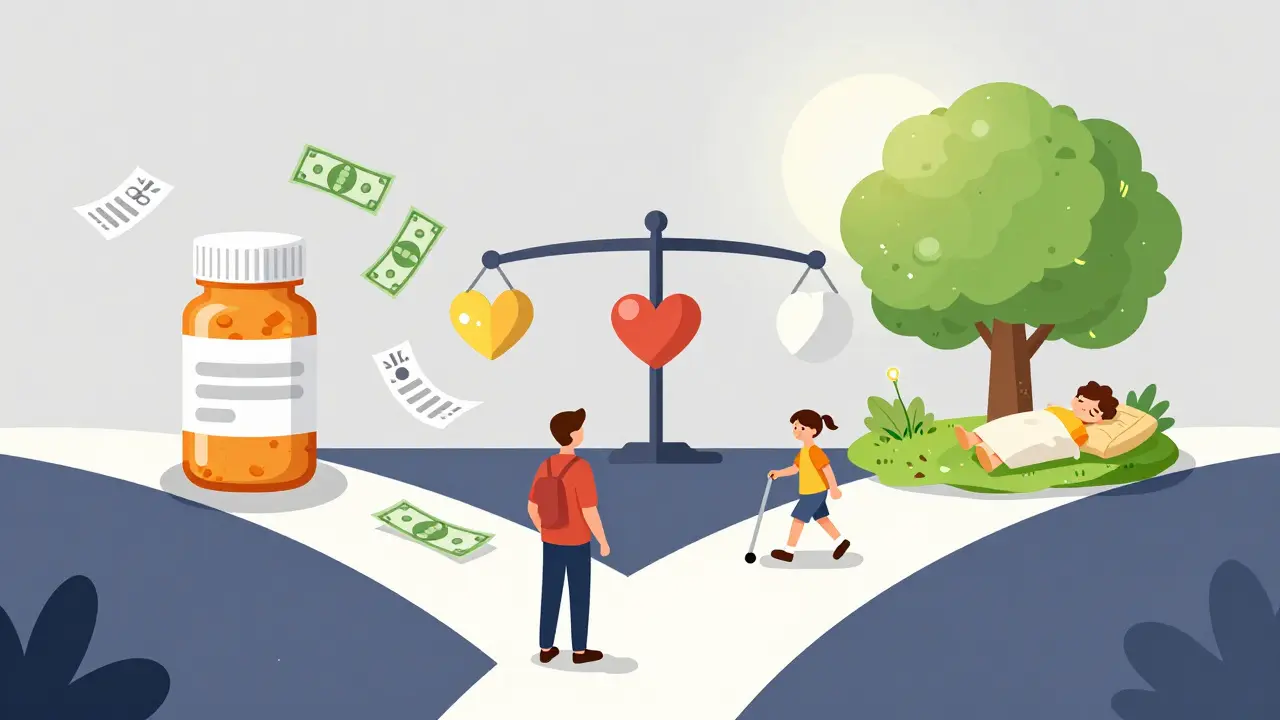
When a drug costs more than a car, or even a year’s rent, it’s hard not to wonder: is this worth it? For many people living with serious illnesses, the answer isn’t about money-it’s about survival. But deciding whether to take an expensive medication isn’t just a personal choice. It’s a balancing act between cost, side effects, and real-world outcomes. And for some, the trade-off makes perfect sense.
Why Some Drugs Cost So Much
The price tag on modern medicines isn’t random. Many of the most expensive drugs are biologics, gene therapies, or treatments for rare diseases. These aren’t your typical pills. They’re complex, often made using living cells, and require years of research to develop. The Orphan Drug Act of 1983 gave companies financial incentives to treat diseases affecting fewer than 200,000 people in the U.S. That’s why drugs for conditions like hemophilia, spinal muscular atrophy, or certain rare cancers now carry prices between $500,000 and $2 million per treatment. In 2023, the median cost per dose of the 50 most expensive drugs covered by Medicare hit $16,178. Thirty-one of those were biologics. Three were gene therapies. And 72% of them had orphan drug status. These aren’t just expensive-they’re engineered for precision. But that precision comes at a steep price.Side Effects Aren’t the Only Risk
When people think of side effects, they imagine nausea, fatigue, or rashes. But with high-cost drugs, the risks go deeper. CAR-T cell therapy, for example, can trigger cytokine release syndrome-a dangerous immune overreaction that requires hospitalization. Some patients get sick enough to need intensive care. But for those with terminal leukemia who’ve run out of options, that risk is acceptable. In a 2023 ASCO patient forum, 78% of people who received CAR-T therapy said it was worth the side effects, even with the hospital stays and recovery time. Similarly, hepatitis C drugs like Harvoni cost $7,153 out-of-pocket in 2016. But they cured 95% of patients in just 12 weeks. Before Harvoni, the standard treatment involved weekly interferon injections that caused flu-like symptoms, depression, and often failed. The side effects of the old treatment were brutal. The side effects of Harvoni? Mild headaches or tiredness. The benefit? A clean bill of health. For many, that trade-off was obvious.When the Alternative Is Worse
Sometimes, the real question isn’t whether the expensive drug is worth it-it’s whether the alternatives are worse. Take rheumatoid arthritis. Methotrexate is cheap. But for many patients, it doesn’t work well enough. The pain, joint damage, and loss of mobility become unbearable. Biologics like Humira or Enbrel can cost over $70,000 a year. But they stop the disease in its tracks. Patients report being able to play with their kids again, go back to work, or sleep through the night. A 2022 survey by the National Health Council found that 68% of patients on drugs costing over $10,000 a month skipped doses because they couldn’t afford them. But those same patients also said they’d rather risk financial ruin than go back to uncontrolled pain or worsening symptoms. For them, the cost of doing nothing was higher than the cost of the drug.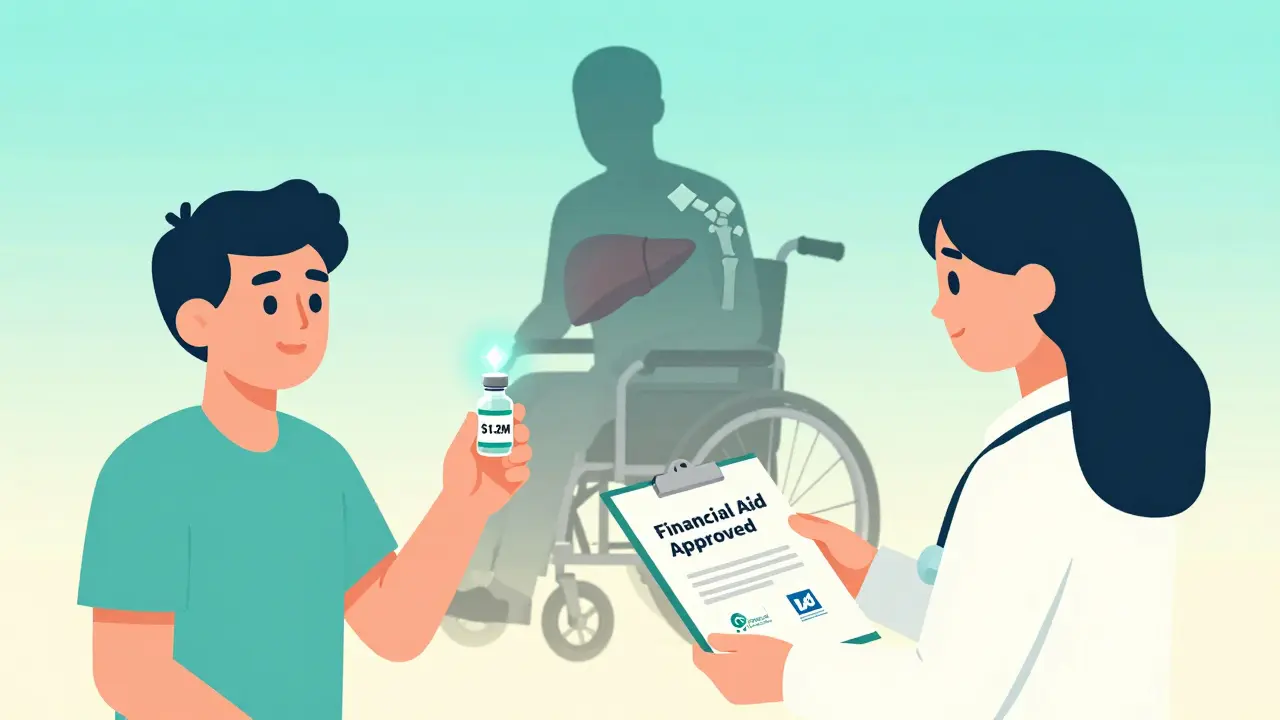
Insurance and the Hidden Cost of Access
Even if your insurance covers the drug, you’re not out of the woods. Medicare Part D has a coverage gap-the infamous “donut hole”-where patients pay nearly everything out of pocket until they hit catastrophic coverage. In 2021, over 2.3 million Medicare beneficiaries hit that gap. For a drug like Revlimid, which costs $11,538 out-of-pocket in a single year, that means paying thousands after insurance kicks in. And here’s the kicker: the list price you see isn’t what insurers pay. Manufacturers offer secret rebates to pharmacy benefit managers. The real cost is hidden. A 2023 study found that the net price after rebates was often 30-60% lower than the sticker price. But patients don’t benefit from those rebates unless they’re on Medicaid or have special coverage. Most people still pay based on the inflated list price.Who Gets Left Behind?
The system isn’t fair. People with lower incomes are far more likely to skip doses. In 2023, 68% of Medicare Part D enrollees earning below 150% of the federal poverty level delayed or skipped their medication due to cost. For higher-income patients, that number was 22%. That’s a massive gap. Patients with hemophilia, for example, might need emicizumab, which costs $15,000 a month. Without financial help, that’s impossible. But through manufacturer assistance programs, many get their co-pays reduced by 40% on average. Foundations like the Chronic Disease Fund gave out $2.1 billion in aid in 2022 alone. Still, navigating these programs takes time, paperwork, and persistence. Many patients give up before they even start.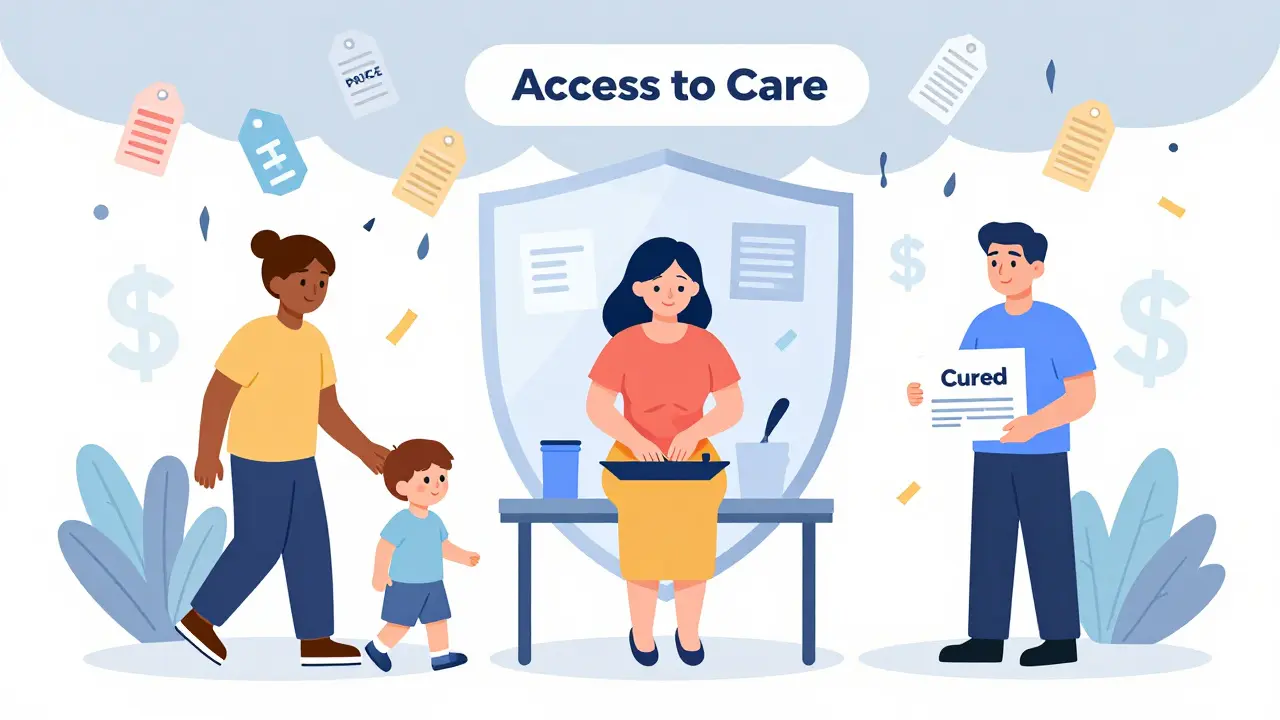
When Does It Make Sense?
So when is an expensive drug worth it? Here’s a simple framework:- It saves your life or prevents irreversible damage. Think cancer remission, preventing liver failure from hepatitis C, or stopping joint destruction in autoimmune disease.
- It’s significantly better than existing options. If the new drug cuts treatment time from a year to a month, or reduces side effects from severe to mild, the cost may be justified.
- There are no cheaper alternatives that work. If generics or older drugs have failed, the expensive option becomes the only real choice.
- You can access financial help. Manufacturer programs, nonprofit aid, and state assistance can cut costs by half or more. Don’t assume you can’t afford it until you’ve explored every option.
What You Can Do
If you’re facing a high-cost medication:- Ask your doctor for the net price after rebates. You might be surprised how much lower it is.
- Request a prior authorization letter. Sometimes, insurers will approve the drug if you prove other treatments failed.
- Contact the drug manufacturer. Nearly all have patient assistance programs. You can often get the drug for free or at a steep discount if you qualify.
- Work with a specialty pharmacy. They assign case managers who handle insurance, appeals, and paperwork-often spending over 3 hours per patient to get coverage.
- Apply for aid from foundations like the Patient Access Network Foundation or the Chronic Disease Fund. They don’t ask for collateral or credit checks.
The Bigger Picture
The U.S. spends more on drugs than any other country-$621 billion in 2022. Yet, only 15% of new drugs are rated by independent groups like Prescrire as offering major therapeutic progress. Many are slight improvements over existing drugs, priced 10x higher. That’s the system’s flaw: profit often drives pricing, not value. But for the people who need these drugs, the system works-not because it’s fair, but because it gives them a chance. A child with spinal muscular atrophy who can now walk. A woman with multiple sclerosis who no longer needs a cane. A man with hepatitis C who’s cured after 20 years of liver damage. These aren’t just statistics. They’re lives. And sometimes, paying $500,000 for a one-time cure is the only rational choice.Are expensive medications always worth the cost?
No. Many high-cost drugs offer only marginal improvements over cheaper alternatives. But for patients with life-threatening or disabling conditions who have no other options, the benefit can outweigh the cost-especially if side effects are manageable and financial aid is available.
How can I afford a drug that costs tens of thousands of dollars?
Start with the drug manufacturer’s patient assistance program-most offer free or deeply discounted drugs to qualifying patients. Then check nonprofit foundations like the Patient Access Network Foundation or the Chronic Disease Fund. Specialty pharmacies also assign case managers who help navigate insurance and appeals. Never assume you can’t afford it without exploring all options.
Do side effects make expensive drugs unsafe?
Some do, but safety is relative. CAR-T therapy can cause life-threatening reactions, but for patients with terminal cancer who’ve exhausted all other treatments, that risk is acceptable. The key is comparing side effects to the disease itself. If the disease causes more harm than the drug, the trade-off often makes sense.
Why are some drugs so much more expensive in the U.S. than elsewhere?
The U.S. doesn’t negotiate drug prices like other countries. In Europe and Canada, health agencies evaluate whether a drug’s benefit justifies its cost. If not, they refuse to cover it or demand lower prices. In the U.S., manufacturers set prices with little oversight, and insurers often pay list price without rebates reaching patients.
Will drug prices go down soon?
For a small number of drugs, yes. Starting in 2026, Medicare will negotiate prices for 10 high-cost drugs under the Inflation Reduction Act. But 96% of the most expensive drugs are currently excluded from negotiation. Real change will require broader reforms, which are still being debated. For now, financial assistance programs remain the best way to lower out-of-pocket costs.
Tiffany Adjei - Opong
January 4, 2026 AT 15:41Okay but let’s be real-half these drugs are just fancy placebos with a $500k price tag because Big Pharma knows we’ll pay anything to cling to hope. I’ve seen patients get ‘cured’ of a disease that didn’t even exist two years ago. They call it ‘rare’ so they can charge like it’s a limited edition Tesla. The science? Maybe. The ethics? Absolutely not.
Wesley Pereira
January 5, 2026 AT 12:08Yup. Biologics are basically magic beans sold by guys in suits who’ve never met a patient. CAR-T? Sure, it works-but only if you’re young, healthy enough to survive the cytokine storm, and have a trust fund. Meanwhile, my cousin’s mom got chemo that cost $80k and gave her 3 extra months of nausea. Thanks, capitalism.
Isaac Jules
January 6, 2026 AT 03:48LOL you people act like these drugs are a gift. They’re a racket. The FDA approves junk because pharma pays for the trials. The ‘cures’? Often just delay death by 6 months. And don’t get me started on how they jack up prices because ‘R&D costs’-as if the R&D wasn’t funded by taxpayer grants. Wake up.
Pavan Vora
January 7, 2026 AT 13:04From India, I can say: in our country, even basic insulin is a luxury. We see these drugs as sci-fi. My uncle died of hepatitis because the medicine cost 3x his annual salary. I don’t blame the companies-I blame a system that lets one person’s life be priced like a luxury watch. We need global pricing. Please.
Joann Absi
January 8, 2026 AT 05:29OMG I’m crying 😭 this is why America is broken. We’re literally choosing between feeding our kids and keeping our mom alive. I saw my best friend’s dad take a $1.2M gene therapy… and then his insurance dropped him because he was ‘too expensive to cover.’ This isn’t healthcare-it’s a horror movie. #SaveOurLives
Ashley S
January 8, 2026 AT 11:58So you’re saying if you’re rich, you live? And if you’re poor, you die? Wow. That’s just… simple. No need for all this fancy talk. It’s just greed. And it’s evil.
Gabrielle Panchev
January 9, 2026 AT 21:21While I acknowledge the emotional weight behind individual stories, we must consider the broader macroeconomic implications: when pharmaceutical companies are incentivized to develop treatments for ultra-rare conditions with minimal patient populations, the aggregate cost to the healthcare system becomes unsustainable, especially when those same companies simultaneously market marginally improved versions of existing drugs to broad populations under the guise of innovation-thereby exploiting regulatory loopholes, inflating R&D claims, and leveraging patent evergreening tactics that have no therapeutic justification whatsoever, all while the average patient bears the brunt of inflated list prices that bear no relation to actual production cost or even net price after rebates, which, as the article correctly notes, are systematically hidden from the consumer, creating a grotesque asymmetry of information and power that fundamentally undermines the ethical foundation of medical practice in a capitalist society.
Katelyn Slack
January 9, 2026 AT 23:37My sister got Humira. It saved her. But she had to fill out 47 forms, wait 3 months, and call 12 different people just to get the co-pay down from $5k to $800. The system is broken. Not the medicine. The system. Please don’t blame the drug. Blame the middlemen.
Melanie Clark
January 11, 2026 AT 15:40They’re watching you. Every time you take one of these drugs, your data gets fed into a corporate algorithm that predicts your lifespan, your insurance risk, your future medical bills-and then adjusts your premiums accordingly. They don’t care if you live. They care if you’re profitable. That’s why they make these drugs. Not to heal. To track. To profit. To control. You think this is medicine? It’s surveillance capitalism with a stethoscope.
Venkataramanan Viswanathan
January 13, 2026 AT 06:19In India, we have a saying: 'The rich get medicine, the poor get prayers.' I work in a clinic where patients sell their jewelry to buy insulin. I respect the science behind these drugs, but the pricing model is colonial. Why should a child in Ohio pay ten times more than a child in Delhi for the same molecule? The answer is not science-it is power.
Vinayak Naik
January 15, 2026 AT 03:37Let me tell ya-my cousin’s kid got that SMA gene therapy. Cost $2.1M. Insurance said no. Family sold the car, maxed out credit cards, cried in the hospital parking lot for a week. Then they found a nonprofit that covered 90%. Kid’s walking now. Grabs his grandma’s hand. Laughs. That’s not a drug. That’s a miracle. Yeah, the system’s messed up. But don’t you dare tell me miracles don’t have a price. They do. And sometimes… it’s worth every penny.