
Consumer Language Guides: Making Generic Drug Information Accessible
Have you ever picked up a prescription and stared at the pill in your hand, wondering if it’s really the same as the brand-name drug you used to take? You’re not alone. Millions of Americans feel this way - not because they’re suspicious, but because the information they’re given is confusing, full of jargon, or just plain missing.
Generic drugs are the quiet heroes of American healthcare. They make up over 90% of all prescriptions filled in the U.S., yet cost only about a fifth of what brand-name drugs do. In 2022 alone, they saved patients and the system nearly $300 billion. But here’s the problem: even though they’re just as safe and effective, many people still think generics are inferior. Why? Because the language used to explain them hasn’t kept up with how real people think and talk.
What Exactly Is a Generic Drug?
A generic drug is not a copy. It’s not a knockoff. It’s not a cheaper version that cuts corners. It’s the exact same medicine - same active ingredient, same strength, same way of being taken - as the brand-name version. The FDA requires it to deliver the same amount of medicine into your bloodstream within the same time frame. That’s called bioequivalence. And it’s not a guess. It’s a science.
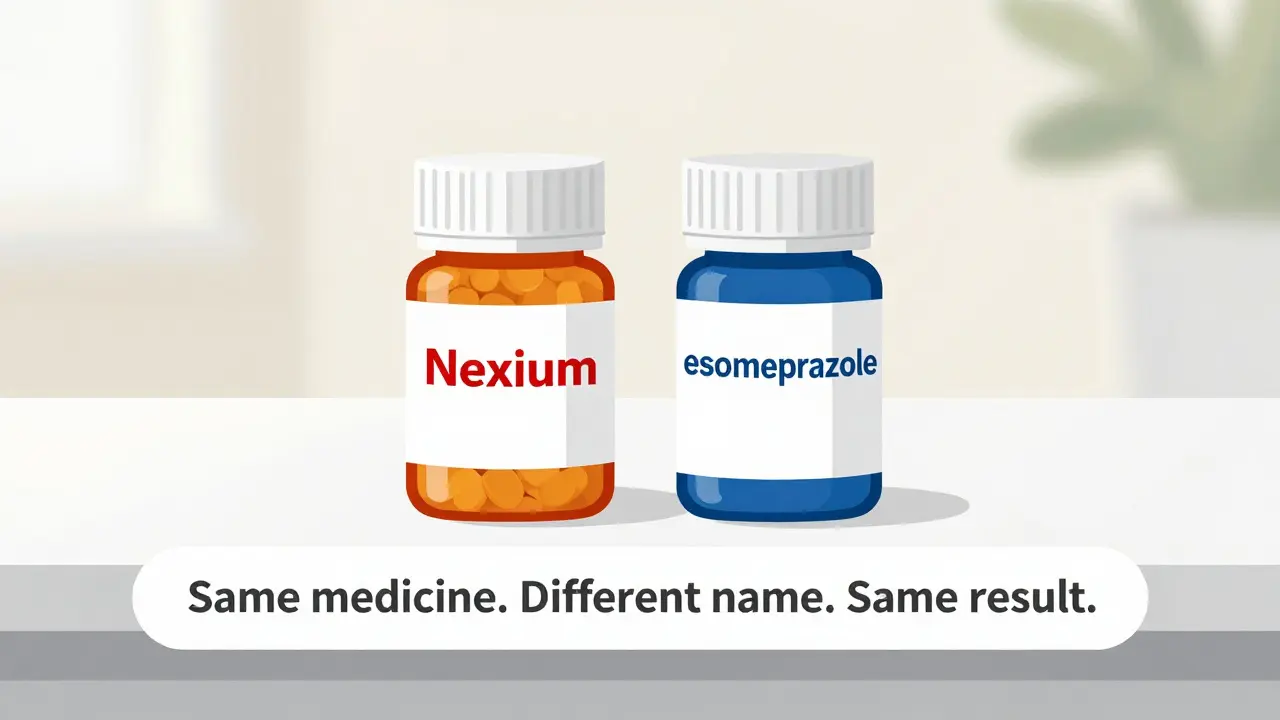
For example, if you take 20mg of esomeprazole (the generic for Nexium), your body absorbs it the same way as if you took the brand-name version. Same effect. Same safety profile. Same side effects. The only differences? The color, shape, or filler ingredients - like lactose instead of sugar. These don’t affect how the drug works. They’re just there to make the pill look different or easier to swallow.
The FDA’s own definition is simple: a generic drug is identical to the brand-name drug in dosage, safety, strength, how it’s taken, how it works in the body, and what it’s used for. That’s not marketing. That’s law.
Why Do People Still Doubt Generics?
It’s not about science. It’s about language.
Most patient materials still use terms like “pharmacokinetics,” “bioavailability,” or “therapeutic equivalence.” These words are meaningless to someone who just wants to know: “Will this work?” “Is it safe?” “Why is it so much cheaper?”
A 2021 study from the University of North Carolina found that when patients were given plain-language guides - written at a 6th-grade reading level - their understanding of generics jumped by 37 percentage points. That’s huge. But here’s what’s missing: most pharmacies still hand out brochures written for pharmacists, not patients.
One of the most effective tools is a simple visual: two pill bottles side by side. One labeled “Nexium,” the other “esomeprazole.” The text underneath says: “Same medicine. Different name. Same result.” That’s it. No jargon. No charts. Just clarity.
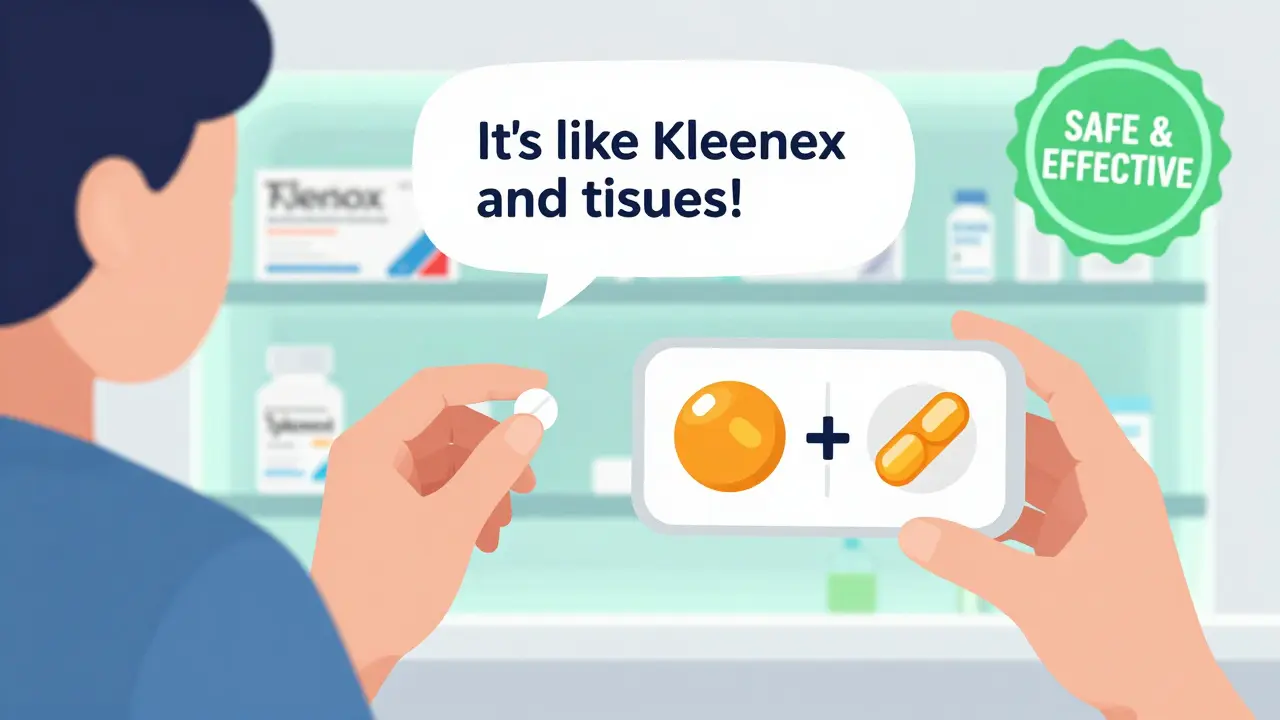
And it works. A 2023 Pharmacy Times survey found that 73% of patients said this kind of visual made them more likely to choose the generic. Even better? When pharmacists used analogies like “Tylenol is to acetaminophen like Kleenex is to tissues,” patient confidence went up dramatically.
The Hidden Exceptions: When Generics Aren’t Exactly the Same
Here’s the truth most guides don’t tell you: not all drugs are created equal.
For most medications - antibiotics, blood pressure pills, cholesterol drugs - generics work perfectly. Studies show no difference in outcomes. For example, a 2016 study of over 8,600 patients taking generic atorvastatin (the generic for Lipitor) found the same heart protection as the brand.
But for some drugs, tiny differences matter. These are called narrow therapeutic index (NTI) drugs. That means the difference between a dose that works and one that doesn’t is very small. Examples include:
- Levothyroxine (for thyroid disease)
- Warfarin (a blood thinner)
- Phenytoin (for seizures)
- Digoxin (for heart rhythm)
For these, some doctors still prefer brand-name versions - not because generics are unsafe, but because even small changes in how the body absorbs the drug can affect outcomes. The FDA recognizes this. That’s why it requires extra testing for these drugs.
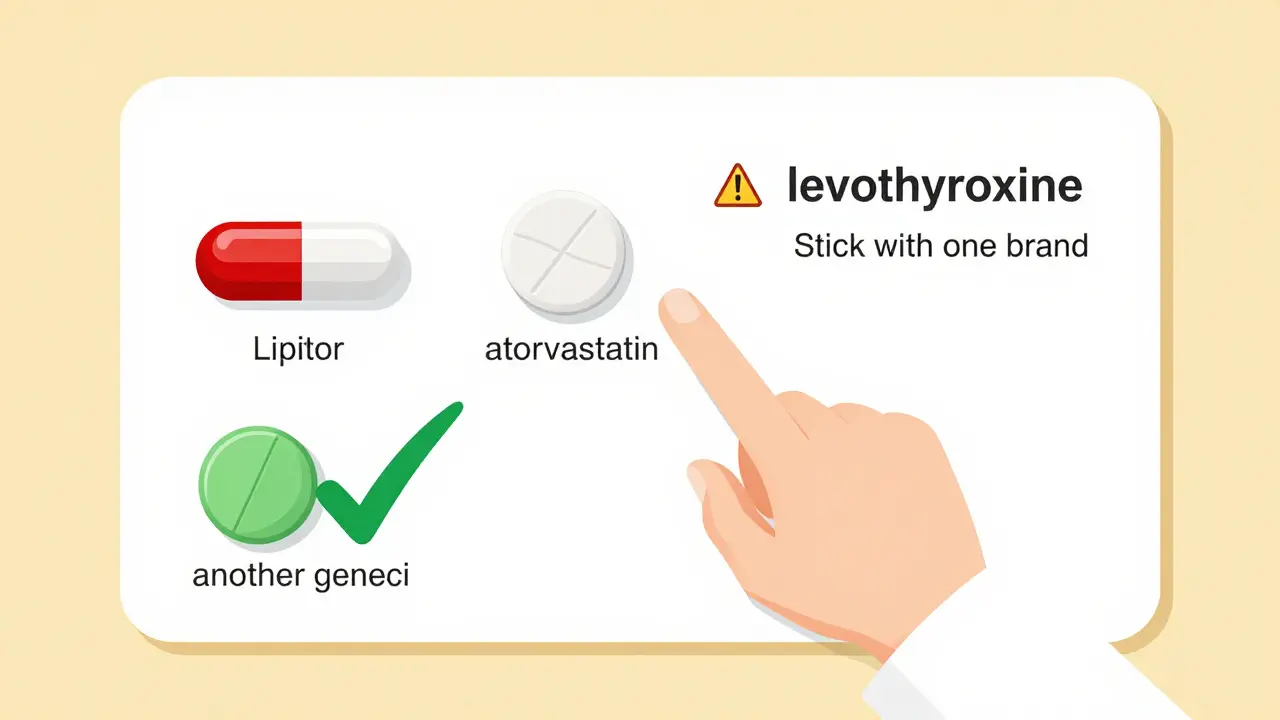
But here’s the problem: most consumer guides don’t mention this. They say, “All generics are the same.” That’s not true. And when patients switch from one generic to another - say, from one manufacturer’s levothyroxine to another - and feel worse, they blame the generic. They don’t blame the system.
The best guides now include a simple note: “For some medicines like levothyroxine, staying on the same brand or generic version is recommended. Ask your pharmacist if you’re unsure.”
What Makes a Good Consumer Language Guide?
Not all patient materials are created equal. A 2022 analysis from the University of Florida rated FDA’s materials at 87 out of 100 on the Patient Education Materials Assessment Tool. Most pharmacy handouts? Around 62.
Here’s what separates the good from the bad:
- Plain language: No Latin terms. No “pharmacokinetics.” Just “This medicine works the same way as the brand.”
- Active voice: “Take one pill daily” instead of “One pill should be taken daily.”
- Short sentences: Under 15 words per sentence. Most guides are too long.
- Visuals: Side-by-side images of brand and generic pills. Color-coded labels. Icons for dosage form (tablet, capsule, liquid).
- Teach-back: A simple question like, “Can you tell me why this generic is just as good as the brand?” helps confirm understanding.
- Transparency: Admits exceptions. Says, “For most drugs, yes. For some, like thyroid medicine, consistency matters.”
The FDA’s “Generic Drug Facts” page is the gold standard. Updated quarterly, it includes charts like “What’s In a Name?” - showing how chemical names (N-(4-hydroxyphenyl) acetamide) become generic names (acetaminophen) and then brand names (Tylenol). Pharmacists say this one chart alone reduces patient confusion by 82%.
How to Use These Guides - And What to Ask Your Pharmacist
You don’t need to memorize bioequivalence ranges. But you do need to know what to ask.
When you get a generic prescription, here are three simple questions to ask:
- Is this the same medicine as the brand? (Answer: Yes - same active ingredient, same strength, same effect.)
- Are there any reasons I should stick with the brand? (Answer: Only for certain drugs like levothyroxine or warfarin. Ask if yours is one of them.)
- Can I switch between different generics? (Answer: Usually yes. But for NTI drugs, it’s better to stay with the same manufacturer.)
And if your pharmacist doesn’t offer this info? Ask for the FDA’s “Generic Drug Facts” page. Or check out the Academy of Managed Care Pharmacy’s free consumer toolkit. Both are free, updated regularly, and written for real people.
The Bigger Picture: Why This Matters
Every time someone refuses a generic because they think it’s less effective, the system loses. In 2023, the Association for Accessible Medicines estimated that confusion over generics cost the U.S. healthcare system $3.2 billion - all because people didn’t understand what they were taking.
But when patients understand, they stick with their meds. The FDA found that when generics are explained clearly, adherence goes up by 22%. Switching back to expensive brand-name drugs drops by 34%.
And it’s not just about money. It’s about access. For people on fixed incomes, a $387 monthly savings on a generic statin isn’t a luxury - it’s survival.
The future is here. By 2026, 60% of generic education will be built right into electronic health records, personalized to your specific meds. AI tools will adjust explanations based on your reading level. Pharmacies will use tablets to show you side-by-side comparisons in real time.
But until then, the simplest tools still work best: clear words. Real examples. Honest answers. And a pharmacist who takes 90 seconds to say: “This isn’t a cheaper version. It’s the same medicine. Just without the brand name.”
Where to Find Reliable Generic Drug Info
- FDA’s Generic Drugs Page - Updated quarterly. Includes “What’s In a Name?” charts and FAQs. (FDA.gov/generics)
- Academy of Managed Care Pharmacy Consumer Toolkit - Free, printable guides for common medications. Revised January 2023.
- People’s Pharmacy Podcast - 17 episodes on generic drugs, with real patient stories.
- FDA’s YouTube Channel - Short videos explaining generics in plain language. Over 127,000 subscribers.
Don’t wait for your pharmacist to explain it. Go to the source. You’re entitled to clear answers - not marketing, not jargon. Just facts.
Simon Critchley
February 10, 2026 AT 07:01Let’s cut through the BS here - bioequivalence isn’t some magic pixie dust, it’s pharmacokinetic parity with a 90% CI confidence interval. FDA doesn’t just wave a wand and say ‘this is good enough.’ They run AUC and Cmax assays, validate within 80-125% range, and cross-validate across 27+ parameters. If your generic doesn’t hit those metrics, it gets rejected. Period. 🤓
Karianne Jackson
February 10, 2026 AT 17:44I took a generic for my anxiety meds and felt like a zombie for a week. Not my imagination. Something was off. 😭
Frank Baumann
February 11, 2026 AT 20:24Look, I get it - the system wants you to believe generics are identical, but let’s be real. The fillers? The binders? The coating? They’re not just ‘lactose instead of sugar.’ They’re proprietary, unregulated, and sometimes toxic. I had a neighbor who developed chronic fatigue after switching to a generic levothyroxine from a Chinese-manufactured batch. They didn’t even test for heavy metals. The FDA’s ‘same’ is a legal loophole, not a biological guarantee. And don’t get me started on how they let generics change manufacturers mid-script. That’s not healthcare - that’s pharmaceutical Russian roulette. 💀
Marie Fontaine
February 12, 2026 AT 08:07Yessss this is so needed!! 💯 I used to be scared of generics too until my pharmacist showed me the side-by-side pill pic and said ‘same medicine, different price tag.’ I saved $200/month. My cat’s vet bill is cheaper than my meds now 😆
Lyle Whyatt
February 13, 2026 AT 08:21There’s a deeper layer here that no one talks about - the cultural stigma around generics. In places like the U.S., brand-name = quality. It’s branding psychology, not pharmacology. We’ve been conditioned to equate cost with efficacy. That’s why the visual of two pill bottles side-by-side is so powerful - it bypasses the mental narrative. But here’s the kicker: the real change won’t happen until pharmacies stop treating patients like they’re too dumb to understand a 6th-grade sentence. We’re not idiots. We just need clarity, not jargon. And honestly? The FDA’s ‘What’s In a Name?’ chart should be plastered on every pharmacy counter. It’s genius.
Ryan Vargas
February 14, 2026 AT 03:30Let’s not pretend this is about science. This is about corporate capture. The FDA’s ‘bioequivalence’ standards are written by industry lobbyists. The 80-125% window? That’s a 45% variance. That’s not ‘same medicine’ - that’s ‘close enough for a lawsuit.’ And let’s not forget: brand-name companies own the patents, then sell them to generics after expiration, then buy back the ‘equivalent’ versions through shell corporations. The system is rigged. The ‘savings’? They’re not savings - they’re redistribution from patient wallets to Big Pharma subsidiaries. Wake up. This isn’t transparency. It’s obfuscation with a smiley face.
Tasha Lake
February 14, 2026 AT 22:10Can we talk about the NTI drugs? Levothyroxine is the elephant in the room. I’ve been on it for 12 years. Switched generics three times. Each time, my TSH went haywire. My endo had to re-titrate me each time. It’s not paranoia - it’s data. The FDA admits there’s variability. Why don’t the guides say that? Because they’re written by marketers, not clinicians. We need labeling like ‘This generic may require monitoring’ - not just ‘same medicine.’
Sam Dickison
February 16, 2026 AT 13:15Yeah, I get what you’re saying about the jargon. But here’s the thing - when you say ‘same active ingredient,’ you’re glossing over polymorphs, crystalline forms, and dissolution profiles. Two generics can have the same chemical formula but different release kinetics. That’s why some people feel different. It’s not placebo. It’s pharmaceutical science. We need better labeling, not just ‘same pill.’
Brett Pouser
February 17, 2026 AT 14:07As someone from a low-income family, I can’t tell you how much this matters. My mom skipped her statin for two years because she thought generics were ‘fake.’ When we finally got her on the right info? Her cholesterol dropped. Her doctor said she’d have had a heart attack if she’d kept going. This isn’t about money - it’s about dignity. People deserve to understand what’s in their body. No jargon. No shame. Just facts.
Joseph Charles Colin
February 19, 2026 AT 05:10For NTI drugs, the issue isn’t just absorption - it’s inter-batch consistency. The FDA allows a 5% variation in dissolution rate across manufacturing lots. For levothyroxine, that’s enough to shift TSH by 1.5 mIU/L. That’s clinically significant. Most patient guides don’t mention that. They say ‘same’ - but the reality is ‘same on average.’ There’s a difference. And for patients on narrow windows - like those with atrial fibrillation on warfarin - that ‘average’ can mean hospitalization. Transparency isn’t optional. It’s a medical necessity.
Patrick Jarillon
February 19, 2026 AT 16:14Oh please. The FDA is a puppet of Big Pharma. They approved generics made in India with lead-contaminated excipients. You think they care if you get the same medicine? They care if the stock price goes up. And don’t even get me started on how they allow pharmacies to switch generics without telling you. That’s not healthcare - that’s a scam. You’re being gaslit into thinking it’s safe. Wake up.
Kathryn Lenn
February 21, 2026 AT 09:00So let me get this straight - you’re telling me the same drug, made by different companies, with different fillers, in different countries, with different quality control… is ‘exactly the same’? 🤡 That’s like saying two McDonald’s burgers are identical because they both have ‘beef.’ Please. My cousin died because her generic warfarin didn’t dissolve right. And now you want me to trust a pamphlet? Thanks, but I’ll stick with the brand. At least I know who to sue when it fails.
John Watts
February 21, 2026 AT 17:55This is why I love community pharmacists. They’re the real heroes. I used to work at a clinic where we’d hand out those side-by-side pill pics. Patients would cry. Not because they were sad - because they finally understood. One woman said, ‘I’ve been taking this for 10 years and no one ever told me it was the same.’ That’s the tragedy. Not the drug. The silence. We need more of this. Not just in pharmacies - in schools, in TV ads, in insurance portals. Knowledge is the real generic.
Tori Thenazi
February 21, 2026 AT 22:06Wait… so you’re saying the government says generics are safe… but then admits some are NOT? 🤔 That’s not transparency - that’s a contradiction. And why does the FDA have a ‘What’s In a Name?’ chart… but not a ‘What’s In Your Pill?’ chart? What are they hiding? Are the fillers dangerous? Is there a secret list? Why don’t they publish the exact composition? Are we being lied to? 😳
Elan Ricarte
February 23, 2026 AT 19:53Let’s be real - this whole ‘generic = same’ narrative is corporate propaganda. You think the brand-name companies are stupid? They patent the damn thing, let it expire, then buy the generic license and jack up the price. And now they’re telling you to trust the system? LOL. The only thing that’s ‘identical’ is the profit margin. You’re not saving money - you’re being exploited. And if you believe this, you’re part of the problem. 🤡