
Antihistamines and Occupational Safety: Managing Drowsiness at Work

Antihistamine Workplace Safety Checker
Risk Assessment
Enter your details and click "Check Safety Risk" to see the analysis.
You might feel wide awake, but your brain could be lagging. This is the dangerous reality for millions of workers using certain allergy medications. The core problem isn't just falling asleep at your desk; it's the "invisible impairment" where your reaction times slow down and your coordination slips, even while you feel perfectly alert. In safety-sensitive jobs-like driving a truck, operating a crane, or performing surgery-this gap between how you feel and how you actually perform can be fatal.
| Feature | First-Generation | Second-Generation |
|---|---|---|
| Common Examples | Diphenhydramine, Chlorpheniramine | Loratadine, Cetirizine, Fexofenadine |
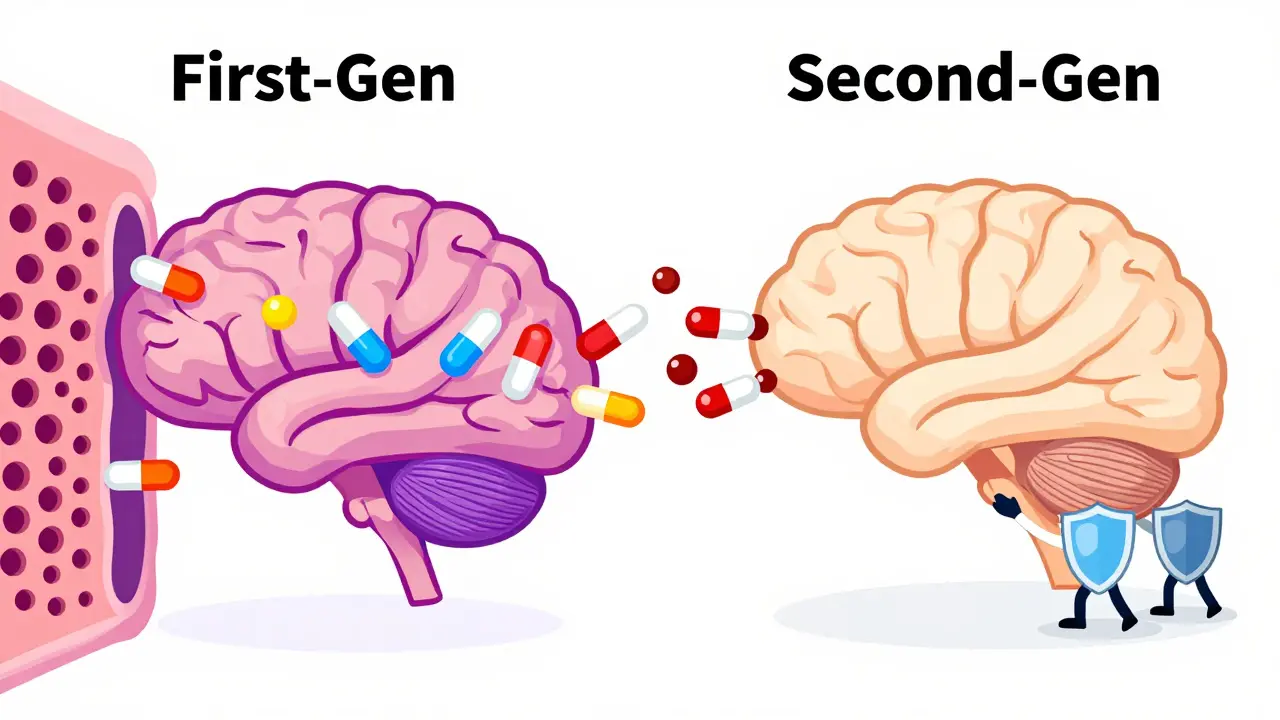
| Brain Penetration | High (crosses blood-brain barrier) | Low (pumped out by P-glycoprotein) |
| Cognitive Effect | Significant impairment/drowsiness | Minimal to none (similar to placebo) |
| Workplace Risk | High (reduced reaction time) | Low |
The Hidden Danger of First-Generation Antihistamines
Not all allergy meds are created equal. First-generation antihistamines is a class of early allergy medications that readily cross the blood-brain barrier due to their lipophilic properties. Because they enter the brain, they block histamine-a chemical that helps keep you awake and alert. This is why medications like Diphenhydramine (commonly known as Benadryl) are often used as sleep aids.
The real risk is that these drugs don't always make you feel "sleepy." Research from Kay and Quig shows that many patients report their brain functioning is impaired even when they don't feel a strong urge to nap. Imagine a commercial truck driver who feels fine but fails a basic coordination test. This disconnect is a major occupational hazard. In fact, first-generation antihistamines are frequently found in the autopsies of pilots involved in aircraft crashes, proving that "feeling awake" isn't the same as "being alert."
How Your Brain Reacts Under the Influence
When you take a sedating antihistamine, it disrupts your central nervous system. According to research by Jáuregui, these drugs can slash your reaction time by 25-30%. In a driving scenario, this manifests as a 50% increase in lane deviation. If you're operating heavy machinery in a warehouse, a half-second delay in your reflexes could be the difference between a normal day and a catastrophic accident.
The danger is compounded by the medication's half-life. For example, diphenhydramine has a half-life of about 4 to 6 hours, meaning the impairment sticks around long after the initial dose. If you take a dose before bed, you might still be experiencing cognitive deficits the next morning. This "hangover effect" is reported by nearly 37% of users in community reviews, making it a silent threat for the morning shift.
The Safer Alternative: Second-Generation Meds
If you need to stay sharp at work, Second-generation antihistamines are the gold standard. These are modern allergy medications designed to minimize central nervous system effects by increasing their affinity for P-glycoprotein transporters, which essentially act as bouncers, pumping the drug out of the brain before it can cause drowsiness. Examples include Loratadine (Claritin) and Fexofenadine (Allegra).
From a safety perspective, these drugs are practically indistinguishable from placebos in psychometric trials. New options like Bilastine show even better tolerance, remaining non-sedating even at double the standard dose. For anyone in a safety-sensitive role, the switch from a first-gen to a second-gen medication is the single most effective way to reduce workplace risk.

Workplace Safety Strategies and Implementation
Managing your allergy symptoms shouldn't come at the cost of your safety or your coworkers' lives. If you are in a role where a mistake could be fatal, follow these practical rules of thumb:
- The Home Test: Never take a new antihistamine for the first time right before a shift. Try it at home on a day off to see how your body reacts. Everyone's sensitivity is different.
- The 12-Hour Rule: If you must use a first-generation sedating medication, leave at least 8 to 12 hours between your dose and operating safety-sensitive equipment. Some experts suggest waiting 24 hours for high-risk transport roles.
- Bedtime Dosing: As the FDA suggests, take sedating medications at bedtime. However, be mindful of the next-day "fog."
- Avoid Synergies: Never mix sedating antihistamines with alcohol or other CNS depressants. These substances multiply each other's effects, turning mild drowsiness into severe impairment.
Regulatory Trends and Industry Standards
The industry is moving toward stricter controls. The Federal Aviation Administration (FAA) already prohibits pilots from using first-generation antihistamines. Similarly, many Fortune 500 companies in construction and manufacturing are now integrating specific antihistamine guidance into their occupational health policies.
The Food and Drug Administration (FDA) updated its labeling in 2023 to make warnings about occupational impairment more prominent. This shift reflects a growing understanding that drug-induced impairment is just as dangerous as alcohol impairment in the workplace. As awareness grows, it's likely that employers will increasingly require workers in safety-sensitive positions to provide proof that they are using only non-sedating alternatives.
I don't feel sleepy after taking Benadryl; can I still drive?
You should be very cautious. Research shows that first-generation antihistamines can impair your cognitive functions and reaction times even if you don't subjectively feel drowsy. This "invisible impairment" can lead to slower braking and poor decision-making on the road.
Which antihistamines are generally considered "non-drowsy"?
Second-generation antihistamines like Loratadine (Claritin), Cetirizine (Zyrtec), and Fexofenadine (Allegra) are designed to not cross the blood-brain barrier, making them significantly safer for use during work hours.
How long does the impairment from sedating antihistamines last?
While the peak effect usually happens 2 to 4 hours after the dose, residual impairment can last up to 18 hours. This is why you might feel "foggy" the morning after taking a sedating med at night.
Are there any second-generation meds that still cause drowsiness?
While much less common than first-generation meds, some people still experience mild drowsiness with certain second-generation options like Cetirizine. Always perform a "home test" before using a new medication for the first time before work.
Why do first-generation meds cause drowsiness while second-generation ones don't?
It comes down to the blood-brain barrier. First-generation meds are lipophilic and enter the brain easily. Second-generation meds are recognized by P-glycoprotein transporters, which actively pump the medication out of the central nervous system, preventing it from interfering with your alertness.