
Antihistamine Allergies and Cross-Reactivity: Signs and Risks
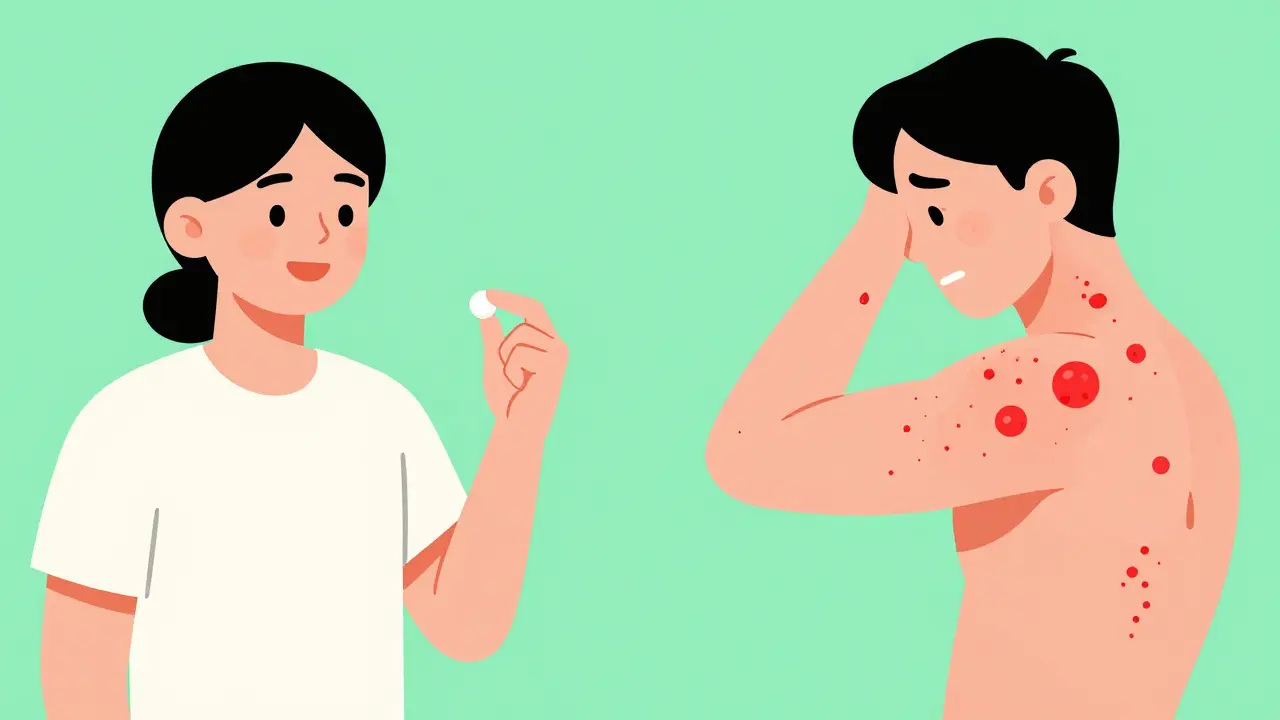
Imagine taking a pill to stop a hives outbreak, only to have the hives get worse minutes later. It sounds like a medical paradox, but for some people, antihistamine allergies is exactly what happens. Instead of blocking the chemicals that cause itching and swelling, the medication actually triggers the same symptoms it was meant to treat. This rare but frustrating condition can leave patients in a loop where the standard treatment for allergies becomes the allergen itself.
The Paradox: When Allergy Meds Cause Allergies
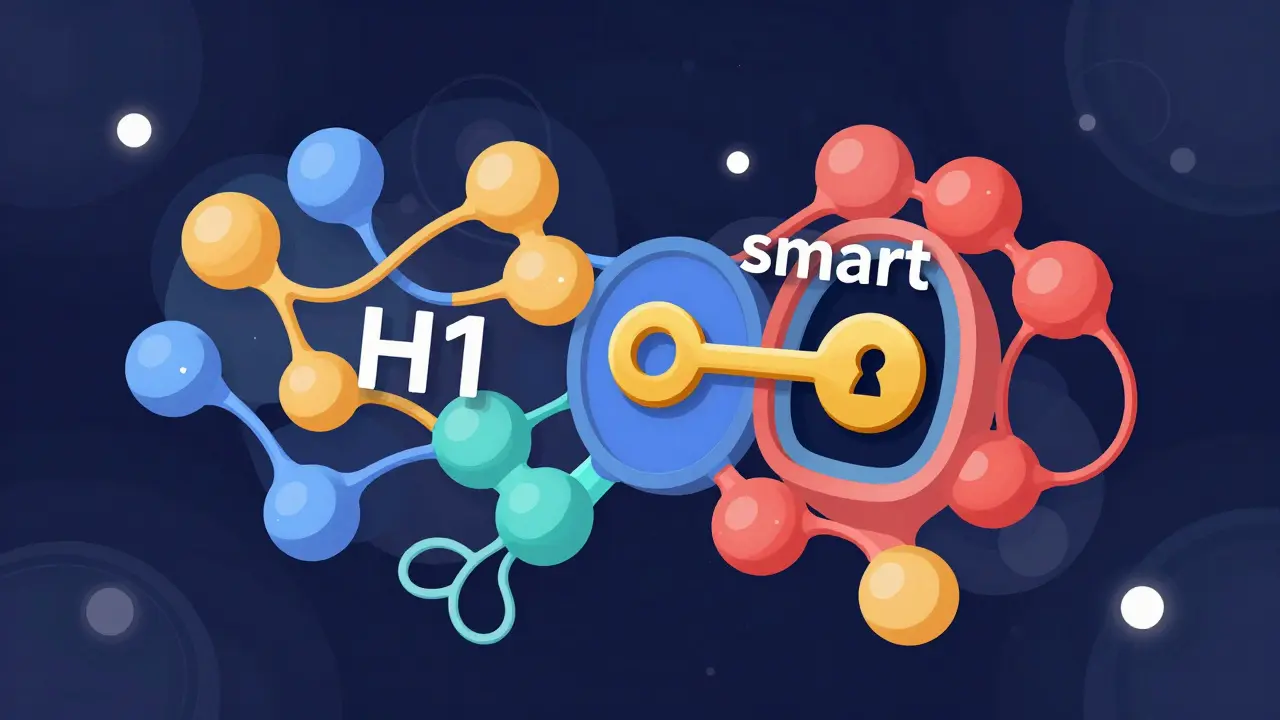
Most of us think of antihistamines as a simple "off switch" for allergic reactions. In a typical body, these drugs act as inverse agonists. This means they stabilize the H1 receptor is a protein on the surface of cells that binds to histamine to trigger inflammatory responses in an inactive state, effectively locking the door so histamine can't get in. However, in some hypersensitive individuals, this process flips.
Research suggests that certain people have polymorphisms-essentially genetic tweaks-in their receptors. Instead of shutting the receptor down, the drug might actually stabilize it in an active state. In plain English: the drug mimics histamine so well that it tricks the body into starting an allergic reaction. This paradoxical activation can lead to urticaria (hives) that appears shortly after taking the medication, making it incredibly difficult to distinguish between a worsening allergy and a drug reaction.
Understanding Cross-Reactivity Across Drug Classes
If you react to one antihistamine, you might assume you're safe switching to a different brand. Unfortunately, cross-reactivity is a phenomenon where the immune system recognizes two different substances as similar, triggering a reaction to both can make a simple switch ineffective. Antihistamines are generally grouped by their chemical structures, and reactions often cluster within these families.
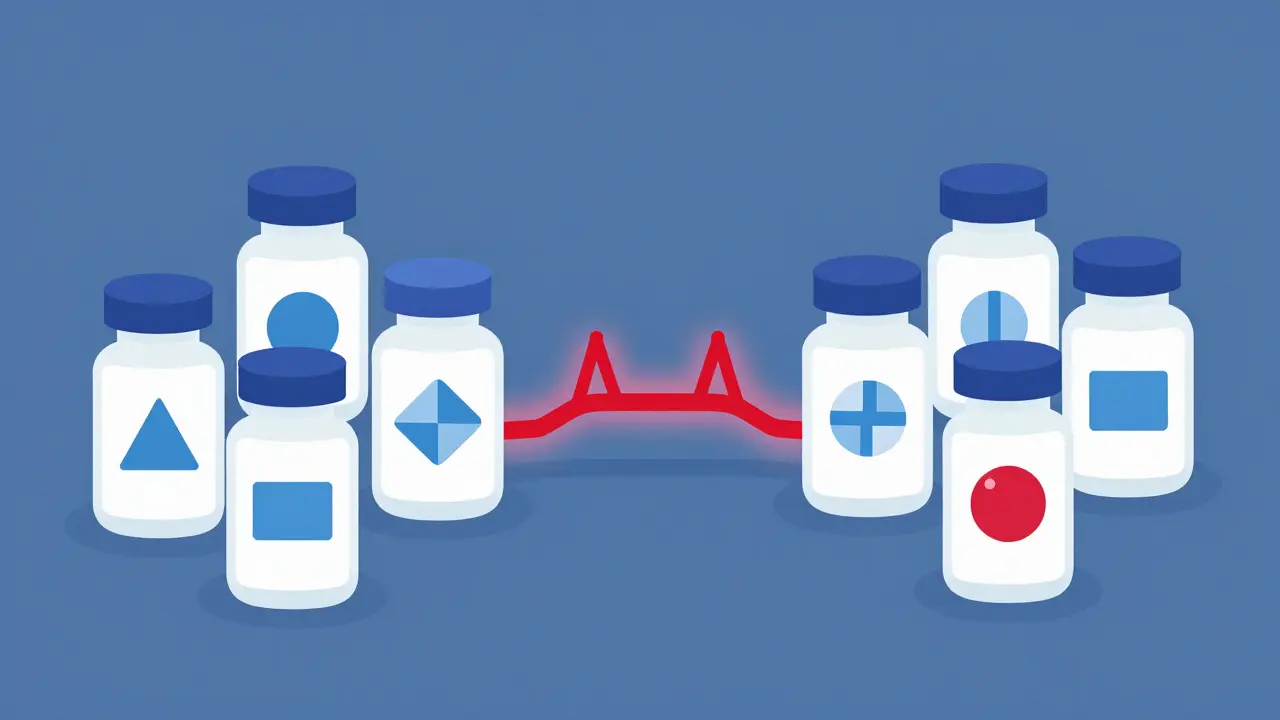
For example, the piperidine class includes common drugs like fexofenadine, loratadine, and desloratadine. On the other hand, the piperazine class includes cetirizine and levocetirizine. While these classes are different, some patients exhibit hypersensitivity to both. This suggests that the body isn't just reacting to one specific chemical chain, but perhaps to a shared structural feature that looks like histamine to the immune system.
| Feature | First-Generation | Second-Generation |
|---|---|---|
| Examples | Diphenhydramine, Pheniramine | Loratadine, Cetirizine, Fexofenadine |
| Blood-Brain Barrier | Crosses easily (causes sedation) | Limited crossing (non-sedating) |
| Duration of Action | Short (4-6 hours) | Long (12-24 hours) |
| Primary Targets | H1 and Muscarinic receptors | Primarily peripheral H1 receptors |
| Hypersensitivity Risk | Rare, but documented | Rare, but documented |
The Diagnostic Struggle: Why Skin Tests Can Lie
One of the most dangerous parts of antihistamine hypersensitivity is that standard tests aren't always reliable. Most doctors start with a skin prick test, but these can yield "false negatives." You might have a negative skin test for a specific drug, but when you actually swallow the pill, you break out in hives. This is because skin tests only measure one type of immune response, whereas oral reactions can be more complex and delayed.
In documented clinical cases, some patients didn't show a reaction until 120 minutes after taking the drug. This delay often leads patients to believe the drug is working, only to experience a "rebound" effect that is actually a drug-induced eruption. This is why medical professionals consider oral provocative testing-taking the drug under strict supervision-as the gold standard, despite the risks involved.
Hidden Triggers and Complicating Factors
It's rarely just about the drug. In some instances, an underlying health issue can make the body more prone to these paradoxical reactions. For instance, some patients have found that chronic infections can prime the immune system, making it more likely to react poorly to medications. Once the infection is treated and the antihistamine trigger is removed, the hives often resolve completely.
There is also the risk of Multiple Drug Hypersensitivity Syndrome. This is a broader condition where a person reacts to a wide variety of chemically unrelated drugs. If you've found yourself reacting to medications across entirely different categories (like an antibiotic and an allergy pill), you might be dealing with a systemic hypersensitivity rather than a specific allergy to one molecule.
How to Manage Paradoxical Reactions
If you suspect your allergy meds are making your symptoms worse, the first step is a meticulous drug diary. Note the exact time you took the medication and exactly when the hives appeared. A reaction that peaks 2 hours later is a major red flag for antihistamine hypersensitivity.
Since the standard toolkit is off-limits, you'll need to work with an allergist to find alternative paths. This might involve:
- Identifying the specific chemical class (piperidine vs. piperazine) you react to and avoiding all drugs in that group.
- Exploring non-antihistamine treatments for urticaria, such as specific corticosteroids or biologics, depending on the severity.
- Screening for underlying infections that might be amplifying your immune response.
Looking Ahead: Better Drug Design
The good news is that we are getting a better look at the molecular level. Using cryo-electron microscopy (cryo-EM), scientists have recently mapped the precise structure of the H1 receptor. They've discovered secondary binding sites that could be used to design "smarter" drugs. The goal is to create next-generation antihistamines that fit more securely into the receptor's inactive state, leaving no room for the paradoxical activation that causes these rare allergies.
Can I be allergic to all antihistamines?
While very rare, some people experience reactions across multiple chemical classes of antihistamines. This is often linked to receptor polymorphisms or Multiple Drug Hypersensitivity Syndrome, meaning the body reacts to the general structure of these drugs rather than one specific ingredient.
What are the signs of a paradoxical reaction?
The main sign is the appearance or worsening of hives (urticaria) shortly after taking an antihistamine. Unlike a normal allergy where symptoms fade after the pill, a paradoxical reaction causes new eruptions or increased itching, often peaking 1 to 2 hours after ingestion.
Why did my skin test come back negative but I still react?
Skin prick tests only detect immediate hypersensitivity via certain pathways. Some antihistamine reactions are systemic or delayed, meaning they only happen once the drug is metabolized and enters the bloodstream. This is why oral provocative testing is often necessary for a definitive diagnosis.
Is there a difference between H1 and H2 antihistamines in this context?
Yes. H1 antihistamines target the receptors responsible for allergic symptoms like itching and swelling. H2 blockers primarily target receptors in the stomach to reduce acid. Because they target different receptors, a person allergic to H1 blockers is not necessarily allergic to H2 blockers.
What should I do if I suspect an antihistamine allergy?
Stop taking the suspected medication and contact an allergist. Keep a detailed log of your symptoms and the timing of your doses. Do not try to "test" different brands on your own, as cross-reactivity could lead to a more severe reaction.
Del Bourne
April 6, 2026 AT 23:10This is such a helpful breakdown of a complex topic. For those wondering, it's always worth checking if the "inactive" ingredients or dyes in a specific brand are the actual culprits rather than the active pharmaceutical ingredient itself. I've seen many cases where a patient reacts to the blue dye in one tablet but is perfectly fine with the generic version of the same drug. Always keep that in mind when starting your drug diary!
Benjamin cusden
April 7, 2026 AT 21:47The mention of cryo-EM is basic at best. Anyone with a rudimentary understanding of structural biology knows that mapping the H1 receptor is merely the first step in a much longer pharmacological journey. The leap from a static image to a functional inverse agonist that avoids paradoxical activation is far more complex than this simplistic summary suggests.
Danielle Kelley
April 9, 2026 AT 00:37Typical pharma nonsense. They want us to believe our bodies are just "glitching" with polymorphisms so they can push these "smarter" next-gen drugs on us. It is obvious they are just designing these chemicals to keep us dependent on the medical system. Wake up and realize that these "paradoxical reactions" are probably just a result of the toxins they put in the water supply reacting with the meds!
Jitesh Mohun
April 10, 2026 AT 15:17listen up if youre struggling just go to a real specialist and dont waste time with basic clinics they dont know about cross reactivity and will just keep giving you the same junk pills over and over again get a proper blood panel done and stop guessing with your health
Rauf Ronald
April 11, 2026 AT 05:07Spot on! It's so important to realize that our bodies are unique. For anyone feeling overwhelmed, just remember that there's always a solution. If the standard meds aren't working, don't lose hope! Work with your doctor to explore those biologics or other alternatives. You've got this, and getting a clear diagnosis is the first big win toward feeling better!
Vivek Hattangadi
April 11, 2026 AT 22:08I totally agree with the point about the drug diary! It's such a simple tool but it makes a world of difference when you finally sit down with an allergist. I've helped a few friends organize their symptoms like this and it usually speeds up the diagnostic process significantly. Has anyone else tried using an app for this or do you prefer the old-school notebook method? I find a physical log helps me stay more mindful of the timing!
charles mcbride
April 12, 2026 AT 20:22It is truly heartening to see such detailed research being shared. I am confident that as medical science advances, these rare conditions will become much easier to manage for everyone involved.
Nikhil Bhatia
April 14, 2026 AT 15:47Kinda long read for just a few main points.
Rupert McKelvie
April 14, 2026 AT 21:50This is a fantastic resource. It's wonderful that there's a focus on the future of drug design to help those who currently have no viable options. I'm sure we'll see some great breakthroughs very soon that will make these reactions a thing of the past.