
Allergy Medications During Pregnancy: Safety Profiles
When you're pregnant and battling sneezing, itchy eyes, or a stuffy nose, the last thing you want is to choose between feeling miserable and worrying about your baby. Allergies affect 20-30% of pregnant people, and managing them isn’t as simple as grabbing your usual allergy pill. The real question isn’t whether to treat allergies - it’s which treatments are truly safe, and when.
What’s Safe in the First Trimester?
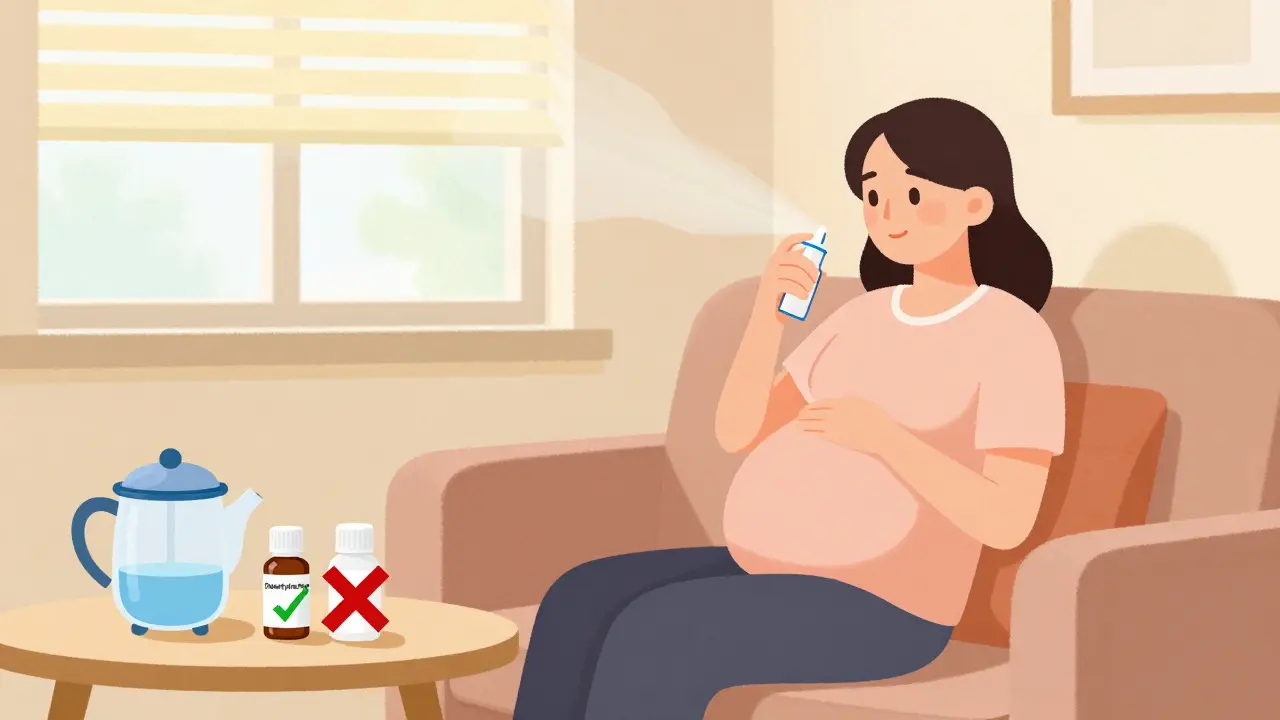
The first trimester is when your baby’s organs are forming. That’s why doctors urge extra caution with any medication during weeks 1 through 12. Even if you’ve taken a drug for years, pregnancy changes how your body processes it - and how your baby might respond.For most people, the best move right now is to skip medications entirely and focus on non-drug strategies. Use a saline nasal spray or a neti pot to flush out allergens. Keep windows closed during high pollen seasons. Run a HEPA air filter in your bedroom. Wash your hair and change clothes after being outside. These simple steps can cut symptoms by half for many.
If symptoms are unbearable, diphenhydramine (Benadryl) and chlorpheniramine (Chlor-Trimeton) are still considered the safest oral antihistamines in early pregnancy. Decades of data - including a 2010 meta-analysis of over 200,000 pregnancies - show no increased risk of birth defects. But here’s the catch: they make you sleepy. If you’re already exhausted from pregnancy, that extra drowsiness might make things harder.
Nasal Sprays: Your Best Bet
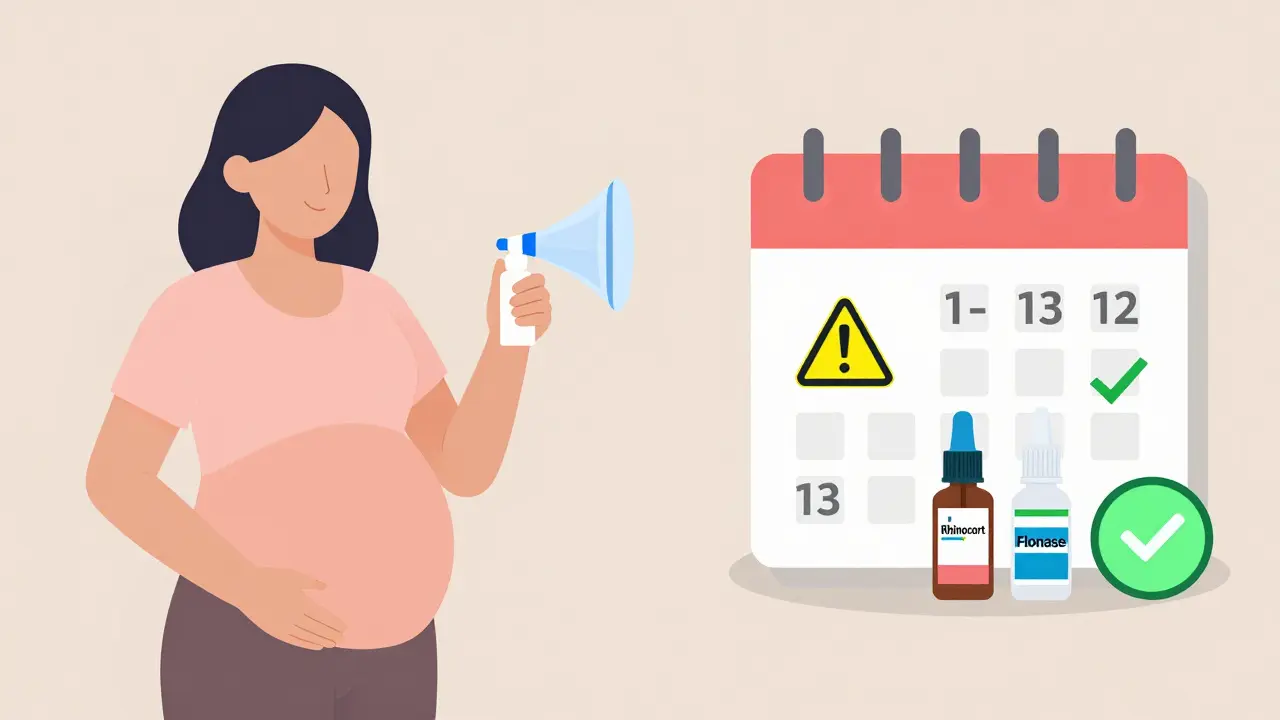
If you need something stronger than a saline rinse, nasal corticosteroids are the gold standard. They work locally - meaning very little enters your bloodstream - and even less reaches your baby.Rhinocort (budesonide) is the most studied and recommended. It has the strongest safety record of any nasal steroid during pregnancy. Flonase Sensimist (fluticasone furoate) and Nasonex (mometasone) are also considered safe. These are all approved for use from the first trimester onward.
But not all nasal sprays are equal. Avoid Nasacort (triamcinolone). It has far less data, and experts warn against using it during pregnancy because we just don’t know enough about its effects.
And skip nasal decongestant sprays like Afrin (oxymetazoline). Even though they’re meant for short-term use (3 days max), they’re not well studied in pregnancy. The risk of rebound congestion and unknown fetal effects makes them a poor choice.
Second-Generation Antihistamines: Cetirizine, Loratadine, Fexofenadine
Once you’re past the first trimester, you have more options. Cetirizine (Zyrtec) and loratadine (Claritin) are both widely used and considered low-risk after week 12. Studies haven’t linked them to birth defects, and they don’t cause drowsiness like Benadryl.Still, there’s a nuance. While these drugs are labeled “Pregnancy Risk Category B” (meaning animal studies show no risk and human data is reassuring), fexofenadine (Allegra) is still listed as “Category C.” That doesn’t mean it’s dangerous - it just means there’s less human data. Animal studies show no harm, but doctors often prefer to stick with cetirizine or loratadine because they’ve been studied in more pregnant people.
And watch out for combo products. If you see a pill labeled “Claritin-D,” “Zyrtec-D,” or “Allegra-D,” that means it contains pseudoephedrine - and that’s a hard no in pregnancy. The “-D” is a red flag.
Pseudoephedrine: The Big Red Warning
Pseudoephedrine (Sudafed) is the most dangerous common allergy medication during pregnancy - especially in the first trimester. A 2009 study found it was linked to a 2.4-fold increase in gastroschisis, a rare birth defect where the baby’s intestines develop outside the abdomen.Even if you’re past the first trimester, you still need to be careful. Pseudoephedrine can raise your blood pressure, and many pregnant people already have higher-than-normal BP. If you’re hypertensive, avoid it completely.
Mayo Clinic updated its guidance in December 2023 to say that in rare cases - like severe congestion that won’t quit - a doctor might allow a very limited dose: 30-60 mg every 4-6 hours, not exceeding 240 mg in 24 hours. But only in the second or third trimester. And only if no other option works. Never self-prescribe this.
What About Allergy Shots?
If you were already getting allergy shots before you got pregnant, you can usually keep going. Studies show no increased risk of miscarriage or birth defects in women who continued immunotherapy. But here’s the rule: never start allergy shots during pregnancy. The risk of a severe reaction is too high, and your immune system is already working overtime.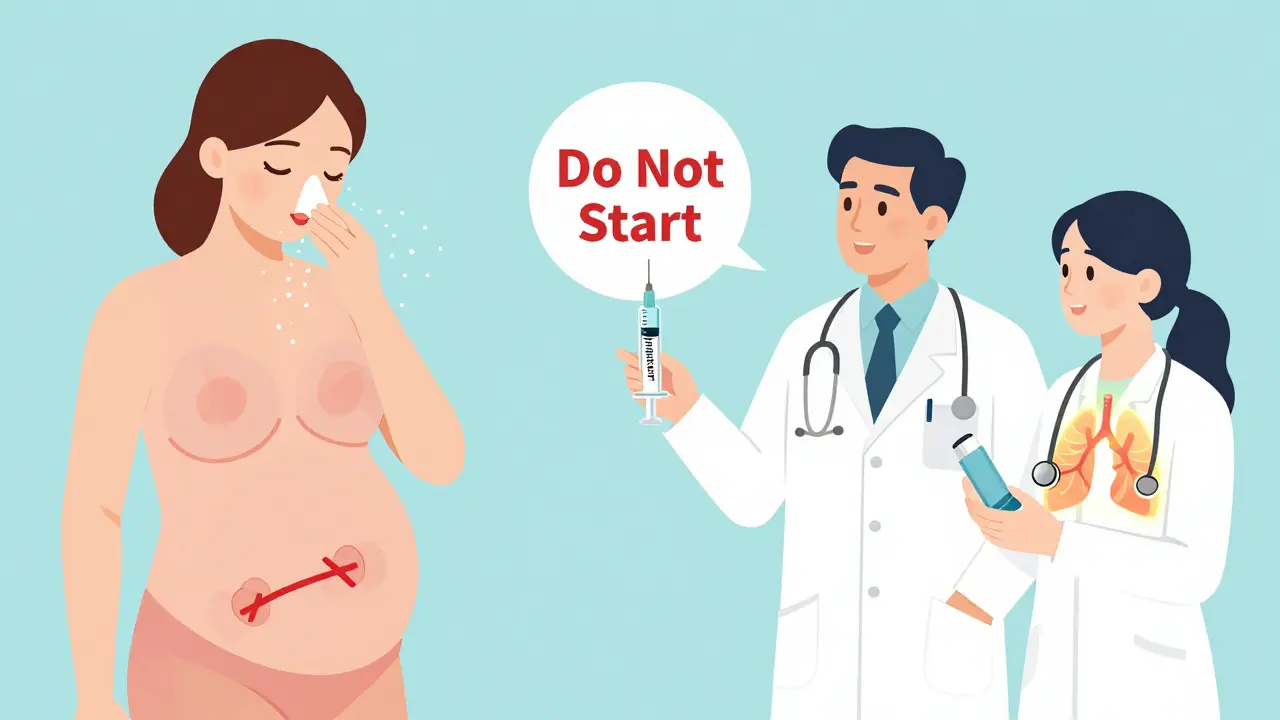
What About Asthma?
About 8% of pregnant people have asthma, and uncontrolled asthma is far riskier than most asthma medications. Inhaled corticosteroids like fluticasone (Flovent) or budesonide (Pulmicort) are safe throughout pregnancy. They’re the first-line treatment. Oral steroids like prednisone? Only if absolutely necessary - and even then, for the shortest time possible.Don’t let fear of medication stop you from breathing. If you’re wheezing or coughing, talk to your doctor. The risks of uncontrolled asthma - low oxygen to the baby, preterm birth, low birth weight - are much higher than the risks of using the right inhaler.
Dosing Tips: Less Is More
When you do need medication, use the lowest effective dose for the shortest time. For example:- Cetirizine (Zyrtec): 10 mg once daily
- Loratadine (Claritin): 10 mg once daily
- Diphenhydramine (Benadryl): 25-50 mg every 4-6 hours as needed
Avoid extended-release versions (labeled SA, ER, or XL). They release the drug slowly, which means more of it stays in your system longer - and that’s more exposure for your baby.
Also skip multi-symptom products. If you have a stuffy nose and itchy eyes, don’t grab a pill that claims to treat “allergies and congestion.” You don’t need the decongestant. Just treat what you have.
What’s Changing in 2025?
The FDA stopped using the A, B, C, D, X categories in 2018. They now require detailed narrative summaries in drug labels. But most doctors and patients still refer to the old system because it’s familiar. Expect that to shift over time.Meanwhile, the National Institutes of Health is running a major study called the Pregnancy Exposure Registry. Since 2018, over 15,000 pregnant women have enrolled to track how medications affect their babies. Preliminary results are expected in late 2024. That data will help update guidelines in 2025 - and might give us even clearer answers about what’s safe.
For now, the message is simple: you don’t have to suffer. There are safe, effective options - if you know which ones to pick. Talk to your OB-GYN or allergist. Bring your current meds. Ask: “Is this safe right now?” Don’t guess. Don’t rely on old advice. Your health matters - and so does your baby’s.
Sean Callahan
March 8, 2026 AT 03:33Adebayo Muhammad
March 9, 2026 AT 13:40Pranay Roy
March 10, 2026 AT 17:58Joe Prism
March 11, 2026 AT 23:09Bridget Verwey
March 12, 2026 AT 14:41Andrew Poulin
March 14, 2026 AT 02:46Vikas Verma
March 15, 2026 AT 12:32Susan Purney Mark
March 16, 2026 AT 12:37Ian Kiplagat
March 17, 2026 AT 07:03Amina Aminkhuslen
March 19, 2026 AT 05:10amber carrillo
March 20, 2026 AT 14:26Tim Hnatko
March 20, 2026 AT 17:14