
Alcohol and Blood Thinners: What You Need to Know About Bleeding Risk and INR Changes
Warfarin Alcohol Risk Calculator
Calculate Your INR Risk
Risk Assessment
Estimated INR Increase
Bleeding Risk Level
If you're taking a blood thinner like warfarin, you've probably heard the warning: alcohol can mess with your numbers. But what does that actually mean? And how much is too much? This isn't just a vague caution-it’s a real, measurable risk that can land you in the hospital.
How Warfarin Works and Why INR Matters
Warfarin, sold under the brand name Coumadin, has been around since 1954. It doesn’t thin your blood like water-it slows down your body’s ability to form clots by blocking vitamin K, which your liver needs to make clotting proteins. That’s helpful if you have atrial fibrillation, a mechanical heart valve, or a history of blood clots. But it’s a tightrope walk.Your doctor tracks how well warfarin is working using a blood test called INR-International Normalized Ratio. For someone not on blood thinners, INR is around 1.0. For you? The target is usually between 2.0 and 3.0. If you have a mechanical mitral valve, it might go up to 2.5-3.5. Anything above 3.5? Risk of bleeding jumps sharply. Above 9.0? You’re in danger zone territory.
Each 0.5-point rise above your target INR means a 30-50% higher chance of bleeding. That’s not theoretical. In one study, 35% of hospitalized patients with INR above 9 bled, and 17% died. Even if you’re not hospitalized, an INR above 9 still carries a 11% bleeding risk. That’s why regular testing isn’t optional-it’s life-saving.
How Alcohol Throws Off Your INR
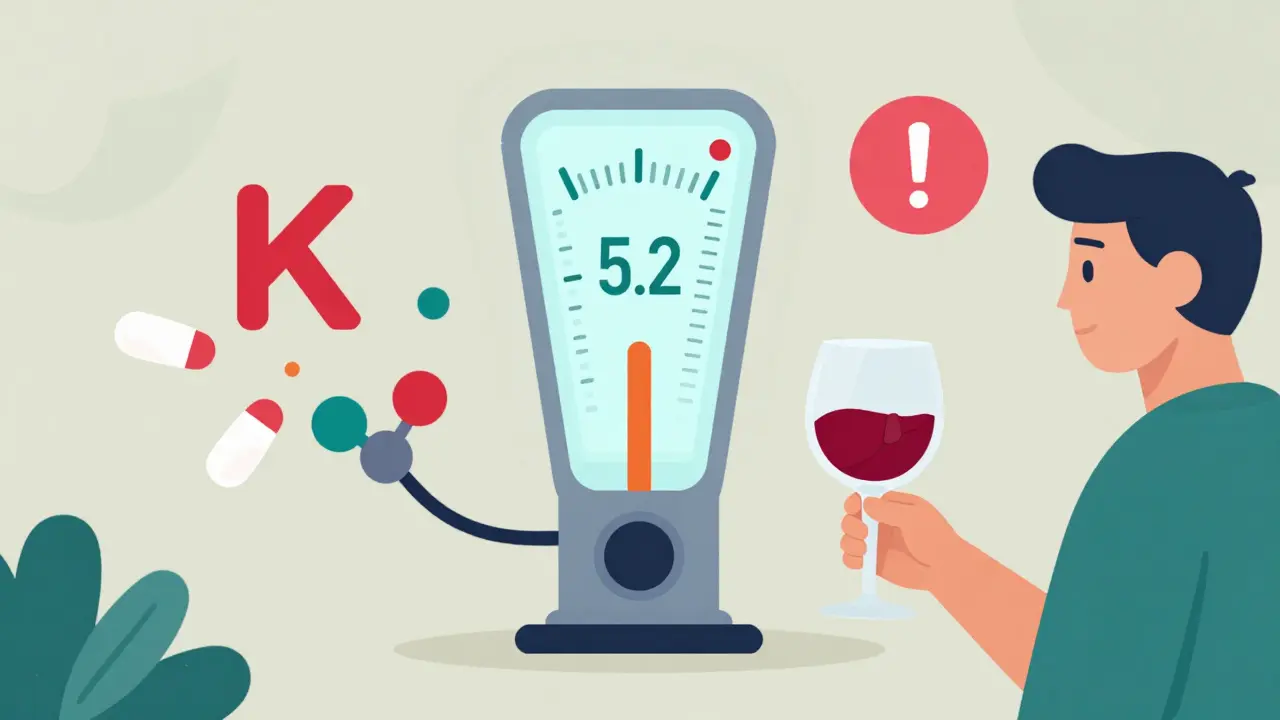
Alcohol doesn’t just make you feel loose-it messes with your liver’s ability to process warfarin. Your liver uses enzymes, especially CYP2C9, to break down the drug. Alcohol competes for the same enzymes. Sometimes it slows down warfarin clearance, making it build up in your system. Other times, heavy drinking damages your liver, making it worse at producing clotting factors. The result? Unpredictable INR swings.It’s not just about how much you drink-it’s about how you drink. Binge drinking-four or more drinks in one sitting-is especially dangerous. One patient in a UK forum saw his INR jump from 2.8 to 5.2 after six pints of beer. That’s not a fluke. That’s a pattern.
Even moderate drinking can cause trouble. People on Reddit’s r/Warfarin report INR spikes after just two or three glasses of wine. One user’s INR went from 2.4 to 3.8 after a weekend of wine-enough for his doctor to cut his dose. These aren’t rare cases. Studies show that 30-40% of warfarin users drink alcohol regularly. And for many, it’s the single biggest reason their INR goes out of range.
Genetics Make It Worse for Some People
Not everyone reacts the same way. If you have certain gene variants-CYP2C9*2 or *3, or VKORC1 1173G>A-your body processes warfarin differently. These variants are common. About 10-15% of white Americans carry at least one. If you have them, even small amounts of alcohol can cause dangerous INR spikes.A 2015 NIH study found that people with these genetic variants who drank alcohol had a much higher risk of major bleeding than those without them. The effect wasn’t just additive-it was multiplicative. Alcohol didn’t just add risk; it multiplied it. If you’ve been on warfarin for over a year and have unexplained INR swings, ask your doctor about genetic testing. It might explain why your numbers are so unpredictable.

Alcohol vs. Newer Blood Thinners
You might be wondering: What about the newer drugs-apixaban, rivaroxaban, dabigatran? They’re often called “direct oral anticoagulants” or DOACs. They don’t need INR monitoring. And yes, they interact less with alcohol than warfarin does.But here’s the catch: DOACs don’t have reliable, fast-acting reversal agents. If you bleed badly on warfarin, doctors can give you vitamin K or fresh frozen plasma to bring your INR down quickly. With DOACs? There’s no instant fix. And while alcohol doesn’t spike INR with DOACs, it still increases bleeding risk by making your blood vessels more fragile and impairing clot formation.
So switching to a DOAC doesn’t mean you can drink freely. It just means the risk looks different. No INR spikes-but still a higher chance of bleeding if you drink heavily.
How Much Alcohol Is Safe?
There’s no magic number that’s safe for everyone. But here’s what the experts agree on:- Stick to moderate drinking: No more than 14 units per week for men, 7 for women. One unit = one 12-oz beer, 5 oz of wine, or 1.5 oz of hard liquor.
- Avoid binge drinking: Never have more than 2-3 drinks in one day. Even one heavy night can push your INR up overnight.
- Be consistent: If you drink, drink the same amount every week. Sudden changes-like going from zero to five drinks on Friday-cause the worst INR swings.
- Don’t mix alcohol with other meds: Painkillers like ibuprofen or aspirin, antibiotics, even some herbal supplements can amplify the risk.
The British Heart Foundation says it’s okay to drink if you stay within these limits. Medical News Today agrees-but adds: the safest way to avoid complications is to avoid alcohol altogether. That’s your choice. But if you do drink, don’t pretend it’s harmless.

Signs You’re Bleeding-Don’t Ignore Them
If your INR is high, bleeding can happen without warning. Watch for:- Red or brown urine
- Tar-like or bright red stools
- Nosebleeds or gum bleeding that won’t stop
- Unusual bruising-especially large, painful ones
- Heavier-than-normal menstrual bleeding
- Brown or bright red vomit
- Sudden headaches, dizziness, or weakness-could mean brain bleeding
If you notice any of these, call your doctor or go to the ER. Don’t wait. High INR bleeding doesn’t always show up on a scan right away. Early intervention saves lives.
What to Do If You’ve Been Drinking
If you had a weekend of drinking and your next INR test is coming up:- Tell your provider. Don’t hide it. They’ve seen it before.
- Expect a test sooner than scheduled. Some clinics will test within 48 hours after alcohol use.
- Be ready for a dose adjustment. Your doctor might lower your warfarin dose temporarily.
- Don’t skip your next test. Even if you feel fine, your INR could still be climbing.
Some clinics now offer telemedicine programs that include alcohol counseling. Patients in these programs saw a 25% drop in INR-related complications. That’s not luck-it’s structure.
Bottom Line: Know Your Risk, Control What You Can
Warfarin works. But it’s not a set-it-and-forget-it drug. Alcohol is one of the most common, avoidable reasons people end up in the hospital with dangerous bleeding. You don’t have to quit drinking forever. But you do need to be smart about it.Know your target INR. Track your drinks. Avoid binges. Tell your doctor. Test regularly. If you have the genes that make you extra sensitive? That’s even more reason to cut back.
There’s no such thing as a “safe” amount of alcohol on warfarin. But there is such a thing as a manageable one. And if you manage it right, you can live well-without ending up on a gurney.
Kerry Howarth
January 4, 2026 AT 16:59Just got my INR checked last week-2.9. Had one glass of wine with dinner. No spike. But I track everything: drinks, dates, meals. Consistency is king. Don't gamble with your numbers.
Tiffany Channell
January 6, 2026 AT 02:00People who drink on warfarin are just playing Russian roulette with their internal organs. No amount of "moderation" makes this safe. If you care about living past 60, quit alcohol entirely. End of story.
Joy F
January 7, 2026 AT 12:44Alcohol and warfarin aren't just pharmacokinetic adversaries-they're existential rivals. The liver, that ancient alchemist, is caught in a biochemical civil war: detoxify ethanol or metabolize warfarin? It can't do both without collateral damage. INR becomes the battlefield, and every sip is a grenade. We think we're choosing a glass of wine, but we're really choosing which organ gets to bleed first.
And let's not romanticize "moderation." That's just capitalism's way of selling you a slower suicide. The real question isn't how much you drink-it's whether you're willing to live with the quiet, creeping dread of a lab result that could kill you.
Genetics? Of course they matter. CYP2C9*3 isn't a variant-it's a death sentence waiting for a trigger. And if you're one of those people who says "I'm fine," you're just the next statistic in a 35% hemorrhage rate. Wake up.
DOACs aren't a loophole. They're a different kind of trap. No INR monitoring means no early warning. You wake up with a headache, then a seizure, then nothing. No vitamin K rescue. No FFP. Just silence. And a family wondering why you didn't just stop drinking.
The British Heart Foundation says "it's okay." They're not the ones bleeding out in the ER. The real experts? The ones who've seen the postmortem reports. They don't say "be careful." They say "don't touch it."
Haley Parizo
January 7, 2026 AT 19:35Let me be blunt: this isn't about alcohol. It's about control. You're handed a drug that demands precision in a world that rewards chaos. Alcohol is just the most visible rebellion against that discipline. But the real enemy? The belief that you're exempt. That your body is different. That your genetics are a shield, not a target. They're not. Not anymore.
Warfarin doesn't care if you're a yoga instructor, a chef, or a retired Marine. It only cares about enzyme activity, vitamin K intake, and whether you had a margarita on Saturday. Your lifestyle isn't a statement-it's a liability.
And if you think DOACs are the answer, you're ignoring the truth: they're the silent killers. No INR means no feedback. No data. No chance to adjust. You drink, you bleed, you die-and no one knew it was coming because you were "fine."
Stop looking for loopholes. Start living like your life depends on it-because it does.
Ian Detrick
January 9, 2026 AT 07:29Been on warfarin for 8 years. Had a few binges, paid the price-INR hit 6.1 once. ER visit, transfusion, scare of my life. Now I drink one beer every other weekend. No more. I track it in a notebook. I tell my pharmacist. I test on time. It’s not hard. It’s just not sexy. But living is.
If you’re reading this and you’re still drinking like it’s 2010-please, just pause. One less drink a week could mean one less trip to the hospital. You don’t have to quit forever. Just be honest with yourself. And your doctor.
Angela Fisher
January 10, 2026 AT 18:01EVERYONE knows the FDA and Big Pharma are hiding the truth about alcohol and blood thinners. Why? Because if people stopped drinking, the whole system collapses. Hospitals make billions from bleeding emergencies. Labs profit from INR tests. Pharmacies sell warfarin by the truckload. And the alcohol industry? They sponsor "moderate drinking" campaigns like it's a health initiative. It's not. It's a cover-up.
My neighbor's uncle died from a brain bleed after one glass of wine. The doctor said "it was just bad luck." But I know better. They don't want you to know that alcohol is a poison designed to make you dependent-and then kill you slowly. They want you to keep buying it.
And genetic testing? That's just another scam. They charge you $500 to tell you what you already know: you're vulnerable. Then they upsell you a DOAC for $400 a month. It's all a pyramid scheme. Stop feeding the machine. Go cold turkey. Or don't. But don't pretend you're being smart.
Neela Sharma
January 11, 2026 AT 18:01One sip of chai with rum in India and my INR jumped to 4.5. No warning. No drama. Just silence in the lab. I stopped. Not because I was scared-but because I loved my mornings too much to risk them. Life is not in the bottle. It's in the quiet hours before sunrise.
Liam Tanner
January 12, 2026 AT 17:58Biggest mistake I made? Thinking I could drink on weekends and be fine. Didn't work. My INR went from 2.6 to 4.3 after a single night. My doctor didn't yell. Just handed me a pamphlet and said, "You're not the first. You won't be the last. But you can be the one who changes." So I did. No more wine. No more beer. Just water. And I sleep better now.
Palesa Makuru
January 14, 2026 AT 07:07I don't understand why people are so dramatic about this. In South Africa, we drink wine with dinner every day and live to 90. Your Western obsession with numbers is neurotic. Warfarin is just a tool. If your INR is off, maybe you're not taking it right. Or maybe your doctor is incompetent. Blaming alcohol? That's lazy. You need to fix your system, not your wine glass.
veronica guillen giles
January 15, 2026 AT 07:25Oh wow, a whole article about alcohol and warfarin and not a single mention of how your cat’s litter box affects INR? Typical. Someone’s clearly not doing the deep research. Next up: "How Your WiFi Router Interferes With Vitamin K Absorption." 😏
Tru Vista
January 15, 2026 AT 10:30DOACs r better. No INR. No stress. Just take it. Alcohol? Still bad. But at least u dont need to test every week. #JustSayNoToWarfarin
Shanahan Crowell
January 17, 2026 AT 08:06I’ve been on warfarin since 2018-after my pulmonary embolism. I drink one glass of red wine, every Friday. No more. No less. I test every Monday. I’ve had zero bleeds. Zero ER visits. Why? Because I treat it like a science experiment. Not a lifestyle choice. I log everything. I don’t guess. I measure. And I never, ever skip a test. If you’re not doing that, you’re not being responsible-you’re being reckless.
And to the people saying "I’m fine"-you’re not. You’re just not bleeding yet. And when you do? It’ll be too late to say "I didn’t know."
Don’t be that guy. Be the one who lives.
Angela Goree
January 18, 2026 AT 10:12Alcohol? On warfarin? In America? That’s just asking for a lawsuit. I mean, if you’re dumb enough to drink and then sue the hospital when you bleed out, you deserve what you get. Stop being weak. Quit drinking. Or move to a country where they don’t care. We have laws for a reason.
Kerry Howarth
January 19, 2026 AT 00:21Just saw someone mention DOACs. If you’re on apixaban and drinking hard, you’re still at risk. I had a friend bleed internally after 4 shots of tequila. No INR spike. Just a ruptured spleen. DOACs don’t prevent bleeding-they just hide the warning signs.