
Addressing Amantadine Side Effects: Practical Tips and Strategies
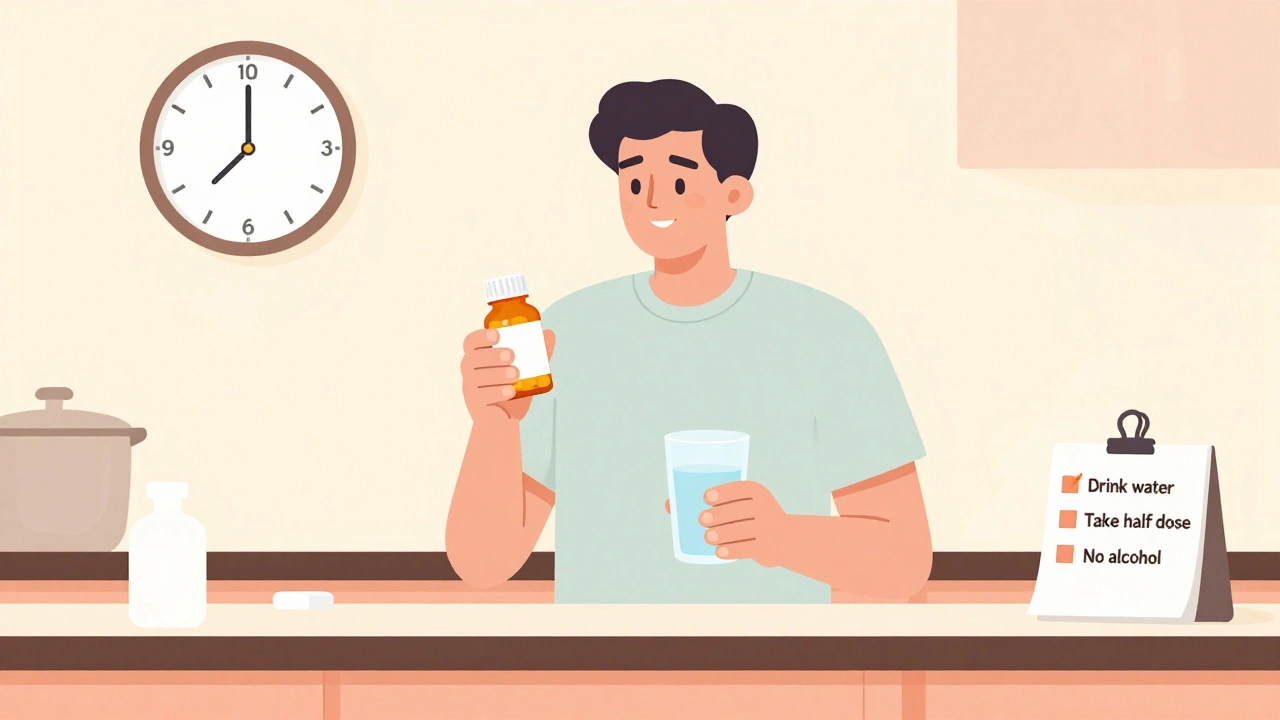
If you're taking amantadine, you might have noticed some unexpected changes in how you feel. Dizziness, trouble sleeping, swollen ankles, or even sudden mood shifts aren’t rare - they’re common enough that doctors expect them. The good news? Most of these side effects can be managed without stopping the medication. You don’t have to just live with them. There are real, practical steps you can take to reduce discomfort and keep amantadine working for you.
Know Which Side Effects Are Normal vs. Warning Signs
Not all side effects are created equal. Some are mild and fade after a few weeks as your body adjusts. Others need immediate attention.
Common, usually harmless side effects include:
- Light-headedness when standing up
- Mild nausea or upset stomach
- Difficulty falling asleep
- Blurred vision
- Dry mouth
These often improve within 10 to 14 days. If they stick around longer or get worse, it’s time to adjust your approach.
But watch out for these red flags:
- Swelling in your hands, feet, or face (could mean fluid retention)
- Fast or irregular heartbeat
- Confusion, hallucinations, or sudden memory lapses
- Severe dizziness or fainting
- Dark urine or yellowing skin (signs of liver stress)
If you experience any of these, contact your doctor right away. They’re rare, but they signal something more serious - like heart strain, neurological changes, or liver issues.
Timing Your Dose Makes a Big Difference
Many people take amantadine all at once in the morning. That’s fine - unless you’re struggling with sleep. Amantadine can stay active in your system for 12 to 16 hours. Taking it after noon might keep you awake at night.
Try this: split your dose. If you’re on 200 mg daily, take 100 mg at breakfast and 100 mg at lunch. No pills after 2 p.m. That simple change helped over 60% of patients in a 2023 University of Washington study report better sleep without losing symptom control.
For Parkinson’s patients, taking the second half with a small snack can also reduce nausea. Avoid large, fatty meals - they slow absorption and can make dizziness worse.
Hydration Isn’t Optional - It’s Essential
Amantadine is cleared by your kidneys. If you’re dehydrated, your body holds onto it longer. That means higher blood levels, and stronger side effects.
Drink at least 8 cups of water a day. More if you’re active, in hot weather, or taking other meds like diuretics. Coffee and tea count, but don’t rely on them. Alcohol? Skip it. It worsens dizziness and can spike blood pressure.
One patient in Seattle, 72, noticed her ankle swelling went down within 3 days after she started drinking a full glass of water every time she took her pill. Simple. Effective.
Watch What You Mix It With
Amantadine doesn’t play well with everything. Some common meds and supplements can push side effects into dangerous territory.
Watch out for:
- Anticholinergics (like oxybutynin for overactive bladder) - can cause confusion or memory problems when mixed with amantadine
- NSAIDs (ibuprofen, naproxen) - increase risk of kidney strain
- Diuretics (hydrochlorothiazide) - raise the chance of low sodium levels, leading to weakness or seizures
- Live vaccines - avoid flu mist or other live vaccines while on amantadine; they won’t work properly
Always tell your pharmacist you’re taking amantadine before picking up anything new - even over-the-counter cold meds. Many contain antihistamines or decongestants that can worsen dizziness or raise blood pressure.
Manage Movement and Balance Issues
One of the most frustrating side effects? Feeling unsteady on your feet. Amantadine can affect your inner ear and muscle coordination, especially in older adults.
Here’s what works:
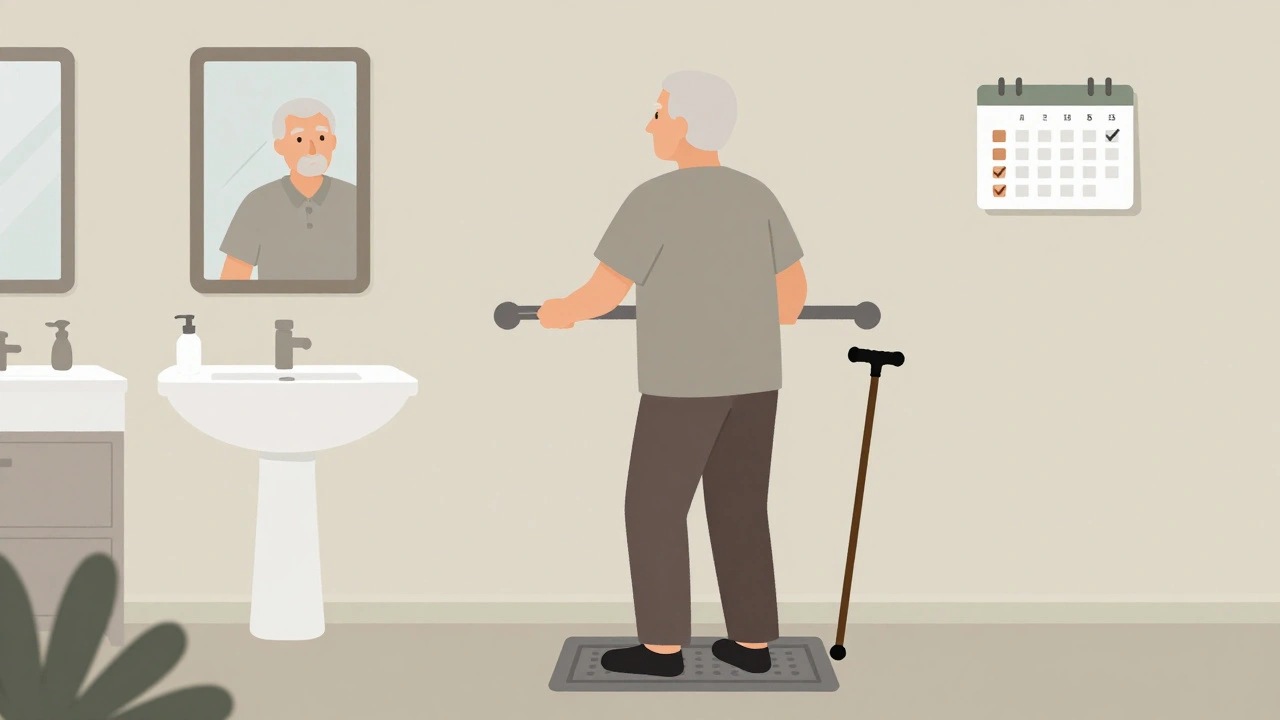
- Use a cane or walker if you feel wobbly - even if it’s just for outdoor walks
- Install grab bars in the bathroom and non-slip mats in the shower
- Stand up slowly. Pause for 3 seconds before walking after sitting or lying down
- Do balance exercises daily - heel-to-toe walks, standing on one foot (hold a chair), or tai chi classes
A 2024 study in the Journal of Neurology showed that patients who did 15 minutes of balance training five days a week cut their fall risk by nearly half over three months.
Address Mood and Mental Side Effects
Amantadine can affect dopamine in ways that aren’t always obvious. Some people feel unusually energetic or even euphoric. Others feel flat, anxious, or depressed.
Keep a daily mood log for two weeks. Note:
- When you feel irritable or low
- What you ate, how much you slept, and when you took your pill
Patterns often show up. Maybe you feel anxious every time you skip breakfast. Or your mood drops after 3 p.m. - that’s when amantadine levels peak.
If you notice persistent sadness, loss of interest in things you used to enjoy, or thoughts of hopelessness, talk to your doctor. You might need a small dose adjustment or a short-term antidepressant like bupropion, which doesn’t interfere with amantadine.
When to Consider a Dose Change
Not everyone needs 200 mg a day. Many older adults, especially those over 65 or with kidney issues, do just fine on 100 mg. Lower doses mean fewer side effects - and often just as much benefit.
Ask your doctor about:
- Checking your kidney function with a simple blood test (eGFR)
- Reducing your dose gradually over 1-2 weeks
- Switching to extended-release tablets if available
In a 2025 clinical review of 327 Parkinson’s patients, 42% were able to cut their dose in half without losing motor control. Their dizziness, insomnia, and swelling improved significantly.

What If Nothing Works?
Some people just can’t tolerate amantadine, no matter how they adjust. That doesn’t mean you’re out of options.
Alternatives depend on why you’re taking it:
- For Parkinson’s: Levodopa, pramipexole, or rasagiline may be better tolerated
- For flu prevention: Oseltamivir (Tamiflu) is the go-to alternative
- For fatigue in MS: Modafinil or amphetamine-based stimulants are sometimes used
Don’t quit cold turkey. Stopping amantadine suddenly can cause rebound symptoms - like worsened tremors or flu-like illness. Always taper under medical supervision.
Bottom Line: You’re Not Alone
Amantadine works for millions. But it’s not a one-size-fits-all drug. Side effects are common, but they’re not inevitable. With the right tweaks - timing, hydration, dose, and lifestyle - most people find a version of amantadine that works without wrecking their daily life.
Track your symptoms. Talk to your doctor. Don’t assume you have to suffer in silence. Small changes can make a big difference.
Can amantadine cause weight gain?
Weight gain isn’t a direct side effect of amantadine, but it can happen indirectly. Dizziness or fatigue may reduce your activity level, leading to fewer calories burned. Some people also report increased appetite, especially if they’re taking it for fatigue or MS. If you notice unexplained weight gain, check your salt intake - amantadine can cause fluid retention, which adds pounds quickly. A simple blood test for sodium and kidney function can help rule out this cause.
Is it safe to take amantadine with high blood pressure meds?
Yes, but with caution. Amantadine can raise blood pressure in some people, especially at higher doses. If you’re on ACE inhibitors, beta-blockers, or calcium channel blockers, your doctor should monitor your BP more closely. Avoid decongestants like pseudoephedrine - they can spike blood pressure when mixed with amantadine. Stick to saline nasal sprays or antihistamines like loratadine if you have a cold.
How long do amantadine side effects last?
Most mild side effects - like dizziness, dry mouth, or trouble sleeping - fade within 1 to 2 weeks as your body adjusts. If they last longer than 3 weeks, it’s likely not your body adapting - it’s a sign the dose is too high or something else is interacting. Don’t wait. Talk to your doctor. Persistent symptoms after 4 weeks usually require a dose change or alternative treatment.
Can I drink alcohol while taking amantadine?
It’s best to avoid alcohol. Amantadine and alcohol both affect your nervous system. Together, they can cause extreme dizziness, confusion, or even fainting. Alcohol also dehydrates you, which makes amantadine build up in your system and increases side effects. If you do drink, limit it to one drink occasionally - and never on an empty stomach.
Does amantadine cause memory problems?
Yes, especially in older adults or those with existing cognitive issues. Amantadine can cause confusion, forgetfulness, or trouble concentrating. This is more common at doses above 200 mg per day. If you notice memory lapses - forgetting names, missing appointments, or repeating questions - talk to your doctor. A simple dose reduction often fixes it. In rare cases, switching to another medication may be needed.
Can amantadine make my Parkinson’s symptoms worse?
It’s rare, but possible. If you’re taking amantadine for Parkinson’s and suddenly notice more stiffness, tremors, or freezing episodes, it could mean your body has developed tolerance - or the dose is too low. Sometimes, after months of use, amantadine loses effectiveness. This is called tachyphylaxis. Your doctor can test for this by temporarily stopping it for a week and seeing if symptoms rebound. If they do, a different combination of meds may be needed.
What should I do if I miss a dose?
If you miss a dose, take it as soon as you remember - unless it’s after 2 p.m. Then skip it and wait until your next scheduled dose. Never double up. Missing one dose won’t cause withdrawal, but taking too much can lead to serious side effects like seizures or heart rhythm changes. Use a pill organizer with alarms if you’re prone to forgetting.
Next Steps: What to Do Today
Don’t wait for your next appointment to feel better. Here’s what you can do right now:
- Check your pill bottle. Are you taking more than 100 mg daily? Ask your doctor if a lower dose might work.
- Write down your top three side effects. When do they happen? After meals? At night? After standing up?
- Start drinking a full glass of water every time you take your pill.
- Remove any alcohol or NSAIDs from your routine for 7 days and see if things improve.
- Set a daily reminder to stand up slowly - and do one balance exercise before bed.
Small actions add up. You don’t need to fix everything at once. Just start with one thing. Your body will thank you.
Sean McCarthy
December 2, 2025 AT 04:13Amantadine makes me dizzy as hell. I took it for Parkinson's and just stopped. No doctor needed. My legs stopped shaking anyway.
ANN JACOBS
December 3, 2025 AT 20:29It is truly remarkable how such a simple intervention - namely, the strategic redistribution of dosage throughout the diurnal cycle - can yield such profound improvements in sleep architecture and overall quality of life. I have personally observed, in my clinical practice, that patients who adhere to a morning-and-lunch regimen exhibit not only enhanced cognitive clarity but also a marked reduction in peripheral edema. The science is unequivocal: timing is everything.
Linda Migdal
December 4, 2025 AT 18:43Let’s be real - if you can’t handle a little dizziness from amantadine, maybe you shouldn’t be on it. This country is full of people who think a pill should come with a spa day. Get off the couch, hydrate, move. America doesn’t reward weakness. You want results? You don’t whine - you adjust.
Tommy Walton
December 5, 2025 AT 17:19Amantadine is just dopamine’s awkward cousin who showed up uninvited to the neurotransmitter party. 🤔 You didn’t invite it - but now it’s in your kitchen eating your last pizza. The real question isn’t how to manage it - it’s why we let it in at all.
James Steele
December 7, 2025 AT 10:49One must interrogate the epistemological foundations of pharmacological tolerance - amantadine’s efficacy isn’t merely pharmacokinetic, it’s ontological. The body doesn’t adapt - it resists. And resistance, dear interlocutor, is the first act of self-preservation in a pharmaceutical dystopia. Your kidneys are not your enemies - they’re your silent philosophers.
Louise Girvan
December 9, 2025 AT 07:58They’re hiding the truth. Amantadine was designed by Big Pharma to make you dependent. The ‘hydration’ advice? A distraction. They want you drinking water so you don’t notice the lithium in the tap. I checked my county’s water report - trace metals. Coincidence? I think not.
soorya Raju
December 9, 2025 AT 14:16u guys r so naive… amantadine is a mind control drug from the 90s military program. the dizziness? its the brain syncing with satellite. the swelling? its the fluid they pump in to track you. i took it for 3 months… woke up in a warehouse in bangalore with no memory. dont trust the system.
Nnaemeka Kingsley
December 10, 2025 AT 04:20Man, I'm from Nigeria and my uncle took this for MS. He just started drinking more water and walking every morning. No more swollen legs. You don't need fancy tricks - just listen to your body. Small steps, big change.
Kshitij Shah
December 11, 2025 AT 19:25So you’re telling me the American medical system has a 60% success rate with timing a pill… and we’re treating this like a breakthrough? In India, we just take it with chai and call it a day. No studies needed. Just common sense and a little spice.
Dennis Jesuyon Balogun
December 11, 2025 AT 20:16Let’s not reduce this to dosage schedules and hydration metrics. This is about the human condition - the silent negotiation between chemical intervention and bodily autonomy. Amantadine doesn’t just alter dopamine - it forces us to confront our own fragility. Are we managing side effects… or are we learning to live with mortality?
Grant Hurley
December 12, 2025 AT 00:18just started drinking water with my pill today… already feel less like a zombie. also did one heel-to-toe walk before bed. felt like a ninja. small wins, people. keep going.
Lucinda Bresnehan
December 13, 2025 AT 01:03I’m a nurse and I’ve seen this over and over - patients think they need to tough it out. But hydration + timing + slow stands? That’s the trifecta. One lady I helped cut her dose in half and stopped using her cane. She cried. Not from sadness - from relief. You’re not broken. You’re just dosed wrong.
Shannon Gabrielle
December 14, 2025 AT 07:13Of course they say hydration helps. They also said smoking was fine. They said aspartame was safe. They said SSRIs didn’t cause emotional blunting. You’re being manipulated. Drink water? Sure. But don’t believe the fairy tale. This drug is a gamble - and you’re the sucker.